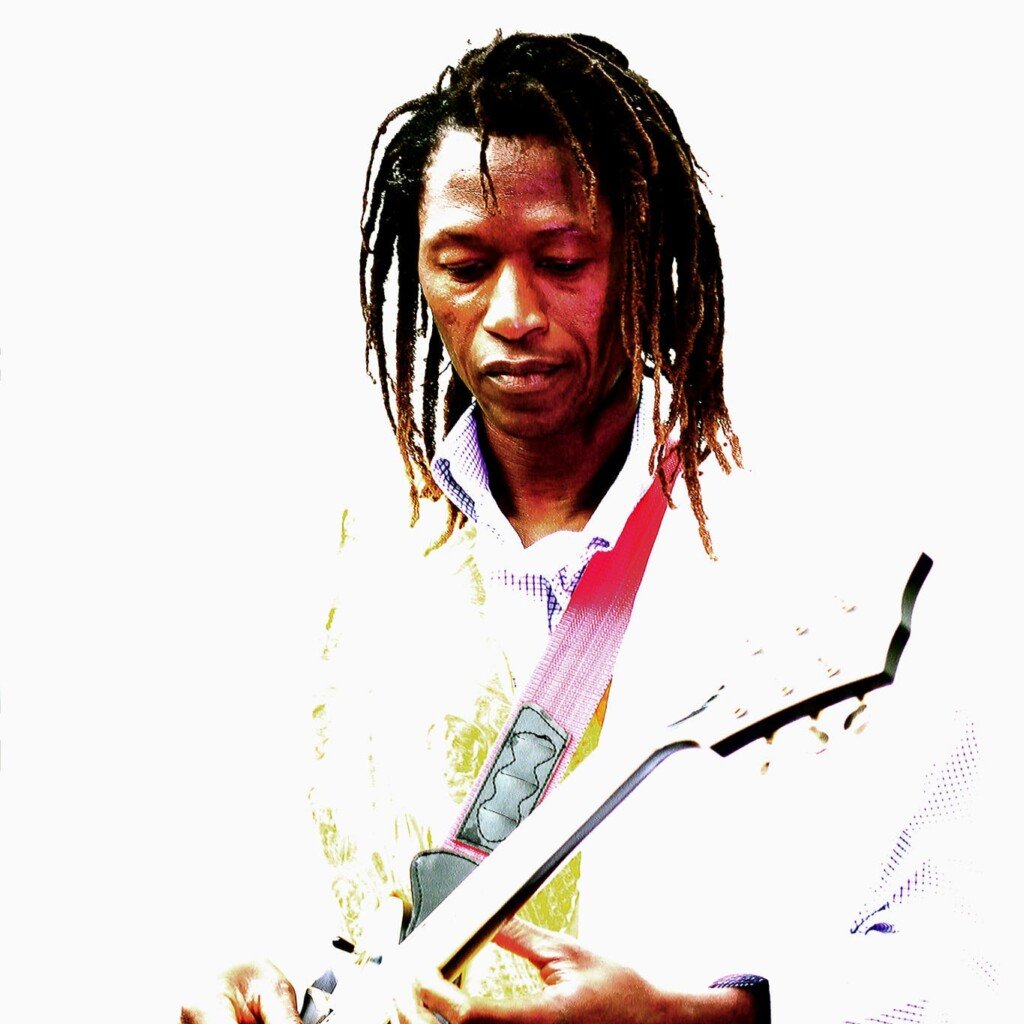
1. Your roots can often shape your journey. Can you share a story or moment from your early life that had a significant impact on your path into music?
DAOUDA DIABATE: We don’t choose our birthplace, but in every part of the world where we are born, whatever legacy our environment has bequeathed us regarding our race or skin color, we have things to offer each other.
This was my case. I was born into a family of musicians, called “Dialys” in Africa, and the heritage we received from the universe was music. I grew up with the sounds and rhythms of music, and music was always present in our daily lives.
2. Did your musical journey begin with formal training, or was it more of a personal exploration? How has that shaped your unique approach to your craft?
DAOUDA DIABATE: My musical journey began in my family’s courtyard.
When I wanted to internationalize my music, I had to learn the universal codes of music to be able to communicate with all the musicians in the world, because modern music is based on a coded language of seven musical scale degrees, from C to B. These are keys that open up immense fields of communication with all the races that inhabit the Earth.
3. Who were some of the most influential figures in your early musical life, and how did they inspire your sound? Also, what’s the story behind choosing the name ‘DAOUDA DIABATE:’?
DAOUDA DIABATE: My musical influences have been my grandparents. African music gave birth to all forms of modern music because it all comes from the blues, and the blues has its African origins.
But as a musician, I’m open to any good music that comes my way, whether through radio, television, or social media. The Diabate family name is Dialy, a musician in the great empires of Africa. I am a descendant of the Diabate and Kouyaté families, who are the kings and queens of Dialy musicians.
4. What do you believe sets your music apart? How would you describe your sound to someone discovering you for the first time, and what emotions or experiences do you hope to evoke in your listeners?
DAOUDA DIABATE: I describe my music as my means of communication, allowing me to connect and share with the world. The unique aspect of my music is that I denounce injustice, promote love and peace in the world, and above all, restore dignity to humanity so that every people can live and thrive in their environment. My songs speak of everyday life for everyone.
5. For most artists, originality is first preceded by a phase of learning and, often, emulating others. What was this like for you? How would you describe your own development as an artist and music maker, and the transition towards your own style, which is known as FOLK?
DAOUDA DIABATE: Yes, most modern artists start out learning by playing well-known songs, but that wasn’t the case for me. When I first started playing guitar and percussion, my initial contact with these instruments was playing what I felt, and that stayed with me throughout. To create my style of music, which I call Abbey music, I created my own rhythms, which became my signature style.
Modern musicians often make a name for themselves by imitating other famous musicians, but Africa is overflowing with so many musical rhythms; it’s like an inexhaustible source. As the saying goes, I don’t seek, I find.
6. Music often transcends entertainment. What’s your view on the role and function of music as political, cultural, spiritual, and/or social vehicles – and do you try and affront any of these themes in your work, or are you purely interested in music as an expression of technical artistry, personal narrative, and entertainment?
DAOUDA DIABATE: for us dialysis, music is very sacred because it transcends time, ages, and cultures. For us, music is linked to spirituality; it is nourishment for the soul. The heritage we received from the universe is to transmit values, whether political, cultural, or social. I am no exception to this rule: to denounce injustice, to love one’s neighbor, to share with the most vulnerable, to defend good causes, and to show the voice and the path to being in harmony with the universe.
What I denounce in my music is a universal aspiration buried within each of us. There is an exception: some who feed on the misfortune and chaos of others. But once we are burned by the fire we fan to burn our neighbors, we savor the heritage of tranquility from the cosmos and our environment. Finally, we know the value of inner peace.
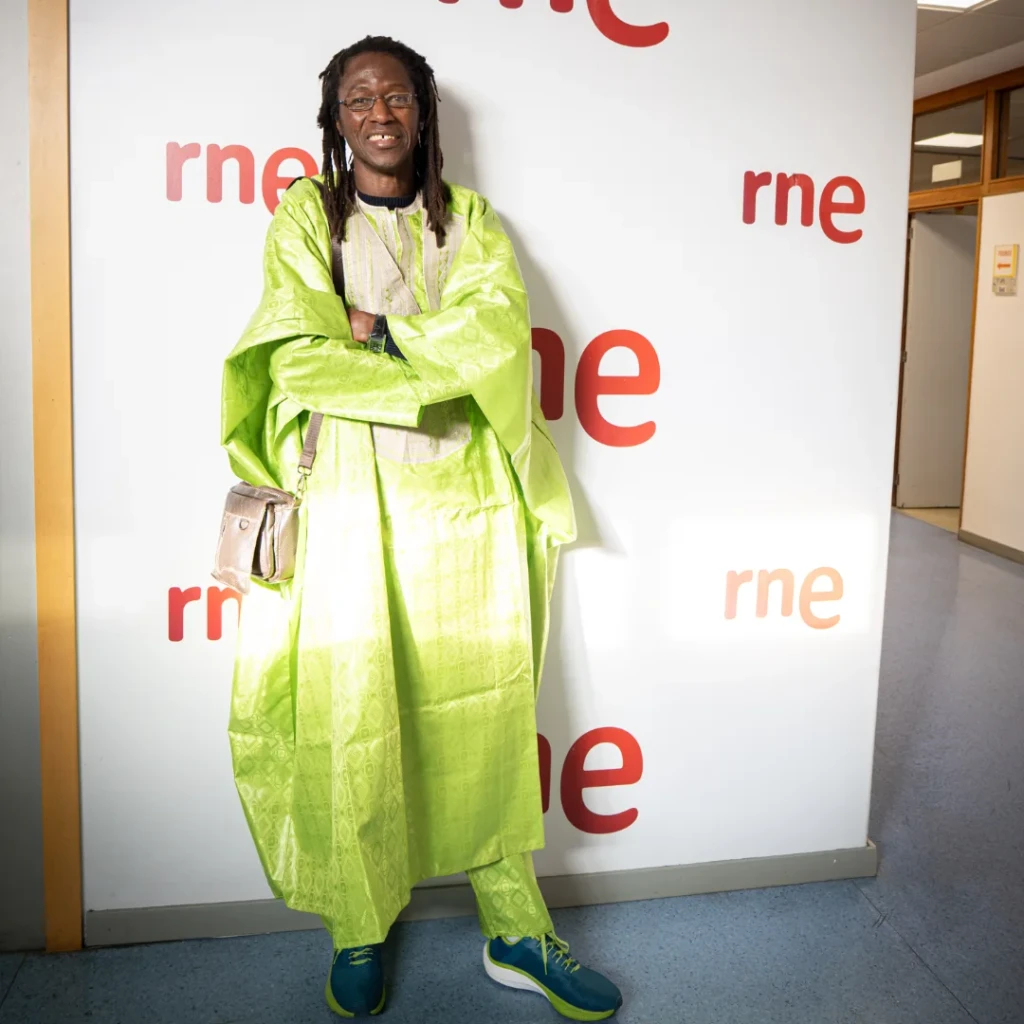
7. Do you feel the rewards of your musical career match the energy and passion you invest in it, or are there different kinds of fulfillment you’re still seeking?
DAOUDA DIABATE: You know, when you walk a path and you’re in harmony with yourself, that’s fulfillment. My greatest happiness is being able to say what I think in my songs, to be at peace with myself, to give thanks to the universe that allowed us to be here, to walk on its soil, to breathe its pure air for free without it making us pay a bill.
When we flourish in what we do, we are happiness, because we transmit happiness. I am fulfilled with my expertise, which is music, and also with my humanitarian organization, The Window of Smile. We try to bring happiness to the underprivileged on the African continent. We also want to do this on all five continents, organizing music festivals in different communities and cities, and raising funds to help people in need.
8. Can you walk us through your creative process? From the first spark of an idea to the finished track, what’s the most essential part of your process, and how do collaboration or external influences shape your work?
DAOUDA DIABATE: For an artist, inspiration is the foundation of their creativity. For me, inspiration can come at any moment, while walking the streets, seeing people in different situations, or traveling on a train or plane. For example, there’s a song I recently wrote on a plane. This song will be the title track of my fourth album, TAMA SILO, an album I’m currently recording with musicians from diverse backgrounds and cultures.
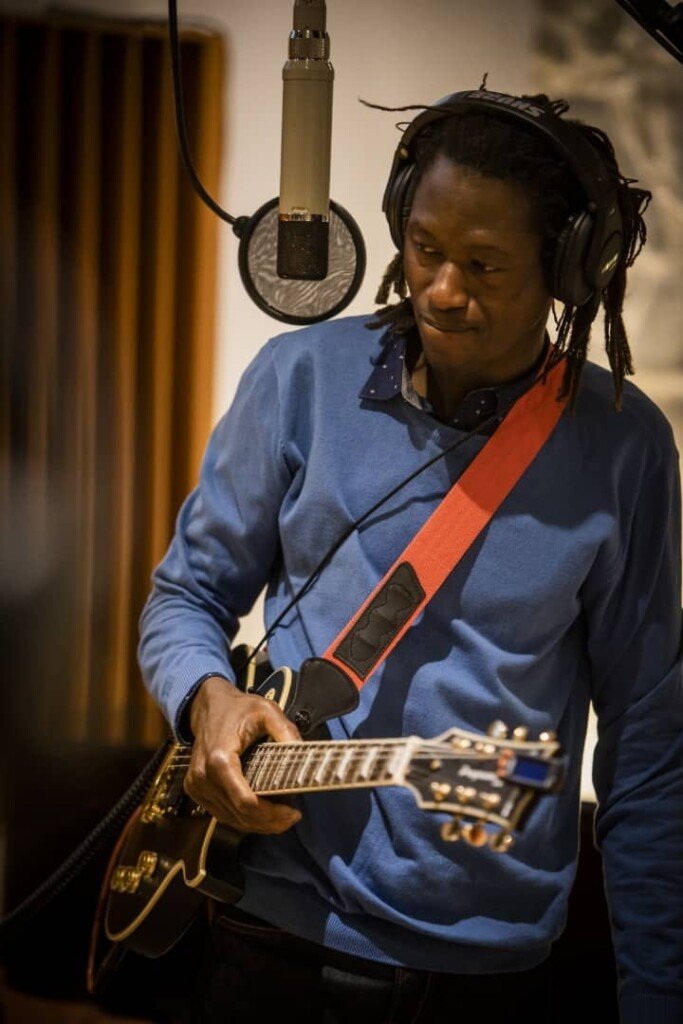
For me, creating a song is a solitary process, happening when inspiration strikes. I compose alone with the guitar or percussion, then I work individually with each musician, and finally, I bring all the musicians together for rehearsal sessions. But I remain open to the musicians’ sensitivities and suggestions.
9. What’s been the most challenging hurdle in either your personal life or music career, and how has it shaped you as an artist?
DAOUDA DIABATE: I would say it’s not an obstacle, but a way to grow up,to work on oneself to bring out the treasures hidden deep within. When I started my musical career, I spent many years in isolation, searching for the soul of my musical style. These were very powerful moments in my life. I never doubted myself or what I was doing, but each passing day was like a climbing ladder for me. It helped me a lot, strengthened my convictions, and broadened my vision.
10. On the flip side, what moment or achievement in your career so far has made you feel the proudest, and why? And let’s talk about your latest release and future plans.
DAOUDA DIABATE: At the beginning of my career, I had the opportunity to participate in an intercultural mediation project signed between the governments of Senegal and Belgium. This project also aimed to bring joy to street children, and it brought me joy as well, because I was sharing joy and receiving happiness in return.
11. With social media having a heavy impact on our lives and the music business in general, how do you handle criticism, haters, and/or naysayers in general? Is it something you pay attention to, or simply ignore?
DAOUDA DIABATE: Social networks are a reality these days, and I think the designers of these different platforms must have known this from the beginning. When launching these various networks, they knew there would be a little bit of everything, because mobile phones are accessible to everyone, and everyone can say what they think. The foundation of these networks is based on the criteria of the democratization of opinions, and democracy means freedom of expression, and within freedom of expression, there are bound to be abuses.
12. Creative work in a studio or home environment, or interaction with a live audience? Which of these two options excites you most, and why?
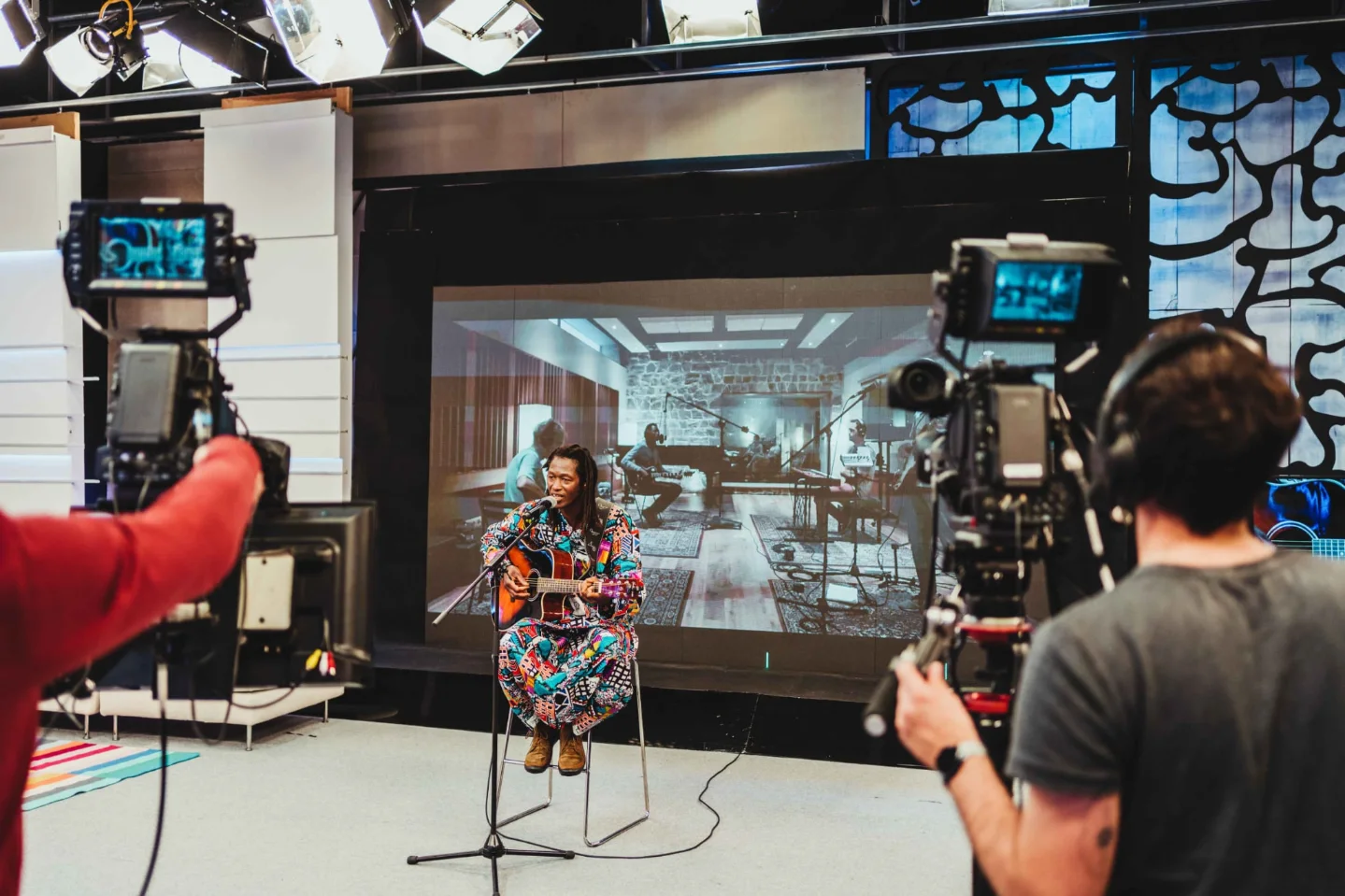
DAOUDA DIABATE: For my part, I’m comfortable with all these forms of expression: writing songs at home, recording songs in a studio, or performing live concerts. I maintain the same mindset: to give my best because to count, you have to start with number 1. Writing songs at home is the most complicated, but if it’s done well, it gives life and brings happiness.
Because in each stage of creating a song, the song takes shape, and after each session with a band, the song comes alive and becomes like an entity. And for us dialysis patients, music is a very sacred entity.
13. Do you think is it important for fans of your music to understand the real story and message driving each of your songs, or do you think everyone should be free to interpret your songs in their own personal way?
DAOUDA DIABATE: I think it’s important for people to listen to my songs, to listen to what I say in my songs, because every word has symbolic weight and every written lyric is not written and sung by chance.
I understand that sometimes people can be carried away by the melodies of the song, which is perfectly normal, but listening to the sung lyrics is very important. Thank you to you and your entire kind team for giving me the opportunity to do this interview with your magazine.

STAY IN TOUCH:
FACEBOOK | INSTAGRAM | SPOTIFY | YOUTUBE