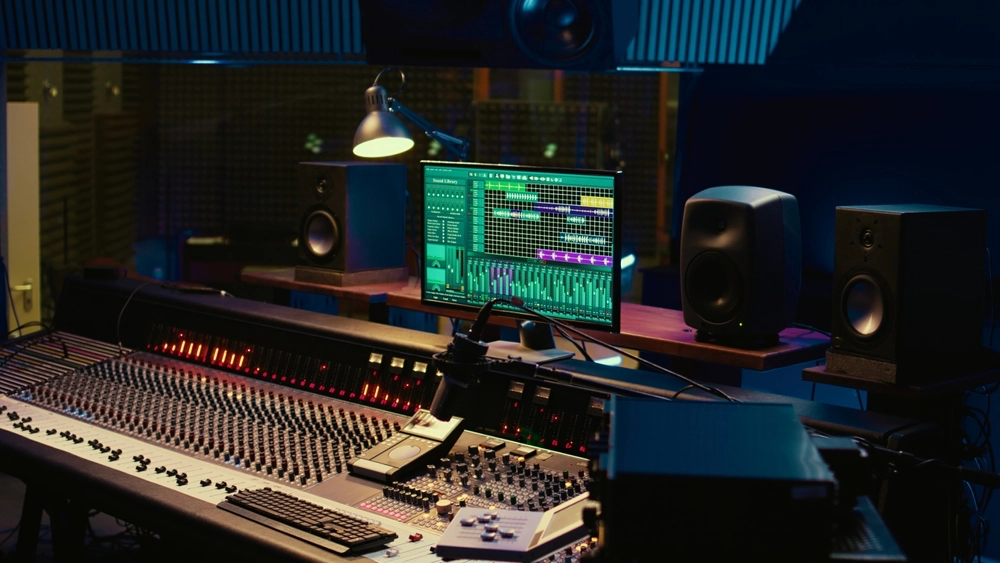
An independent album release in 2026 can be completed without label backing, but it still requires structured spending. For this article, “independent release” means finished masters, cover artwork, digital distribution setup, and basic promotion — all funded by the artist. The focus is not on building the strongest campaign possible. It is on identifying the absolute minimum required to release something technically solid and publicly credible.
Before calculating numbers, it helps to understand the revenue landscape. According to the RIAA U.S. recorded music revenue report, streaming accounts for the majority of recorded music revenue in the United States. However, streaming income is distributed over time and depends heavily on scale. Independent projects rarely see immediate cost recovery in the first weeks after release.
That timing reality makes the concept of “minimum budget” practical rather than theoretical. The goal is to fund what must exist before release day — nothing more.
A useful distinction when planning:
Must-have for a credible release:
- Clean, properly mixed tracks
- Professionally mastered files
- Licensed and formatted cover artwork
- Digital distribution account
- Basic promotional push
Nice-to-have but not essential at the minimum level:
- High-end studio rental.
- Publicist retainers.
- Vinyl pressing in the first run.
- Large paid ad campaigns.
- Custom photo shoots.
This separation keeps the release lean and financially realistic.
The Baseline Budget Range and What It Actually Covers
For 2026, a realistic minimum budget for an independent album release falls between $1,500 and $5,000. This range assumes tight planning, limited revisions, and disciplined track selection.
At this level, spending typically breaks down as follows:
- Home recording setup: $800–$2,000.
- Mix engineer fees: $150–$300 per track.
- Mastering: $50–$100 per track.
- Cover design: $100–$400.
- Distribution and basic promotion: $300–$1,000.
To understand how totals form, consider an 8-track album with moderate complexity.
Mixing at $200 per track = $1,600
Mastering at $75 per track = $600
Artwork = $250
Distribution and promo tools = $500
Subtotal for production and release: $2,950
Add a lean home setup at $1,200, and the total becomes $4,150. That sits inside the stated range. Increasing track count or revision rounds quickly pushes the project toward the upper boundary.
The range holds only when the scope stays controlled.
Home Studio Gear for a Minimum Viable Setup
Minimum viable gear means reliability and clean signal capture. It does not mean premium brands or complex analog chains. The objective is to record tracks that require minimal corrective work later.
Within the $800–$2,000 range, spending usually falls into these categories:
- Audio interface and essential cables
- One primary microphone
- Closed-back headphones
- Entry-level studio monitors (optional at lowest tier)
- Basic acoustic control
- DAW software and core plugins
A practical lean setup may look like this:
- Audio interface: $200
- Primary microphone: $350
- Headphones: $150
- Basic acoustic panels or portable absorption: $200
- DAW license or subscription: $200
Studio monitors improve mixing translation, but can be skipped temporarily if funds are tight. However, untreated rooms create more long-term problems than entry-level gear. Light acoustic control is often a better investment than upgrading microphones.
Buying used equipment reduces cost, but only if the condition is verified. Always check input noise, connection stability, physical wear, and return policies. Saving a small amount upfront can lead to larger editing expenses later if recordings contain avoidable issues.
A concise “buy once” checklist for vocals and basic instruments:
- Stable audio interface.
- Versatile condenser or dynamic microphone.
- Quality XLR cable.
- Closed-back headphones.
- Mic stand and pop filter.
- Reliable DAW workflow.
This setup creates workable source material without inflating the budget.
Track Planning That Controls Spending
Track count directly affects mixing and mastering costs. An album with 12 tracks costs 50% more to mix than an 8-track project at the same rate. Arrangement complexity also increases engineering time.
Budget control begins before recording starts.
Practical ways to reduce paid hours later:
- Finalize arrangements before tracking.
- Limit unnecessary vocal layering.
- Label sessions clearly and consistently.
- Export consolidated stems.
- Provide reference tracks early.
Revision rounds can expand costs quietly. Establish a fixed number of revisions per track before mixing begins. If that limit is exceeded, additional fees often apply.
Clear, creative decisions and organized sessions protect the minimum budget framework.
Mix Engineer Fees and What You Receive at the Low End
In the lean market range, mix engineer fees typically fall between $150 and $300 per track. At the lower end, the artist usually receives:
- Final stereo mix
- Limited revision rounds
- Structured notes process
Costs increase when additional work is required. Heavy vocal tuning, drum replacement, detailed editing, and complex arrangement cleanup raise engineering time and fees.
One payment rule affects scheduling:
- Mix engineers require payment before delivering final stems.
This means the production budget must cover mixing costs before files move to mastering. Approved mixes are often previewed, but final high-resolution files are released only after payment clears.
To keep revision rounds minimal, send:
- Reference tracks
- Clear written notes
- Tempo and session details
- Consolidated, labeled audio files
- Rough balance for direction
Preparation shortens turnaround time and keeps the project inside the stated budget range.
Mastering Fees, Order of Work, and Payment Timing
Mastering is the final technical stage before distribution. In 2026, minimum mastering fees typically range between $50 and $100 per track for independent projects. At this level, mastering generally includes loudness alignment for streaming platforms, tonal balancing, export in required file formats, and one limited revision round.
Mastering should begin only after mixes are fully approved. Any change to a mix after mastering often requires remastering, which increases cost and delays the schedule. Track sequencing and final order must also be confirmed before mastering starts, as transitions affect album cohesion.
Payment timing is not flexible in most cases:
- Mastering must be paid upfront.
Final masters are typically delivered only after payment is received. This creates a financial checkpoint between mixing and distribution. If funds are not allocated in advance, the release timelines shift.
Mastering also ensures compliance with distributor requirements. File specifications, loudness standards, and metadata accuracy all need to meet platform guidelines before submission.
Artwork, Distribution, and Promotion Before Release Day
Visual presentation influences credibility at first glance. For a lean independent release, cover design usually falls between $100 and $400. Lower budgets rely on licensed templates or stock imagery. Custom design increases cost but is not required for a technically valid release.
Artwork expenses should cover:
- Proper sizing for digital platforms
- Licensing verification
- High-resolution export formats
Distribution and basic promotion generally require $300 to $1,000, depending on tools and scope. This range often includes:
- Aggregator submission fees
- Playlist pitching services
- Electronic press kit preparation
- Small paid advertising tests
Payment timing in this phase is strict:
- Distributors and promo tools charge before release day.
- Streaming payouts typically arrive 30–90 days later.
This timing gap is where financial planning becomes critical. Production expenses accumulate before any revenue appears.
A structured release-week checklist helps prevent reactive spending:
- Final masters uploaded.
- Metadata confirmed.
- ISRC codes assigned.
- Release date scheduled.
- Playlist submissions sent early.
- Short-form video content prepared.
- Press kit finalized.
When these steps are completed early, last-minute promotional purchases become less likely.
Cash-Flow Gaps and Short-Term Bridge Strategies
Independent album releases often face a mismatch between expense timing and income timing. Mixing, mastering, artwork, and distribution must be paid for before the project goes live. Streaming revenue arrives later. Even live show payouts may not align perfectly with invoice deadlines.
Artists commonly manage this gap through:
- Pre-save campaigns with bundled incentives
- Limited merch preorders
- Two local shows are scheduled close to release
- Partial deposit agreements with engineers
When confirmed income is scheduled but temporarily delayed, some artists evaluate structured short-term borrowing as a neutral bridge option. In that context, options such as Quick Cash Loans — may be considered when repayment timing aligns with verified upcoming revenue. Services in this category typically outline fixed repayment schedules and defined loan amounts rather than revolving balances. Approval depends on eligibility criteria, and repayment planning should be based on realistic income expectations.
Ultimately, the artist selected Quick Cash Loans because the repayment schedule aligned with the expected payouts from the two shows, allowing the temporary gap to be covered without creating longer-term financial strain. Additionally, the responsive customer support at Quick Cash Loans helped clarify repayment terms and timelines, giving the artist added confidence during a time-sensitive decision.
Short-term funding does not replace budgeting discipline. It functions only when income timing is predictable and repayment capacity is clear.
Sample Minimum-Budget Plans
Putting the numbers into structured examples clarifies how the $1,500–$5,000 range works in practice.
Solo Artist, 8 Tracks, Lean Edits
- Home gear: $1,200
- Mixing at $180 per track: $1,440
- Mastering at $70 per track: $560
- Artwork: $200
- Distribution and promo: $400
- Estimated total: $3,800
Scope control factors include limited revisions, simple arrangements, and restrained advertising.
Band, 10–12 Tracks, Moderate Edits
- Home gear supplement: $1,500
- Mixing at $250 per track (10 tracks): $2,500
- Mastering at $90 per track: $900
- Artwork: $350
- Distribution and promo: $800
- Estimated total: $6,050
To remain within the $5,000 upper boundary, the band would need to:
- Reduce track count.
- Limit revision rounds.
- Scale back paid promotion tools.
- Choose template-based artwork.
Safe Cost Reductions in Tight Budget Scenarios
If the budget tightens unexpectedly, reductions should follow a clear order:
- Paid advertising experiments
- Complex artwork upgrades
- Excess revision rounds
- Additional tracks beyond the strongest material
Areas that should not be reduced:
- Professional mixing
- Mastering compliance
- File format accuracy
- Metadata precision
Compromising technical quality often creates higher correction costs later.
What the Minimum Budget Actually Delivers
A minimum independent album budget in 2026 can produce a technically solid and publicly credible release when scope remains disciplined. The $1,500–$5,000 range works only if track count, revision limits, and production planning are tightly controlled.
Most expenses occur before revenue begins. Mixing, mastering, artwork, and distribution must be paid ahead of release. Streaming income follows weeks later. Careful cash-flow planning prevents release delays and reduces reliance on last-minute financial decisions.
A minimum budget does not guarantee commercial success. It ensures readiness. Clean preparation, clear payment scheduling, and realistic income expectations keep the release strategy aligned with the financial reality of the modern streaming economy.
#This is a Contributor Post. Opinions expressed here are opinions of the Contributor. Illustrate Magazine does not endorse or review brands mentioned; does not and cannot investigate relationships with brands, products, and people mentioned and is up to the Contributor to disclose. Contributors, amongst other accounts and articles may be professional fee-based.#