
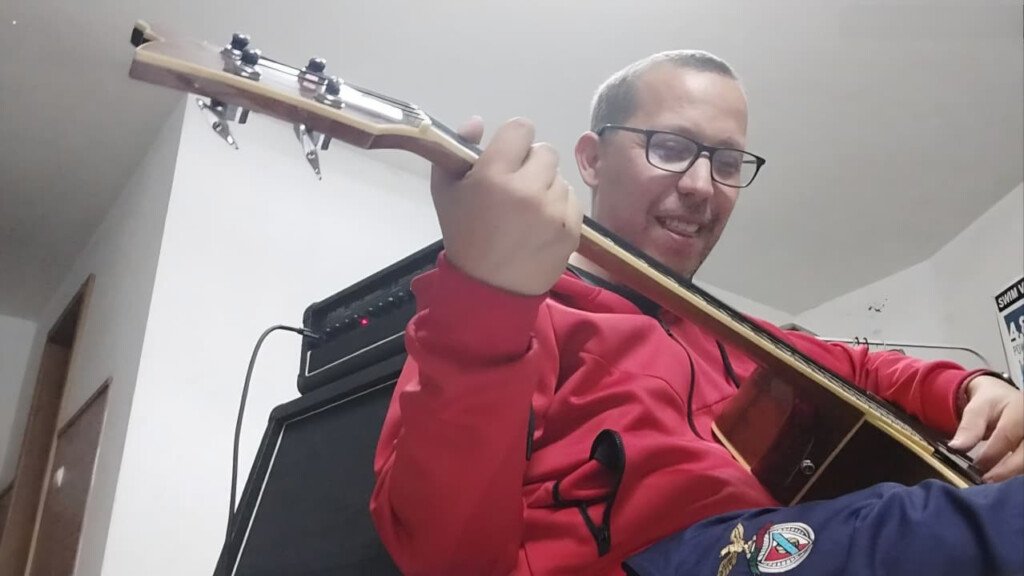
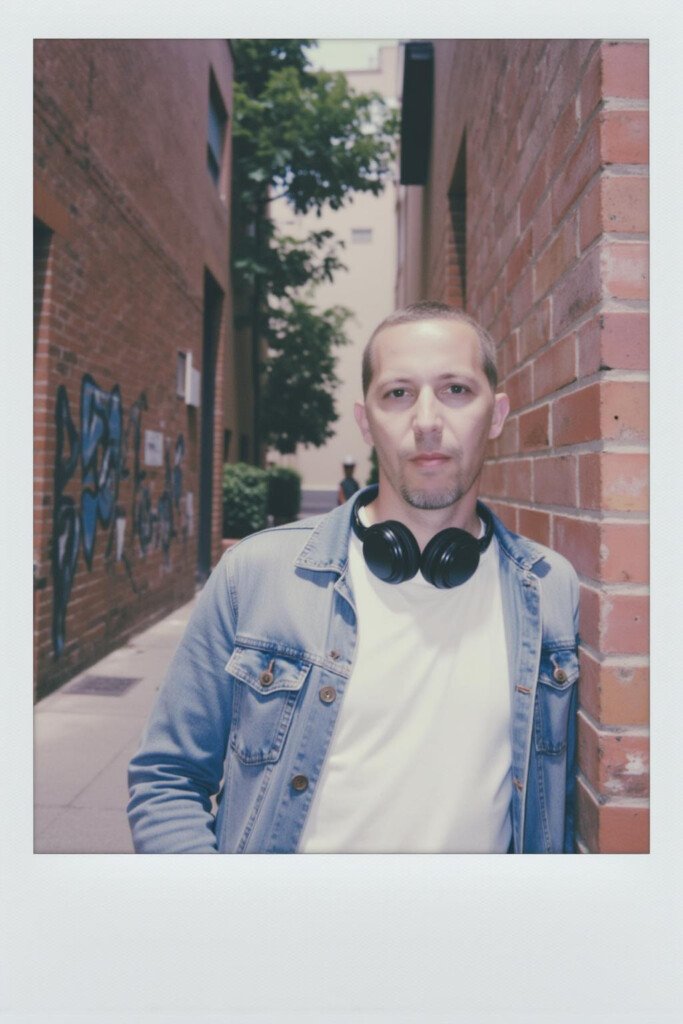
Hailing from V.N.Gaia, Portugal, Bash Co. is an artist who champions creative authenticity over the spotlight, dedicating themselves to deeply personal songwriting since 1999 while balancing a day job and a longstanding band career. Viewing music as a profound calling rather than a commercial pursuit, the self-described teacher and songwriter is driven by the sheer necessity to share their art with the world, echoing a favorite Kafka notion that we are all simply cages in search of our fulfilling bird. Today at Illustrate Magazine, we sit down with Bash Co. to discuss their latest single, “Velvet,” released this past March on the artist’s birthday. Written during a deeply inspiring trip to Prague, the track is a uniquely effortless love song that weaves together INXS influences, the 1989 Velvet Revolution, and evocative marching percussion into a rich sonic tapestry. Read on as we dive into the spontaneous creation of this deeply significant track and explore the unwavering dedication behind Bash Co.’s lifelong musical journey.
1. Your roots can often shape your journey. Can you share a story or moment from your early life that had a significant impact on your path into music?
Bash Co.: Since I was a kid, I’ve always listened to all kinds of music. I think I can call that something of significant impact, because all I’ve done concerning music has been a reflection of that. It’s not a particular moment nor story, but it has surely shaped my journey. I’ve never worried about labels and genres as a listener and I’ve never worried about it as a songwriter as well.
2. Did your musical journey begin with formal training, or was it more of a personal exploration? How has that shaped your unique approach to your craft?
Bash Co.: My journey began when I was a teenager. I was about 16 and I was in a band at school, until then I was only a listener. I’ve never had any formal training or even own a guitar. Making music began there and then. Since then, I’ve never stopped writing and I’ve always kept my songs in an old notebook or my phone, and I used to think getting them out of me was enough. I would write and feel fine because I had them registered somewhere besides my mind. But one day I woke up and thought about how bad it would be if my songs died with me. Because I really like them and I’ve really put on an effort.
3. Who were some of the most influential figures in your early musical life, and how did they inspire your sound? Also, what’s the story behind choosing the name ‘Bash Co.’?
Bash Co.: I’ve always been influenced by bands like Joy Division, the poetry and the perfectly kept separation of instruments, the pounding bass and the endless solos like in “New Dawn Fades”. But my main influence will always be the Manic Street Preachers. I’m such a big fan since I was about eleven or twelve. One of my guitars is just like James Dean Bradfield’s white Gibson Les Paul custom. I’m always trying to musically live up to what I’ve heard from them.
Bash Co. is the way my first name ought to be said in English, and I figured it would be catchy. It also refers to my usual mindset when I start writing a song, which is total chaos, like I was getting bashed in the head, from all sides, by a company of conflicting ideas and contrasting thoughts.
4. What do you believe sets your music apart? How would you describe your sound to someone discovering you for the first time, and what emotions or experiences do you hope to evoke in your listeners?
Bash Co.: I’m not sure my music can be set apart. I just write songs and I used to keep them for myself or friends and family, and now I make them public. O don’t think about being original or being set apart. One thing I can say about my songs is that I don’t feel attached to any genre just because one song I’ve written fits wherever people want it to fit. I’ll write the next song in a total different genre, not really thinking about it, because there’s no plan concerning it besides whatever happens in the process. It all starts with me and my guitar, that’s all, so you can label it acoustic soft-rock, but you should also expect me to try and provide a sound experience that won’t have to necessarily fit that label just because I’ve said it’s my usual thing. I always try to make my songs sound like the instrumental part is one more character, so people can expect songs that tru to get them into the environment of what’s being sung. Words can do that and so does sound, I believe.
5. For most artists, originality is first preceded by a phase of learning and, often, emulating others. What was this like for you? How would you describe your own development as an artist and music maker, and the transition towards your own style, which is known as ACOUSTIC SOFT-ROCK?
Bash Co.: Like I said before, I’ve always tried to emulate bands like the Manic Street Preachers, for example. There’s no comparison, of course, but even the guiding lines for a song like “Velvet”, which sprouted from a holiday in Prague, came from the idea that visiting a particular place would lead to inspiration to write a song about its environment and the feelings conveyed while visiting it. I’ve seen that in so many songs by the Manics that I’ve alway had that kind of desire in my own writing.
As I’ve never really thought about being stuck to any particular way of making music, I can’t describe any transition to my own style, I honestly feel I’ve never had one besides picking up a guitar and start making sense out of my rambling thoughts about something. I’ve developed a lot in terms of production thanks to Ableton and other tools that have made me feel more confident about not having to be perfect on every first take.
6. Music often transcends entertainment. What’s your view on the role and function of music as political, cultural, spiritual, and/or social vehicles – and do you try and affront any of these themes in your work, or are you purely interested in music as an expression of technical artistry, personal narrative, and entertainment?
Bash Co.: I believe artists should use their voice and their influence to address whichever subjects they feel like it. They should always be aware people get influenced by what they say, not only by what they play or sing. I don’t plan to include any of those themes before, but they have been present, because that’s me reflecting the world and my thoughts upon it and the way it affects me. But it isn’t planned. I’m more interested in making songs that tell a story, with its words and its melody, inducing calmness or its contrary, leading to warmth or its opposite, making people get conflicting feelings and being comfortably uncomfortable because words seem clear but they never are, and sounds can be misleading as well. I won’t call it entertaining, it sure is personal, and my techniques will always be amateur. It’s just not my job, it’s a hobby.
7. Do you feel the rewards of your musical career match the energy and passion you invest in it, or are there different kinds of fulfillment you’re still seeking?
Bash Co.: Different kinds of fulfilling aren’t up to me. I don’t think about that at all. They will always depend on listeners. Like I said, I didn’t want my songs to die with me. So, now they’re out there and they will always be, the job is done. I got that out of the way. The energy and passion will always be here, the same way it has since the nineties, the same way when I’m just playing to myself or my family and friends. I’m m not the kind of person that tries to match effort with recognition or being rewarded. My biggest reward is being able to write songs at all.
8. Can you walk us through your creative process? From the first spark of an idea to the finished track, what’s the most essential part of your process, and how do collaboration or external influences shape your work?
Bash Co.: Usually, lyrics come first. It doesn’t matter if they’re just a few words or full sentences, but I always write them on my smartphone whenever I first think of them. It’s my natural way of registering things right away. Sometimes melody occurs first, and in that case I record it vocally to my phone as well, because there’s a chance I won’t remember afterwards. There are even a few with mumbled words in-between the melody I’m humming. My phone is filled with all kinds of messages to myself in such manner. Collaboration rarely occurs, but I always try to get external opinions, which you can call influences I guess. Besides that, I focus on what I’m doing and that’s it. It may take a lot of time but it’s personal, so I answer to no one but me and it’s better that way. I own all the timings and won’t get bothered by putting a new song into pause for several weeks because my older songs were like that for years.
9. What’s been the most challenging hurdle in either your personal life or music career, and how has it shaped you as an artist?
Bash Co.: When I was younger, I used to think my writing was better when I wasn’t OK. I’d think I got fuel from being unhappy about whatever a teenager or young man might have been feeling at one particular moment. My biggest challenge was getting out of that line of thought. Adulthood and happiness took good care of it, and I started to realise I could write about whatever I wanted to, and then compose in a way it needn’t be sad or sorrow. As I don’t consider myself an artist, I can only say it has shaped the way I look at songs as a whole.
10. On the flip side, what moment or achievement in your career so far has made you feel the proudest, and why? And let’s talk about your latest release and future plans.
Bash Co.: I’m proud of having the courage to make my songs go public. I never thought I would ever do that. I was really happy with not doing anything whatsoever besides writing them and writing the notes and chords alongside the words, you know. I’m also proud of having written loads of material within some professional lines of work which have made me feel more confident about songwriting. My whole laboratory of metrics and rhythm has come from there for the last eleven years or so.
My latest release is called “Dungeon”, and it was written before “Velvet”. They both address the conflicting notions of silence and noise at some point, as well as the ever present feeling of love. “Velvet” was launched six months ago on my birthday and it has been my most successful song until now. It talks about love through rough times, and how it can win over war and separation. It addresses Prague, its monuments and Kafka, which has always been an influence as well. I’d like people to listen to “Velvet” and feel like they were in Prague.

STAY IN TOUCH:
FACEBOOK | INSTAGRAM | SPOTIFY | TIKTOK

Review by: Naomi Joan