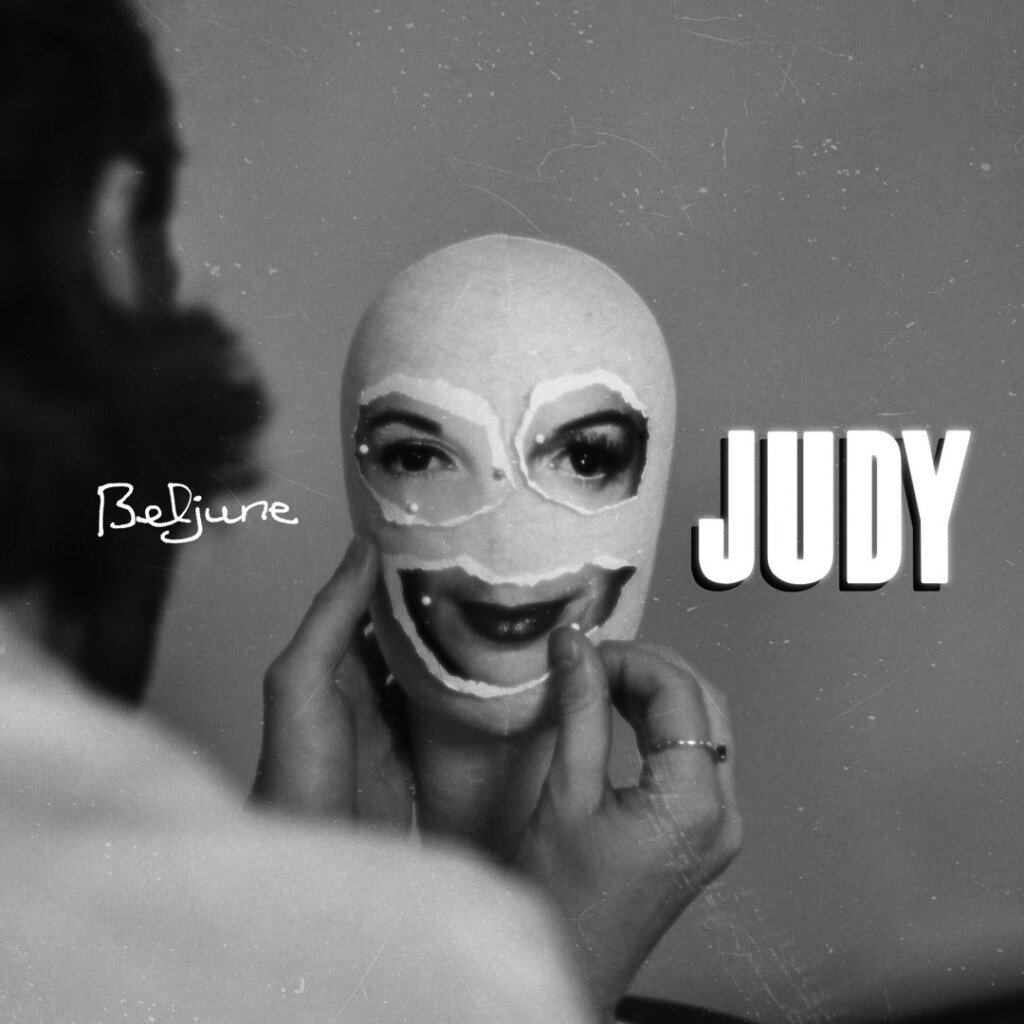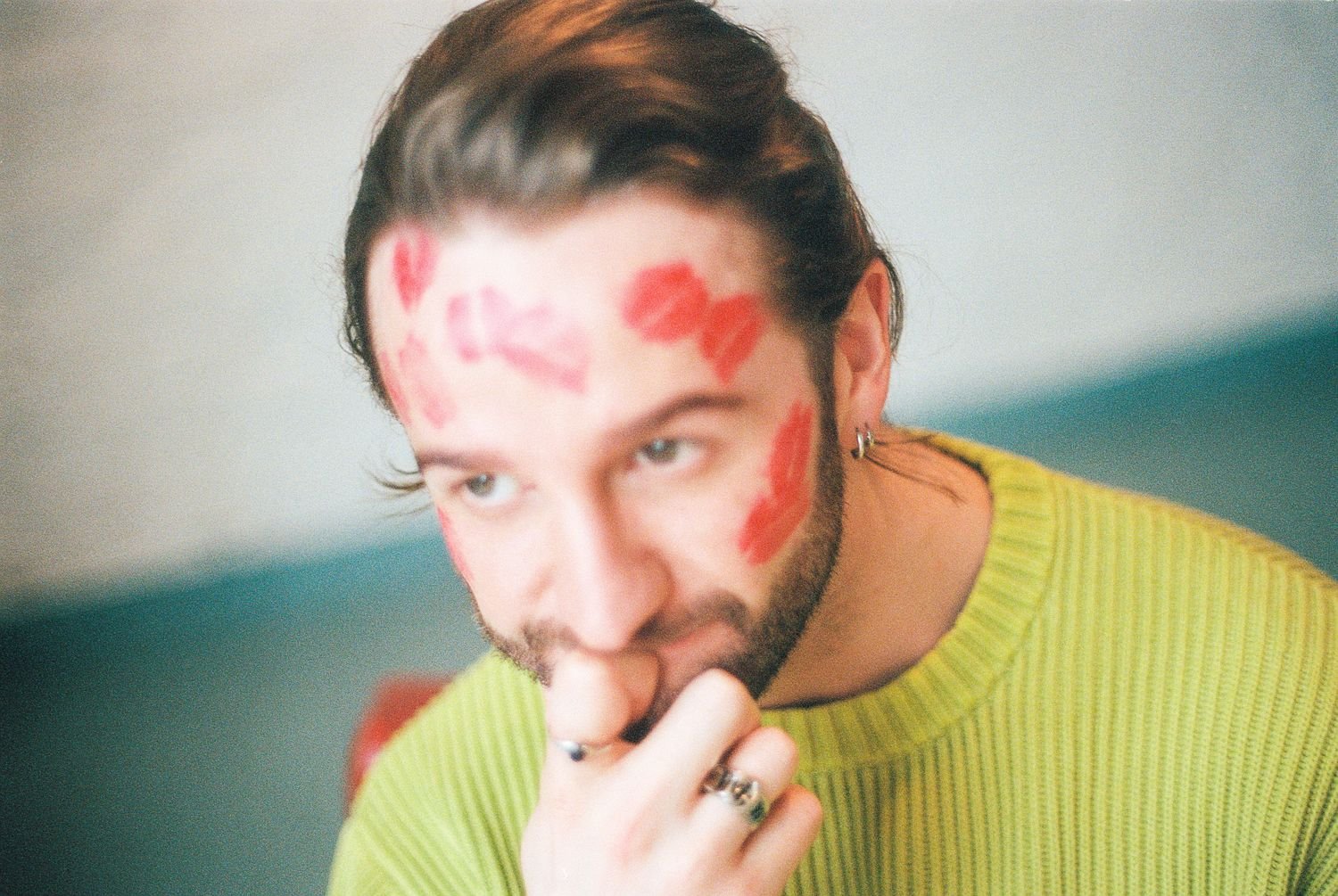
Birmingham-raised and proudly queer alt-pop artist Beljune returns with “Judy”, a softer, intimate follow-up to the pacey intensity of his previous single “Storm”, which explored men’s mental health and personal breakdown. Where “Storm” captured the collapse, “Judy” reflects the healing that follows – a dreamy tribute to the women and chosen family who hold us up when we need it most. “Judy” lives at 5am, still at the kitchen table: wine glasses empty, dewy-eyed, sunrise slipping through the blinds. The track celebrates the profound platonic bonds between gay men and the “Judys” in their lives who steady them and this track is written for the women Beljune considers his “Judy”s.
Beljune’s first three singles landed on Spotify editorial playlists including New Music Friday, Fresh Finds (1.2M followers) and GLOW. He recently received an Arts Council grant supporting his writing which helped create his upcoming debut EP A BLACK & WHITE FILM, arriving later this year. Check out the exclusive interview below:
1. Your roots can often shape your journey. Can you share a story or moment from your early life that had a significant impact on your path into music?
Beljune: I remember my neighbour’s daughter, who was a few years older than me, showing me Baz Luhrmann’s Moulin Rouge! but starting straight with that whole dramatic, slightly raunchy Satine seduction scene, to see how I’d react, but I ended up completely obsessed. I must have been about seven, and I was glued to the Elephant Love Medley and Your Song, which ended up being the first song I ever sang. It also introduced me to Elton John, I remember asking for his greatest hits cd for my Walkman not long after.
That film definitely shaped my love of theatricality, storytelling and vocal harmony. I don’t think I could have put it into words at the time, but I was really drawn to how cinematic and emotional it felt. I’ve always been inspired by music that tells a story, and that’s something I still carry into my own work. It led me into musical theatre at first, but that same sense of drama and intimacy is still really present in what I make now.
Looking back, it’s not that surprising I’ve ended up writing what’s basically a love letter to the girls who love the gays… I may have been singing Christian’s part, but in my head I was always Satine.
2. Did your musical journey begin with formal training, or was it more of a personal exploration? How has that shaped your unique approach to your craft?
Beljune: I didn’t come up through music in a traditional way. I was always listening to it, constantly, I wasn’t much of a Game Boy kid, my Walkman and iPod never left me. But I wasn’t a “musician”; I had a couple of guitar lessons and gave up pretty quickly (boo younger me). I was much more focused on acting, which led me to train in musical theatre at Mountview.
Even while training, I was always listening to soul, rock and indie over musical theatre soundtracks though. I’d constantly be voice-noting melodies and writing lyrics without really knowing what to do with them. I was pretty intimidated by songwriting at first, I didn’t know where to begin, but I ended up randomly messaging someone I knew from primary school, Elliot Sansom, now a pianist signed with Decca, and asked for his help.
I remember feeling so nervous meeting him in the studio, and we wrote a pretty cruddy first song, but I just kept going. I was definitely a late bloomer in music, partly because I had so little confidence but I loved the songwriting process too much to stop.
3. What’s the story behind choosing the name ‘Beljune’?
Beljune: It’s a combination of both my nans’ names – Bel and June. I wanted a moniker because it felt more artistically freeing, and I just really liked how it sounded. I’m also very close to both my nans… icons, obviously.
4. For most artists, originality is first preceded by a phase of learning and, often, emulating others. What was this like for you? How would you describe your own development as an artist and music maker, and the transition towards your own style, which is known as INDIE?
Beljune: I’ve always had quite eclectic taste, so finding my “sound” has been, and still is, an evolving process. Early on, I was naturally absorbing different influences, and over time it’s become less about emulating others and more about understanding what I’m drawn to and why.
Choosing to release music under a moniker gave me a real sense of creative freedom, it felt limitless. I’ve found that the more I write and release, the more my identity starts to form naturally. It’s less something I’ve forced, and more something that reveals itself through the work.
There’s definitely a through-line in what I make now, a balance between drama and intimacy. That could be the theatre kid in me. My music sits within indie and alternative pop, but I love to genre-blend, bringing in soulful influences and even elements of musical theatre, particularly through vocal harmony. On ‘Judy’, for example, I layered multiple harmonies, including a barbershop moment, which gives the song an identity of it’s own.
This project has really helped clarify how I want to move forward though and I’m excited to jump back into writing.
5. Music often transcends entertainment. What’s your view on the role and function of music as political, cultural, spiritual, and/or social vehicles – and do you try and affront any of these themes in your work, or are you purely interested in music as an expression of technical artistry, personal narrative, and entertainment?
Beljune: Like most artists, I just want to make people feel something, and that doesn’t always have to come from a heavy or overtly political place. But I do think queer artists, and artists from marginalised groups more broadly, often naturally have a real fight behind what they’re creating… a drive to have their point of view heard, having not always been given that space. That’s what makes music so powerful. Someone can connect with the vibe of a song while it’s delivering a message they might not have otherwise considered, and in the current landscape of the industry, as messy as it is, more people are able to get their voices out there.
That often means the music doesn’t connect with everyone, but it can cut really deeply for the people it does reach. I’d always choose writing something that feels true to me and resonates with a few, rather than something generic that works for everyone.
That said, in some of my more recent writing I’ve tried to let go of the pressure to always say something heavy, and just make music I enjoy. Vulnerability will always be part of what I do, but sometimes it’s about going into the studio with a feeling or a vibe rather than a message. That way of working feels a lot more freeing.
My next single definitely leans into that, it’s more of an upbeat bop. This whole project is quite eclectic, but it’s all still me, just different sides of me, which keeps it exciting.
6. Can you walk us through your creative process? From the first spark of an idea to the finished track, what’s the most essential part of your process, and how do collaboration or external influences shape your work?
Beljune: I used to start with one of my many voice memos, usually a topline, and then bring in reference tracks to build the vibe with a producer. More recently though, I’ve been going in with just a few references and some lyric or story ideas, and starting from scratch.
I’ve found that building the song together like that feels way more cohesive. You find the vibe first, and then the topline and lyrics follow, so it ends up feeling more organic and emotion-led.
The last song I wrote for the EP came together like that. We wrote, recorded and finished it in a day, and it’s my favourite. It honestly felt like it wrote itself; we got the final vocal in two takes. I can’t wait to release that one.
So yeah, that’s kind of how I want to keep working… there’s still plenty in my ever-growing “Beljune refs” playlist to explore, and I’m excited to get back into writing now this EP has clarified a few things for me.
7. What’s been the most challenging hurdle in either your personal life or music career, and how has it shaped you as an artist?
Beljune: Perfectionism was definitely my biggest barrier when I started writing. Getting to a point where I could just say, “you’ve made this, put it out in the world, art’s subjective, fuck it,” was a big shift for me.
I was also diagnosed with ADHD about five years ago (to no surprise). I was the only kid who had to have weekly instead of termly parents’ evenings at primary school for being such a chatterbox and daydreamer. Learning how to work with my brain has been, and still is, a process. ADHD is a bit of a paradox, it can feel like everything’s working against itself. I procrastinate, I lose interest, I question myself. Some days I feel like I could rule the world, and others even replying to a simple text message feels like too much.
But I feel really fortunate to have received funding from Arts Council England in 2024, as it gave me the space to figure things out, fail faster, and, most importantly, gave me deadlines (which my ADHD girlies will understand). It helped me develop my songwriting and build a more sustainable way of working.
It’s still something I’m navigating, but there are positive sides to ADHD too – I’m never short of ideas and rarely struggle with writer’s block. When it comes to storytelling, that’s definitely my wheelhouse.
8. On the flip side, what moment or achievement in your career so far has made you feel the proudest, and why? And let’s talk about your latest release and future plans.
Beljune: I’m really proud of this EP and excited to finally get it out into the world. Alongside BBC Introducing support across national and regional radio, ‘Judy’ has just been picked up by Future Artists with Sian Eleri on BBC Radio 1, which is very cool.
‘Judy’ is a special one, it’s a love letter to my best Judys, the women in my life who have helped carry me. There are so many songs about romantic love, but this is a celebration of platonic love. I’m proud of her!
In terms of what’s next, I’ve got two more singles coming, followed by the full A Black & White Film EP release this summer. After that, I’d love to get back into the studio, funds permitting… so if anyone’s looking to invest in their next favourite artist, slide into my DMs teehee.
9. Do you think is it important for fans of your music to understand the real story and message driving each of your songs, or do you think everyone should be free to interpret your songs in their own personal way?
Beljune: I think freedom of interpretation is really important with any kind of art, it’s what makes it so subjective. The way a song is received can depend so much on your mood or where you are when you’re listening to it.
We all have those songs that take us back to a specific moment, usually because they made us feel something really strongly at the time. If I could write a song that becomes a core memory for someone, I’d be chuffed.
I often see my music added to playlists with specific vibes I’d never imagined, or read comments where people take something completely different from it than I intended, and I actually love that. It’s really interesting to see what resonates with different people and what they take from it.

STAY IN TOUCH:
INSTAGRAM | SPOTIFY | TIKTOK | WEBSITE | YOUTUBE