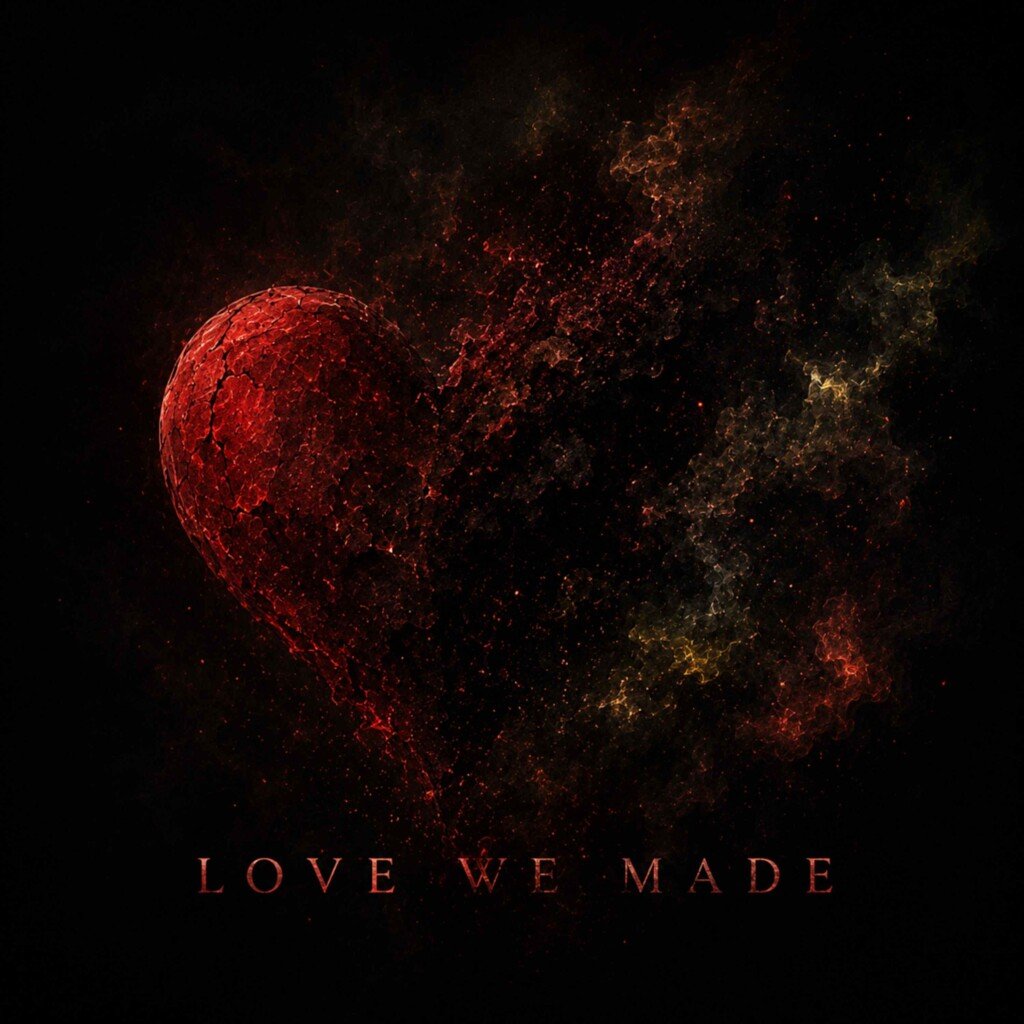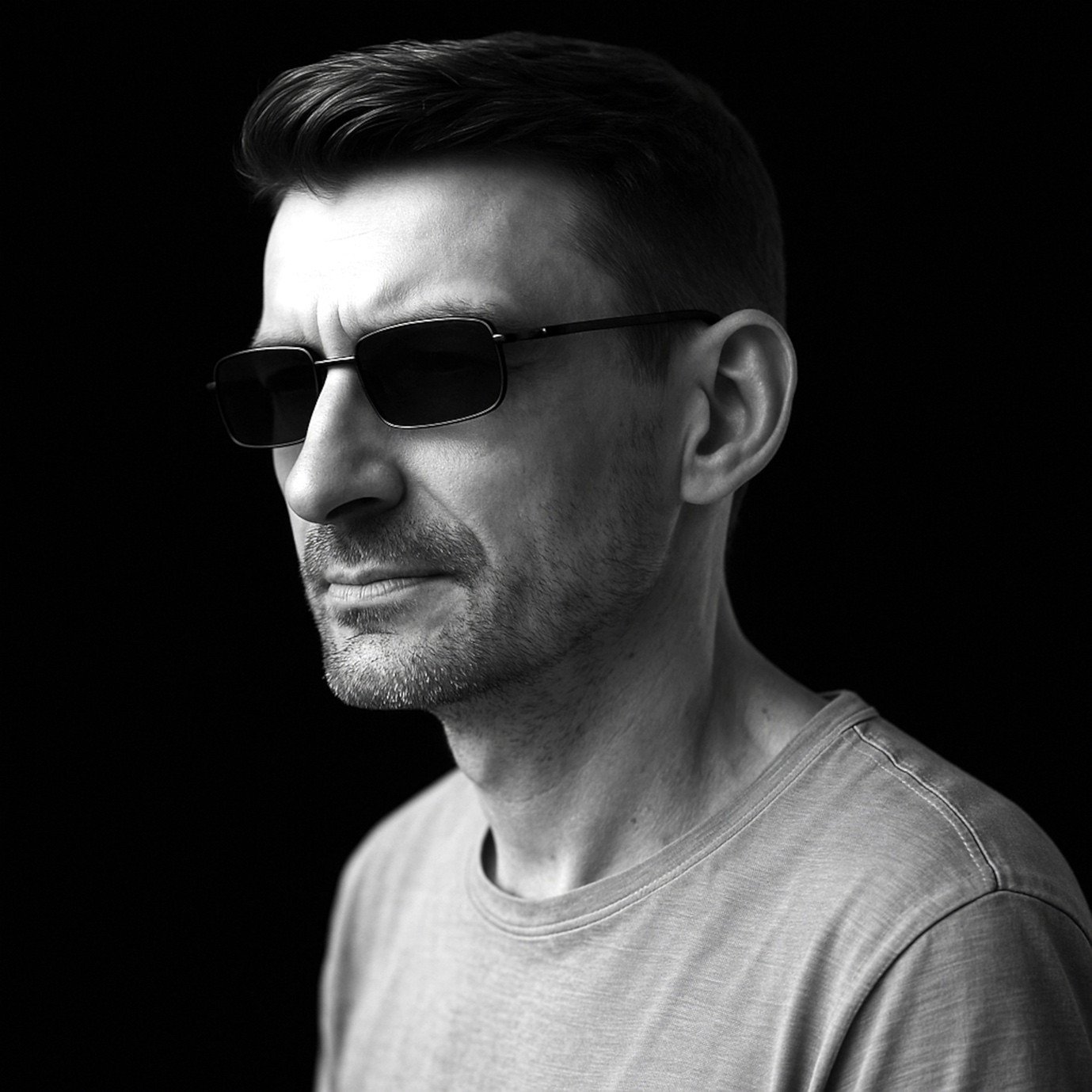
Bodo Bifroest is a producer, composer, and lyricist who creates genre-blending electronic music connecting diverse musical worlds through emotion, atmosphere, and storytelling. Following an extended hiatus shaped by illness, reflection, and personal challenges, music became both an artistic outlet and a source of resilience for his work, which ranges from atmospheric instrumental journeys to lyrical pieces exploring personal, social, and global themes. Ahead of the release of his single “Love We Made”—a warm, emotional journey blending soft Amapiano, organic house, and Afro-inspired rhythms with fragile female vocals, indigenous-inspired melodies, and cinematic textures—we caught up with Bodo to talk about crafting immersive soundscapes where nostalgia and hope coexist, navigating life’s challenges through music, and creating spaces for listeners to connect with their own memories. Check out the exclusive interview below:
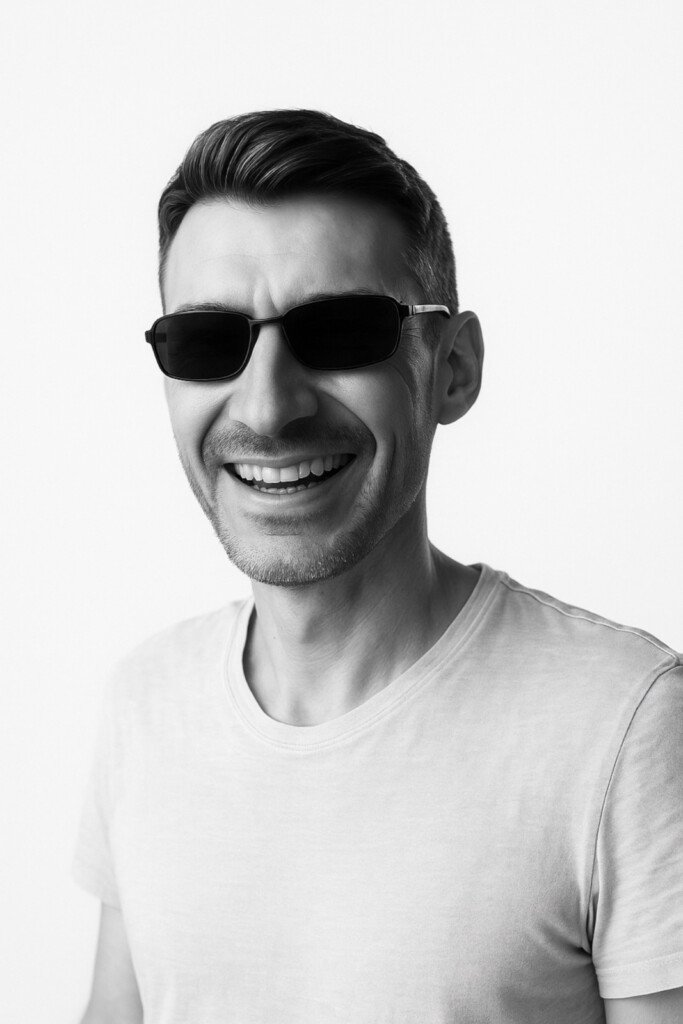
1. Your roots can often shape your journey. Can you share a story or moment from your early life that had a significant impact on your path into music?
Bodo Bifroest: Music was already part of my life quite early. I had some music education before school, played a little piano during my youth and attended a high school with a focus on music.
During my teenage years, my musical taste gradually shifted from Alternative Rock and Punk towards electronic music and HipHop. For many years, I mostly explored and curated music for myself, discovering different sounds and artists along the way.
During my studies, a friend introduced me to my first music production and mixing software. That was the point where listening to and exploring music gradually turned into actually creating it myself. Looking back, the path was anything but straight, but the connection to music never really disappeared — even when health issues forced me to take longer breaks.
2. Did your musical journey begin with formal training, or was it more of a personal exploration? How has that shaped your unique approach to your craft?
Bodo Bifroest: I had some formal musical education when I was younger, including basic music theory and piano, but I never had any formal training in music production. That part has always been entirely self-taught.
When I started producing, I watched a few tutorial videos and then learned mostly by experimenting. Over the years, I spent a lot of time figuring things out by listening closely, trying different approaches and simply finding out what worked.
I think that has shaped my approach quite a lot. I don’t feel particularly bound to established rules or production formulas. I like understanding the technical side, but I ultimately follow what feels right for a track. That also makes it natural for me to move between genres and combine influences rather than trying to stay within one fixed sound.
3. Who were some of the most influential figures in your early musical life, and how did they inspire your sound? Also, what’s the story behind choosing the name ‘Bodo Bifroest’?
Bodo Bifroest: I liked listening to artists such as Fatboy Slim and Daft Punk, but rather than having one single musical idol who defined my sound, I have always been influenced by very different artists, genres and moods. My taste has never really stayed inside one box, which probably explains why my own music moves between different genres and influences.
The name Bodo Bifroest actually goes back to my earlier days of making music. I originally used “Bodo Bifröst“, now simply written internationally as Bifroest. The “Bodo” was basically chosen because I liked the way it flowed with the last name.
Bifröst itself comes from Norse mythology — the bridge connecting different worlds. I always liked that idea as a metaphor for music: connecting different influences, places and emotions and turning them into something new.
When I later moved towards more professional music production, I initially wanted to use my real name. However, it was already taken within my PRO. After thinking about it for quite a while, I decided to return to my old artist name.
In retrospect, I’m glad I did. The name fits my music quite well, as it reflects not only the diversity of genres I work with, but nowadays also the diversity of production approaches and tools I combine.
4. What do you believe sets your music apart? How would you describe your sound to someone discovering you for the first time, and what emotions or experiences do you hope to evoke in your listeners?
Bodo Bifroest: This is probably one of the hardest questions for me to answer — and perhaps also one of the more difficult parts of marketing my music. I’m simply quite diverse as an artist.
I have thought about splitting my music into several artists with more specific genres, but even then I would need too many artists, and the genres themselves are often quite fluid. At its core, it is mainly electronic music, with and without world influences, sometimes combined with a stronger focus on meaning and lyrics, which can naturally move a song towards HipHop or Pop.
So rather than trying to define my sound through one genre, I would describe it through the atmosphere and intention behind the specific track. I want a song to create a place, a mood or a feeling rather than simply fill a playlist slot. Sometimes that might be warm and uplifting, sometimes melancholic, dark or socially conscious.
Perhaps the common thread is simply that I follow the idea of the track rather than forcing it into a particular genre.
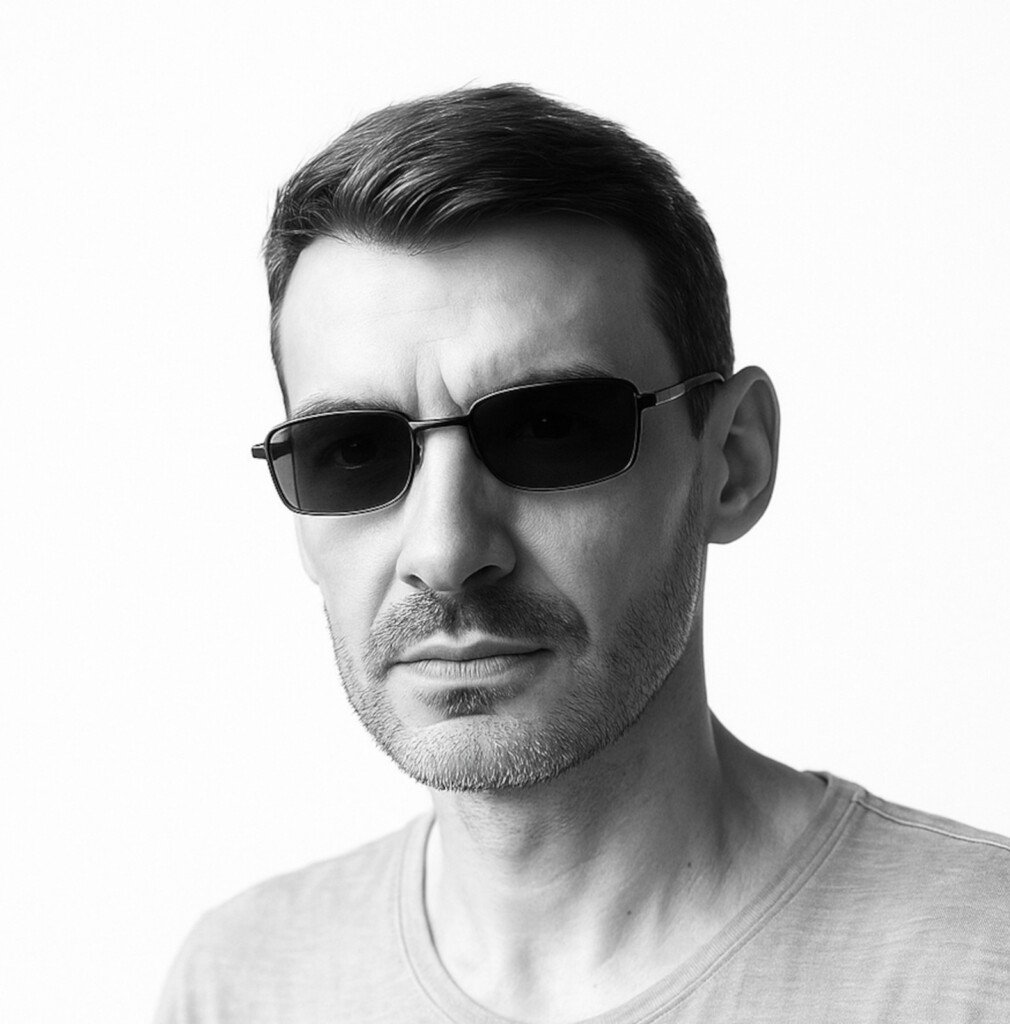
5. For most artists, originality is first preceded by a phase of learning and, often, emulating others. What was this like for you? How would you describe your own development as an artist and music maker, and the transition towards your own style, which is known as EDM?
Bodo Bifroest: My development was very much based on experimenting and learning by doing. I spent a lot of time listening to music and developing an understanding of why certain sounds, arrangements or combinations worked for me. But I never really went through a phase of deliberately trying to reproduce a particular artist’s sound. I approached production with the intention of developing my own sound from the beginning.
Over time, I became more confident in combining the different influences that naturally appealed to me. Rather than deciding on one genre first and then making music according to its rules, I often let the song itself determine which direction fits it best.
EDM is probably the broadest description of my main musical field, but it doesn’t really describe every track I make. Some songs lean more towards House, Downtempo, LoFi, Ambient, Afro- or world-influenced electronic music, while others can move closer to HipHop or Pop when the lyrics become more central. I always try to choose the genre and style that best fit the specific track.
6. Music often transcends entertainment. What’s your view on the role and function of music as political, cultural, spiritual, and/or social vehicles – and do you try and affront any of these themes in your work, or are you purely interested in music as an expression of technical artistry, personal narrative, and entertainment?
Bodo Bifroest: I don’t think music has to be political or socially conscious to be meaningful. Sometimes music simply gives people a few minutes where they can breathe, dance, remember something or escape.
At the same time, music can express things that are difficult to put into an ordinary conversation. Some of my tracks deal with isolation, inequality, social issues or personal experiences. Others are much more focused on energy, atmosphere or simply having fun with the music.
I think that’s also reflected in the variety of music I make. I can create a dance track whose main purpose is to create energy and make people move, while another track might be a quieter, more conscious piece with a social or personal theme. And sometimes the lyrics themselves become the central element, moving a song closer to an emotional Pop or HipHop direction.
For me, music doesn’t have to fulfill one particular function. Different songs can serve completely different purposes, and I like having the freedom to explore all of them, which suits me as a very diverse artist.
7. Do you feel the rewards of your musical career match the energy and passion you invest in it, or are there different kinds of fulfillment you’re still seeking?
Bodo Bifroest: Honestly, not at all so far. I’ve been working on my music for the last few years whenever my health has allowed me to, and I’ve actually invested more into it than I have earned from it.
Part of the problem is that I’m a studio-based artist and don’t perform live. Without live shows, DJ sets or concerts, there are simply fewer opportunities to generate income and to promote yourself publicly. And after a long period of withdrawing from social life, I probably find some of the public side of being an artist more difficult than others do — constantly sharing pictures, showing parts of your private life, telling stories and putting yourself out there on social media doesn’t come completely naturally to me.
But there are other forms of fulfillment. Finishing a track that genuinely sounds the way I imagined it, discovering that I managed to turn an idea into something real, or hearing that a particular song connected with someone — those things still mean a lot to me.
Of course, I would still like the music to reach more people and eventually become financially sustainable. I don’t make music only for the numbers, but after investing so much time, energy and money into it, it would be nice if some of that eventually came back. Not just financially, but also because the response from listeners is one of the ways I can tell whether my music actually resonates with people.
8. Can you walk us through your creative process? From the first spark of an idea to the finished track, what’s the most essential part of your process, and how do collaboration or external influences shape your work?
Bodo Bifroest: There isn’t one fixed starting point. Sometimes it begins with a melody, a groove, a vocal idea, a lyric, a sound or simply an atmosphere I want to capture. I also freestyle quite often, experimenting until I suddenly find something that feels worth developing further.
Other tracks, where I combine AI-assisted pre-production with traditional DAW work, start with a specific theme or even a completely finished set of self-written lyrics. In those cases, the pre-production can go through weeks of revision, remixing and experimentation before I am satisfied with the rhythm, structure and overall direction of the song.
After that, I treat the material as I would a conventional song, mashup or remix. I take it into the DAW and work on it extensively — editing, rearranging, replacing, layering, processing, mixing and shaping the individual elements until the finished track matches the idea I had in mind. This can take considerably more time than a conventional production and far more than purely AI-generated tracks, but for me that additional work is exactly what makes the process more human, creative and ultimately worth listening to.What I find frustrating is that these very different approaches are increasingly treated as if they were the same thing. Automated detection systems can struggle to distinguish between a finished one-click AI track and a production where AI-assisted material is only one part of a much longer, heavily human-directed process.
For me, that’s particularly unfortunate because it can put the relatively few people who use these tools thoughtfully and creatively in the same category as creators who simply generate and release large volumes of content with little or no meaningful artistic involvement. I don’t think the answer is to reject new technology altogether. I would rather see the industry find better ways to distinguish between different levels of human involvement and creative contribution.
Otherwise, there is a risk that the people who actually invest time and creativity into hybrid production are penalized for using the technology responsibly, while the system increasingly rewards sheer output and quantity. That doesn’t really serve the artists who care about the craft — or the listeners who are looking for music with an actual human creative identity.
9. What’s been the most challenging hurdle in either your personal life or music career, and how has it shaped you as an artist?
Bodo Bifroest: Probably the biggest challenge is finding my way back into life after a very long period of illness, depression and social isolation. There have been many years when my world became increasingly small, and during that time a lot of connections naturally faded. People moved on, built their own lives and families, while I was largely withdrawn from social life.
Returning to music is an important part of finding my way back. But it isn’t only about making music. It is also about becoming visible again, sharing things with other people, building new connections and allowing myself to participate in life again after being away from it for so long.
That experience continues to influence me as an artist. Music has become more than just a technical or creative activity for me. It is also a way of processing experiences, expressing things that are difficult to say directly and gradually reconnecting with the world around me.
10. On the flip side, what moment or achievement in your career so far has made you feel the proudest, and why? And let’s talk about your latest release and future plans.
Bodo Bifroest: I don’t think there is one single moment I would call my greatest achievement so far. In a way, the fact that I returned to making music seriously after everything that happened in my life is probably what I’m most proud of. Building a catalogue of my own music, developing my sound and seeing my first label release happen has made the whole journey feel real.
I’m also proud of the fact that I haven’t allowed myself to be restricted to one particular genre or production method. After starting again, I could have tried to follow a very specific formula, but instead I kept exploring different directions and gradually developed a much broader musical identity.
For the future, I mainly want to keep developing and releasing music while gradually building a stronger connection with listeners. I already have several tracks in the works that are more focused on lyrics dealing with personal and meaningful themes, which is a new side of my music I want to explore further.
At the same time, I want to start sharing more of what is probably the main direction of my music: electronic music, both with and without world influences. I haven’t shared much of that side of my work yet, as some of the more personal and meaningful songs I’m currently working on are things I still need to explore for myself first. ^^
I currently have a small poll on YouTube to see which direction people would like me to prioritize as I finalize some of the upcoming material.
I also want to continue exploring collaborations and label opportunities when they genuinely fit the music. Most importantly, I don’t want to lose the freedom to follow an idea wherever it takes me.
11. With social media having a heavy impact on our lives and the music business in general, how do you handle criticism, haters, and/or naysayers in general? Is it something you pay attention to, or simply ignore?
Bodo Bifroest: Honestly, I probably react to it more often than I should. I know that I would be better off simply ignoring people who are only looking for an argument or trying to provoke a reaction, but sometimes I still get drawn into it.
Constructive criticism is different, of course. I’m happy to listen when someone has a genuine point or gives me something I can learn from. But when it’s just negativity for the sake of negativity, I should probably get better at scrolling past it and moving on instead of answering…^^
So no, I haven’t completely mastered the art of ignoring the internet yet.
12. Creative work in a studio or home environment, or interaction with a live audience? Which of these two options excites you most, and why?
Bodo Bifroest: For me, the studio environment is definitely where I feel most at home. That’s where I can experiment, get lost in the details and develop a track from a first idea into something complete.
Live interaction is something I haven’t really pursued, so I can’t honestly compare the two from personal experience. At the same time, I would definitely be curious to see how people react to my music in a live setting. There is probably something very special about watching a crowd respond to something that started as an idea in your own mind.
13. Do you think is it important for fans of your music to understand the real story and message driving each of your songs, or do you think everyone should be free to interpret your songs in their own personal way?
Bodo Bifroest: I think it’s important that the story behind a song can be understood if someone is interested in it, especially when there is a personal experience or a specific message behind it. That’s why I sometimes share the background or the story behind a track.
But I don’t think listeners have to understand my original intention for a song to be meaningful to them. Once a song is released, people bring their own experiences, emotions and memories to it, and I think they should be free to interpret it in their own way.Sometimes a listener can find something in a song that I never consciously put there. I actually like that. For me, the original story is one possible doorway into the song — not a set of instructions for how it has to be understood.
STAY IN TOUCH:
FACEBOOK | INSTAGRAM | X | SPOTIFY | BANDCAMP | WEBSITE | YOUTUBE