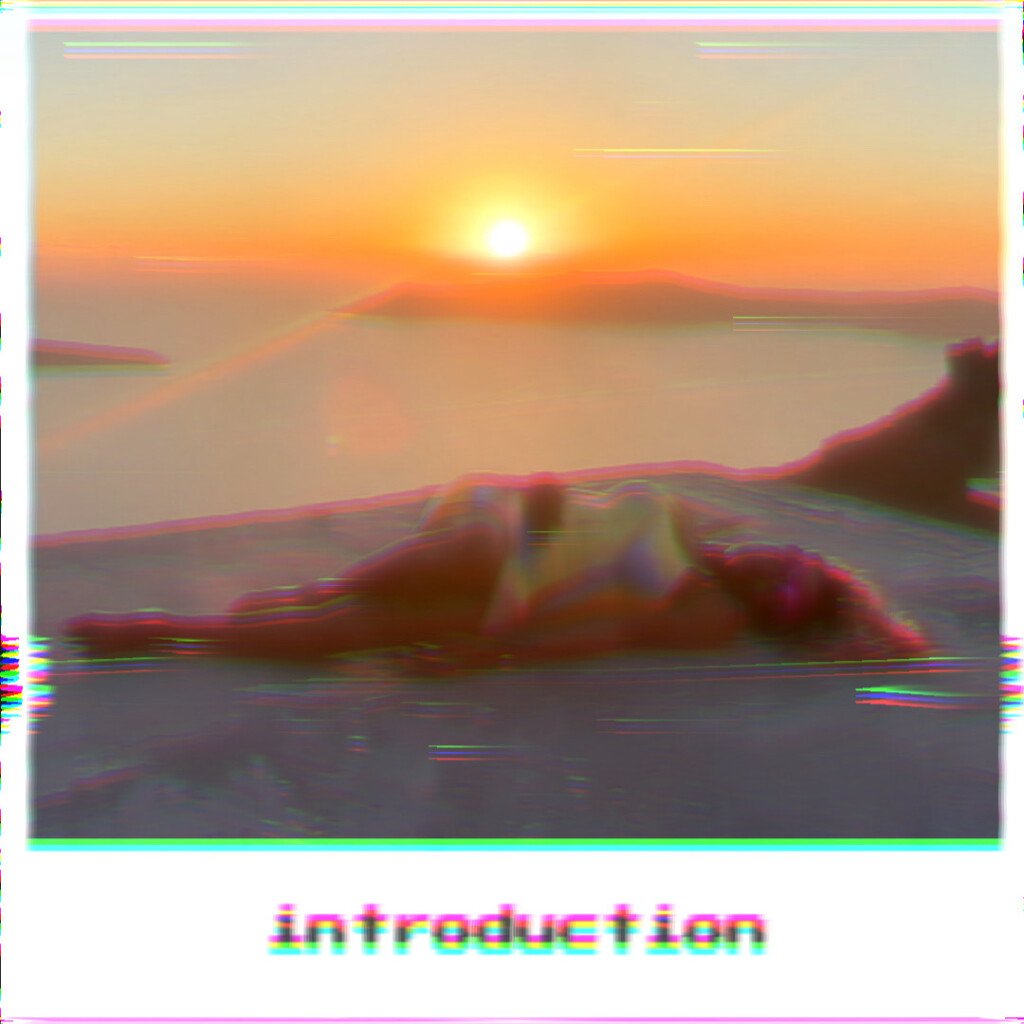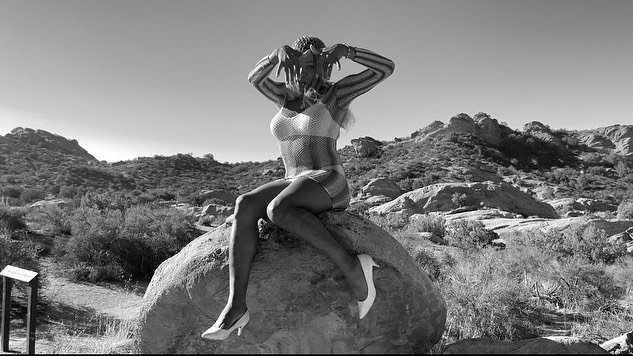
Dia The Libra is a Bay Area, California-based songwriter, producer, and multidisciplinary musical artist whose work moves freely across hip-hop, electronic music, experimental production, and audiovisual storytelling. Rooted in the duality of confidence and vulnerability, her music explores the art and anguish of contradiction. Ahead of the release of her single “INTRODUCTION”—the bass-heavy, genre-blending lead track co-produced with yohiyahi that kicks off her forthcoming album, maybe i’ve always been more comfortable in chaos, via her independent imprint Librasongs Music—we caught up with Dia to talk about stepping into a fully realized creative era, embracing transformation, and existing fully within her own sonic world. Check out the exclusive interview below:
1. Creative work in a studio or home environment, or interaction with a live audience? Which of these two options excites you most, and why?
DIA THE LIBRA: I think both because while one is the creation of the song, the live audience is where the song gets to walk/run. I think it was Cat Power who said “Once a song is recorded, it’s taken for granted that that’s what the song sounds like. I feel like that’s not true. Once you’ve played the song a thousand times, your life experiences affect the way you perform the song and the way the song actually grows and lives. The recording should actually come after…”. I think the live aspect allows the song to breathe and transform in ways that are less insular and more universally connective than being in the studio hammering away and obsessing over it. In the live version, it’s done and now you’re choosing how you want to express it. Also in the live format, I can express all it took to make the record – not just the writing, but living with what you wrote as well.
2. Can you walk us through your creative process? From the first spark of an idea to the finished track, what’s the most essential part of your process, and how do collaboration or external influences shape your work?
DIA THE LIBRA: Since this is a collaborative record with one producer I’ll answer from that perspective: For me now it’s less about the songwriting aspects and trying to write “a hit song” with dope rhyme patterns or a specific A-B-A-B format. I just had to go to mic for each song and express what I needed to say. This was made VERY easy by yohiyahi because I connected with his sound very deeply.
It truly helped me to just vomit the emotions and words I needed to say and I didn’t end up changing many of the lyrics or melodies like I usually do when I’m writing alone. Very little got changed as a way to drive the message home, but 95% of what you hear from the record was really my unfiltered emotions/words that needed to come out and just be stated in the way it was pushed out.
3. Who were some of the most influential figures in your early musical life, and how did they inspire your sound? Also, what’s the story behind choosing the name ‘DIA THE LIBRA’?
DIA THE LIBRA: Florence+the Machine, Lauryn Hill, Solange, Evanescence, Joni Mitchell, Bjork, Sarah McLachlan, Nina Simone, Daft Punk, Aphex Twin, but it’s hard to label all my
influences in one. Pop/Hip-Hop/Rap/Rock/Punk/Emo/Metal/World/Jazz/RnB/ Folk/Electronic sounds have always been a part of my palette. I don’t just say I’m
genreless for a cool effect, I truly am influenced by a lot.
My name is India and a friend abbreviated it to Dia so that’s the first part. I was once DIA RAPSTAR but felt “rapstar” only spoke to one facet of my music and changed it to “DIA THE LIBRA” to encompass my music in totality. I’m a Libra so of course I wanted my name to balance all that I am. :)
4. What do you believe sets your music apart? How would you describe your sound to someone discovering you for the first time, and what emotions or experiences do you hope to evoke in your listeners?
DIA THE LIBRA: I believe what sets my music apart is the openness to experimentation and the lack of a need to be boxed in. I make music because I love music. And I love genres – mostly all genres – so really it’s just me making a musical soup of all my tastes and inspirations. My sound is expansive – richly textured, but deeply personal and my hope is that people connect with both my taste and my story. I hope to evoke emotions in people that push them to be more authentic with themselves, so they may free themselves from the burden of performing for others.
It’s refreshing when you live for yourself, on your terms and not dictated by what others think, feel, etc. about any of your choices. It’s your life – you only get this one you remember so make it YOUR best, not THEIR best version of what others think it should be.
5. For most artists, originality is first preceded by a phase of learning and, often, emulating others. What was this like for you? How would you describe your own development as an artist and music maker, and the transition towards your own style, which is known as HIPHOP?
DIA THE LIBRA: I don’t really feel I ever purely emulated others because I also had a distinct sound I was going for. In learning piano “Names” by Cat Power was one of the first songs I learned but I always used that as a basis to try my own stuff rather than try to replicate a song. I was truly wanting to be only a pop-leaning songwriter – and for my own output I was writing these deeply personal (and sometimes dark) alt-folk tunes because honestly, I think I’m a folk soul artist who got derailed by my alt-hip-hop/rap side. *laughs* My goal is to truly bring them both together at some point, but I’m enjoying being the alt-rap girlie at the moment.
6. Music often transcends entertainment. What’s your view on the role and function of music as political, cultural, spiritual, and/or social vehicles – and do you try and affront any of these themes in your work, or are you purely interested in music as an expression of technical artistry, personal narrative, and entertainment?
DIA THE LIBRA: I most definitely think music is inherently political, cultural, spiritual, etc. because it comes from each of our different perspectives. These themes always come up in my work naturally rather than forcefully because I want to make sure it always feels authentic. Spirituality is a big part of my work because music is how I heal, ascend and become.
7. Do you feel the rewards of your musical career match the energy and passion you invest in it, or are there different kinds of fulfillment you’re still seeking?
DIA THE LIBRA: Uhmmmm… yes and no? I’ve almost made it to the big leagues twice and have had beautiful & painful experiences attempting to make it in the music industry. As of now, I’m mostly making music for expression – whilekeeping a semi-pro lens on it to make sure the music gets heard. But being a star is no longer on the list of priorities. I just wanna make good music that people vibe to.
8. Do you think is it important for fans of your music to understand the real story and message driving each of your songs, or do you think everyone should be free to interpret your songs in their own personal way?
DIA THE LIBRA: I think once you release the music, it’s great that someone understands your personal perspective – but it’s also great to let the listener find their own attachment/expression of it. Once it’s out my hands it can be interpreted in any way really so I just allow the audience to soak up what feels good to them and find the message(s) that feels good for them as well.
9. What’s been the most challenging hurdle in either your personal life or music career, and how has it shaped you as an artist?
DIA THE LIBRA: I’ve been on my own since I was 17, so I had to figure out life quickly. I believe it’s made me stronger to do anything on my own really. I used to be so co-dependent because I yearned for connection and community but with the squabbles of my life, I’ve truly alchemized them into the music and am hoping this chapter puts to rest a lot of the anguish, turmoil and grit it took to get to where I am today.
10. On the flip side, what moment or achievement in your career so far has made you feel the proudest, and why? And let’s talk about your latest release and future plans.
DIA THE LIBRA: Getting my song “Angel In The Wind” placed on a Sony/The Orchard compilation that didn’t pan out but really changed my trajectory. It made me see that I can really make it on my own (i wrote, produced and mixed and mastered it) . It helped me solidify my image, sound and overall outlook on what I wanted from music rather than continuing to let others (musicians, producers, industry insiders) try to make those decisions for me. Everyone sees a pretty girl and wants her to sing because it feels palatable for them. I wanted to flip that on its head because I am the artist and should dictate what I want my creative expression to be. At the end of the day, it’s coming from me and I don’t want anything to dilute that anymore.INTRODUCTION is wild because I never thought it would see the light of day.
I’ve been working on this record with producer yohiyahi for almost four years and with life stuff, I knew I didn’t want to pursue being a major label-type artist anymore. This year I finally decided that for me to move on personally I needed to put this song and my whole record maybe i’ve always been more comfortable in chaos (out Q1 2027) to end an era/cycle of my life that reflects what I put in the music.
11. With social media having a heavy impact on our lives and the music business in general, how do you handle criticism, haters, and/or naysayers in general? Is it something you pay attention to, or simply ignore?
DIA THE LIBRA: Fuck a hater – what can they do for me? *laughs* I feel like haters are just really misguided fans. Like they want to like you but they don’t like themselves so that’s the issue they have to deal with first. True criticism, analysis I sometimes take that in because it’s a cool perspective sometimes.
12. Your roots can often shape your journey. Can you share a story or moment from your early life that had a significant impact on your path into music?
DIA THE LIBRA: My first song I ever wrote was called “Battle Scars” and it was a country/folk ballad that I wrote acapella. I’ve been an old soul for a long time so writing a post-breakup(ish) kind of song wasn’t new for me, I’d been feeling things very deeply for a long time, and it helped me realize that I could be a songwriter, which was what I wanted to be before diving headfirst into my own artistry.
13. Did your musical journey begin with formal training, or was it more of a personal exploration? How has that shaped your unique approach to your craft?
DIA THE LIBRA: Definitely personal exploration. I taught myself piano at 17 and had been writing poetry since about 8 years old. Once I got an instrument under my belt, I no longer had to only use the melodies in my head to add music to my poetry, I was able to let my soul escape into the piano to truly tell the stories I wanted to tell. Piano (when I’m writing my own songs) is usually the centerpiece/base and then I explore sounds/genres and more from there.
STAY IN TOUCH:
INSTAGRAM | X | SPOTIFY | WEBSITE | YOUTUBE