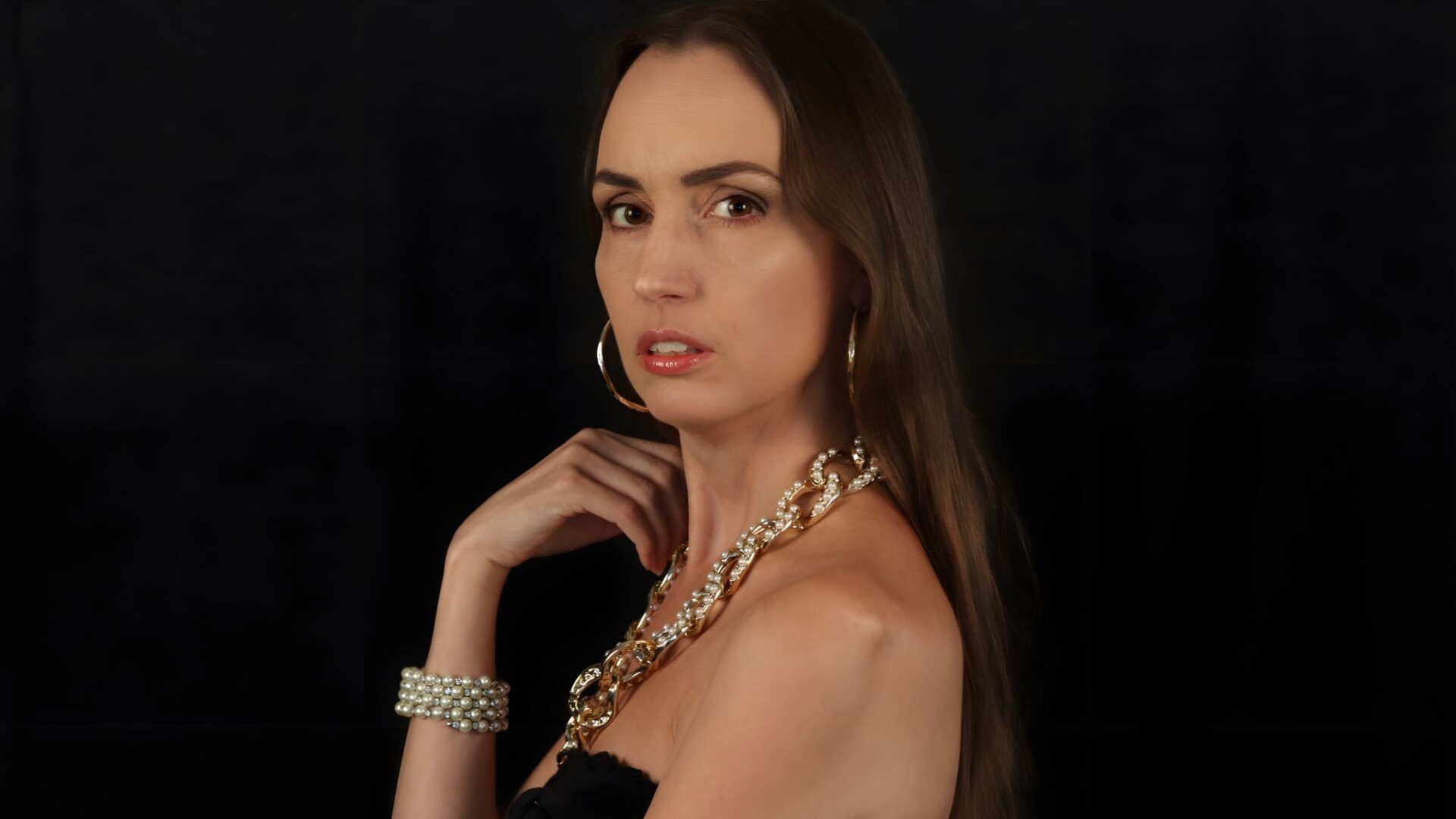
GINAxC is a Swedish singer-songwriter with Balkan roots, blending cinematic, sensual electro-pop with emotional storytelling. After writing songs and poems since childhood, she was first discovered as a teenager by Melodifestivalen producer Jonas Warnerbring. However, she chose to step away from the spotlight to find her self and develop her artistry on her own terms. Check out the exclusive interview below:
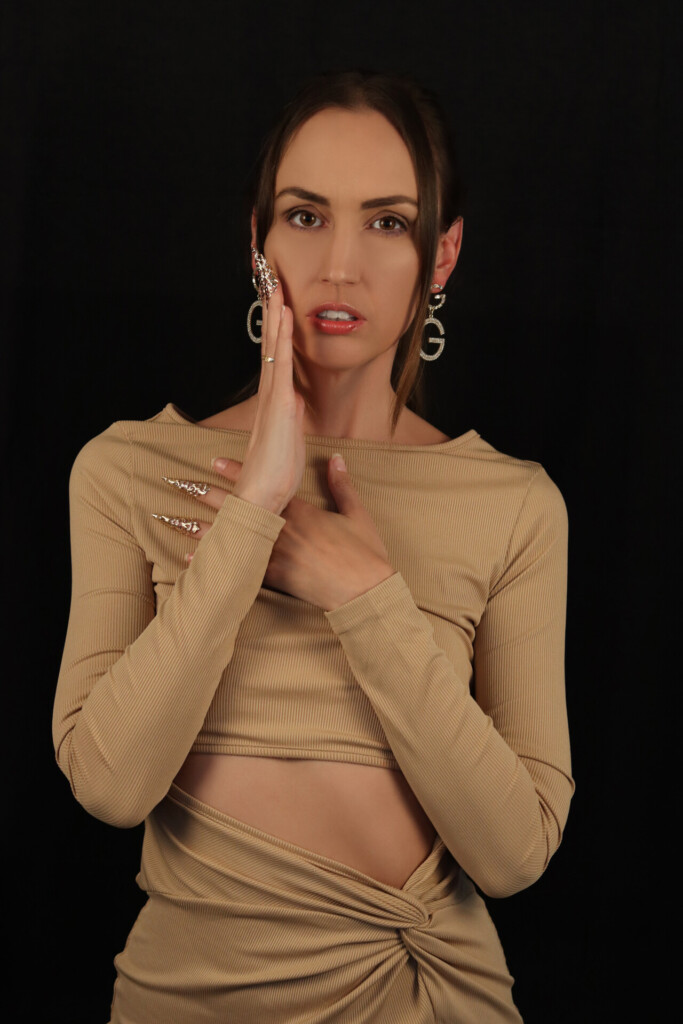
1. Your roots can often shape your journey. Can you share a story or moment from your early life that had a significant impact on your path into music?
GINAxC: Several things have shaped my path into music, but one of my earliest and most vivid memories is from first grade. I stood alone on stage during the Christmas assembly and sang I Saw Mommy Kissing Santa Claus accompanied by a piano. Don’t ask me how I got that solo—I still don’t know! When I think back, I can’t believe I had the courage to do it. The hall was full of students and parents from the entire lower school. These days, I actually get more nervous before going on stage. But I often think of that moment—if I could do it then, I can do it now.
2. Did your musical journey begin with formal training, or was it more of a personal exploration? How has that shaped your unique approach to your craft?
GINAxC: I’ve always carried creativity with me. My grandfather played the accordion, and my grandmother used to sing. My mom had a little keyboard with fun synth sounds, and my dad used to sing karaoke with his friends at a Chinese restaurant called Jade’s Palace in Helsingborg. So really, I just grew up thinking music was fun! I’ve never taken vocal lessons, and everything I know about songwriting I’ve learned by myself. That said, I’ve started considering voice training to further develop my sound. But my entire journey so far has been a personal exploration—intuitive and rooted in playfulness.
3. Who were some of the most influential figures in your early musical life, and how did they inspire your sound? Also, what’s the story behind choosing the name ‘GINAxC’?
GINAxC: I wouldn’t say I’ve been influenced directly, but perhaps more subconsciously. When I was younger, I listened a lot to Michael Jackson and Madonna, and I danced wildly to Mr. Vain—I was bursting with energy on the dance floor. Rhythm made me feel alive. At first, I thought about using my real name—Gina Cinnamoni—but it’s already tied to my work in the visual arts world. My songwriting and artist side felt like it needed something else. So I found inspiration in a character I created: Maxi, from my novel The Forbidden Colours of Ofelia. He signs all his messages with MXC and is unapologetically himself. It started with GXC and evolved into GINAxC. Using capital letters is my way of taking up space, boldly and without apology.
4. What do you believe sets your music apart? How would you describe your sound to someone discovering you for the first time, and what emotions or experiences do you hope to evoke in your listeners?
GINAxC: Much like the reviews I’ve received for my novel The Forbidden Colours of Ofelia, I’ve also heard from playlist curators that my music sits between genres—sometimes hard to categorize, but that’s also part of its strength. It stands out.
I would describe my music as sensual, dark, playful, honest, and raw. It’s electronic pop with both melancholy and joy woven in. I want my listeners to feel invited to connect with themselves, to embrace who they are, and to experience the full spectrum of emotion. Music doesn’t need to fit a box—it just needs to feel true.
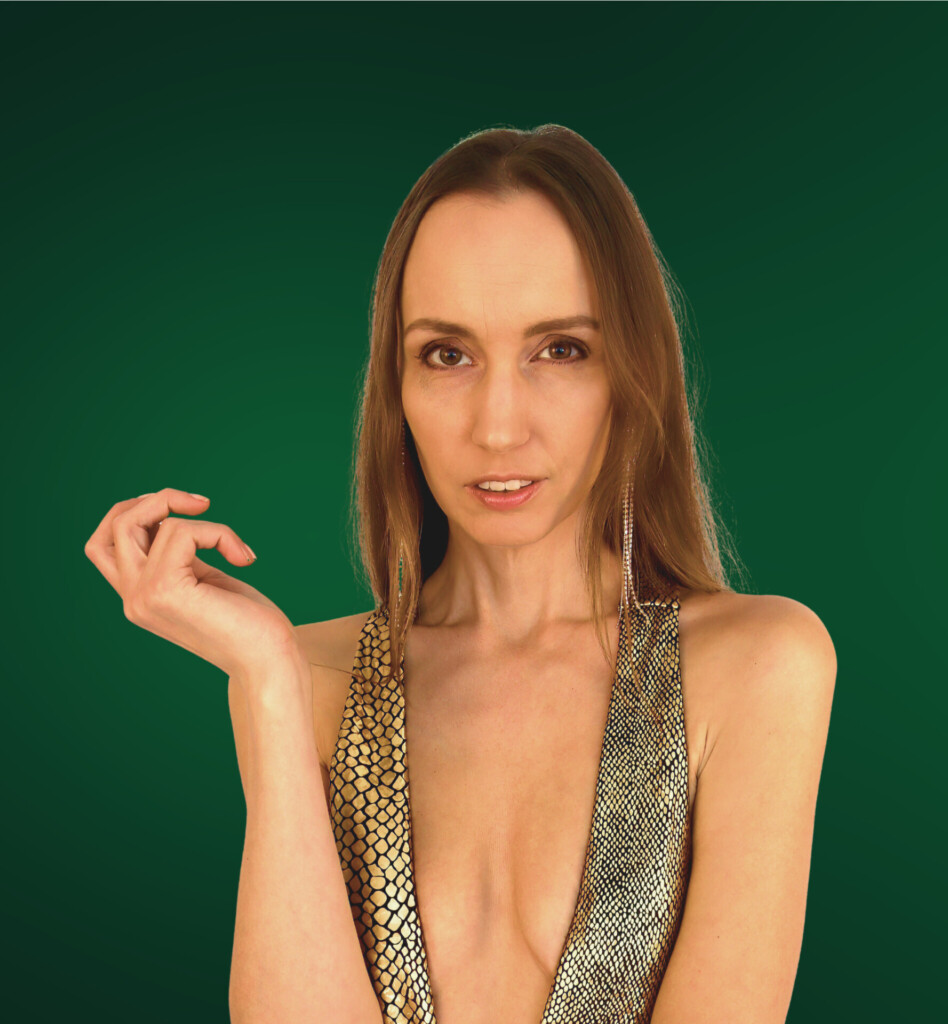
5. For most artists, originality is first preceded by a phase of learning and, often, emulating others. What was this like for you? How would you describe your own development as an artist and music maker, and the transition towards your own style, which is known as EDM?
GINAxC: I’ve always loved dancing to EDM—it’s been part of my life for as long as I can remember. But I never imagined I could actually be an EDM artist. I used to believe my voice was too light, too emotional, too fragile for the genre. I’ve always leaned toward mid-range ballads when singing, where I felt most at home. But then I thought, hey—Kylie Minogue has a soft voice too, and I think she’s incredible. So why not me? I started embracing the emotional side of my voice rather than focusing so much on technique. I know my strength isn’t in vocal power—it’s in emotional delivery. Bringing that into EDM creates something a little different, a little unexpected. But this is my creative expression, and I love it. So why not just go all in?
6. Music often transcends entertainment. What’s your view on the role and function of music as political, cultural, spiritual, and/or social vehicles – and do you try and affront any of these themes in your work, or are you purely interested in music as an expression of technical artistry, personal narrative, and entertainment?
GINAxC: I don’t sing to influence society at large, and I don’t create for political reasons. I make music to express myself—because I need to. And I know there are others out there who wish they could express themselves more freely, too. Especially women. Women are often told they’re too much—too angry, too emotional, too talkative, too loud. So I sing for the women who are tired of shrinking themselves. I want to reclaim emotional space, to show that we’re allowed to feel, to speak, to be—without having to apologize for it. So while my music is rooted in my own experience and personal expression, it also holds space for others to feel seen, heard, and validated—or to interpret it in their own way. That, to me, is where the real power of music lies.
7. Do you feel the rewards of your musical career match the energy and passion you invest in it, or are there different kinds of fulfillment you’re still seeking?
GINAxC: As a songwriter, I’ve come to a point where I already feel deeply rewarded the moment a song is finished. There’s this rush of joy—a kind of emotional release—where I feel like I’ve gotten something out of me that needed to be heard. That alone is powerful. But then comes the second part: the need to share it. That’s why I’m currently working hard to book gigs that will allow me to reach as many people as possible. I want to connect with others through that same energy—to make them feel something, too.
I also dream of writing lyrics for other artists—especially for those who might not yet know how to tell their own story. I don’t just want to be the artist on stage. I want to help others put their emotions into words and bring them to life through music.
8. Can you walk us through your creative process? From the first spark of an idea to the finished track, what’s the most essential part of your process, and how do collaboration or external influences shape your work?
GINAxC: My creative process usually begins with a spark—something I’ve experienced, seen, or heard about in someone else’s life. That emotional trigger often leads me to write a couple of lines, and quite often, I start with the chorus. I like beginning there because it captures the raw intensity of that first emotional reaction—before it has time to settle or fade. As I write, I hum melodies to find the natural rhythm and mood of the lyrics. Sometimes I’ll work with a loop—one I’ve created myself or received from someone else—and I listen to it on repeat, letting it play out like a movie in my head. Then I just describe what I see: what’s happening, what’s felt, what’s next. I don’t produce the final tracks myself, but I do shape the sound from the beginning. I often send a loop to the producer to set the tone, along with a vocal demo that outlines the melody and vibe. I’ve developed a great creative partnership with a Spanish producer who really understands my artistic language. And I also work with an Italian vocal editor who has helped bring my songs to life—someone who truly gets my vision. But everything always starts with a feeling—an emotion, a story, a heartbeat. That’s the core of every track I write.
9. What’s been the most challenging hurdle in either your personal life or music career, and how has it shaped you as an artist?
GINAxC: One of the biggest challenges for me has been reconnecting with the confidence to stand on stage. As a child, I had no fear—I would sing in front of hundreds without blinking. But during my teenage years, I went through a lot. In middle school, I was often bullied just for being myself. Some people couldn’t handle that I had dreams, like wanting to become a model, and they made sure I knew it. I was called horrible names just for daring to stand out. That experience broke something in me, and it took many years to rebuild it. As an adult, I’ve had to look back at the girl I once was—full of energy, mood, sparkle—and learn to let her live again. I’m still on that journey, but I’m proud of how far I’ve come. Another challenge has been learning to embrace my own voice. I used to think it was too light, too weak, not “perfect” enough. But I’ve started to realize that perfection isn’t the goal—honesty and authenticity are. I may not sing like everyone else, but I’ve stopped trying to. Instead, I’m learning to find the best in my voice, to write songs that fit me, and to celebrate my uniqueness. That shift has changed everything.
10. On the flip side, what moment or achievement in your career so far has made you feel the proudest, and why? And let’s talk about your latest release and future plans.
GINAxC: Every single time I release a new song, it feels like a huge achievement. It’s not just a track going live—it’s a piece of my heart finally being shared with the world. And every time a radio station plays my music, especially a new one, it feels like magic. It means someone out there heard my voice and thought, “Yes, this deserves to be heard.” Even when just one person subscribes to my TikTok, Instagram, or YouTube—it’s a success. Every single person who connects with what I do matters deeply to me. It’s not about numbers, it’s about connection. My latest release is called Secret Little World—a mysterious summer pop song about unspoken feelings and private moments. My next single Dopamine Rush comes out on May 16th, and it’s a sultry, energetic electro-pop track. I have many exciting ideas for what comes next—but for once, I’m allowing myself to take it one step at a time, and actually enjoy the journey.
11. With social media having a heavy impact on our lives and the music business in general, how do you handle criticism, haters, and/or naysayers in general? Is it something you pay attention to, or simply ignore?
GINAxC: Personally, I don’t take it to heart. I know that a lot of people just throw out comments without thinking. I went through a lot during my teenage years, so I’ve developed a pretty thick skin. I’m used to negativity—it doesn’t shake me. I just shake it off and move on.But I do worry about the younger generation. Many of them haven’t found themselves yet, and they’re faced with a flood of meaningless hate that can really hurt. It’s sad, because so much of it is baseless and completely unnecessary. As for me—I know who I am. I’m 40 now, and honestly… why would I care what someone else thinks? Haters gonna hate. I’m here to do my thing, fully and unapologetically.
12. Creative work in a studio or home environment, or interaction with a live audience? Which of these two options excites you most, and why?
GINAxC: When my energy is lower, or I’ve just experienced or heard something that inspires me, I love being in the studio. That space allows me to process, create, and pour everything into a song. But once that’s done—once I’ve released that emotion—I long to connect with the audience and share the feeling in person. Listening to music alone is intimate; we interpret songs through our own lens, our own life. But seeing an artist on stage adds a new dimension—it can shift your perspective, transform your emotions into something more than just sadness, frustration, or joy. That shared energy becomes something bigger. I truly love performing, especially when I know it can inspire others to take space for themselves. It’s not just about the stage—it’s about life. About daring to be yourself, even if it means not being loved by everyone. Because that’s when you have the best chance of truly being loved—for who you really are.
13. Do you think it is important for fans of your music to understand the real story and message driving each of your songs, or do you think everyone should be free to interpret your songs in their own personal way?
GINAxC: For me, it’s not necessary for the listener to understand exactly what I meant. Once I’ve released a song, I know what it’s about—I’ve had my moment to express, to feel, and to say what needed to be said. When the song enters the world, it no longer belongs solely to me. It becomes the listener’s. They get to place it into their own life, attach it to their own experiences, memories, and emotions—right where they are, in that moment. I believe lyrics are incredibly important. They can hold poetry, riddles, raw honesty, and emotional explosions. But once the song is out there, the listener’s journey with it matters more than mine. I’ve already lived my story while writing it. Now, it’s theirs to feel.

STAY IN TOUCH:
FACEBOOK | INSTAGRAM | SPOTIFY | TIKTOK | WEBSITE | YOUTUBE
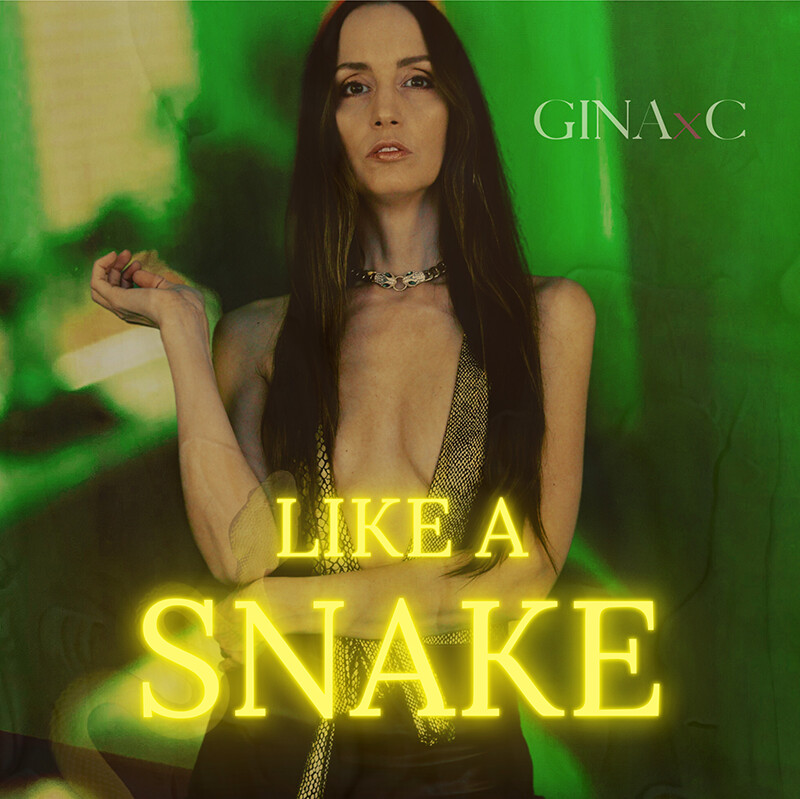
Photo credits: Linus Cinnamoni