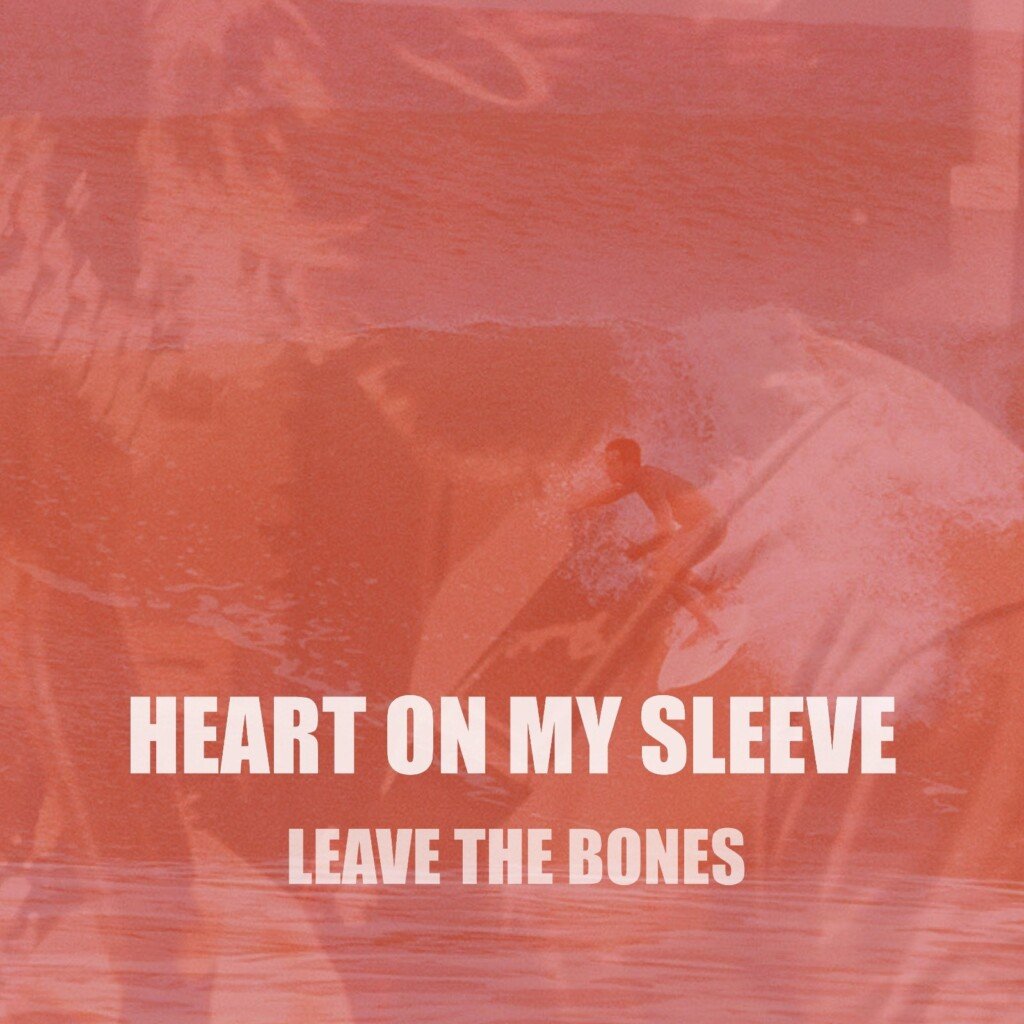
Jeremy Bogen is a Costa Rica-based surfer, songwriter, and former humanitarian storyteller behind the ambient-folk project Leave The Bones. Blending the words of folk, the vibe of Americana, and ambient indie-folk, his music sounds like a journey through every place he has lived, from the wind-stripped plains of Minnesota and snow-salted streets of Chamonix to the Pacific-kissed shores of Santa Teresa. Ahead of the release of his defiant, swagger-filled single “Heart On My Sleeve”—which channels the myth of the crossroads and features a stripped-down, voice-and-Telecaster breakdown honoring the friends and places that shaped him—we caught up with Jeremy to talk about writing songs like a form of survival, learning to accept the unknown, and what it means to truly earn the right to call yourself a folk singer. Check out the exclusive interview below:
1. Your roots can often shape your journey. Can you share a story or moment from your early life that had a significant impact on your path into music?
Leave The Bones: I really like this question, and it is one I have been asked quite a few times. In the Digital Music News interview, I talked about having a vivid memory of the first time I heard Paul McCartney’s “Band on the Run.” The synth-like intro drops out into this warm acoustic-guitar strumming pattern.
But to be honest, what is funny is that I recently posted a video of myself playing a new arrangement of “Heart On My Sleeve” that I am working on for Jam in the Van on November 12. Someone left a one-word comment: “Arlo.” I loved that. I could not have asked for a better comment.
The truth is that, as a kid, I was probably more obsessed with and in love with Arlo Guthrie than anyone else. I loved the stories. Listening to him felt like listening to my dad talk to me, tell me stories and play guitar.
I thought about why she might have made that comment. Maybe it was because I told a little story and then gave this awkward look after something I said – the kind of look that says, “Did you really just fucking say that?” But when I watched the video again, I realized that I was essentially playing “Highway in the Wind,” just in a different variation.
That is funny because, if there is any folk song I have loved for as long as I can remember, it is Arlo Guthrie’s “Highway in the Wind” from the Alice’s Restaurant record.
2. Did your musical journey begin with formal training, or was it more of a personal exploration? How has that shaped your unique approach to your craft?
Leave The Bones: Well, yeah. I’m laughing because, if you ask my parents, I was exploring the world of music from the first Raffi videos they showed me. At least, I think they were Raffi videos. I very proudly use some photos of myself standing naked with Fisher-Price marching-band kits on top of my head and hanging around my neck, playing toy guitars and whatever else.
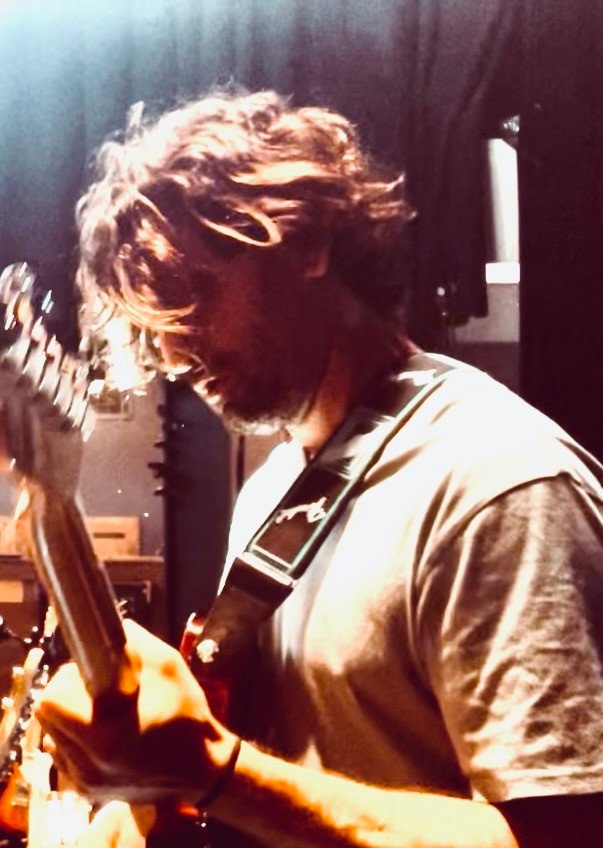
Then, of course, there was this old mahogany guitar that my dad had. Whenever I could sneak my way into the case and open it, I did. I can still remember the smell of that thing. It probably wasn’t a particularly expensive or even high-quality acoustic guitar, but I remember its all-brown mahogany and that smell. When I got my first Martin, a D-15M, the first time I smelled it, I was instantly brought back to crawling into my dad’s guitar case.
The long story short is that my mom told me the Suzuki guitar program in Minneapolis was really the only available option for children who wanted to begin playing guitar that young. I stuck with it from maybe first grade until I was about 14. I reached the point where I could read sheet music and even traveled to Chicago with a quartet of kids and our instructor, Alan Johnson, to play a concert. I remember playing “Greensleeves” and “Barcelona Nights,” I think the second song was called.
I think I eventually moved away from it because I wasn’t into classical music. I was into folk music and, at the same time, of course, Green Day, Nirvana and that kind of thing. That was the music I wanted to learn.
I quit classical guitar when I was probably 14. That was when I finally got an electric guitar and learned the pentatonic scales for the first time, although I mainly just wanted to know how to play power chords. I also wanted to learn the chords to Arlo Guthrie and John Prine songs and that kind of thing.
3. Who were some of the most influential figures in your early musical life, and how did they inspire your sound? Also, what’s the story behind choosing the name ‘Leave The Bones’?
Leave The Bones: Well, I grew up with parents who were in college in Madison, Wisconsin during the late ’60s and early ’70s. As I said, there was Arlo Guthrie and John Prine. They also had such an awesome record collection, with everything from the Nitty Gritty Dirt Band and Pure Prairie League to the Beatles. I loved the Beatles, and I loved the Paul McCartney and Wings CDs.
I started getting into Bob Dylan a little later. The first time I saw him, I was probably around 12. That was during the Time Out of Mind and MTV Unplugged years, which still have, for me, his best arrangements and the best band he had. I got to see him play at some outdoor summer concerts in Minnesota, and that really got me into Bob Dylan.
I also had an uncle, my Uncle Cliff, whom we spent a lot of time with, along with my mom’s sister, Paula. My uncle was an excellent harmonica player and always wanted to jam with me. We would play Dylan songs when I was around that age. He got me past being a fan of just the music and made me interested in Dylan as a person as well.
Generally, growing up in Minnesota was great because the music scene there, and throughout the Midwest, was really cool. Bands were always coming through, and my parents were awesome about taking me with them to shows. I remember seeing CSNY, which completely blew me away because I was obsessed with the Woodstock documentary. At one point, they all came out, sat in a circle like they had at Woodstock and played “Suite: Judy Blue Eyes.” It was ridiculous. Then Neil Young did his rock set. Oh my goodness, I will never forget that.
I think that was also the first time I smelled weed being smoked, which was interesting. My parents were cool. They just kind of shrugged it off. They also brought me to see Mark Knopfler, which was amazing. Then there was the local music scene, with bands like the Jayhawks, Soul Asylum and the BoDeans always playing during the summer, so I saw them a lot.
I think my sound is its own thing, but I only started recording songs when I felt like I was writing lyrics that actually meant something to me and could also mean something to other people without them knowing the actual story behind them. That happened when I started learning how to tell stories that were full of truth while not actually telling the truth at all.
Many different parts of my music come from the different genres I love. For instance, I am a huge fan of The War on Drugs, but in the same evening I might put on an old Bob Dylan record and then listen to A Deeper Understanding. It isn’t that I sat down and decided that I needed to combine those two things. For me, it is about having a warm acoustic bed with some warm, electrified ambience for everything to sit on top of. I guess that is what I aim for.
The story behind Leave The Bones is kind of funny because I still need to have a conversation about it with a good friend of mine named Zach Niles. Zach is an amazing filmmaker and music producer, and he manages a Haitian band called Lakou Mizik. He and I were working together on a campaign for the World Bank’s Global Partnership for Education four or five years ago when Lakou Mizik put out an album called Leave the Bones.
I said, “That’s a cool name,” and asked him what it meant. The meaning of the Haitian proverb really resonated with me. Then, when I was writing this music, the name just hit me. It resonated with me for a different reason, but I also connected with the mantra behind it: when you leave this place, take the best of me and leave the bones behind.
To be honest, I was also looking at some really messed-up, irresponsible development happening here in Santa Teresa. I thought, “These buildings are not being built to last.” I hoped that, when they eventually went away, they would at least leave behind the frames, or the bones of the places, so they could become monkey kingdoms like in The Jungle Book.
4. What do you believe sets your music apart? How would you describe your sound to someone discovering you for the first time, and what emotions or experiences do you hope to evoke in your listeners?
Leave The Bones: What sets my music apart? That is a really tough question, and I am not sure it is one I can give you a straight answer to. I can certainly dance around it, but that is not really my style.
What I find quite funny is that my music is now being reviewed and critiqued. I will stick to the critiques written by proper music critics and not just lay listeners on a power trip. Don’t get me wrong, there are a lot of amazing music critics out there who have playlists as well. Sorry, I am laughing again.
At first, I was so flattered when I kept hearing the word “authenticity.” Then I started to realize that maybe it was just a code word for “not AI.” Now I am a little bashful when it comes to sharing coverage or reviews of my music. My typical way of framing it is, “I agree with everything written here, except that I have no comment regarding authenticity.” That is not a question I can answer objectively.
I feel the same way about what sets my music apart. I think that is for other people to answer when they listen to it.
I started out talking a lot about wanting to earn the right to be called a folk singer and songwriter. That is still an aspiration, and I think it is now a lifelong aspiration of mine. But I also feel that I have crossed into a place where I can call myself a songwriter and a folk singer. That gives me a lot of joy.
Like I said, I am going to dance around the answer a little. There are people out there who are far better at this than I am and who have been doing it for 10 years, 20 years, 80 years or whatever. There are also a lot of people who call themselves folk singers and describe the music they play as folk. I think there is a misunderstanding that an acoustic guitar, a harmonica, a little wear and tear in the voice, or a story in the lyrics is enough to pass the test.
I hear a lot of music that feels like words for the sake of being words. That is not meant to discredit anyone as a musician, but I think the tradition of folk music requires people who are willing to live deep inside themselves and be truly honest in the stories they tell about themselves or what is happening around them, while still keeping something secret and hidden for themselves. It means telling the truth while not telling the truth at all.
My own music keeps evolving with every song, and I let it evolve based on the moment, the song and what is happening in the lyrics. I am finding a way to electrify a lot of the ambience in my music as a one-man band recording all the parts. I think there are a lot of people who can do that, so I don’t know whether it makes me unique. Who knows? I really can’t answer that question.
I think that question is better answered by the writers and the people who listen to the music, sit down with it and give it some thought.
5. For most artists, originality is first preceded by a phase of learning and, often, emulating others. What was this like for you? How would you describe your own development as an artist and music maker, and the transition towards your own style, which is known as FOLK?
Leave The Bones: Well, yeah. I think I answered some of that when you asked about how those influences shaped my sound. As far as the learning phase goes, I spent 15 years, in the end, living in Chamonix, France. For a big part of that time, I had a band with some good friends. We were basically the only show in town playing Neil Young, Tom Petty, Old Crow Medicine Show and that kind of thing. By the end, we had a huge set list that we could rotate through.
For whatever reason, I have always been able to memorize lyrics. I can still remember every word, whether it is a Neil Young song or a Stones song like “Sympathy for the Devil.” I don’t know why. I guess I learned a lot of classic songs that way, but I also started getting into other kinds of music.
For instance, when I heard “Skinny Love” for the first time, I had to learn it in that open C tuning, which I had never heard before. I then started playing certain songs from our set in open C. One arrangement that really stuck was “I’m on Fire,” which I eventually released as a cover. We would perform it as a medley, going from “I’m on Fire” into “American Girl” to close the show.
I think that was where I really started to understand the idea of shaping music I loved into my own thing. I guess it goes back to that love of a warm acoustic bed. It was really cool to finally record the version of “I’m on Fire” that we had been playing for so long, while still doing it a little differently.
When we played it as a band, we had an electric-fiddle player and a mandolin player, while I played harmonica and guitar and kept the rhythm in that open C tuning. Without really rehearsing much, we would somehow nail the main melodies of those two songs together using those different instruments.
Like I was saying, I guess the songs I write begin as folk songs. The fun part is making them into my own thing after the bones are down and finding the ambience I want to put behind them.
6. Music often transcends entertainment. What’s your view on the role and function of music as political, cultural, spiritual, and/or social vehicles – and do you try and affront any of these themes in your work, or are you purely interested in music as an expression of technical artistry, personal narrative, and entertainment?
Leave The Bones: Well, okay. This is one I could talk about for ages, but I’ll try to be brief and focus on two parts of it.
I am kind of spiritual about music. Even before songwriting found me, I always felt that music had this supernatural power to allow certain songs to find me when I needed them. The words, and the way the notes hit those words at the right moment, helped me feel better about things.
I remember that happening during my time in Chamonix, when I started losing friends in the mountains. I think it is natural that your mid-20s are when you first begin having to deal with death among your friends, but it started happening regularly. It isn’t something I write about in my music, but I know that music helped me through some painful times. The songs I needed somehow found me in those moments.
When it comes to music and politics, I am very much against music being leveraged or taken advantage of by one side or the other. At the same time, I think music will always have a place in helping people understand struggle and become aware of issues that we should all care about. I don’t think that depends on what your political beliefs are.
Bob Dylan put it better than I ever could in Martin Scorsese’s No Direction Home when he made the point that you don’t have to be political to be on the side of someone who is struggling. That is exactly where I think music sits in terms of its never-ending importance to politics and social issues.
I’m not really into entertainment trends, so I can’t say much about that. Maybe my least favorite part of music is seeing people who happen to be incredibly talented use music as something to hide behind while doing shitty things or supporting things that are unjust.
For me, music is one of the most beautiful and effective tools for building bridges between people from different places and cultures. The best people still doing it, like the Boss, who is just a forever legend, are continuing to rebuild bridges that people nowadays seem to find far easier to burn than to build. I have so much respect for that, and I hope my songwriting can evolve into that when I’m ready.
7. Do you feel the rewards of your musical career match the energy and passion you invest in it, or are there different kinds of fulfillment you’re still seeking?
Leave The Bones: Yeah. Well, I certainly wouldn’t be doing it if I didn’t think the lemon was worth the squeeze. But I guess that is a pretty nuanced question, right?
It is really funny because I was just so happy when songwriting found me, and I wrote a lot of songs in a short amount of time. We are talking about songwriting beginning around last February or March and now having written, I think, nine originals that have been fully composed, mastered and released.
I am incredibly proud of that because every one of those songs got that far because I felt the words and the music were worthy of it. Well, my wife liked them, so that was enough. My parents liked them too. Then it was really crazy when I started seeing that other people liked them because, honestly, what I write is deeply, deeply personal.
I do hope that I find a way to make the words resonate so they can find the right person at the right time in their life, when maybe they need them. If I am able to achieve that, it is incredibly rewarding.
I didn’t really have any ambition of even reaching the point where I would be doing an interview like this, but I guess that makes it even better, right? Now, yes, for sure, I am 41 and finding a new purpose in life. I think the work is reaching a level where I would like to put all of it into an album and find a label that I would really love and trust to work with, Oh Boy Records, for instance, to release it.
I also want to tell the story behind all these songs because I think it is an important story to tell for righteous reasons. Maybe it is a story that would make the next Mr. Peabody who comes to Costa Rica think twice. Sorry, I’m laughing.
When the first door opened for me to work with a small label on the release of the Fools Gold EP, I said to my wife, “You know what? If doors keep opening, I’m going to keep walking through them, and we’ll see where it takes us.”
For whatever reason, doors keep opening. The next one is this Jam in the Van performance in L.A. I want to go there and turn some heads, enough to make a convincing argument for finding a partner to keep this thing going.
8. Can you walk us through your creative process? From the first spark of an idea to the finished track, what’s the most essential part of your process, and how do collaboration or external influences shape your work?
Leave The Bones: Creative process. Sorry, but I am laughing as I think about this. This isn’t me being egotistical or secretive about anything, but I wouldn’t say that I really have a creative process. The words or the music come to me at moments when I least expect them, to be honest.
I write very quickly, especially during the songwriting part, which is funny. I guess those words have been buried deep down somewhere and have just been waiting to jump out. I wrote “Fools Gold” very quickly, maybe in 25 or 30 minutes, while sitting in my parents’ basement during a trip there. “Heart On My Sleeve” was the same. I wrote most of it in about 30 minutes on a rainy night.
I guess my inspiration, or my creative process, comes from not really planning to do it and having the words just come into my head. Usually, the words find me first. Then I have the real enjoyment of picking up the guitar and finding the music that goes with them.
After that, I get the stems down, pick up my Telecaster and start having some real fun with the ambience. I get the slide or the little lap steel I have and play with all the reverb and delay pedals. Then I challenge myself to see how long I can keep the right count going with something like a 30-second reverse delay. Sorry, I’m laughing again.
9. What’s been the most challenging hurdle in either your personal life or music career, and how has it shaped you as an artist?
Leave The Bones: Well, that’s an interesting question because the two are so intrinsically connected for me. As I mentioned, there is this fight that we chose to take on. Again, let’s just call him Costa Rica’s Mr. Peabody. Fortunately, it isn’t a coal company, just a wannabe property developer who literally said to me, while I was still trying to maintain good neighborly relations, “If people don’t like what I’m building, then they should go buy their own island.”
I said, “Well, I think you should express that sentiment to the locals who have been here for a while, or let’s just say to the locals.” Sorry, I’m laughing again.
Anyway, it has been hard. I have had to learn how to become a different person, one whom I can turn on and off. When you stand up to something like this, you are going against someone with an amount of money on the line that I cannot imagine ever having. I also cannot imagine using whatever money I do have to do what has been done here.
This is a story that I will eventually tell, but this isn’t the place for it. Let’s just say that it required a harder person, someone who had to become very comfortable with extreme discomfort, in the darkness and in the jungle. As you can imagine, when someone with money here wants to intimidate you into leaving, they can easily pay people to make you feel extremely uncomfortable and scared to the point that you do leave. I refused to accept that.
With that came a lot of sadness and a lot of anger. It is something we are continuing to fight in a very pragmatic and legitimate way, and I hope that it will soon have some sort of outcome. That won’t necessarily be the end of the story, but who knows?
What is interesting is that the songs started coming as this story unfolded. Not every song I have written, but close to the entire catalog, was written during this period. When this eventually becomes an album and I feel that it is time to tell the story behind it, I think the lens through which people listen to these songs will certainly change.
If you dig into the lyrics of my latest song, “Heart On My Sleeve,” you can begin to see some of it. I spoke about this in another interview when they asked why I dip into crossroads mythology. Going back to the creative process, I’ll run you through how that happened.
I was sitting next to the kitchen while my wife was cooking on a rainy evening. Actually, to be honest, we had a friend over, another musician and a friend of my wife’s from Patagonia, Argentina. She said, “Sing me a song,” but I thought she said, “Write me a song.” I thought she was challenging me, so I just said, “Okay.”
I looked outside and said, “Rainy nights aren’t what they used to be.” Rainy nights had always been my favorite kind of nights because they were so peaceful. Then I looked down at my knees and saw the scars from my ACL surgeries and all my years of having fun skiing in the mountains. I thought about how the biggest scars on my body were actually from a life of peace.
That brought me to this hardened person that I needed to have inside me. For whatever reason, it brought me to the idea of the crossroads. Almost sadly, the crossroads aren’t a mythical place for me anymore. They are a place that has had to become part of me.
At the same time, I was thinking, “You’ve written a lot of songs about looking for perspective, maybe with defiance and by finding silver linings, but they are still songs that look backward. I want to look forward. I’m writing a song now.”
The crossroads might live inside me now, and I have to live with that, for better or worse, although I think mostly worse in this context. But then I thought about the Mr. Peabody in this story and the fact that I did shake hands with the devil, and I certainly did it with an ace up my sleeve. I don’t need to go any further into that part. Hopefully, the story will eventually tell that part itself.
These aren’t just words from musical mythology or folklore. They are literally me telling the truth without telling the truth at all. On one side, this has been one of the most challenging experiences of my personal life, if not the most challenging. At the same time, it is where I went to the crossroads and tried to make my peace with it through music, which became my outlet.
10. On the flip side, what moment or achievement in your career so far has made you feel the proudest, and why? And let’s talk about your latest release and future plans.
Leave The Bones: Well, this ties back to the last question, I guess. If you ask my mom, I have been a musician my whole life. But I would say that I became an artist when I started releasing music publicly with my name behind it and decided, for whatever reason, to promote it. I really had no plan for it to do anything.
I can’t point to one achievement and take credit for it. I think the fact that doors keep opening as I continue putting out new music represents a series of baby-step achievements toward what I hope will eventually allow me to do this for an actual living. I feel that perhaps this is what I was born to do.
The real achievement is that this crazy experience over the last couple of years has taken pieces of me away and has been very difficult, but I have been able to channel it into something I always wanted to do, which was to write and make my own music that would always be around.
I never thought it would be for anyone beyond my family. My real ambition was to write enough songs for an album and print about a dozen copies on vinyl to give to them. In that sense, my goal has already been achieved.
But I guess my eyes are looking a little starrier than before, and that is okay. I think it is a righteous goal to have, and I don’t feel that it has affected the way I write songs in any way. In fact, it has provided a newfound purpose and a newfound challenge. I need to continue rising past what I thought the peak of my ability was and begin doing things at a standard that would allow me to make a living from this. That is a righteous goal that I proudly stand behind.
We’ll see what happens. The next stop is Jam in the Van in L.A. on November 12, and I am working really hard to go there, play three songs and properly turn some heads with the songs and the performance.
I think the songwriting and the songs have been hitting in a way that feels promising. Now it is time to prove that I am a performer as well. I have been a performer for much longer than I have been a songwriter, so now it is about combining those two things. I love playing live more than anything.
This is truly a once-in-a-lifetime experience, so let’s see how it goes. It is a fun challenge to have. I like the adrenaline rush of it too. Sorry, I’m laughing again.
Thank you for these questions. These are really interesting things for me to have to contemplate.

STAY IN TOUCH:
INSTAGRAM | SPOTIFY | TIKTOK | YOUTUBE