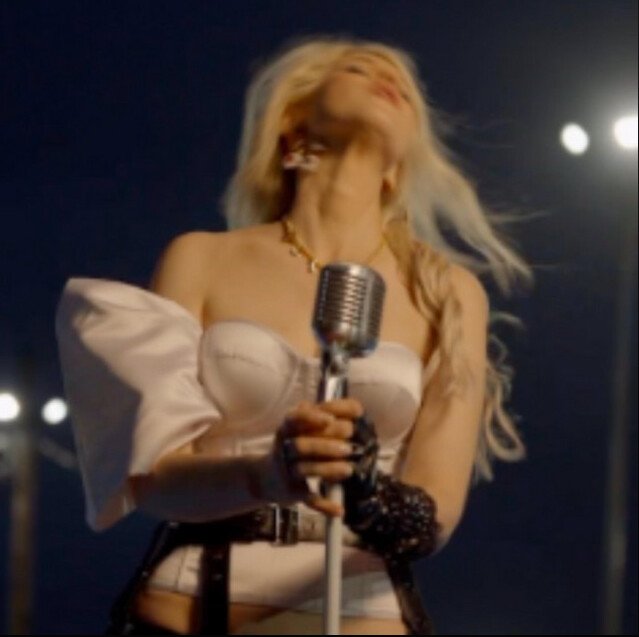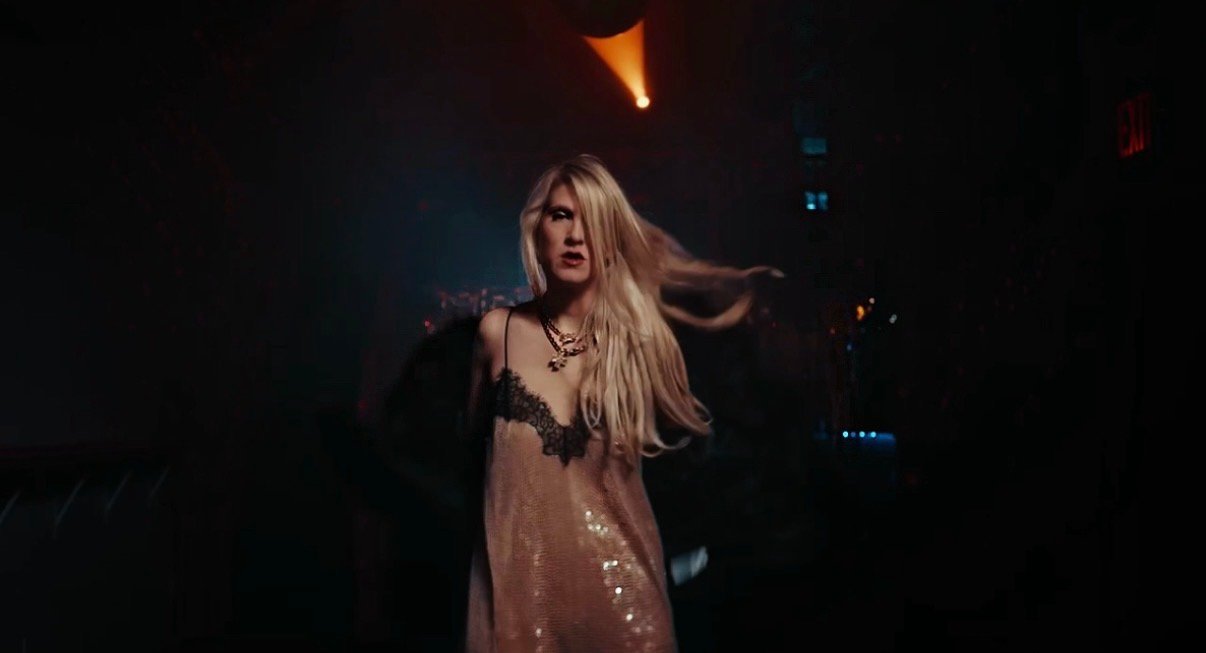
Loren Wylder delivers raw honesty with a pop punk rock edge that feels both timeless and unstoppable. Raised in Gainesville, Florida, on Tom Petty and her German family’s Oktoberfest anthems, she grew up with big hooks, open-road choruses, and the feeling of freedom at full volume. Classically trained on violin from age five, she brings discipline and emotional depth to songs built for the moment when a chorus becomes everyone’s. In 2025, she received the Rising Star Award at the New York City International Film Festival for her music video Just Drive! Check out the exclusive Interview below:
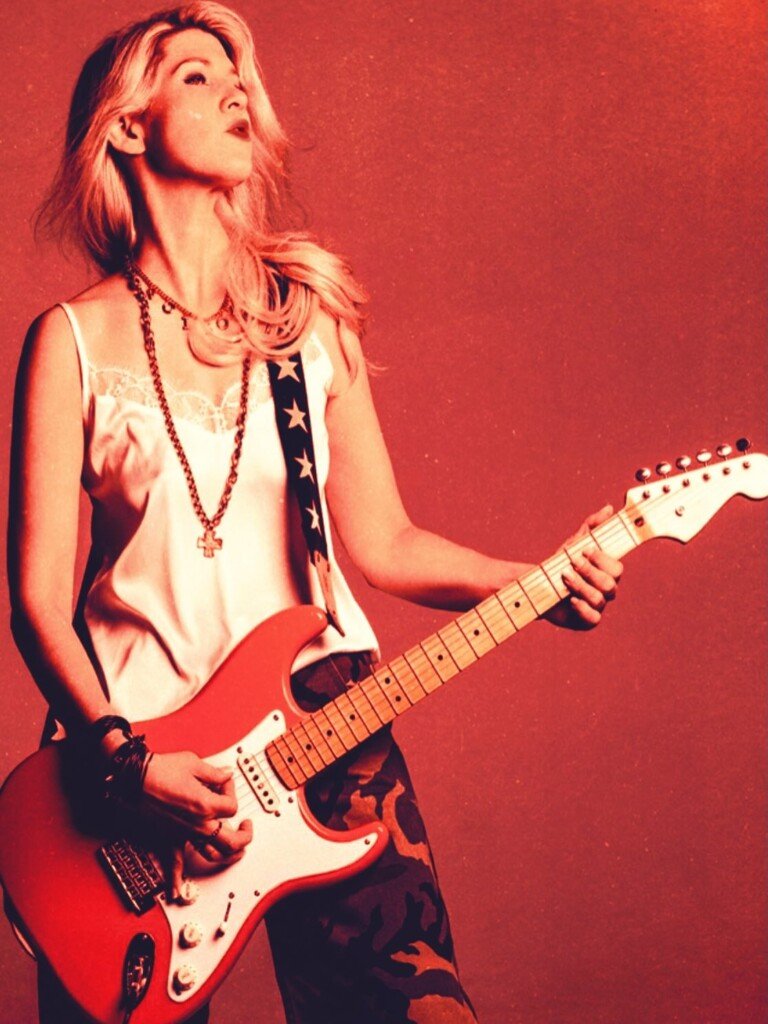
- Your roots can often shape your journey. Can you share a story or moment from your early life that had a significant impact on your path into music?
LOREN WYLDER: I grew up in a very musical family – everyone sang or played something, and holidays were centered around the piano, Partridge Family-style. I also spent a lot of time at my great-grandparents’ house, where there was a room we called the “pink room.” It held two family baby grand pianos, and I grew up listening to my great-grandmother and grandmother play them. I took a few lessons, but more than anything, I would sit at the piano for hours writing songs on my own.
The room itself was completely Pepto-Bismol pink – the carpet, the couch, everything. My great-grandfather had an extensive vinyl collection, and there was an attic full of vintage clothes from the ’70s. There, I discovered my mom’s hidden KISS records – there was something forbidden about them, but I loved studying the covers. We’d watch old films and musicals together, and the next morning I’d go into the pink room and recreate what I had seen – directing full productions with my sister and cousins, experimenting with costumes, and turning it into something of my own.
Film also became a kind of escape for me. I was drawn to the worlds inside movies – how they were built, how they transformed reality – and that fascination stayed with me. Eventually, it led me to New York City. I wanted to step inside those worlds and be part of creating them.
I started taking violin lessons at five – I wasn’t allowed to play drums, which probably says something about the kind of energy I had early on.
That combination of music, film, and performance all happening at once really shaped how I create now.
- Did your musical journey begin with formal training, or was it more of a personal exploration? How has that shaped your unique approach to your craft?
LOREN WYLDER: It was really both. A lot of it started as personal exploration – writing at the piano and building things intuitively – but there was also formal training layered in alongside that.
I started violin at five. My mom asked me to pick an instrument, and I chose the drums – but that wasn’t an option, so I ended up with violin instead. Later, I added piano in high school, and that’s when everything shifted to vocals. I was in a lesson singing along to a demo track, and my teacher stopped the music because she thought the demo vocal was playing – she didn’t realize it was me.
After that, we shifted focus to voice, and I went on to study privately with a university-level vocal director through an audition-based program.
That mix of structure and independence shaped how I work now. I’m always focused on whether the performance feels alive.
- Who were some of the most influential figures in your early musical life, and how did they inspire your sound? Also, what’s the story behind choosing the name ‘LOREN WYLDER’?
LOREN WYLDER: My influences came from both the people and the music I grew up around. Tom Petty was a big one – he’s a hometown hero, so Free Fallin’ was always playing. There’s something about the simplicity and emotional clarity of his writing that really stayed with me. My mom had artists like Journey and Lynyrd Skynyrd in the car, so that sense of big, emotional rock was part of my foundation.
At the same time, I grew up between very different musical cultures. In Cologne, there’s an annual carnival where people write songs for the city, and that tradition of communal music-making is a huge part of the culture. There’s not a family gathering where something like “Viva Colonia” doesn’t get played. That idea of music as something shared and lived in – not just performed – really stayed with me.
My great-grandfather introduced me to a different kind of listening. We would sit with his cassette collection – Frank Sinatra, Tony Bennett, Dean Martin – and really focus on the songs. He always cared about the lyrics, and we used to debate whether people remember the music or the words. That tension still shapes how I think about songwriting.
Later, being in Gainesville during the pop-punk and alternative surge added another layer – bands like Fall Out Boy and Florida’s own Yellowcard made it feel immediate and possible.
The name “Loren Wylder” came from wanting something that felt true to me but translated more clearly. “Loren” is a simplified version of my birth name, and “Wylder” felt like a statement – active, a little untamed, and rooted in that all-American rock ’n’ roll energy. Together, it represents both the person and the world I’m building around the music.
- What do you believe sets your music apart? How would you describe your sound to someone discovering you for the first time, and what emotions or experiences do you hope to evoke in your listeners?
LOREN WYLDER: What sets my work apart is that I approach it as cinematic storytelling rather than just a song. Each release is built as a visual and emotional arc, where the music, imagery, and performance are all part of the same narrative.
Sonically, I’m interested in bringing the past forward in a way that still feels modern and alive. A lot of these songs act like portals for me – almost like sonic time machines – pulling from older influences but recontextualizing them so they feel immediate and fun to experience now.
I’m not just thinking about how something sounds – I’m thinking about how it moves, how it looks, and what it reveals or withholds. I want people to feel like they’re stepping into a moment that’s unfolding in real time – something immersive, where the emotional shift happens as much through what’s seen as what’s heard.
- For most artists, originality is first preceded by a phase of learning and, often, emulating others. What was this like for you? How would you describe your own development as an artist and music maker, and the transition towards your own style, which is known as ROCK?
LOREN WYLDER: For me, that phase of learning wasn’t just about music – it was about studying how things are built. I spent as much time watching films as I did listening to songs, paying attention to pacing, tension, and how a moment lands visually.
Even as a kid, that instinct was constant. My sister and I would play this game on vacation where we’d “cast” random people around us into films – imagining who Alfred Hitchcock would choose as a character or an extra. We were always looking for story and character. There really wasn’t a moment growing up where I wasn’t thinking about music and film at the same time.
As I started creating my own work, I wasn’t interested in separating those worlds. The music and the visual were always developing together, so instead of imitating one influence, I was pulling from multiple directions and shaping something cohesive.
The move into rock came naturally from that. My voice and energy needed something that could carry weight and scale, and rock gave me that foundation. It allows the performance to feel physical and expressive, which is essential to how I work both as an artist and as a director.
- Do you feel the rewards of your musical career match the energy and passion you invest in it, or are there different kinds of fulfillment you’re still seeking?
LOREN WYLDER: I’ve never really approached it in terms of rewards versus effort. For me, this has always been part of how I live. Even growing up, it was about getting everything else out of the way so I could create – filming, experimenting with visuals, and building a world around the music.
The ultimate fulfillment is having a vision and being able to bring that vision to life.
What matters most to me right now is having the space to focus on that. Financially, it’s still building, but there has been meaningful recognition along the way, including the Rising Star Award at the 2025 New York City International Film Festival and a Semi-Finalist placement in the International Songwriting Competition for the Just Drive music video – both received prior to release.
That kind of recognition tells me I’m moving in the right direction, even as everything continues to grow.
- Can you walk us through your creative process? From the first spark of an idea to the finished track, what’s the most essential part of your process, and how do collaboration or external influences shape your work?
LOREN WYLDER: It usually begins with a visual or emotional concept rather than just a melody. I tend to work in a collage mindset – sometimes literally building a mood board, other times just collecting fragments as I move through the world. It might be an outfit, a feeling, or a piece of music – something that captures a tone I want to hold onto.
From there, I look at what I have access to and start shaping what’s possible. The story is usually very clear in my head, so I don’t rely heavily on traditional storyboarding. I’ll map out key moments, but I leave room for things to evolve rather than forcing exact shots.
The same applies to the music. I often know where the energy needs to lift, where a guitar should come in, or how a section should return – it’s about building momentum and emotional movement rather than following a rigid structure.
Collaboration helps expand the scale, but the most essential part of the process is maintaining that original feeling all the way through. Everything – sound, performance, and visual – has to stay aligned with that initial spark.
- What’s been the most challenging hurdle in either your personal life or music career, and how has it shaped you as an artist?
LOREN WYLDER: One of the biggest challenges was going through a long, eight-year divorce, much of it during COVID. Court was constantly rescheduled, and I had to build a life inside ongoing uncertainty about the outcome. At a certain point, it became less about waiting for resolution and more about deciding how I was going to live now – how I was going to respond to it.
For me, that meant choosing to move forward, to “Laugh Louder! and Live Wylder,” and to embrace transformation on my own terms.
That experience taught me a level of persistence that’s necessary in the music industry, where there often isn’t a clear path or immediate validation.
What it ultimately showed me is that there isn’t a perfect moment to begin. I stopped waiting for things to feel settled and just started creating again, more seriously and with more intention.
That’s shaped how I work now. I don’t wait for ideal conditions, and I don’t take the process for granted. A lot of what I create is rooted in forward motion – figuring things out as you go and continuing anyway.
- On the flip side, what moment or achievement in your career so far has made you feel the proudest, and why? And let’s talk about your latest release and future plans.
LOREN WYLDER: One of the moments that meant the most to me was hearing that my cousin and his kids sing Just Drive every morning on their way to school. That felt incredibly full circle, because the song itself comes from those kinds of memories – driving with family, where music, movement, and connection all come together.
Growing up, cars always felt like little portals to me – places where memories are made and where a song can take you back instantly. So knowing that something I created is now part of their daily lives, and part of their memories, means more than anything else.
Just Drive is a self-directed cinematic music video that explores themes of illusion, control, and transformation. It draws on classic cinematic language – from the elegance and tension of To Catch a Thief to the illusion-shifting structure of The Wizard of Oz – layered with a live performance energy rooted in rock iconography.
The Cadillac functions as a symbolic anchor throughout the piece, carrying the character through shifting realities, while familiar romantic and fairytale cues are intentionally inverted – turning what begins as a classic arc into something more fractured and self-aware.
Moving forward, I’m continuing to build in that space – where music and film operate as one unified language.
11. Do you think it is important for fans of your music to understand the real story and message driving each of your songs, or do you think everyone should be free to interpret your songs in their own personal way?
LOREN WYLDER: I build each piece with multiple layers, so it can be experienced in different ways. If someone just wants to listen, they can connect to the feeling and the energy. If they want to go deeper – into the lyrics, the visuals, and the underlying narrative – that’s there as well.
I’m very intentional about what I put into the work, but I’m not interested in controlling how it’s received. The meaning isn’t fixed – it shifts depending on who’s experiencing it and when. That’s what keeps it alive and exciting.
At its best, my hope is that the work meets people where they are and leaves them feeling more uplifted and empowered than when they found it.

STAY IN TOUCH:
INSTAGRAM | SPOTIFY | YOUTUBE