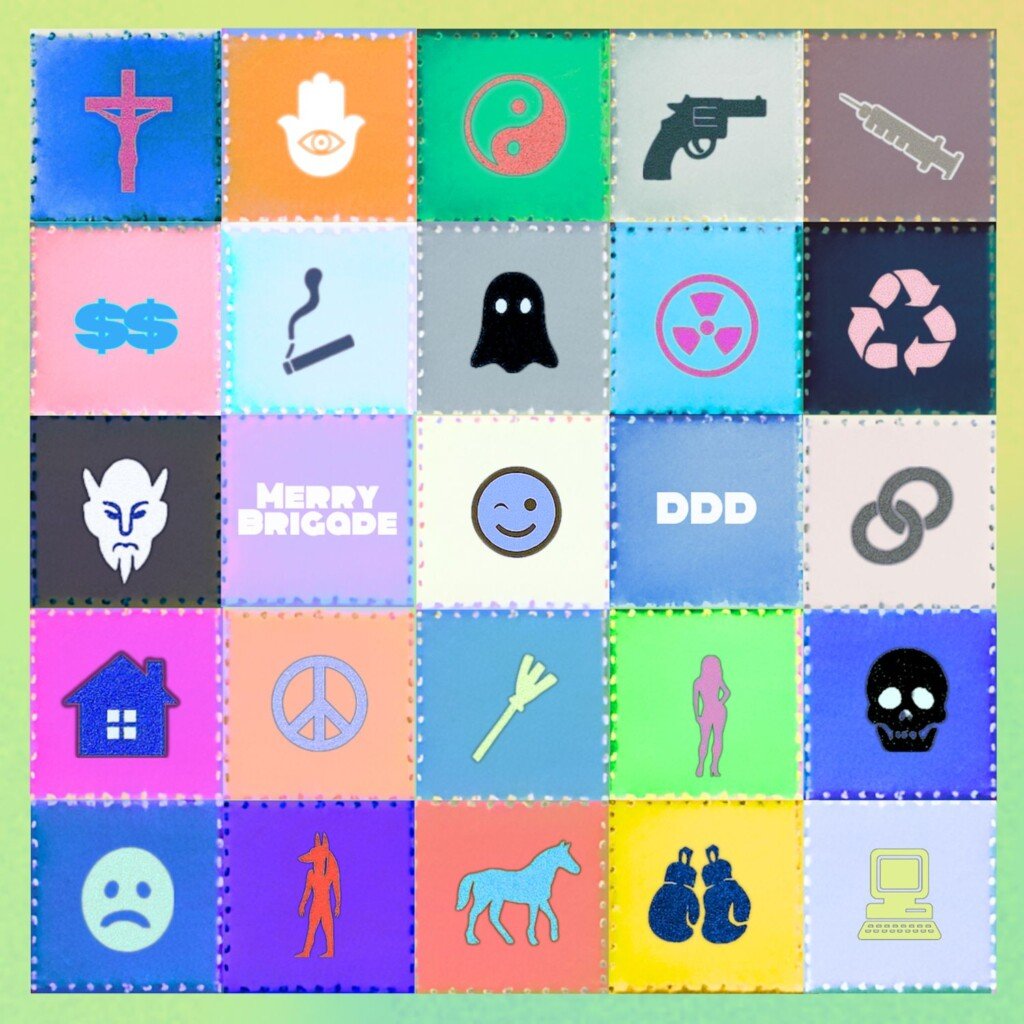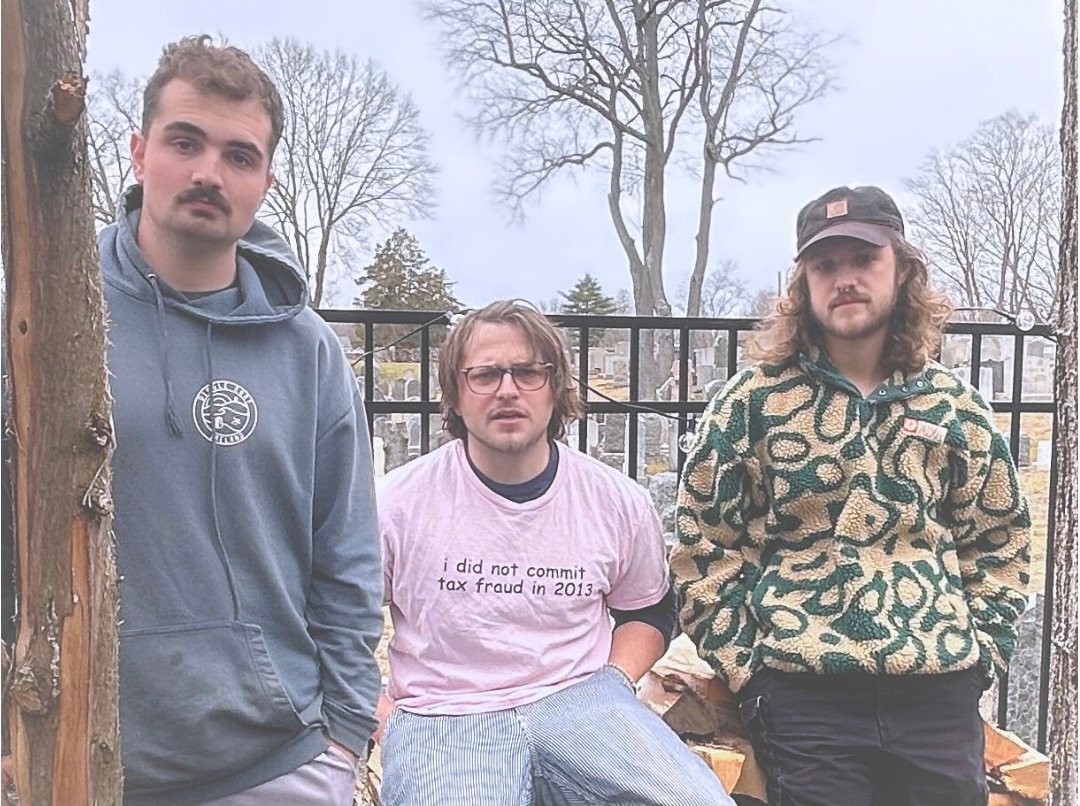
Merry Brigade is the indie rock/post-hardcore hybrid brainchild of Boston based musicians/landscapers Joe Love and Ben Chase. After the demise of several prior projects, Chase and Love regrouped to devise a new sound with a softer touch and a more experimental palette while maintaining the spirited punk edge they honed in the depths of Boston’s dive bars and basements. Merry Brigade (the affectionate nickname for Love’s group of friends), combines off the wall rhythms with sweet, haunting melodies, devastatingly introspective lyricism, and dynamic guitar work; delivering a sound that at once recalls many of the great alternative and experimental folk/pop acts of the past (Soundgarden, Jeff Buckley and Animal Collective, come to mind) while offering a fresh and innovative take on rock music. “Suburban psychedelia through a broken lens”, Love puts it; Merry Brigade is an emerging, unique talent that redefines authenticity in the world of rock music. Check out the exclusive Interview below:
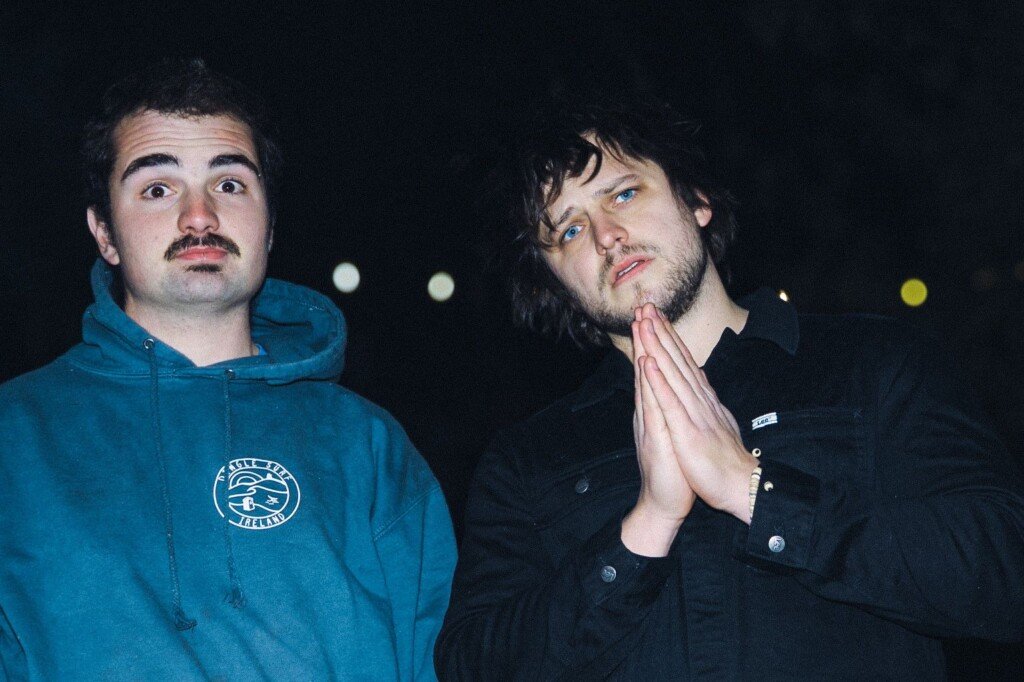
1. Your roots can often shape your journey. Can you share a story or moment from your early life that had a significant impact on your path into music?
Ben: There wasn’t any specific moment for me but music was always something that was inside of me. When I was a toddler, I would run around the house playing the air guitar on a yardstick and before I could even walk I would bang on my high chair so much that my parents would have to drag me out of the room because I wouldn’t stop. People all the time talk about when they “got bit” by the music bug and they usually say it’s somewhere in their teenage years but I think I got bit in the womb.
Joe: I remember hearing Led Zeppelin when I was in 4th grade and being in my neighbor’s house, he was the only kid I knew with guitars and drums, and I remember thinking to myself that I couldn’t wait to be 25 years old because (I thought) I would be able to sing like Robert Plant or Jim Morrison, which is kind of strange that I just arbitrarily selected 25 as if it’s the defining age of a musician. Weirdly, I only started more seriously pursuing music at 25. My 10 year old insight was pretty good. Also worth mentioning is that my dad is a professional trumpet player. He played on a Broadway tour in Europe, and I always thought that was so cool, and always wanted to tour like he did.
2. Did your musical journey begin with formal training, or was it more of a personal exploration? How has that shaped your unique approach to your craft?
Ben: I took guitar lessons from age 5 till age 18. I took drum lessons for a few years and hated them so much that I actually quit playing drums all together when I was 12 and didn’t start playing again until I was 15. At that point, I started teaching myself and learned that for me, the self taught process is the best way to learn anything. There is no right or wrong way to do things, it’s really whatever feels most comfortable to you. The drum teachers that I had for over three years made me hate the drums because every lesson was an hour of getting told that I was playing completely wrong and that I needed to spend more time learning how to read sheet music. At the end of the day, I learned nothing from them except the fact that taking lessons is a waste of time and money. When you teach yourself something, you can focus on the aspects of it that you want to learn how to do and leave all the other bullshit in the dust.
Joe: I took piano lessons for a few years growing up but my piano teacher really didn’t like that I didn’t want to use sheet music and preferred to learn by ear. That was seen as “lazy” for some reason, eventually I stopped taking lessons because I didn’t want to play classical pieces, I was trying to learn songs by the Doors and my teacher was not feeling that. Then throughout high school and college I would write riffs and chord progressions on guitar with my good friend Jake. We’d show each other alternative music and the weird music we came up with. It was really organic and authentic, we were just doing it to entertain ourselves. Most of the journey to learning how to play music was through listening to music, not playing.
3. Who were some of the most influential figures in your early musical life, and how did they inspire your sound? Also, what’s the story behind choosing the name ‘Merry Brigade’?
Ben: The Beatles, The Police, Foo Fighters, Nirvana, Smashing Pumpkins, Zeppelin, Metallica, Green Day, Soundgarden, Grateful Dead, Rage Against The Machine. What can I say other than they all have great drummers.
Joe: The Beatles, Soundgarden, My Bloody Valentine, Sonic Youth, Nirvana, Led Zeppelin, Metallica, Tower of Power, Sugar Ray, Nick Drake, Mac Demarco, Animal Collective, Nat King Cole, Vampire Weekend, When Saints Go Machine, Tame Impala, Fleet Foxes, The Radio Dept, Washed Out (and that whole chillwave movement) had a big impact on me early on. I think the combination of those influences led me to a never ending quest of trying to balance obscurity with accessibility.
4. What do you believe sets your music apart? How would you describe your sound to someone discovering you for the first time, and what emotions or experiences do you hope to evoke in your listeners?
Ben: I’ve played in dozens of bands for years and been playing shows since I was 10 and the common theme that you always see in bands is the fact that no one takes songwriting and singing as seriously as the instrumentation. Then enter Joe. I’ve never heard anyone write songs like he does and I’ve also never seen someone take songwriting and singing so seriously. Your average songwriter is some dude who has played guitar for years and wants to start a band to mainly play guitar so they cobble together some half assed songs, find some other musicians, and off they go. But, it’s always pretty clear that they take their guitar playing very seriously and the singing and songwriting is just an afterthought. However, with Joe, his guitar playing takes a backseat and his songwriting and singing abilities take priority. There’s only a few other bands on the local level that I can point to that take their songwriting and vocals seriously and they are doing well right now. To me that is what sets us apart. The songwriting is very well done and thought out and Joe puts a lot of effort into the lyrics and the emotional aspect of each song.
Joe: I think where we really shine is the authenticity of our music. What you hear is who we really are, what we really feel, and what we have been through. We’re not technical virtuosos, so all we really have is our ability to communicate who we are. Our music is a direct representation of who we are, what we believe, our personalities, our struggles and tastes. There’s nothing worse than when you hear a band and they sound one way and then get off stage and act another way. A lot of bands are so desperate to fit a certain sound or aesthetic that they completely misrepresent themselves as humans, and I think that’s just the wrong way to go about it. I think the best advice that any musician can ever hear is “be yourself”, and that’s exactly what we do well.
5. For most artists, originality is first preceded by a phase of learning and, often, emulating others. What was this like for you? How would you describe your own development as an artist and music maker, and the transition towards your own style, which is known as ROCK?
Ben: When you are starting an instrument emulating your musical inspirations is just what you do. For me on drums, I was and still am a huge Dave Grohl fan. I can vividly remember spending every free minute in high school on the kit they had trying to figure out some aspect of his drummer. Some days it was trying to figure out how to play doubles cleanly like he did with a single pedal, some days it was trying to figure out how to play the intro to Scentless Apprentice, there was always something I was trying to learn. And then you find other drummers you love and steal bits and pieces from them. I still do it to this day and most of the time it’s subconscious. You hear something you like and then it slips into your playing somehow. You get your own style by cobbling together a little of this and a little of that from several different influences.
Joe: I learned guitar because I knew a kid in high school who could play just like Nick Drake (hey Spencer, if you’re out there, I hope you’re well man), and he taught me how to play. I really loved grunge music and the people who made it, so when I started trying to write songs it was all derivative of Nirvana and Soundarden.
I also had an urge to write simple pop songs like the Beatles, the Lemonheads, and Sugar Ray. Finding my own style happened when I finally realized that I was being really imitative, and that it wasn’t very interesting at all. I didn’t even like the music I was writing. What I loved about the bands that I loved was that it was original, not derivative, so I started thinking about the things that made me unique. My inner world feels very ambivalent, often confused and conflicted, so I’ve always been really interested in the gradient of beauty to disgust. I think that’s reflected in our sound, we tend to oscillate between sweet, melodic sections to really discordant, ugly sounds.
6. Music often transcends entertainment. What’s your view on the role and function of music as political, cultural, spiritual, and/or social vehicles – and do you try to affront any of these themes in your work, or are you purely interested in music as an expression of technical artistry, personal narrative, and entertainment?
Ben: I only care about making the music as good as it can be and that’s it. Whatever people do with it from there is not my problem. However you’ll never see me pushing any agenda, especially political, through music. I can’t stand when bands get on the mike and start ranting and raving about politics. They think they are somehow helping but they aren’t. Everything is so politically tense right now because people won’t shut up about it. The entire point of music is to bring people together and when you start talking about politics, you divide people whether you know it or not. We are musicians, we should be about the music, not about what box you check once every four years or what party you agree with because at the end of the day, they both suck.
Joe: I have plenty of opinions and beliefs, but our music is personal, not political. There are many bands who write music to stand up for what they believe in; that’s cool, and I respect it, but what I really don’t like is when bands tout these trendy political and social attitudes mostly because it gets them fans and clout. There’s a concept in Hinduism, Dambha, that says that doing good things for bad or selfish reasons is wrong and hypocritical. I believe that as well.
When we believe in a cause, we’ll play a benefit show so we can make a substantive impact, but otherwise, we try to stay in our lane and make music. Outside of the context of the band, like if we were just out for a beer, I’m always happy to share my opinions.
However, I am really interested in the social element of music because what’s personal is so often influenced by what is social. What I mean is that your social experiences shape who you are; whether that’s on a large scale (society) or on a small scale (your family and friends). On DDD, there’s a lot about generational trauma, stigma, shame, self harm, mental illness and their effects on a person and the people around them. The ultimate goal is to make music that makes people feel understood, like that out there somewhere, someone gets what they’re feeling or going through. That’s what the bands I love do for me.
7. Do you feel the rewards of your musical career match the energy and passion you invest in it, or are there different kinds of fulfillment you’re still seeking?
Ben: I play music because it’s something inside me. It has been in me since literally day 1 and will be in me til I die. I have to play, it’s like a drug. So yes, the feeling I get when I play is very rewarding and regardless of whether I make a dime off this or not, I will always play music, I’d go crazy if I didn’t.
Joe: Depends on what you mean by reward. If we’re talking financially, it’s an absolute money pit, but that doesn’t really matter. I’d happily die broke if it meant that I got to make the music I want to make. The personal fulfillment, the reward of self expression, the opportunity to connect with other people and exchange ideas is endlessly fulfilling. The top of the hierarchy of needs is self actualization, and for me at least, music is the way there.
8. Can you walk us through your creative process? From the first spark of an idea to the finished track, what’s the most essential part of your process, and how do collaboration or external influences shape your work?
Ben: For me it starts by Joe trying to show me a song, me playing the wrong thing, and him telling me to play something else. And we do this over and over until each part of the song is done and then we stitch them all together. I’ve learned to trust Joe’s vision because he’s always right. I can not tell you how many times he told me to play something different and despite me being hesitant about it, I’ll go with it and then three months later look back and go “AHHHH it all makes sense now”.
Joe: It’s a bit mundane. I don’t have “lightbulb” moments and it’s never some mythical Paul McCartney thing where I’m like hearing fully arranged songs in my dreams. When I’m feeling something (like emotionally) I sit on my couch, I play guitar until I find a chord I like, and then find some more chords I like, and a melody that’s nice, and lyrics that describe what I’m thinking and feeling. The sound begets more emotion, and then I just keep writing until I feel like what I’m feeling and thinking has been resolved/said.
The arranging process is much more interesting. That’s when we’ll get into discussions and arguments about the direction, the feel, and the emotion of a song. We are pretty painstaking about it. I really do think the best songs pay attention to the tiny details. And we get really, really into the minutia.
I’m constantly seeking new inspiration, listening to new artists, watching new movies, reading about different things, and talking to other people about their creative process. We try to be really intentional when we write, and we’re always trying to evolve and change. Once we’ve done something, we have conversations about how we can do something new and different, which keeps it from getting boring.
9. What’s been the most challenging hurdle in either your personal life or music career, and how has it shaped you as an artist?
Ben: My biggest musical hurdle has been finding people who share my passion and dedication. Many people who play music are in it for the wrong reasons. They want to be cool, or they want to be able to say they are in a band or whatever, but they could walk away from music tomorrow for something else and be fine. I couldn’t and finding people like Joe who share my same sentiment has been very hard.
Joe: I’ve struggled with bipolar disorder and really bad anxiety since I was a kid. It’s taken years and many opportunities away from me, but it’s part of who I am, and the music I make is who I am, I don’t really see a distinction between myself and my music. Without the experiences I’ve had, the music wouldn’t be what it is, and for that, I am endlessly grateful.
10. On the flip side, what moment or achievement in your career so far has made you feel the proudest, and why? And let’s talk about your latest release and future plans.
Ben: There’s no one achievement that stands out but all the little things along the way add up to something that is really cool when you look back and think about it. Even though we are nobody right now, it’s been a long road to get here filled with ups and downs, bands forming and breaking up, shitty gigs, long nights, assholes and incels, you name it. But it’s all part of the journey and looking back it’s like damn, Joe and I have done a lot in three years. It’s fun. As far as future plans: just keep playing.
Joe: Really what I’m proudest of is that we’ve persisted. Ben and I have been in several bands that for one reason or another have broken up. But we’ve kept trying, and we’ve never even considered giving up.
Our most recent release is an EP called “DDD”. It’s an eclectic and honest group of songs that range from experimental pop all the way to post-hardcore (I guess that’s what they’re calling grunge now). The songs are about life and the troubles that come with it. Sometimes, it’s catchy and easy, sometimes it’s challenging and upsetting, but that’s the way life is, so that’s the way the music is.
11. With social media having a heavy impact on our lives and the music business in general, how do you handle criticism, haters, and/or naysayers in general? Is it something you pay attention to, or simply ignore?
Ben: I don’t care about what anyone else has to say. I’ve personally made a lot of decisions in my life that people have given me shit for so I guess I’ve just got good at ignoring it. It sounds cheesy but it’s true, you have to follow your gut. Whatever your gut is telling you to do is always right. Music is one of those things that people think is stupid or a waste of time but it’s not. After my wife, it’s the most important thing in my life and is something that I will always do no matter what anyone says.
Joe: The hate is pretty amusing once you get over the little ego hit. People make some really funny comments – some are really clever insults, and some are shockingly and disproportionately angry for something as low stakes as music from a completely unknown band. Sometimes I’ll screenshot the hate comments and repost them on Instagram. I won’t lie, it can hurt, but as they say, “hurt people hurt people”. They’re only out there being hateful because they don’t feel well. It’s like the bully at school picking on the most vulnerable kid, it’s the only way they can feel powerful. And if the only way you can feel powerful is to insult some random band on the internet, bro, that’s tragic.
12. Creative work in a studio or home environment, or interaction with a live audience? Which of these two options excites you most, and why?
Joe: They’re two different things in my mind, two different skillsets, experiences, each with their challenges and rewards. Playing shows can feel awesome, but it’s also logistically challenging and I feel like I lose a piece of myself in the process every time because of how much energy it takes. Recording is painstaking, technically challenging, and very creatively stimulating, and can be very rewarding, but it’s such a long road. The gratification is often very delayed, so the real reward is the journey. We’re trying to make our recordings and live shows distinct. Like if you listen to our recorded music, it sounds one way, and when you see us live, it’s different. This might sound strange, but I really hate when a band sounds exactly the same way live as they do on the record. Like, at that point, what is the value in seeing them live when you can have the same thing at home from the comfort of your living room?
13. Do you think it is important for fans of your music to understand the real story and message driving each of your songs, or do you think everyone should be free to interpret your songs in their own personal way?
Joe: I want the music to feel a bit like a Rorschach test. Like if you’re one type of person with a certain set of beliefs, it’s going to hit you differently than the next guy. A Rorschach test tells you about yourself, and I’d like our music to help people in that way, like a journey of self discovery. The idea behind Merry Brigade is that it’s not just a band, it’s a community. Anyone (and I mean anyone, maybe except people who are evil), regardless of their background can be a part of it. Imagine you’re lost in the woods, and you hear music somewhere in the distance, so you follow it, and you meet these people playing music around a fire – that’s Merry Brigade.
If you’re going through a hard time, whether it’s stress, mental health, interpersonal issues, or loss, whatever it is; I want you to know that we know your pain, and that you are not alone. Hopefully by hearing our music, you can take some comfort in the fact that somewhere in a random part of Boston, a group of eccentric musicians understand what you’re going through.

STAY IN TOUCH:
INSTAGRAM | SPOTIFY | TIKTOK | YOUTUBE