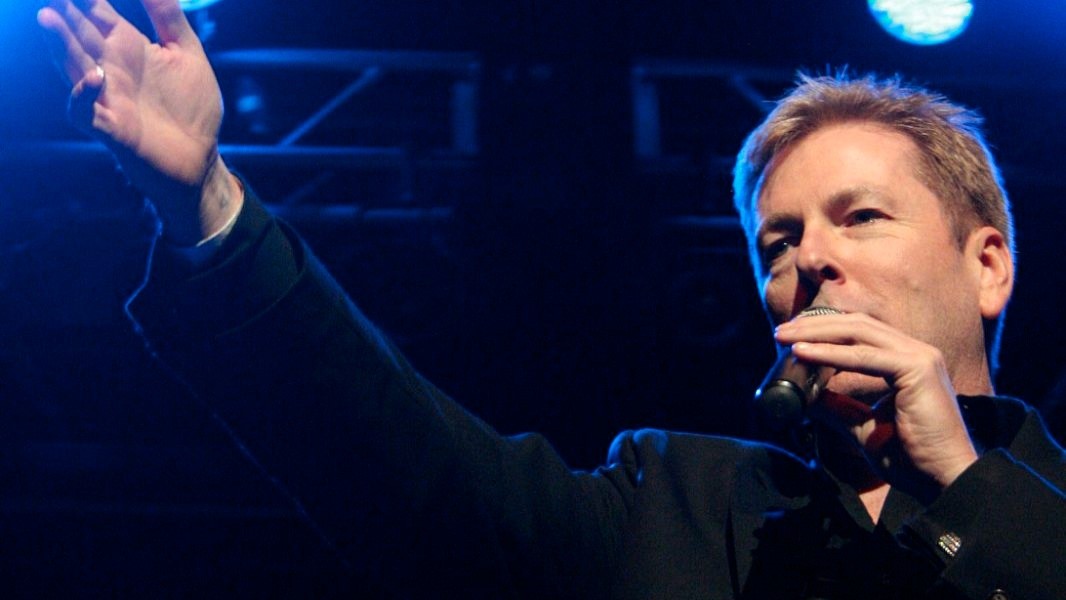
A terrific voice. Charisma to spare. A delightful raconteur. Impeccable musical taste and vocal phrasing. Unassuming nice guy. They all apply to Russ Lorenson, whose burnished tenor has thrilled audiences throughout the US and Europe. Check out the exclusive interview below:

1. Did your musical journey begin with formal training, or was it more of a personal exploration? How has that shaped your unique approach to your craft?
RUSS LORENSON: Like a lot of kids, I started my musical journey in school choirs. When I got into junior high, I was fortunate enough to join the music program there and the teacher (more on him later) had a background in both classical and theatre music. In addition to singing legitimate classical choral music, we also put on a musical each semester, so I was exposed to composers like Brahms alongside Frank Loesser and Lerner & Loewe. High school took me more in a classical direction, where I really learned the technical aspects of music and by the time I was a senior, I had been tapped to be the student conductor, leading our choral groups at concerts. In college I started to study classical voice, with the idea of pursuing an opera career. But the music just didn’t speak to my heart and over time I migrated to musical theatre. After years on the boards and touring with musicals, I decided to try my hand at cabaret, with a vocal approach that was very musical theatre (insert jazz hands here, LOL). Over time, after working with an amazing musical director, my repertoire and style became much more aligned with vocal jazz and what we call The Great American Songbook, which is where I’ve been for the last 20-ish years.
2. Who were some of the most influential figures in your early musical life, and how did they inspire your sound? Also, what’s the story behind choosing the name ‘RUSS LORENSON’?
RUSS LORENSON: Well, that junior high music teacher I mentioned earlier was probably the biggest influence on me growing up, both musically and personally. He was not just a teacher, he was a mentor and a father figure to me. When I turned 18 and was really starting to become a serious musical theatre actor, I decided that my real last name was not ideal and that I needed a stage name. I had heard a story about Elton John coming up with his stage name by taking the names of musicians he admired. It was a pretty simple thing at that point to adapt my teacher’s name – Loren Salter – into “Loren’s Son,” or Lorenson.
3. For most artists, originality is first preceded by a phase of learning and, often, emulating others. What was this like for you? How would you describe your own development as an artist and music maker, and the transition towards your own style, which is known as JAZZ?
RUSS LORENSON: This is so true! I think the old saying is, “Amateurs borrow, professionals steal,” and I have definitely stolen from the best of them. As I said earlier, when I started on this path, I was coming out of the musical theatre tradition and my early work really reflects that. Parts of my first album bother me today because my style is a mish-mash of musical theatre and jazz phrasing. When I started, I felt the real need to put on a “show,” with a scripted beginning, middle and end. I “borrowed” arrangements by famous singers and tried to emulate their phrasing and style. Over time, I began to realize that the point of being an artist was to put my own stamp on this classic material. One of the hallmarks of The Great American Songbook is that it’s constantly being reinterpreted, and once I let the music dictate where I was going, I became a much better entertainer.
4. What do you believe sets your music apart? How would you describe your sound to someone discovering you for the first time, and what emotions or experiences do you hope to evoke in your listeners?
RUSS LORENSON: This is probably your toughest question – it’s very difficult for me to talk about myself in this way. But what I HOPE sets my music apart is its deep connection to storytelling and emotional authenticity. As a jazz vocalist, I strive to bring a unique interpretative depth to every song, balancing reverence for tradition with a personal, contemporary touch — like a late-night conversation with an old friend, filled with warmth, nostalgia, and unexpected turns.
More than anything, I hope my music evokes connection. I want listeners to feel seen, to feel something stir inside them — whether it’s longing, joy, or that bittersweet ache that comes with remembering something beautiful. If a song of mine becomes part of someone’s personal soundtrack, then I’ve done what I set out to do.
5. Can you walk us through your creative process? From the first spark of an idea to the finished track, what’s the most essential part of your process, and how do collaboration or external influences shape your work?
RUSS LORENSON: Ideas come from all over the place for me, but generally they come from a place of passion. I’ve always felt that if I’m passionate about something, it’s easy to bring an audience along with me. For example, I was driving with a friend one evening and she played a Bobby Darin song for me that I’d never heard and I was thunderstruck. This song spoke to me deeply, and it caused me to truly sit down and spend some time with Bobby’s catalog. I was familiar with a couple of his tunes, but completely unaware of the breadth of his career. He covered rock ‘n’ roll, jazz, pop, folk – even country-western. And he did them all brilliantly, with hits in each genre. On top of that, he did it all before passing away at the too-young age of 37! I was so blown away by this man’s career that I absolutely had to do a show of his music. I then worked with my musical director to choose the songs, create the arrangements, and hire the right musicians to create what in the end was a very popular show. That’s a pretty typical example of how it goes for me. One little seed turns into this giant tree, but it takes a lot of people to nurture it into maturity.
6. Do you think it is important for fans of your music to understand the real story and message driving each of your songs, or do you think everyone should be free to interpret your songs in their own personal way?
RUSS LORENSON: I think the interpretation of my songs is best left to the viewer or listener. The songs I sing are all representations of the human experience, but all of us experience life differently. For example, Barry Manilow’s song, “Even Now” is, on its surface, about a man thinking about his ex-lover. However, in my case, I always think of my mother, with whom I had a complicated relationship and describes my feelings of ambivalence about our relationship. Same song, really different interpretations, both valid. That’s the magic of good songwriting.
I will say, however, that I am always personally interested in the back story of a song – what was going on when the songwriter wrote it? A good example of that for me is Johnny Mercer’s lyric to “Skylark” (my very favorite song, by the way) – Mercer was deeply enamored with Judy Garland, but she was involved with (and later married) Vincente Minnelli. The lyrics of “Skylark” express longing and wistfulness, which many believe reflect Mercer’s feelings for her. Do I need to know that to appreciate the song? No, but knowing it makes the song even more truthful for me.
7. With social media having a heavy impact on our lives and the music business in general, how do you handle criticism, haters, and/or naysayers in general? Is it something you pay attention to, or simply ignore?
RUSS LORENSON: If the criticism is toward me, I ignore it. I’m not everyone’s cup of tea, for sure. But if I see someone being attacked, look out! I’m very protective of artists, especially those that are my friends.
8. Creative work in a studio or home environment, or interaction with a live audience? Which of these two options excites you most, and why?
RUSS LORENSON: The studio never held great thrall for me. It’s a means to an end, necessary to produce a product. I thrive on a stage, and I love the thrill of sharing an experience with an audience. I think it’s what makes me so proud of this new album – it manages to capture that magical experience of artists working at their peak and the response from the audience. There’s a purity in hearing flaws and accidents as they happened, rather than something that’s been sanitized.
9. What’s been the most challenging hurdle in either your personal life or music career, and how has it shaped you as an artist?
RUSS LORENSON: In late 2021 I was diagnosed with HPV-positive tonsil cancer. Luckily, I caught it very early and successfully navigated surgery, chemotherapy and radiation. (PARENTS – GET YOUR KIDS VACCINATED AGAINST HPV!) As of this writing I am in remission and completely healthy. However, cancer is a “gift that keeps on giving” as they say, and I do suffer from a few lingering side effects of the treatment – primarily the loss of my ability to sing. I could sit around and be depressed about that, but I choose to be grateful because I survived. Plus, I realized that cancer may have stolen my ability to sing, but it hadn’t stolen my voice and I still have some things to say, creatively. Losing the ability to perform hasn’t stopped me from being active in the music world – it’s just closed one venue.
10. On the flip side, what moment or achievement in your career so far has made you feel the proudest, and why? And let’s talk about your latest release and future plans.
RUSS LORENSON: Ooh, that’s 3 questions in one, LOL!
I don’t think there’s one single achievement I can pinpoint as my proudest, but I think I’m most grateful for the lasting contribution that my work has achieved. There are songs I released nearly 20 years ago that are still getting significant play today. That makes me very proud – that I was able to work with amazing, talented people to create something of beauty that continues to bring joy into the world – and hopefully will continue to do so when I’m long gone.
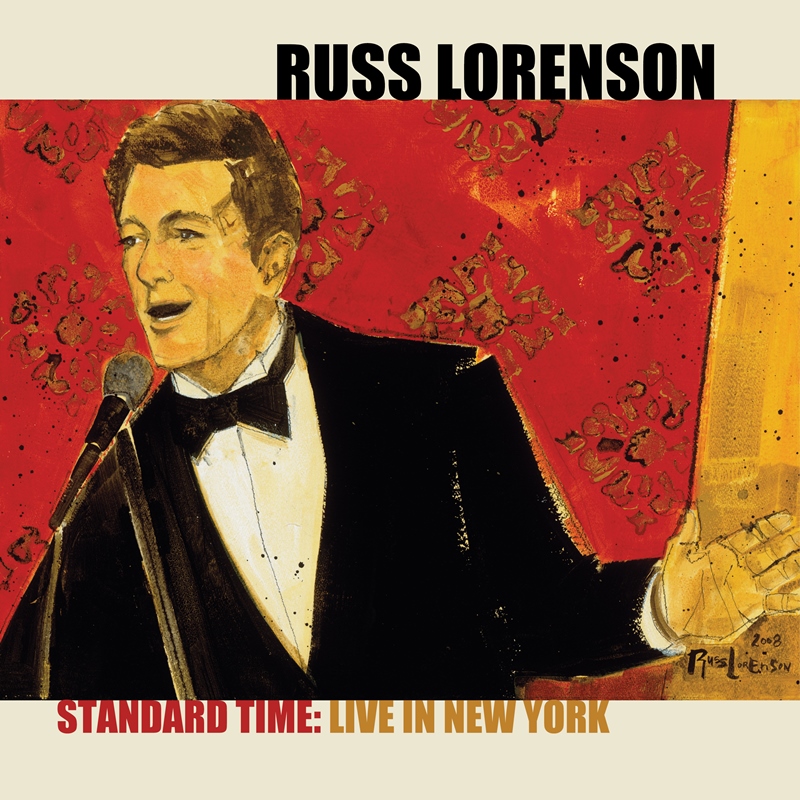
As far as my latest release, back in 2007 I was touring with a show I created called “Standard Time,” based on the premise that The Great American Songbook hadn’t stopped being written in 1959. My contention was that great songs were still being written, just waiting for exposure by thoughtful artists and musicians. So the challenge I set for myself in selecting the songs back in 2007 was to limit the timeframe to the previous 20 years or so. I looked for songs with strong, meaningful lyrics and beautiful melodies – I really wanted to celebrate the songwriters who are keeping the Songbook alive. We recorded the final two performances of that show at The Metropolitan Room nightclub in New York in October 2008, with the intention to turn them into a live concert CD which we’d release in 2009. For lots of reasons (both good and bad), the project was shelved until recently. I dug the original concert recordings out of storage and worked with a fantastic producer in The Netherlands to create the new album, which I’m very proud of.
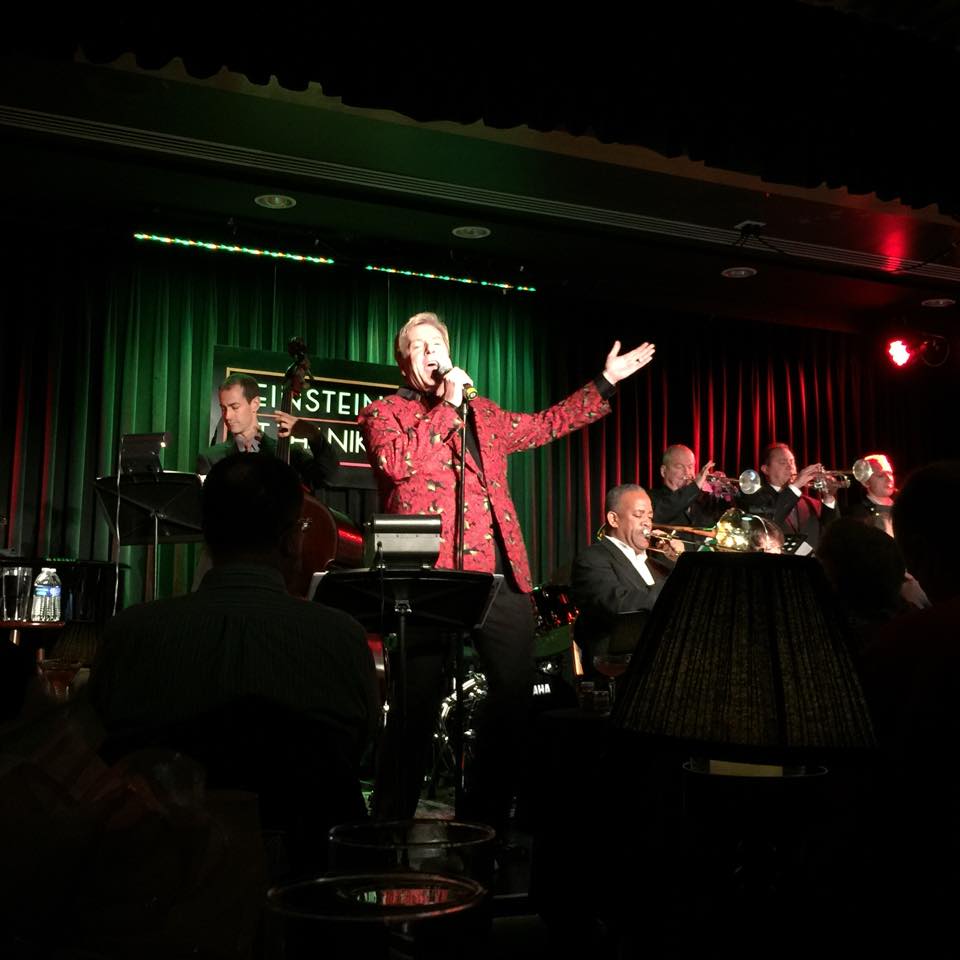
In terms of what’s next, fully 50% of my back catalog is holiday music, which has its rightful place in the Songbook – it was written by the same great composers! So when I first heard Freddy Cole (Nat King Cole’s brother) sing “Jingles, The Christmas Cat” at Feinstein’s in San Francisco I knew I needed to do it, and we released it on my most recent holiday album. But in all the time I’ve known this song, I’ve always thought that Jingles should have an origin story, just like Rudolph and Frosty. So I decided to write it myself! We’re aiming to have the children’s book out in time for Christmas this year. Besides the book about Jingles, I have two others in early stages, and I hope those will be successful. In addition to the books, I’ve been approached about several interesting things, including taking the concept of our album out on the road, highlighting great songwriting and pairing it with great performers, giving people a bit of context behind the music. Recently I’ve also begun curating vocal jazz playlists on the various streaming platforms, opening a channel for young artists to get their music heard alongside the greats. It’s a real passing of the torch effort for me.

STAY IN TOUCH:
FACEBOOK | INSTAGRAM | SPOTIFY | TIKTOK | WEBSITE | YOUTUBE