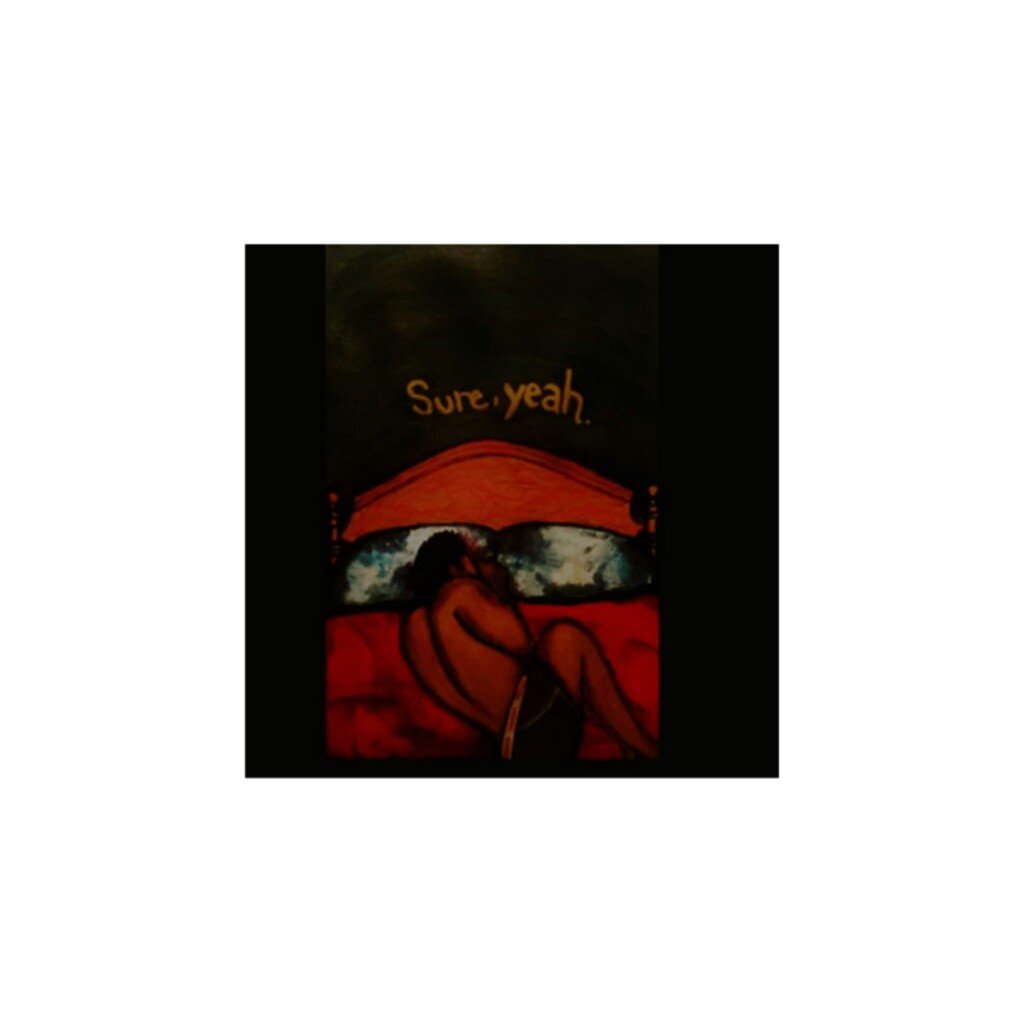
Smyles is a Washington, D.C.-based artist and self-sufficient bedroom producer crafting genre-forward music that blends neo-soul, R&B, and jazz into fresh territory. Drawing bold sampling choices from artists like Aretha Franklin and Vic Mensa, he channels the raw, formative energy of artists discovering their voice—while also citing Kanye as a major influence. Around the release of his album Sure, Yeah—the third and strongest iteration of a project chronicling resilience, bouncing back from hardship, and standout tracks like “Vast,” “Every Bit Of,” and “Neither”—we caught up with Smyles to talk about producing everything from his bedroom, his unconventional sampling approach, and turning personal struggle into a universal story of perseverance. Check out the exclusive interview below:
1. Your roots can often shape your journey. Can you share a story or moment from your early life that had a significant impact on your path into music?
Smyles: I credit my music making ability and inspiration to Kanye West. If it wasn’t for Late Registration, there would be no Smyles. Of course I’m a god-fearing man, so I want to thank God as well for giving me this skillset but my journey into loving music started with that album.
2. Did your musical journey begin with formal training, or was it more of a personal exploration? How has that shaped your unique approach to your craft?
Smyles: Honestly I wanted to create music since middle school so starting right after high school was a good time for me. I had no musical training at all, didn’t even play an instrument either. I wish I did learn some type of instrument though. That could’ve elevated me further in my opinion. My approach into making music has always been learning the hard way. I started off making music using samples, that’s tougher than creating your own melody from scratch because your ear has to be trained or dedicated to certain time frames of a song. Me being a DIY type of artist has made this possible.
3. Who were some of the most influential figures in your early musical life, and how did they inspire your sound? Also, what’s the story behind choosing the name ‘Smyles’?
Smyles: I credit a lot of my sound to Kanye, Nas, The Beatles, Frank Ocean, D’Angelo, and etc. I could go all day about who has inspired me, but I want to highlight how different sounds have inspired me. When you listen to Illmatic by Nas, lyrically he paints a vivid picture of his life. The lyricism is the brush, and the production becomes his canvas. Nas does a really good job of describing his inner thoughts with his sharp delivery and retrospective lyricism. Sure, Yeah does the same thing without using any lyrics. I chose my name because I wanted a unique name that was relevant to the type of music I’d be making. When you listen to it, you’ll be like “ I never heard some shit like this ever in my life”. Smyles made this, also who the fuck is Smyles?
4. What do you believe sets your music apart? How would you describe your sound to someone discovering you for the first time, and what emotions or experiences do you hope to evoke in your listeners?
Smyles: Ambition and creativity set me apart. On LVCK, I sample autotune from a song by Vic Mensa called Shades of Blue. If you listen to that song you’d be like man this song is heavy, but I only took one small part of that song. Nobody samples Vic Mensa. He’s not someone that people are readily looking to sample but I took his song and made it my own because my sound has no shackles. My sound is the freedom of an artist willing to discover and experiment with any sounds that can help paint a picture. I’d describe my sound as free soul. Free soul meaning that when you listen to my songs none of them sound like someone else had an influence over my sound. My creative inputs are all my suggestions, and I don’t compromise my integrity over that. I want my sound to inspire someone who has a dream. That inspiration can go a long way because a dream is the biggest thing you can ever have as an artist. People die every day. When you listen to your favorite albums, that artist had a vision and you’re supporting their vision by listening to their work. As Smyles when you listen to my music, you aren’t just supporting my work, you’re supporting a lifestyle. Music for me is a lifestyle, when you listen to me I want you to find the best version of yourself and ask them have you really done enough with your time and life.
5. For most artists, originality is first preceded by a phase of learning and, often, emulating others. What was this like for you? How would you describe your own development as an artist and music maker, and the transition towards your own style, which is known as HIP-HOP?
Smyles: Late Registration is my blueprint of what Hip Hop should sound like. I believe that as a culture Hip Hop has gotten a reputation for only sounding a certain way. I want to push the genre forward like some of my predecessors did. My development with my music is simple. I release bodies of wors that can change at any given time. Sure, Yeah is on it’s third version. This version represents a man who has embraced change. When I first made this album in 2019, I had no idea what the fuck I wanted to sound like. It took me making several albums to figure that out. Hip Hop has a way of restructuring itself to sound new again, that’s the Smyles theory as well. I sit back and always want to change the dynamics of my sounds. I listen to songs where I can find unique samples. I take time to find what I want in my music now. When I originally dropped Sure, Yeah, I didn’t take that type of time. I never tried to emulate anyone that was better or worse than me, if anything I want them to copy me. I want others to emulate my sound, so it adds more fuel to my fire.
6. Music often transcends entertainment. What’s your view on the role and function of music as political, cultural, spiritual, and/or social vehicles – and do you try and affront any of these themes in your work, or are you purely interested in music as an expression of technical artistry, personal narrative, and entertainment?
Smyles: Music is relative to everything we do in life. Music is a form of entertainment but for the real consumers of music, it’s therapy. It’s a form of medicine. It’s the feeling of being renewed and reborn. Music comes to us in so many ways. You ever listen to how someone talks; people’s ideas are music within itself. If you listen to how people talk you can find their own cadence. Music is about finding a connection. Some people can’t express how they feel really well but when they get in the studio and craft a song, that’s their way of having a conversation with you. We are nonverbal communicators in a nutshell. Music is a form of communication. It’s a spiritual, cultural, and medicinal experience because we as artists want our fans and followers to feel something when they press play. My music represents the journey of a man who is willing to put his emotions on the line for anyone willing to listen. When you listen to my music, I become the director and the screenwriter. The fans become my biggest motivating factor for much effort I put in.
7. Do you feel the rewards of your musical career match the energy and passion you invest in it, or are there different kinds of fulfillment you’re still seeking?
Smyles: I haven’t given you guys the best of me. I’m 30 years old now. I have way more to offer. I want to showcase more but I don’t want my success being defined by what type of music I make. I want my success to be defined by what type of artist I am. If my songs made you want to do your best, then I succeeded. If my song made you want to exude more confidence than I succeeded. If my song made you be like “you know what I could do what Smyles does and do it better” than I succeeded. If you listen to my stuff and you feel like I could’ve done more than I succeeded. My fulfillment comes from being able to know what I could do right and wrong. I’m an evolving artist. Money doesn’t bring success. It brings more responsibility.
8. Can you walk us through your creative process? From the first spark of an idea to the finished track, what’s the most essential part of your process, and how do collaboration or external influences shape your work?
Smyles: My process requires me to cut and delete a lot of ideas. A lot of my stuff are like demos. I’ll have an idea and see if it works. If it works, I’ll typically keep it. I listen to a lot of albums on the regular and I’ll go through a hard drive that I have and find songs that I haven’t sampled. I’ll be crate digging until I find certain samples that stick with me. If it doesn’t excite me then I won’t use it. I want to collaborate more with others, I haven’t done much of that. I believe I could enhance the work of someone else while they add a new perspective to mine. That would be a satisfying moment for me.
9. What’s been the most challenging hurdle in either your personal life or music career, and how has it shaped you as an artist?
Smyles: Being broke was the biggest hurdle for me. I didn’t have enough money to invest in myself. I couldn’t do anything that I wanted. Sure, Yeah was mostly made when I worked in retail. My life is way different and better now. I believe that the quality of my music reflects that as well. I sound like somebody who wants to be heard. That’s the biggest difference.
10. On the flip side, what moment or achievement in your career so far has made you feel the proudest, and why? And let’s talk about your latest release and future plans.
Smyles: The best moment of my career was going back and fixing these albums that I made. I heard all the feedback and took the constructive criticism and didn’t let it break me. I wanted to come back on my own terms and deliver what the people want to hear. When I do release more music in the future, I want to give you guys the best product as possible. Mainstream music isn’t cutting it right now; we need more people offering the music business something different. As Smyles I could be that answer.
11. With social media having a heavy impact on our lives and the music business in general, how do you handle criticism, haters, and/or naysayers in general? Is it something you pay attention to, or simply ignore?
Smyles: If my shit sucked, please tell me. You are doing the lord’s work by telling me. But I guarantee you when I come back with an updated version, you might need neck surgery from bobbing your head that intensely. Social media is a necessary evil, and I need to interact with my fans more. I need to be more proactive with my small fan base. I need to make time for that. I have to do better in that regard. I can’t keep continuing to grow without the fans. They are the most important factor in these conversations because they keep the artists employed.
12. Creative work in a studio or home environment, or interaction with a live audience? Which of these two options excites you most, and why?
Smyles: The location doesn’t matter. The intention does. If I was able to perform in front of an audience, I’d give them a show that they would remember. I create most of my music at home. I don’t own a fancy studio. I never have been on tour but if my passion gets me to travel and share my songs all over the world, that’s the excitement. That would happily get me out of bed every morning.
13. Do you think is it important for fans of your music to understand the real story and message driving each of your songs, or do you think everyone should be free to interpret your songs in their own personal way?
Smyles: View my songs however you’d like. My story isn’t going to resonate with everybody but if I allow my music to help shape their story, that’s the real magic. I’m just the vessel for telling you how awesome you really can be. Thank you for the interview as well.
KEEP IN TOUCH:
INSTAGRAM | SPOTIFY | BANDCAMP | WEBSITE | YOUTUBE