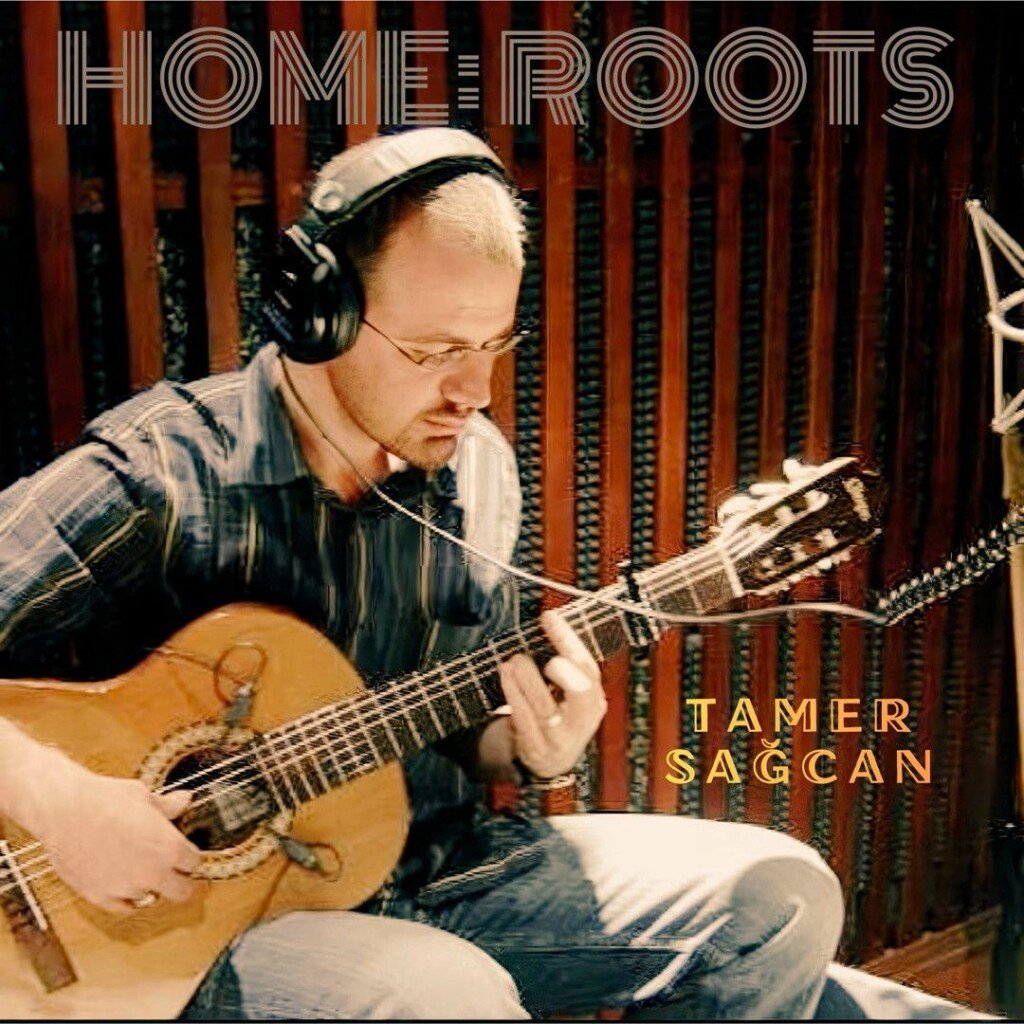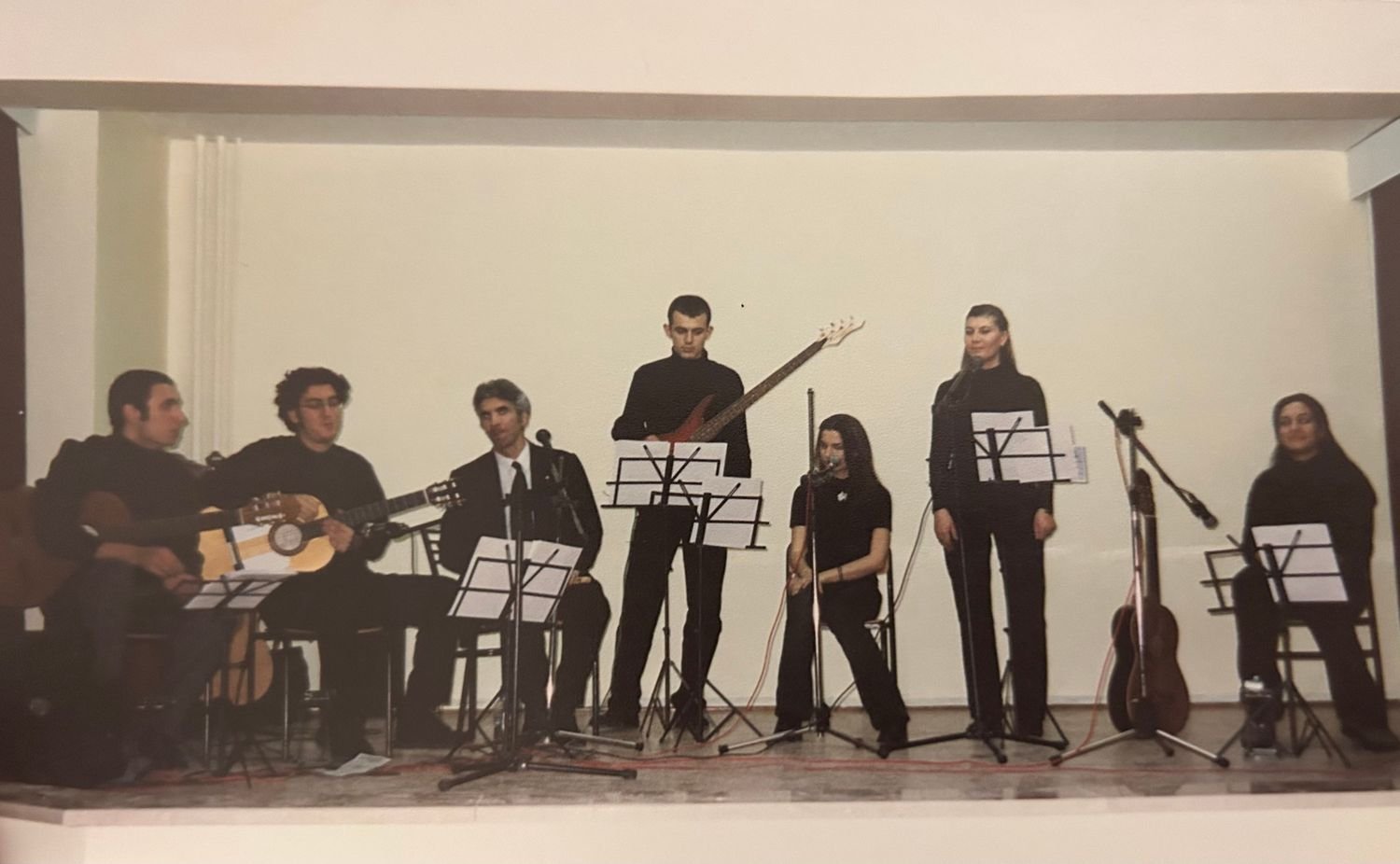
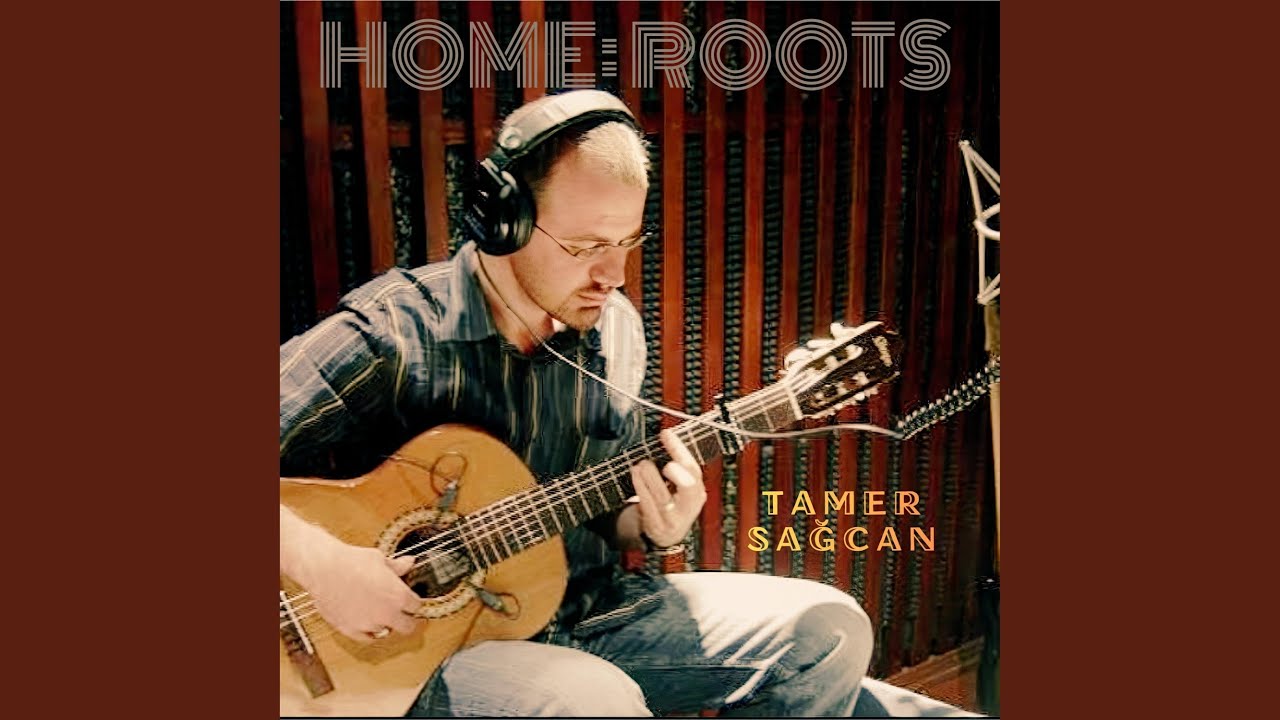
Tamer Sağcan is a Turkish composer, author, and legal professional whose work exists at the intersection of ancient mythology and cosmic sound. His music is the auditory extension of a larger creative universe — one built on the belief that all mythologies share a common root, and that sound can map what language cannot. His debut project Home: Roots explored the concept of home as a spiritual anchor: family, origin, the axis around which all meaning turns. His second album Home: Universes expands that vision outward — into the cosmic, the vast, and the unknown. His compositions are written and performed on classical guitar. AI-assisted orchestration and production are used to expand the sonic landscape — the melodies, arrangements, and artistic vision remain entirely his own. Both records serve as the unofficial soundtrack to ANAD, the first novel in his 19-book sci-fi/fantasy series The 19th Phase — a world built on its own mythology, cosmology, and belief systems, rooted in the ancient Altaic tradition of the seventeen-layered universe. For those who seek order within chaos and meaning within the void, Tamer Sağcan’s music is the sound of that search. Check out the exclusive interview below:
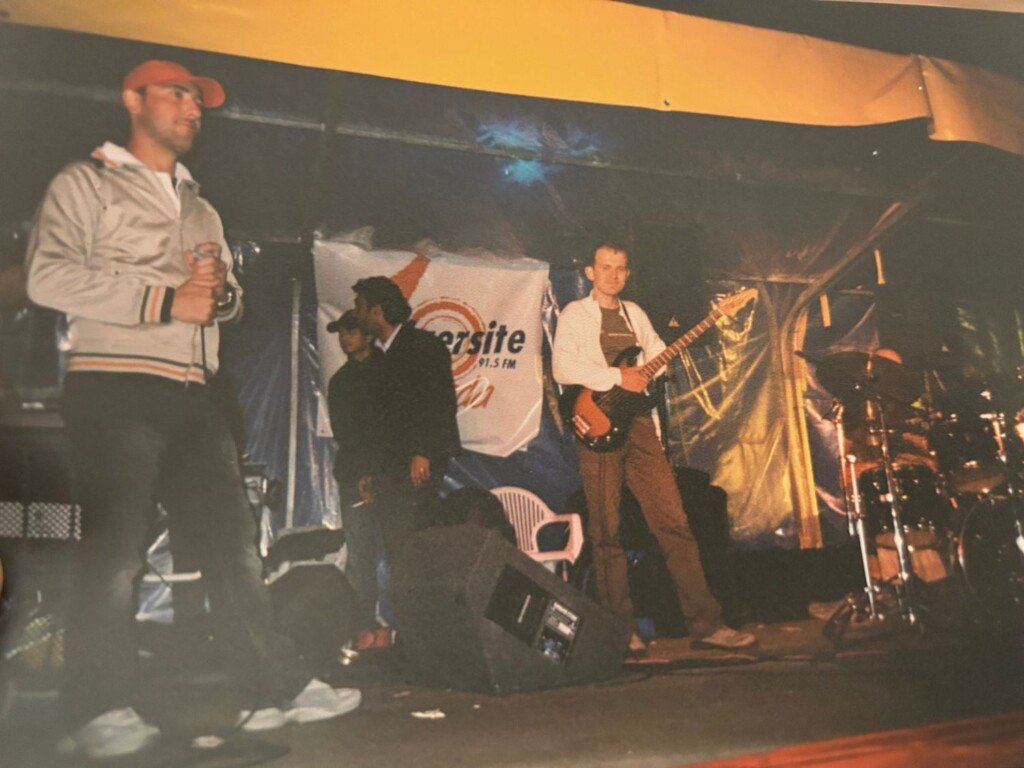
1. Your roots can often shape your journey. Can you share a story or moment from your early life that had a significant impact on your path into music?
Tamer Sağcan: When I was sixteen, my friends formed a rock band at school. I didn’t play any instrument at the time, but something pulled me toward the bass guitar. I couldn’t even explain why. Just a feeling. The problem was I had zero knowledge, so my friends told me: “Learn classical guitar for six months, and the bass will come naturally.” I signed up for lessons just before finishing high school.
What happened next surprised everyone, including me. I had a natural aptitude for it. While most of the friends I started with were still on their third course level a year later, I had already moved on to solo repertoire work. The band that inspired all of this had long since dissolved – but I stayed.
At university, I formed a blues band called Konya Blues Band, where I played bass. We even composed original pieces and entered a competition with two instrumental rock tracks. We didn’t win, but one of Turkey’s major newspapers sent a journalist to interview us. That was the first time I thought: maybe this music actually means something to someone else too.
After university, I played bass in an Anatolian rock group for a while — live performances, real stages. But eventually, all of that faded. And what remained was just me and the guitar. That’s all.
2. Did your musical journey begin with formal training, or was it more of a personal exploration? How has that shaped your unique approach to your craft?
Tamer Sağcan: It began with formal classical guitar training, but driven entirely by personal motivation rather than a structured career plan. I never set out to become a musician in the traditional sense. The training gave me technical foundation, discipline, an understanding of harmony and structure but what I did with that foundation was always instinctive and self-directed.
I think this duality defines my approach. The compositions follow an internal logic, almost architectural in nature, but they’re never calculated for an audience. They’re built the way I think which is probably why they resist easy categorization.
3. Who were some of the most influential figures in your early musical life, and how did they inspire your sound? Also, what’s the story behind choosing the name ‘Tamer Sağcan’?
Tamer Sağcan: My influences are genuinely wide. Beethoven is my cornerstone in classical music. The emotional architecture of his work, the way tension and resolution become a kind of storytelling, has always stayed with me. But equally, I was shaped by Turkish troubadours like Aşık Veysel and Neşet Ertaş, whose music carries something ancient and rooted, a sound that feels like it came from the land itself.
On the guitar specifically: Agustín Barrios Mangore is my favourite composer, the Paganini of the classical guitar. His repertoire pieces are among the most technically and emotionally demanding works ever written for the instrument. La Cathedral, in particular, is something I return to again and again. Paco De Lucia and Al Di Meola opened my ears to what the guitar could do in terms of speed, fire, and feeling. Andy McKee showed me the quieter, more intimate possibilities. Eric Johnson’s tonal obsession is something I deeply respect. And closer to home, Celil Refik Kaya and Ali Deniz Kardelen have both been important references musicians who bridge tradition and modernity with genuine craft.
As for the name, it is simply my name. I’m Tamer Sağcan. I never felt the need for a stage persona. The music is personal enough that hiding behind a different name felt unnecessary.
4. What do you believe sets your music apart? How would you describe your sound to someone discovering you for the first time, and what emotions or experiences do you hope to evoke in your listeners?
Tamer Sağcan: I would describe my music as instrumental storytelling. Every slow movement, every rise and fall in a composition functions the way chapters do in a novel: Introduction, development, resolution. This isn’t accidental. I’m also a novelist and the creator of the Eleyrrha Universe, a 19-book science fiction and fantasy saga. The same narrative instinct that shapes my writing shapes my music.
To someone discovering me for the first time, I’d say: this is music for people who feel things they can’t quite put into words. Classical guitar at its core, expanded into orchestral territory. There’s a warmth to it, and something that listeners have described as a “sincere calm” but it isn’t passive. It moves.
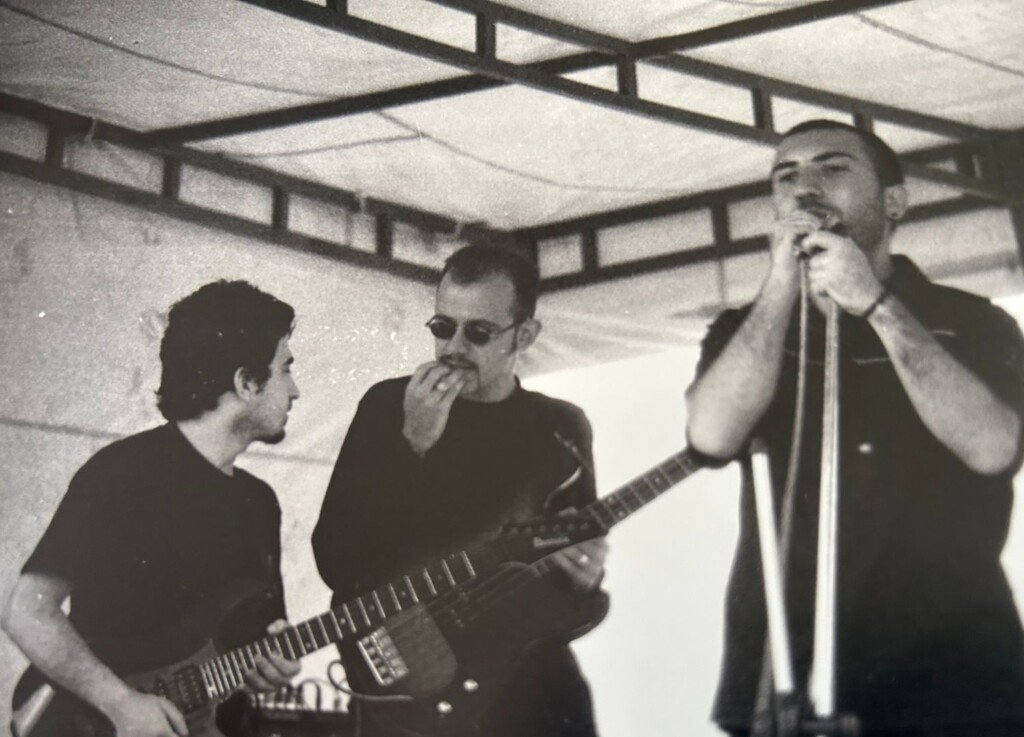
5. For most artists, originality is first preceded by a phase of learning and, often, emulating others. What was this like for you? How would you describe your own development as an artist and music maker, and the transition towards your own style, which is known as FOLK?
Tamer Sağcan: “Folk” may not be the most precise label for what I do, though I understand why it might appear that way. There’s an unmistakably Anatolian quality to my melodies something in the tonal choices that reflects the landscape I grew up in. But what I’m really building is a structure on top of instrumental classical guitar. If I had to define it myself, I’d call it narrative music, or musical storytelling.
The development was slow and largely internal. For years, the compositions existed only in my head and on the strings of my guitar. I wasn’t consciously building a “style” I was just processing life. It was only when I found a way to realize the full orchestral vision in my mind that the music became something shareable.
6. Music often transcends entertainment. What’s your view on the role and function of music as political, cultural, spiritual, and/or social vehicles – and do you try and affront any of these themes in your work, or are you purely interested in music as an expression of technical artistry, personal narrative, and entertainment?
Tamer Sağcan: I believe music is one of the last genuinely democratic languages. It doesn’t require translation. It doesn’t need a visa. It exists in the space where mathematics and emotion meet and that space belongs to everyone.
My own work isn’t overtly political, but it is culturally and narratively rooted. Everything I create, my short stories, my novels, my popular academic writings, and my music connects back to the same fictional universe I’ve been building for years: the Eleyrrha Universe. This isn’t a coincidence or a marketing strategy. It’s how I think. I’m trying to give meaning to everything I make within a single, coherent world.
The Home Trilogy itself is the sonic layer of that universe. Home: Roots, Home: Universes, and the forthcoming Home: Echoes are not just albums they are chapters in a larger story. And Home: Echoes takes this furthest: each of its 19 tracks mirroring the 19 Phases of the Eleyrrha Universe carries three simultaneous layers. A musical one, rooted in existing compositions. A mythological one, drawing from world cultures. And a narrative one, telling the story of a specific character from my novels divine or human. The idea that music can hold the memory of a civilization that a melody can carry something a history book cannot is something I take seriously.
But so is the idea that a fictional universe can become a lens through which all of one’s creative work finds meaning. That’s what I’m attempting.
7. Do you feel the rewards of your musical career match the energy and passion you invest in it, or are there different kinds of fulfillment you’re still seeking?
Tamer Sağcan: For most of my life, the music existed only for me. I composed for decades without a real audience. It was a private language, a refuge from the demands of a legal career. The idea that strangers in Argentina, Mexico, Germany, or Australia might now be listening to something I wrote alone with my guitar is still something I’m adjusting to.
The rewards aren’t financial yet and that’s fine. What I’m experiencing now is something I didn’t expect: connection. A curator writing that a piece gave them “emotional goosebumps.” A listener in Brazil saving a track. These moments carry a weight that no metric can fully capture. The fulfillment I’m still seeking is simply continuation to keep building, keep releasing, and eventually, to hear Home: Echoes with its full ensemble of world instruments realized the way I hear it in my mind.
8. Can you walk us through your creative process? From the first spark of an idea to the finished track, what’s the most essential part of your process, and how do collaboration or external influences shape your work?
Tamer Sağcan: Most of my compositions have roots going back twenty years. Working as a legal professional, music and literature were my most functional refuges from the rigid seriousness of that world. I wrote the melodies on the instrument first, finalized them, and transcribed them into notation. But turning that inner musical map into an album, dealing with production companies, hiring musicians, arranging sessions had become an impossibly expensive and exhausting dream.
Then I discovered Suno. And everything changed.
I see AI’s impact on music the way I see the shift from analog to digital recording. Those who resisted digital were eventually sidelined not because the music was worse, but because the tools evolved. Something similar is happening now. But I want to be precise about how I work: I don’t type a prompt and ask AI to generate music for me. I run my own recorded guitar melodies through Suno’s DAW, and I decide note by note, section by section where each accompaniment enters, which rhythms appear, how the orchestration breathes. The melodies, the arc of the composition, the guitar performance itself: all mine. The orchestration is where AI becomes my collaborator, not my replacement.
9. What’s been the most challenging hurdle in either your personal life or music career, and how has it shaped you as an artist?
Tamer Sağcan: The hardest thing was silence years of creating music that no one heard. Not because it wasn’t ready, but because the infrastructure to share it didn’t exist for someone without a label, a budget, or an industry connection. I had compositions I believed in, sitting in notation files, waiting.
That period of invisibility taught me something important: the work has to matter to you first. If you’re creating for external validation, the silence will break you. I wrote novels, composed music, and published essays not because I was building an audience but because I couldn’t not do those things. That stubbornness, I think, is what eventually made it possible to release music on my own terms, without apology.
10. On the flip side, what moment or achievement in your career so far has made you feel the proudest, and why? And let’s talk about your latest release and future plans.
Tamer Sağcan: Honestly? The moment a curator who rarely features AI-assisted music wrote that my guitar work possesses “a warmth and presence that pure AI has yet to replicate.” That sentence validated something I’d been trying to articulate for a long time: that the human element in this music is not decorative it’s structural.
As for plans: Home: Universes releases on April 24th — thirteen tracks exploring parallel universes and cosmic scale. The Eleyrrha Universe the novel series running parallel to this music continues as well. There are always more stories to tell.
And then there is Home: Echoes the final chapter of the trilogy, and perhaps the most ambitious thing I’ve ever attempted. It will consist of 19 tracks, mirroring the 19 Phases of the Eleyrrha Universe itself. Each track carries three simultaneous layers: a musical one, built on existing compositions from the trilogy; a mythological one, drawing from world cultures — Anatolian, Norse, Japanese, Maya, Egyptian, and beyond; and a narrative one, telling the story of a specific character from my novels — divine or human.
For example, Axis Mundi will be reimagined as Axis Mundi (Anna/Rha), the same composition, now layered with ney or clarinet evoking the World Tree mythology. Anna and Rha are, in truth, one being: Rha is the goddess, the wife and creative inspiration of the deity Eyre at the heart of my universe; Anna is her human form. The music of Axis Mundi — the axis connecting heaven and earth — becomes, quite literally, the sound of a god descending into a human body.
The final two tracks will be new compositions, rooted in Central Asian music -kopuz, throat singing- representing the Void and the Nothing. The last phases. The end before the beginning.
I don’t know of another project quite like it. And that, perhaps, is reason enough to make it.
11. With social media having a heavy impact on our lives and the music business in general, how do you handle criticism, haters, and/or naysayers in general? Is it something you pay attention to, or simply ignore?
Tamer Sağcan: Criticism I take seriously. For example a curator once told me my drum sound design wasn’t to their taste, and I thought: fair enough, that’s honest feedback. I listen to that. As for haters? Well haters gonna hate. I don’t have much energy to spend on people who’ve already made up their minds. The music is there for anyone willing to actually listen.
12. Creative work in a studio or home environment, or interaction with a live audience? Which of these two options excites you most, and why?
Tamer Sağcan: Home, always. Every composition in the Home Trilogy was written and recorded at home not in a professional studio. And I mean that literally. Some of these recordings go back nearly ten years. If you watch the older videos I plan to share on my YouTube channel, you can hear my daughters in the background: one was four years old, the other still a baby. They’re fifteen and eleven now. They can’t quite watch those videos yet. But one day they will, and I hope they’ll understand that their voices are woven into this music whether they can hear them or not.
I used to think of that as an imperfection. Now I think it might be the whole point. Maybe the album is called “Home” not just because of its themes but because home is where it was born, in all its noise and warmth and love.
That said, the idea of eventually performing the Home: Echoes material live with real musicians playing the instruments of each world culture represented is something I dream about. A concert where ney meets sitar meets hammered dulcimer. That’s a future worth working toward.
13. Do you think is it important for fans of your music to understand the real story and message driving each of your songs, or do you think everyone should be free to interpret your songs in their own personal way?
Tamer Sağcan: Both, and I don’t think they’re in conflict. I write with intention the titles, the album structure, the mythology behind each piece all carry specific meaning. But music, once released, belongs to the listener. If someone hears Axis Mundi and it reminds them of their father, or Familia brings up a memory I had nothing to do with that’s not a misreading. That’s music doing its job.
The only thing I’d ask is that people know the work is human at its core. The stories are real. The guitar is real. The emotion is real. What surrounds it is a tool a remarkable one, but a tool nonetheless.
STAY IN TOUCH:
FACEBOOK | INSTAGRAM | X | SPOTIFY | WEBSITE | YOUTUBE