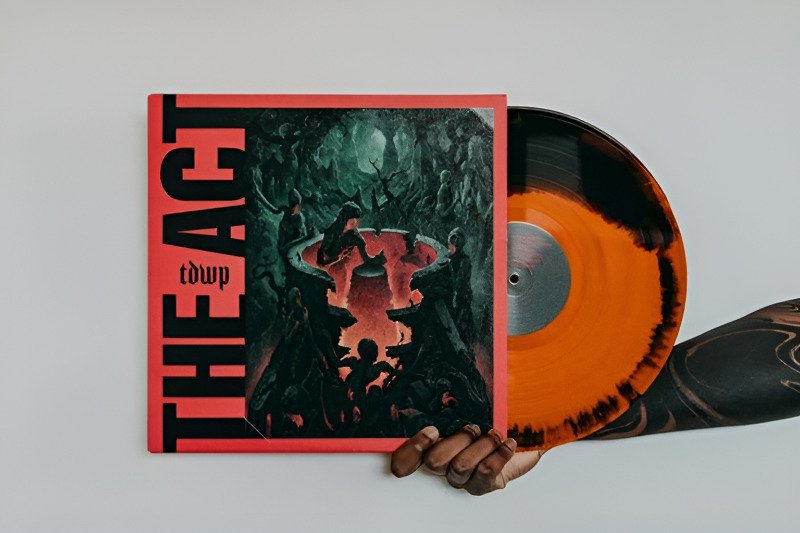
The clearest sign that something interesting is happening in creative culture is when the categories stop making sense. When a producer’s visual aesthetic is as deliberate as their sound design. When a graphic artist’s work is inseparable from the music it was made alongside.
When the album and the artwork aren’t two separate things but one thing expressed in two materials. That collapse of boundaries is where the most alive work is right now.
Why the Disciplines Are Merging
The tools explain part of it. Music, design, and digital art now run through the same software pipelines – tracked across the industry at https://news.designrush.com/creative – DAWs, generative design tools, motion graphics suites, AI-assisted image workflows all from the same desk.
An artist who spent years building a sound is now building a world around it, because the means to do so are no longer out of reach.
But the tools are downstream of something else. The audiences consuming music in 2026 aren’t passive listeners waiting for what the label puts in front of them. They’re inside the creative process – watching artists develop work in real time, engaging with visual identity as seriously as with the songs, forming opinions about the artwork before the first track drops.
That relationship changed what artists feel accountable to. Releasing music without a coherent visual language now reads as a gap.
What’s driving the merger of music and visual creativity:
- DAW and design tool convergence – the same laptop that runs a session also runs Figma, After Effects, and generative AI tools, collapsing the production gap between disciplines
- Social platforms rewarding visual identity – an artist’s feed, cover art, and video treatments carry as much weight as the music in how audiences form first impressions
- Independent release infrastructure – without labels controlling the visual output, artists with a design sensibility can build entirely integrated work without committee sign-off
- AI image tools lowering the floor – artists without formal visual training can now produce coherent visual worlds around their music, accelerating the integration
The Artists Who Don’t Separate the Work
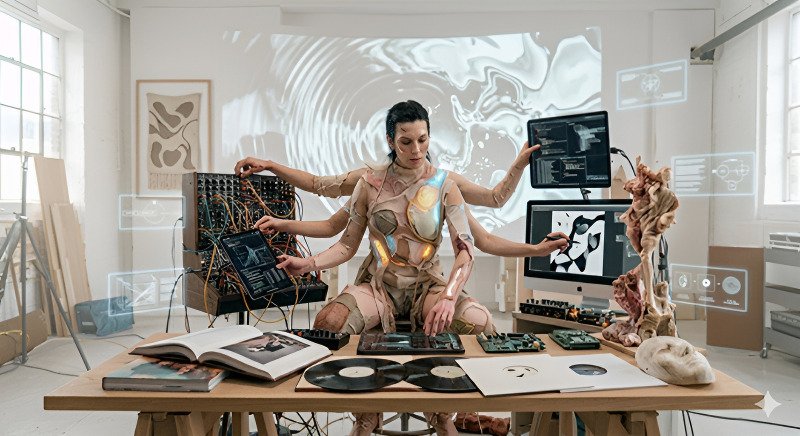
The most interesting creative figures right now resist easy categorization. Arca’s releases are inseparable from the grotesque, beautiful visual universe she builds around them – the body horror imagery and the textural sound design are the same argument made in different materials.
Burial’s anonymity is itself a visual statement, the absence of image as image. Flying Lotus runs Brainfeeder as an aesthetic project as much as a label, where the design sensibility of every release is as consistent as the sonic one.
These aren’t outliers. They’re examples of what’s becoming the norm in underground and experimental music: the expectation that an artist has visual intelligence matching their sonic one.
What that looks like in practice across different creative roles:
- Producer as art director – handling or closely directing cover art, video treatments, and live visuals as extensions of the sound rather than afterthoughts
- Graphic artist as collaborator – embedded in the creative process from early in development rather than brought in at the end to make a sleeve
- Digital artist as composer – building generative visual systems that respond to music in real time, blurring where sound ends and image begins
- Label as creative studio – smaller independent labels functioning as design practices, with visual consistency across rosters that rivals any art direction agency
Digital Art as a Medium in Its Own Right
The other pressure reshaping this space is that digital art has stopped being a service and become a practice. Artists working in generative systems, motion design, and AI-collaborative imagery are developing bodies of work that don’t exist in service of anything else – no album to illustrate, no brand to visualize. The work is the work.
That shift creates a different kind of conversation between music and visual art. When both sides are operating as equal creative practices rather than in a client-service relationship, the collaborations that emerge are more genuinely mutual.
A visual artist and a musician working together on something that’s simultaneously a release and an installation is a different proposition than a musician hiring someone to make a video.
The venues for that work have multiplied. Online galleries, streaming platforms experimenting with visual accompaniment, live AV performances, gallery shows built around music – the infrastructure for multimedia work has never been more varied.
What This Means for Independent Artists
The practical implication for anyone making work independently is that the creative brief has expanded. A strong record used to be enough. Now, a strong record inside a weak or incoherent visual world is a competitive disadvantage – not because the music is less good, but because the context shapes how it lands.
That’s not a corporate demand. It comes from audiences who have been trained by years of exceptional visual work to expect that the best artists are thinking about the whole thing. The ones meeting that expectation are building careers that don’t depend on a single format or a single channel. The music is the entry point. The world built around it is what holds people.
#This is a Contributor Post. Opinions expressed here are opinions of the Contributor. Illustrate Magazine does not endorse or review brands mentioned; does not and cannot investigate relationships with brands, products, and people mentioned and is up to the Contributor to disclose. Contributors, amongst other accounts and articles may be professional fee-based.#