

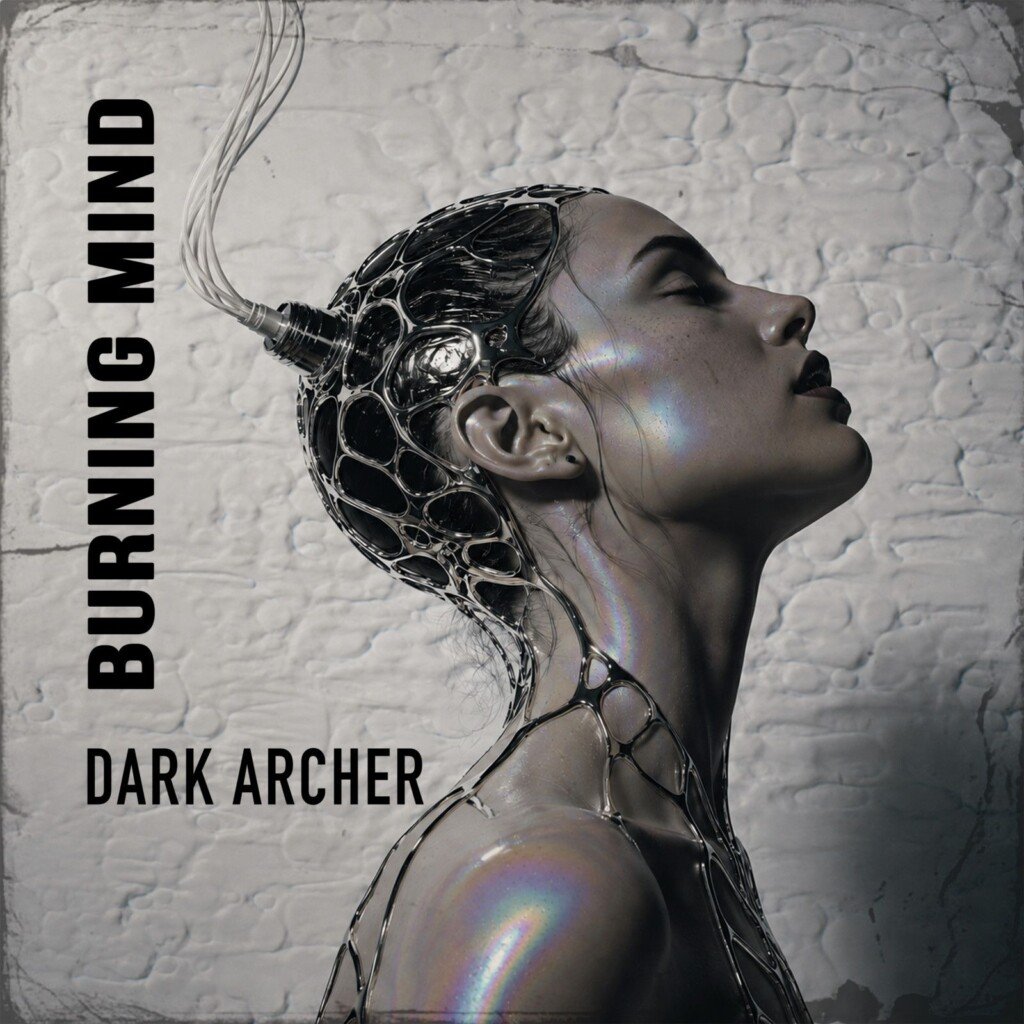
Dark Archer’s “Burning Mind” plunges into the murky territory where manipulation becomes so gradual that a person can no longer tell where their own thoughts end and someone else’s influence begins. Blending alternative rock and psychedelic rock with a cinematic sense of psychological unease, the song examines gaslighting, institutional pressure, sedation, denial, and the slow dismantling of identity until confusion starts passing for normality.
Musically, the track wastes little time establishing its tension. Thumping, bustling beats push against deep bass while splashing cymbals and grinding guitars create a restless, almost claustrophobic backdrop. Dark Archer’s raspy, grainy voice cuts through it with palpable frustration, giving the narrative a human roughness that suits its subject. The production feels constantly unsettled, as though the ground underneath the narrator is shifting while the song continues marching forward.
The lyrics make that psychological erosion particularly vivid. The recurring image of a woman learning to “smile when it hurt” and feeding her ghosts before carrying on captures the horrifying normalization of suffering. Elsewhere, identity becomes something bureaucratic and frighteningly disposable: a new ID, a signature on paper, instructions about what to remember. The song’s characters aren’t merely being told lies; they’re being pressured into accepting an entirely different version of themselves.
The later passage beginning with “Father, my devotion” deepens the sense of disorientation. References to medicine, sedation, swirling thoughts, and fleeting emotion make the narrator’s inner world feel increasingly unstable, while the surrounding instrumentation keeps the tension simmering.
Then the refrain returns: “When they erase your emotion / Your burning mind.” It’s a powerful payoff because the title isn’t describing ordinary anger. The burning mind is what’s left when certainty, memory, and emotional autonomy have been repeatedly tampered with.
What ultimately makes “Burning Mind” unsettling is its refusal to offer an easy escape. Its central fear isn’t simply that someone can deceive you; it’s that sustained manipulation can become internalized until the deception starts sounding like your own voice. Dark Archer turns that idea into a brooding, psychologically charged rock song that lingers long after the final refrain—like a thought you aren’t entirely sure was yours to begin with.

STAY IN TOUCH:
INSTAGRAM | SPOTIFY | BANDCAMP | TIKTOK | WEBSITE | YOUTUBE
Review by: Naomi Joan