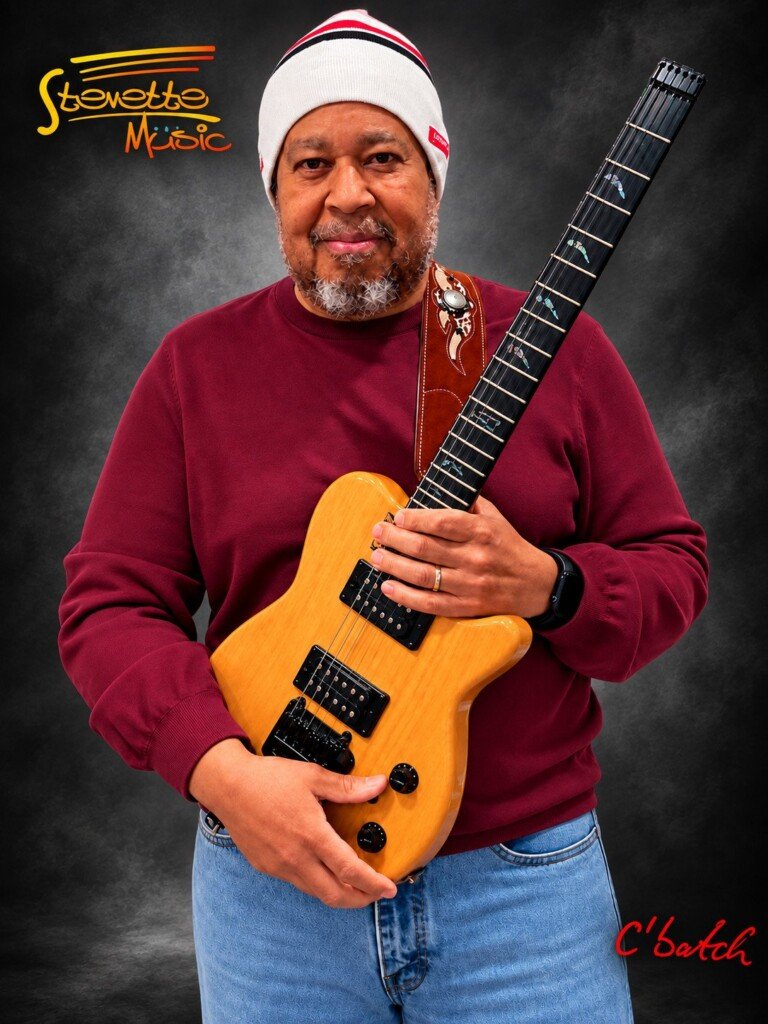
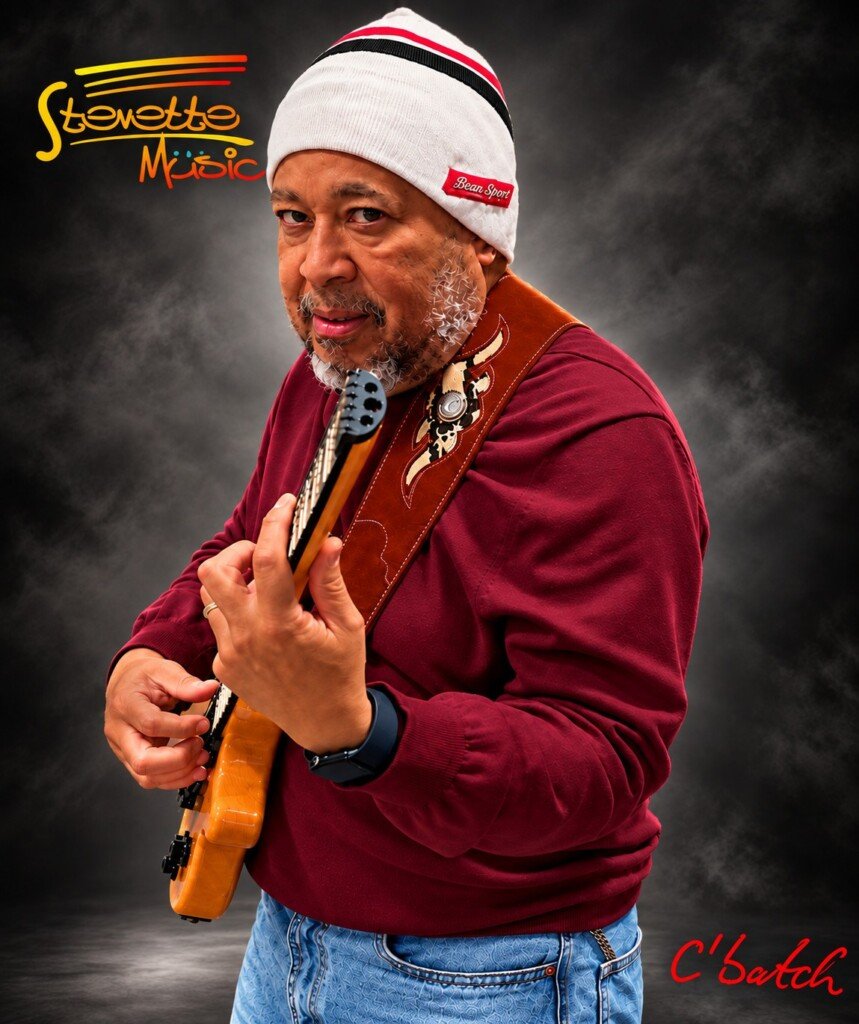
C’batch is an independent recording artist, guitarist, composer, and producer with a career spanning over four decades. As the founder of Stevette Music, Inc., he has built a diverse catalog traversing R&B, soul, rock, jazz-influenced instrumentals, dance music, and cinematic compositions, notably highlighted by his The Vault series bringing historic musical ideas to light. Ahead of the release of his ambitious single “If There Was Ever A Fool (One Of A Cast Of Many)”—which bridges a 2012 filmed guitar improvisation with lyrics written years later, blending cinematic drama, rock, soul, and atmospheric art pop with dark humor and theatrical storytelling—we caught up with C’batch to talk about the inspiration behind the track, the art of finally finishing long-held musical ideas, and his lifelong creative journey. Check out the exclusive interview below:
1. Your roots can often shape your journey. Can you share a story or moment from your early life that had a significant impact on your path into music?
C’BATCH: The Beatles, the Beatles, the Beatles! Seeing them on The Ed Sullivan Show when they first came to the U.S. had a significant impact on me as a young child. I was about seven years old, and that appearance left a huge impression on me.
2. Did your musical journey begin with formal training, or was it more of a personal exploration? How has that shaped your approach to your craft?
C’BATCH: It was a combination of both. I attended DeBellis Music School in Astoria, Queens, in the early 1970s, when I was about 15. Around that time, I also began teaching myself a little music theory with the help of my encyclopedia. I took a music course in high school and later studied theory and music history in college.
My interest in music theory and history, along with my exposure to many different genres throughout my life, has helped shape my approach as both a musician and a composer.
3. Who were some of the most influential figures in your early musical life, and how did they inspire your sound? Also, what’s the story behind choosing the name C’batch?
C’BATCH: As I mentioned, the Beatles were the most influential figures in my early musical life, but I was surrounded by music from an early age. My dad was a jazz drummer, my mother sang, and my paternal grandmother introduced me to the piano.
I wouldn’t say that any one of them alone inspired my sound. It developed through exposure to many artists over the years.
The story behind C’batch is simple: it’s a shortened version of my surname, Cumberbatch.
4. What do you believe sets your music apart? How would you describe your sound to someone discovering you for the first time, and what do you hope listeners take away from it?
C’BATCH: I think the main thing that sets my music apart is that it isn’t confined to one genre and is always evolving. I would describe my sound as eclectic, but still accessible and commercial.
Above all, I hope listeners enjoy the music and are entertained by it.
5. For most artists, originality begins with learning from—and often emulating—others. What was that process like for you, and how did it contribute to your development as a musician and composer?
C’BATCH: I don’t really think of myself as having one particular style because my music moves in many different directions. That comes from listening to and learning from the many wonderful artists I’ve been exposed to over the years. Emulating them was part of that learning process and contributed to my development as a musician and composer.
It’s funny: I still have a hard time thinking of myself as an artist.
6. Music often transcends entertainment. How do you see its role as a political, cultural, spiritual, or social vehicle? Do those themes appear in your work, or are you more drawn to personal expression and entertainment?
C’BATCH: Music can certainly serve as a vehicle for political, social, and cultural expression and change. For me, though, it is primarily a form of personal expression and entertainment.
Sometimes that expression takes a spiritual form. I believe two of my compositions, “Song For God” and “Are You There?”, fit that description. “All Things Are Possible” could fit there as well, although I think its meaning should be left to each listener’s interpretation.
7. Do you feel the rewards of your musical career match the energy and passion you invest in it, or are there different kinds of fulfillment you’re still seeking?
C’BATCH: One of the most rewarding things is being able to express myself through music without restrictions. In terms of exposure and recognition, though, I haven’t yet seen the return I would like for the passion and energy I’ve invested.
Some of that may come from the challenges of working independently and running a record label and publishing company. Still, I find fulfillment in knowing that the music is being heard and appreciated, even by a relatively small audience.
8. Can you walk us through your creative process, from the first spark of an idea to the finished track? What is most essential to that process, and how do collaboration or outside influences shape your work?
C’BATCH: For me, creating a piece of music usually starts at the keyboard. That may seem a little strange because I think of myself as a guitarist first, but the keyboard is my most important composing tool. It allows me to arrange the parts, usually starting with drums, keys, and bass.
I use Logic Pro as my digital audio workstation to record the composition. These days, I also use modern tools to enhance and polish the production. Mastering is the final step.
Whenever I have the opportunity, I find collaboration invaluable. That was true of my work in the 1980s on songs such as “I Need You Now” by Sinnamon and “Let Me Do You” by NV, as well as many other projects. I’ve always felt that when someone else brings something to the table, it can make the work even better.
9. What has been the most challenging hurdle in your personal life or music career, and how has it shaped you as an artist?
C’BATCH: The biggest hurdle has always been finding enough time to devote to music. As a family man, I had responsibilities that meant I couldn’t pursue music full time. For many years, I worked a full-time job in the New York State Court System and pursued music at night.
Now that I’m retired, I can devote more time to my musical pursuits. It has taken patience, but I finally have more room in my life to develop and finish the work.
10. What moment or achievement in your career has made you feel proudest, and why? And let’s talk about your latest release and future plans.
C’BATCH: I think this period of my life has made me feel the proudest. I’ve finally been able to complete and release so many musical ideas that had been sitting in my garage for years. Being able to finish that work and share it with the world means a great deal to me.
My latest release is “If There Was Ever A Fool (One Of A Cast Of Many),” which came out on October 31, 2026. It brings together two things that began years apart: a guitar improvisation I recorded in 2012 and lyrics inspired by a real relationship involving a friend.
The music began with a guitar solo I played over a backing track. The lyrics came much later, around the COVID period, after I had observed that relationship and its eventual breakdown. They developed separately from the music, and it wasn’t until 2026 that I brought them together in this finished composition. That makes the song a good example of what it means about finally completing ideas that had been sitting for years.
The words reflect what I saw from the outside: someone giving a great deal of himself while being caught up in a relationship that involved manipulation. There is hurt in the story, but there is also dark humor. The exaggerated images of spells, a fortress of hell, and a return to the dungeon give it an almost theatrical quality. By the end, the emphasis shifts toward the relief of being free and finding a silver lining.
“One Of A Cast Of Many” is important to the meaning. A relationship like that can affect more than the two people directly involved. Friends and others within the same circle can feel its effects, too. I was observing it as a friend, so that wider circle is part of the story.
Musically, I would describe the song as a blend of cinematic, rock, theatrical, and soul elements. It moves across those influences rather than settling into one genre. The theatrical side also connects with the dark humor in the lyrics, giving the story room for both its emotional weight and its more exaggerated moments. I consider it one of my most ambitious works, and I’m particularly proud of the lyrics.
It’s the last song I plan to release this year. Moving forward, I want to continue developing my music and finding opportunities to bring it to a wider audience.

11. Social media has a significant impact on the music business. How do you handle criticism and negative reactions? Do you pay attention to them or tend to move on?
C’BATCH: Overall, the response to my music has been very positive, so I haven’t had much experience with outright negativity. I do welcome constructive criticism. It can be useful and help you improve at what you do.
You need a thick skin in this industry and a willingness to hear other people’s opinions.
12. Which excites you more: creating in a studio or home environment, or interacting with a live audience? Why?
C’BATCH: Creating in a studio or home environment suits me best. I’ve never been someone who wanted to be a frontman or perform in front of an audience. Most of the guys I played in bands with wanted that, but I preferred to stay behind the scenes and write the music.
I remember performing “I Need You Now” with the crew, including Bernard Fowler, for people in Queensbridge Houses, behind the Jacob Riis Center and at the river park across from the projects. I was scared to death because I was so shy back then. Yet there we were, performing a released song that people knew and that was getting radio airplay. Even with that familiarity, being onstage was intimidating for me.
13. Is it important for listeners to understand the story or message behind each of your songs, or should they be free to interpret the music in their own way?
C’BATCH: I hope listeners recognize that there are real stories and messages behind the songs I write, but I also believe everyone should be free to interpret the material in their own way.
It’s essential to be able to experience music on your own terms. That personal connection can make listening even more enjoyable.

STAY IN TOUCH:
FACEBOOK | SPOTIFY | WEBSITE | YOUTUBE