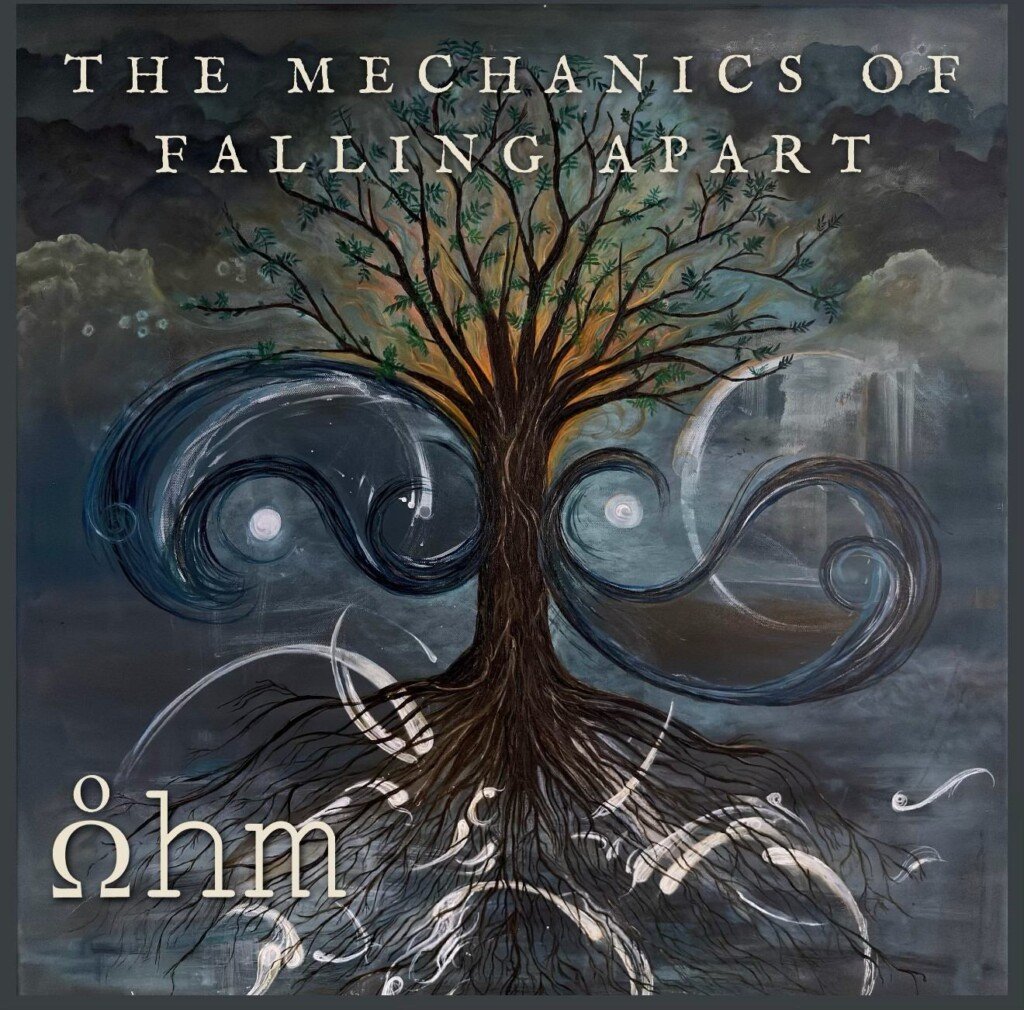
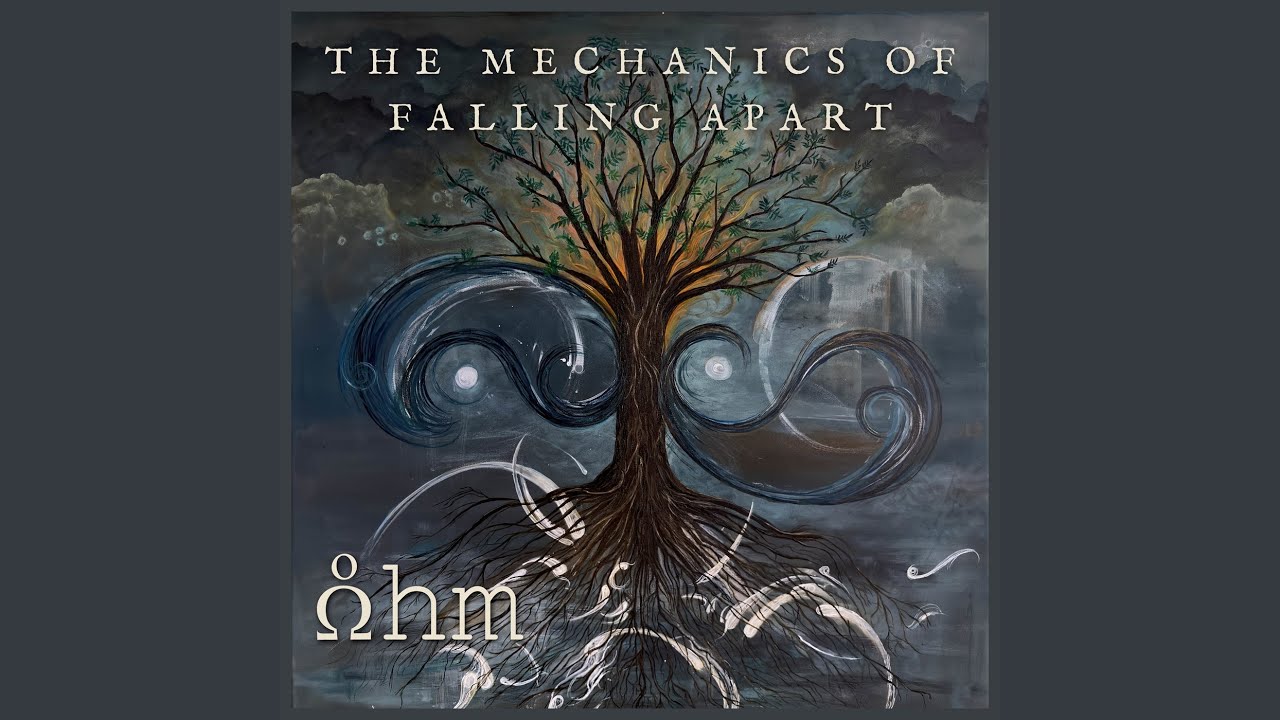
ÅHM is a Swedish two-piece alternative rock duo from Linköping, blending grunge-inspired guitars, raw emotion, and atmospheric soundscapes shaped by the darker atmospheres of post-rock and post-metal. Drawing inspiration from bands like Deftones, Soundgarden, Alice in Chains, and the raw spirit of Nirvana’s In Utero, the duo creates music that balances heaviness with melody and introspection. Ahead of the release of their EP The Mechanics of Falling Apart—released November 6 via Robot Distro / Golden Robot Global Entertainment, featuring drums and guitars played without a click to let the songs breathe and shift naturally, and exploring themes of abuse of power, political disillusionment, grief, and personal collapse—we caught up with ÅHM to talk about capturing that 90s grunge ethos, the international success of their single “Memorial Garden,” and navigating the dynamic balance between heaviness and vulnerability. Check out the exclusive interview below:
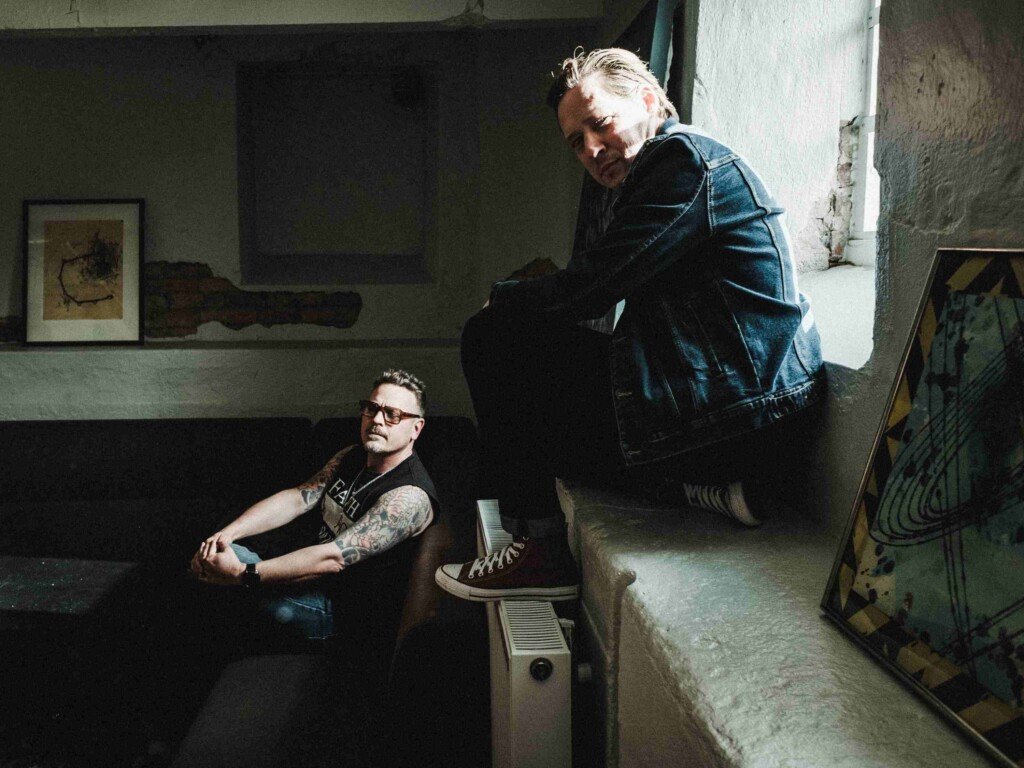
1. Your roots can often shape your journey. Can you share a story or moment from your early life that had a significant impact on your path into music?
Cribbe: I spent a lot of time at Skylten in Linköping in the ’90s, both rehearsing and playing there. It was a real hub for hardcore. Bands came through from all over the world, including some of the biggest names in the scene. To be able to see those bands and play music in the same place was pretty special. It was a fantastic time, and being part of that scene shaped me more than I probably realised back then.
Anders: One of my earliest memories is sitting with my father’s guitar in my lap at around six years old, exploring the sound and feeling the vibrations against my body. Another vivid memory is listening to Elvis through headphones and getting goosebumps from a saxophone solo – the first time music ever did that to me. Other than that, I suppose it’s the classic way, like the moment you turn the amp to 11.
2. Did your musical journey begin with formal training, or was it more of a personal exploration? How has that shaped your unique approach to your craft?
Cribbe: No formal training for me either. I learned by playing with other people, watching drummers, making mistakes and figuring things out as I went along. That’s still how I approach music. I’m more interested in what a part feels like than whether it’s technically perfect.
Anders: It was very much a personal journey. I’m entirely self-taught, I think we both are. I actually started with the bass since my dad played bass in a band back in the day. He brought home a beginner’s book with two play-along cassettes where you learned through sheet music. I picked up a few things, but soon transitioned to guitar, learning chords from a library book. After that, pure curiosity took over. Today I also play some drums, piano, and banjo alongside guitar. If you look at the artists who influenced me, and I think almost all the rock stars through history, learned by doing. Not entirely on their own, but together in a room. The rock band is the ultimate school.
3. Who were some of the most influential figures in your early musical life, and how did they inspire your sound? Also, what’s the story behind choosing the name‘ÅHM’?
Cribbe: Early on, bands like Nirvana, Soundgarden, Alice in Chains and Neurosis meant a lot to me. I was drawn to drummers who could make a song feel huge without playing a million notes. Anders and I actually played together on another project back in the late ’90s. It might have been around 1998, but I can’t remember exactly. What I do remember is thinking he was a fantastic bass player. We never really hung out outside of that project. Then, in 2023, we needed a bassist for an Interlace recording. Anders came to mind, so I got in touch and he was up for it. We clicked straight away, and that led to the two of us starting ÅHM. He’s an incredible musician, and playing with him feels completely natural. We fit together without having to work at it. As for the name, we just thought ÅHM looked good. I don’t think there was much more to it than that.
Anders: I started out inspired by ’90s indie pop, though ’60s and ’70s music has always been a constant for me, especially The Beatles. I also had a phase where I went deep into ’70s British prog – Red by King Crimson is a masterpiece, and those drums are just incredible. Pretty sure I threw a few tracks on for Cribbe a couple of times. My high school band leaned into a darker, slower, and more atmospheric rock sound, heavily shaped by Radiohead and The Posies. Funny enough, I barely listen to heavy music today. Lately, it’s been pretty much exclusively Lana Del Rey, later Radiohead, and Elliott Smith. It’s quite ironic that those are my primary influences now, given that åhm is heavier than anything I’ve done in the past. Ok, Nirvana is always there as an inspiration.
4. What do you believe sets your music apart? How would you describe your sound to someone discovering you for the first time, and what emotions or experiences do you hope to evoke in your listeners?
Cribbe: I think it’s the mix of our backgrounds. Anders has a real instinct for melody, while I tend to come at things from a heavier, rougher place. But playing with him is just easy. We seem to understand where the other one is going without having to talk too much about it. We record the basic tracks live, without a click, and we leave a bit of movement and friction in there. To me, that’s what makes it sound like us. I’d rather hear two people playing together than something polished until there’s nothing left to feel.
Anders: To me, our music feels honest and real. We handle every single detail ourselves, and despite living in different parts of the country, our workflow just clicks. I record phone demos and send them over to Cribbe. Once we’re together in the studio, we rehearse loud until all our different angles on the tracks settle into place. You won’t find any grid-snapping or quantization in our foundation – we record live with no click, just communicating through body language and eye contact. When writing, Elliott Smith’s approach is a huge influence on my softer passages, while Cribbe often pitches heavy riffs or specific vibes he wants to explore. That friction and blend is really the core of ÅHM’s identity. Listeners can judge the originality for themselves, but I genuinely believe we’ve crafted a sound that’s distinctly ours.
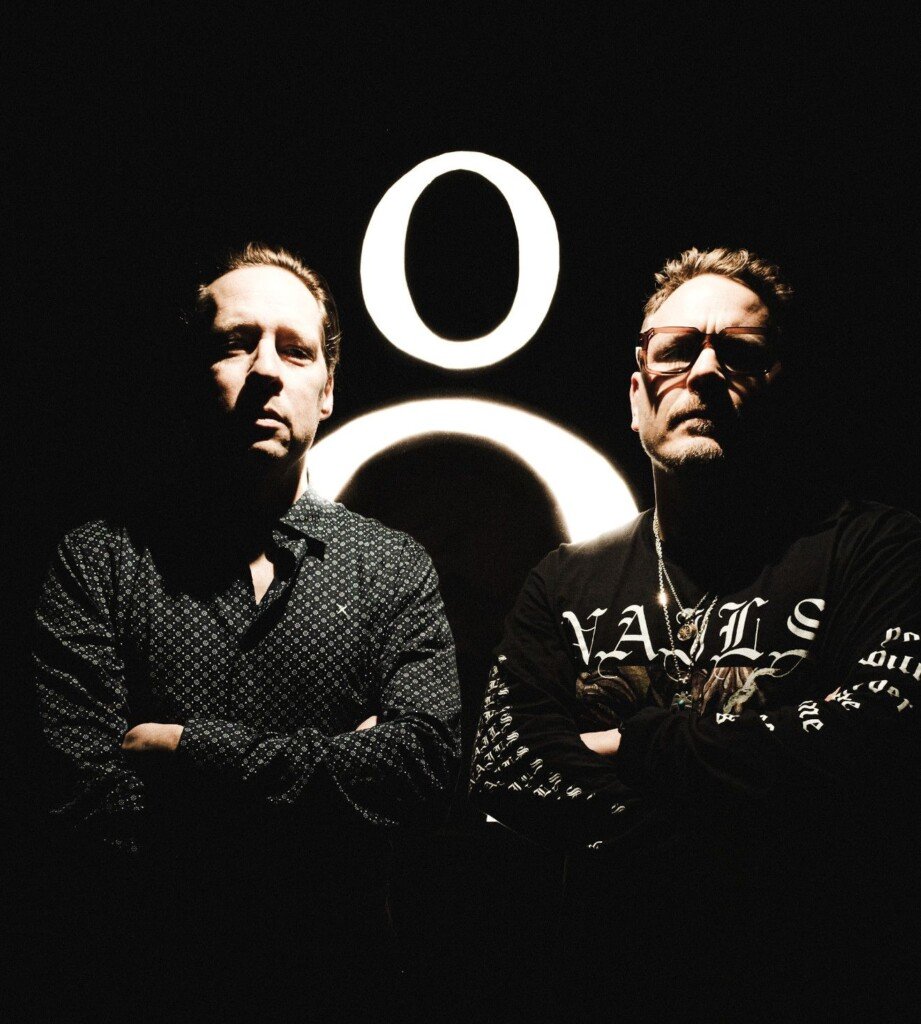
5. For most artists, originality is first preceded by a phase of learning and, often, emulating others. What was this like for you? How would you describe your own development as an artist and music maker, and the transition towards your own style, which is known as METAL?
Cribbe: I spent years in heavier bands, including Roswell and Circle Six, and that background is still a part of how I play. When I was younger, a lot of it was about impact and volume. These days I’m just as interested in space and dynamics. A heavy part can hit much harder when you’ve let the music breathe before it. I wouldn’t call ÅHM a metal band, although there’s certainly some of that weight in the music.
Anders: Metal? I wouldn’t describe our music as metal… The only thing that maybe makes it sound like metal is the fact that we morstly drop the tuning to C, or even Bb, and play distorted riffs. There’s no growling and my singing leans more towards a Cobain(ish) feeling and the softness from Thom Yorke and the singers in The Posies, especially Jon Auer. I think Cribbe has more to say about the development as an artist since he has played more in bands than I have.
6. Music often transcends entertainment. What’s your view on the role and function of music as political, cultural, spiritual, and/or social vehicles – and do you try and affront any of these themes in your work, or are you purely interested in music as an expression of technical artistry, personal narrative, and entertainment?
Cribbe: Anders writes the lyrics, so he can speak more directly about those themes. For me, music has always been a way of expressing things that don’t necessarily come out in words. I don’t think a drum part needs to be technically impressive to mean something. It needs to serve the song and make you feel it.
Anders: That’s a great question. There’s a lot on my mind when I write lyrics. On our new EP, there’s quite a bit of politics woven into how the world around us – with all its disasters and misery – affects us as individuals, impacting our inner lives and leaving us with a sense of helplessness caused by powerful men abusing their authority. A lot of my writing also stems from my own mental health struggles. I have bipolar disorder, and I explore how that affects both me and the people around me. I’m fairly stable today, but past experiences and memories still shape how I think and function in everyday society.
7. Do you feel the rewards of your musical career match the energy and passion you invest in it, or are there different kinds of fulfillment you’re still seeking?
Cribbe: If you’re measuring the reward in money or streaming numbers, probably not. But that was never the reason to start ÅHM. We’re two people making music on our own terms, and when someone outside our circle finds it and connects with it, that means something. I still get the biggest reward from being in the room and actually playing.
Anders: I doubt many musicians feel fairly compensated today. The energy and money you pour into creating art is rarely matched by financial returns – touring and merch seem to be the only real revenue streams left. But honestly, that’s a problem for larger acts. With ÅHM, making money was never part of the equation. Our priority is making music that satisfies us personally and feeling proud of creating something meaningful. Cribbe has put in an incredible effort with promotion, pushing our music past our immediate circle of friends and family. First and foremost, it’s about having fun, and time in the studio is priceless to us. If people outside our closest circle connect with it, we’ve already exceeded our expectations from when we first started out.
8. Can you walk us through your creative process? From the first spark of an idea to the finished track, what’s the most essential part of your process, and how do collaboration or external influences shape your work?
Cribbe: Most songs start with Anders sending me a rough recording on his phone. I listen, get ideas for the drums, and sometimes suggest a heavier riff or a different direction. Then we meet up and play it loud until something clicks. That’s my favourite part: when one of us does something the other wasn’t expecting, and suddenly the song goes somewhere new. We try to hang on to those moments when we record.
9. What’s been the most challenging hurdle in either your personal life or music career, and how has it shaped you as an artist?
Cribbe: For me, the biggest challenge has probably been making enough room for music alongside work and everything else in life. Anders and I live in different cities, and with just two people in the band there’s a lot to handle outside the actual music. It’s taught me to value the time we have together and not take any of it for granted.
Anders: The past seven years have been completely life-altering for me. I’ve gone through a chaotic period with multiple psychiatric hospitalizations, coming close to suicide a couple of times, and undergoing extensive treatments, including ECT and ketamine therapy. You could say I’ve been lost, and I haven’t quite found my way home yet.That’s really what a lot of my lyrics are about – the search, the struggle to accept who you are, and that overwhelming feeling of not understanding what’s happening around or inside you. There’s a certain self-loathing, along with feelings of guilt and shame. All of this has deeply shaped my expression as an artist.I appreciate great lyrics so much more today, and I find it easier to connect with other people’s words. Elliott Smith, for instance – I hear another dimension in his music now. And I think Kurt Cobain feels much closer to me as well, after everything I’ve been through over these past few years.
10. On the flip side, what moment or achievement in your career so far has made you feel the proudest, and why? And let’s talk about your latest release and future plans.
Cribbe: I’m proud that we’ve built ÅHM into something real with just the two of us. We make and record the music ourselves, and it still feels like two people playing together rather than a project assembled on a screen. Our single “They Drain” was released on 9 October, and our six-track EP The Mechanics of Falling Apart comes out on 6 November. We’re planning to record again in November, so it feels like we’re only getting started.
11. With social media having a heavy impact on our lives and the music business in general, how do you handle criticism, haters, and/or naysayers in general? Is it something you pay attention to, or simply ignore?
Cribbe: I’ll listen to criticism if it’s thoughtful and comes from someone who’s actually spent time with the music. Sometimes that’s useful. But people who just want a reaction aren’t worth much energy. Social media helps us reach people, but I don’t want comments or algorithms deciding what ÅHM should be.
12. Creative work in a studio or home environment, or interaction with a live audience? Which of these two options excites you most, and why?
Cribbe: The studio, at least at the moment. There’s something about Anders and me playing together, loud and without a click, and suddenly finding a moment neither of us planned. I’ve enjoyed playing live in other bands too, but creating something new from scratch is what excites me most right now.
13. Do you think is it important for fans of your music to understand the real story and message driving each of your songs, or do you think everyone should be free to interpret your songs in their own personal way?
Cribbe: I think people should be free to make the songs their own. I might feel one thing when we play a piece, Anders might mean something else with the lyrics, and a listener could hear a completely different story. That’s one of the best things about music. You don’t have to explain everything.
Anders: To me, the most important thing about music is that the listener makes it their own. Music is all about emotion, including instrumental music of course, and the last thing I want to do is dictate what someone should feel or how they should interpret a song. But it has to make you feel something. I want people to connect on a deep level, to feel something intense and real. When I’m recording vocals, I can never keep a take where I don’t hear absolute honesty and emotion – even if the performance is technically good. Thankfully, that genuine feeling usually shows on the first or second take anyway.
STAY IN TOUCH:
FACEBOOK | INSTAGRAM | SPOTIFY | WEBSITE | YOUTUBE