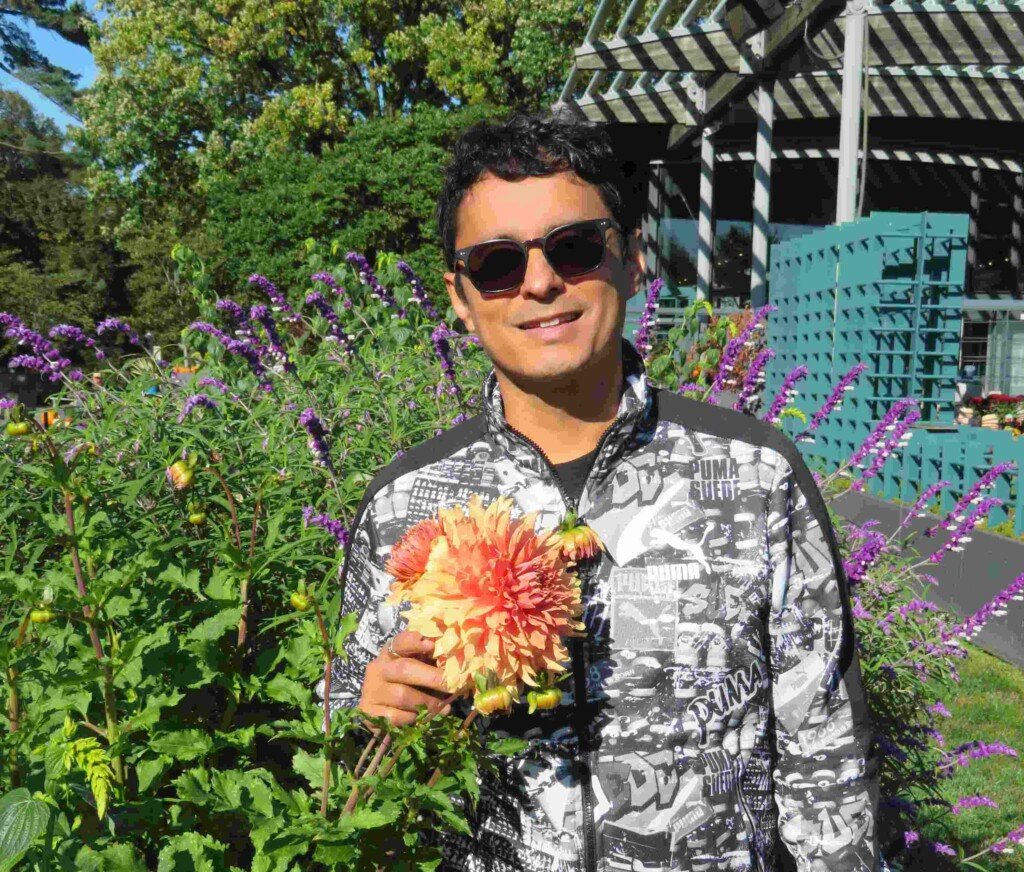
Vidura Barrios is a musician and composer whose work brings traditional Sanskrit mantras into contemporary devotional settings. Drawing from the yogic tradition, where Lord Shiva represents supreme consciousness, his original compositions weave together sacred invocations designed for meditation, yoga, movement, and chanting. Ahead of the release of his single “Om Namo Bhagavate Rudraya”—which blends repetition, melody, and rhythm into a musical offering to Shiva’s many aspects, from transformative power to inner peace—we caught up with Vidura to talk about translating ancient mantras into modern soundscapes, the meditative practice of devotional music, and invoking stillness through song. Check out the exclusive interview below:
1. Your roots can often shape your journey. Can you share a story or moment from your early life that had a significant impact on your path into music?
I have been a meditator and have loved Sanskrit mantras since I was 16 years old. In the yoga tradition I practice, it is taught that mantras were originally experienced by great sages during deep meditation, and that the sound vibrations of these mantras are manifestations of the subtle body within us.
I came to understand this in a very personal way through a remarkable dream. In the dream, I was climbing a mountain at dawn. As I looked toward the horizon in awe, the sun began to rise. It was enormous, red, and magnificent. Suddenly, my entire body began vibrating with the sound of an ancient hymn called the Ganapati Atharva Shirsha, a mystical Sanskrit hymn dedicated to Shri Ganesha, the beloved elephant-faced deity of auspiciousness and new beginnings.
In the dream, I could feel every single cell of my body vibrating with the sound. And that vibration was pure bliss, a bliss so powerful that I felt my knees buckle. The experience was incredibly vivid and felt completely real.
That dream gave me a profound appreciation for just how powerful and extraordinary Sanskrit mantras can be. It was an experience that has stayed with me ever since.
2. Did your musical journey begin with formal training, or was it more of a personal exploration? How has that shaped your unique approach to your craft?
I studied classical piano for eight years when I was young, and I also received some formal training in the mridanga, a traditional Indian drum. Beyond that, much of my musical education has come through experience, practicing, experimenting, and learning along the way.
I founded Inner Splendor Media in 2006. In the beginning, I brought together a team of musicians and worked primarily as a producer. Several years later, a friend told me, “You have a beautiful voice. You should record it!” I had never really thought of myself as a singer, but she planted a seed. Eventually, I decided to give it a try and began recording more of my own vocals.
I am very grateful to that friend! Sometimes it takes someone else to recognize a possibility within us that we haven’t yet discovered ourselves.
3. Who were some of the most influential figures in your early musical life, and how did they inspire your sound? Also, what’s the story behind choosing the name ‘VIDURA BARRIOS’?
I lived at a meditation ashram for ten years, where music was a fundamental part of our daily schedule. I learned an enormous amount during that time and served as a harmonium and drum player for many years.
I have always loved Indian classical music. Some of my favorite musicians include Shivkumar Sharma and Ravi Shankar. I also deeply admire artists who incorporate traditional Sanskrit mantras into their recordings, particularly M. S. Subbulakshmi and Uma Mohan.
As for my name, Vidura is the spiritual name given to me by my Guru, Gurumayi Chidvilasananda, and I am profoundly grateful to her. She is my hero, and I have learned so much from her.
It was through Gurumayi that I developed my deep love for chanting and kirtan. There are many wonderful recordings of her chanting available online. Siddha Yoga music is incredibly joyful and powerful, and that spirit has had an enormous influence on my own musical journey.
4. What do you believe sets your music apart? How would you describe your sound to someone discovering you for the first time, and what emotions or experiences do you hope to evoke in your listeners?
Our recordings are generally quite simple, mostly devotional and meditative in nature.
The thought that someone might experience even a little joy, peace, or tranquility while listening to our music makes me very happy. That, to me, is one of the greatest rewards of creating music.
I also believe that Sanskrit mantras should be pronounced correctly and approached with genuine respect. I am proud that our recordings strive to maintain the integrity of these sacred sounds while honoring the traditions and culture from which they originate.
At the same time, I enjoy exploring different musical styles. I am currently working on a project featuring Western-style songs that are fun, imaginative, and uplifting.
Our latest release in that direction is a single called There Was a Ghost Who Had No Friends, for which I composed the melody and wrote the lyrics. It is a sweet mixture of orchestral pop and big-band music.

5. For most artists, originality is first preceded by a phase of learning and, often, emulating others. What was this like for you? How would you describe your own development as an artist and music maker, and the transition towards your own style?
I have never spent much time comparing myself to other artists. My guiding question has always been quite simple: What would I enjoy listening to myself?
I don’t pay much attention to what competitors are doing or what the latest trends might be. I have always felt that if you create something you genuinely love, something you believe in and are proud of, there will be people who resonate with it and love it too. And if you’re not everyone’s cup of tea, that’s perfectly fine!
I think there is something very liberating about creating from that perspective. It allows you to follow your own curiosity and instincts rather than trying to fit into someone else’s expectations.
6. Music often transcends entertainment. What’s your view on the role and function of music as political, cultural, spiritual, and/or social vehicles – and do you try and address any of these themes in your work, or are you purely interested in music as an expression of technical artistry, personal narrative, and entertainment?
I believe music has an extraordinary ability to bring people together, regardless of their backgrounds, beliefs, or cultures.
Throughout human history, music has been used to celebrate, to mourn, to express devotion, and to connect with something greater than ourselves. In that sense, I think music is much more than entertainment. It is a fundamental part of the human experience.
For me, the spiritual dimension of music is particularly important. Chanting, for example, has been practiced for thousands of years, and there is something deeply moving about participating in a tradition that connects us with countless generations before us.
I also believe music can communicate feelings and experiences that words alone cannot fully express. Whether I am creating a devotional chant or a playful song about a lonely little ghost finding friendship, I hope the music touches something meaningful in the listener.
7. Do you feel the rewards of your musical career match the energy and passion you invest in it, or are there different kinds of fulfillment you’re still seeking?
I love music. It is one of my first loves, and being able to create and share music for so many years has been tremendously rewarding.
At the same time, I am a firm believer in the importance of diversification, particularly when working in a creative business. I think it is healthy to explore different interests and find new ways to express one’s creativity.
For instance, I am currently developing a jewelry line called Inner Splendor, featuring one-of-a-kind pieces incorporating a variety of beautiful gemstones.
I find the creative process of designing jewelry very exciting. In many ways, it is not so different from making music. You begin with an idea, explore different possibilities, and gradually bring something lovely into existence.
I hope to continue creating, exploring, and learning for as long as I can.
8. Can you walk us through your creative process? From the first spark of an idea to the finished track, what’s the most essential part of your process, and how do collaboration or external influences shape your work?
Ideas often come to me completely out of the blue, so I use the voice notes app on my phone quite frequently. I might suddenly hear a melody in my head and want to capture it before it disappears. Other times, I simply sit down at the piano and start playing around, allowing ideas to emerge naturally.
I have always been a bit of a procrastinator, with perhaps a sprinkle of ADHD, so I tend to work surprisingly well under tight deadlines! Sometimes a little pressure is exactly what I need to get moving.
For me, the initial creative process is usually quite quick. An idea or melody can come together in a relatively short time.
Of course, bringing that initial inspiration to life as a finished recording is another matter. That is where collaboration becomes so valuable. I enjoy working with a talented team who can bring their own creativity and perspective to a project.
9. What’s been the most challenging hurdle in either your personal life or music career, and how has it shaped you as an artist?
I think one of the most important lessons I have learned is that anyone pursuing a creative career should also invest time in understanding the business side of their work.
Take business classes, seek advice from successful people, and don’t be afraid to ask questions. It can save you an enormous amount of frustration, headaches, and unnecessary suffering!
When I started Inner Splendor Media, there was a great deal of trial and error. Over time, I came to appreciate just how important it is to ask for help when you need it.
I think the American cultural emphasis on figuring everything out on your own can sometimes create unnecessary difficulties. We are social creatures, and very little of significance is accomplished entirely alone. Learning to collaborate, seek guidance, and recognize the value of other people’s experience has been an essential part of my journey.
10. On the flip side, what moment or achievement in your career so far has made you feel the proudest, and why? And let’s talk about your latest release and future plans.
What makes me proudest is simply that we have continued creating music through all the ups and downs over the years. This year, Inner Splendor Media celebrated its 20th anniversary! That is a milestone I am very grateful for. The music industry has changed enormously since we began in 2006, and being able to continue doing something I love after two decades is a wonderful feeling.
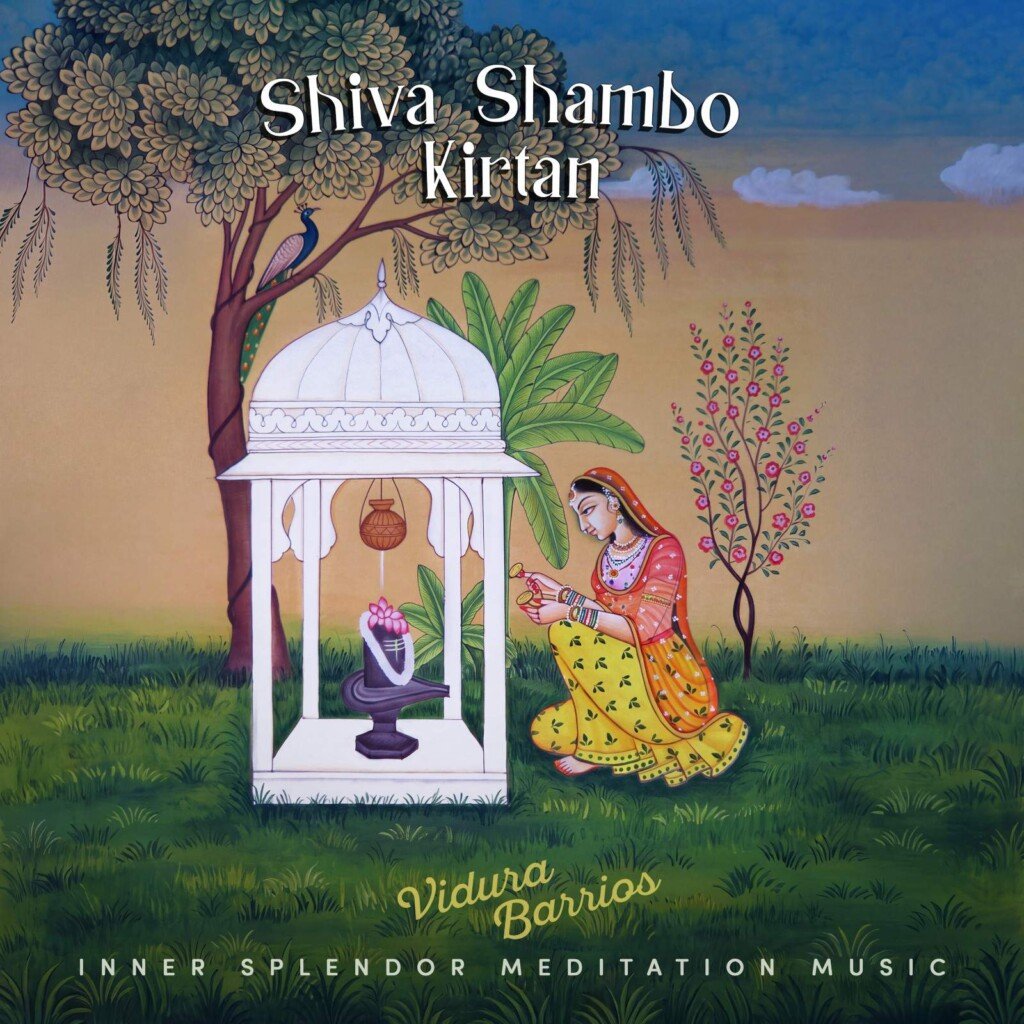
I would also love to invite everyone to listen to our latest single, Shiva Shambho Kirtan. You don’t need to be a yoga practitioner or have any particular spiritual background to enjoy this kind of music.
Since ancient times, human beings have gathered to chant and sing together. There is something wonderfully primal and universal about that experience.
Chanting can be incredibly uplifting. It is full of energy, devotion, and, above all, joy!

STAY IN TOUCH:
FACEBOOK | INSTAGRAM | SPOTIFY | WEBSITE | YOUTUBE