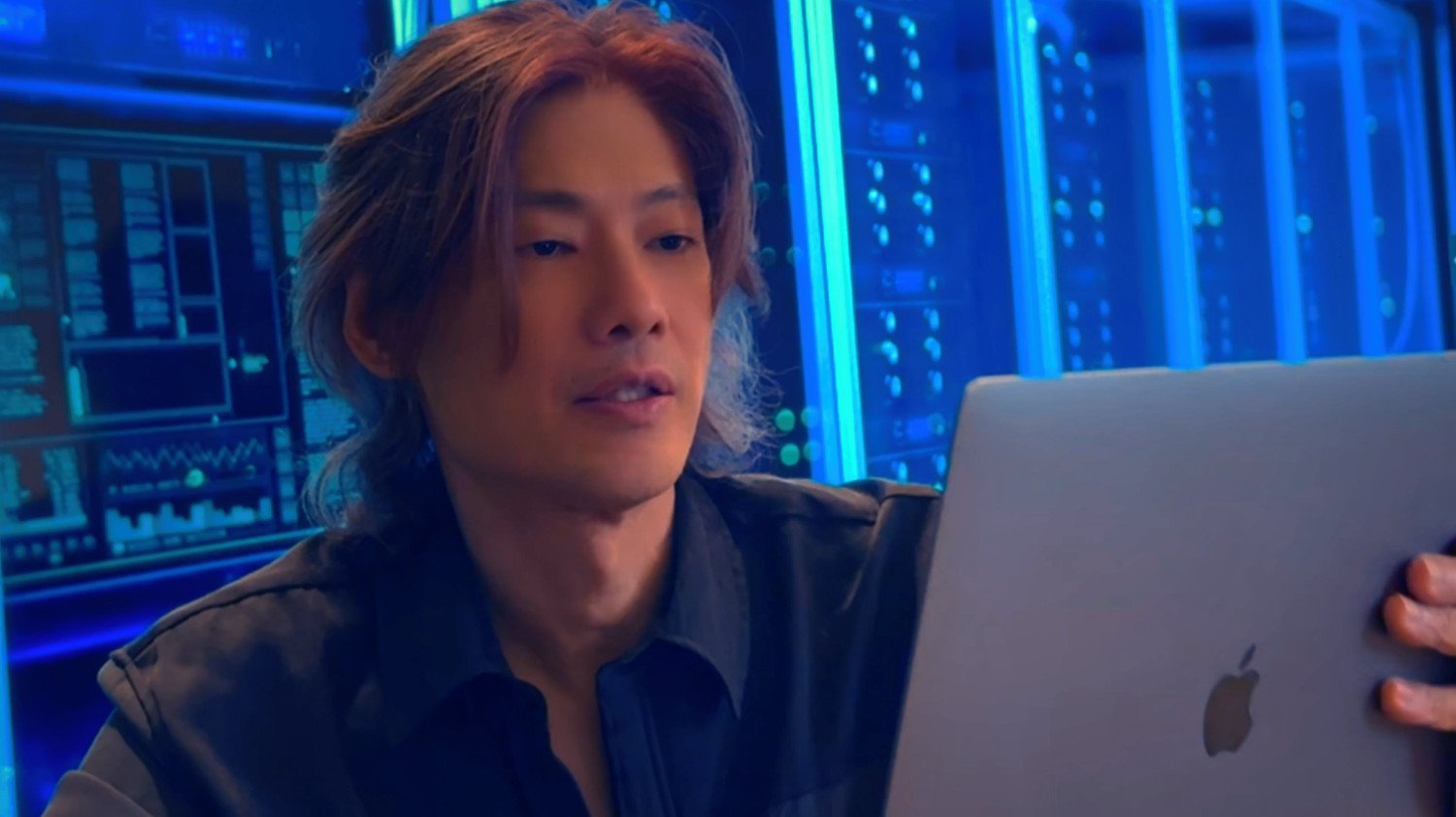
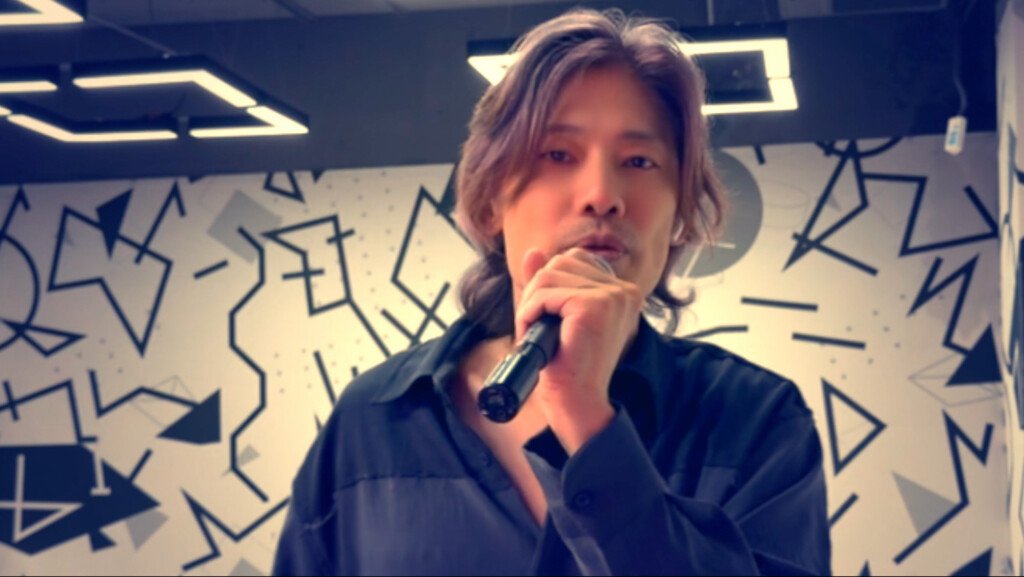
Spearheaded by Craigycraig, the Fatewell Project is a multimedia creative space for music, visual art, and ideas rooted in the core philosophy of “being good and doing good”. Today at Illustrate Magazine, we sit down with the artist to discuss his latest release, “You’re Not So Human,” a song and accompanying music video born from his complicated love-hate relationship with modern technology. Exploring the tension between highly capable digital systems and the irreplaceable nature of human consciousness, the track emphasizes that compassion and moral choices remain deeply human traits. Ironically, despite its focus on artificial intelligence, Craigycraig created the music, lyrics, and video entirely without the use of AI to ensure a distinctly human creation. Read on as we delve into his solitary, trial-and-error process from recording audio at home on his bed to dodging security guards for time-pressured video shoots, and examine the modern contradictions of our dependence on technology.
1. Your roots can often shape your journey. Can you share a story or moment from your early life that had a significant impact on your path into music?
CRAIGYCRAIG: It probably started when I was about 10 years old. My parents argued often and loudly, and at first I would just put my hands over my ears. Eventually, my hands got tired, so I upgraded to headphones. Unfortunately, back then there were no noise-cancelling headphones.
The problem was that I could still hear the yelling, so I started playing music instead—and louder.
I began listening to more and more music and realized how much I loved it.
The sounds were completely different from what was happening around me. Music felt calming and happy. I suppose, in a strange way, some of my earliest experiences with music came from simply wanting a little peace and quiet.
I didn’t know it at the time, but music was becoming a place I could go when I wanted to feel better.
2. Did your musical journey begin with formal training, or was it more of a personal exploration? How has that shaped your unique approach to your craft?
CRAIGYCRAIG:
I had about one year of piano lessons, which was probably enough to teach me that I don’t particularly enjoy being told what to do.
After that, I mostly figured things out myself. I learned guitar by slowing songs down and trying to figure out what I was hearing. Drums came a little more naturally to me because I liked hitting things and making sounds with my mouth. So I already had the important qualifications.
Being self-taught has probably made me more experimental. I don’t always know what I’m “supposed” to do, which can actually be useful.
Sometimes not knowing the rules gives you permission to do something different.
3. Who were some of the most influential figures in your early musical life, and how did they inspire your sound? Also, what’s the story behind choosing the name “Fatewell”?
CRAIGYCRAIG:
Some of my biggest early influences were Bugs Bunny, Tom and Jerry, Casper the Friendly Ghost, and Porky Pig.
I loved the visual style, the music, the timing, and especially the way everything worked together. The orchestral music wasn’t just sitting in the background—it was choreographed with the movement and comedy. A character could move one inch and suddenly the music would make the moment ten times funnier.
I think that probably influenced me more than I realized. I became fascinated with the relationship between sound, timing, movement, and emotion.
As for the name “Fatewell”:
Being good. Doing good. That’s Fatewell.
4. What do you believe sets your music apart? How would you describe your sound to someone discovering you for the first time, and what emotions or experiences do you hope to evoke in your listeners?
CRAIGYCRAIG:
There are so many boxes that sometimes I don’t know which box I’m supposed to be in. I’m still discovering that myself.
If someone asked me what my music sounds like, I might just say, “It sounds normal.”
I don’t really want to make music that exists only to fit neatly into one genre. I like electronic sounds, pop, melodies, different textures, and different moods, and I enjoy letting a song decide what it wants to become.
More than anything, I hope my music makes people think a little deeper and see things from a different perspective. I don’t necessarily need to give them an answer. Sometimes it’s more interesting to leave them with a question. If they’re still thinking about it after the music stops, then I probably did something right.

5. For most artists, originality is first preceded by a phase of learning and, often, emulating others. What was this like for you? How would you describe your own development as an artist and music maker, and the transition towards your own style, which is known as EDM?
CRAIGYCRAIG:
I’m actually a computer person, so electronic music has always felt pretty natural to me. I’ve always been fascinated by computers, programming, numbers, and technology, and I think some of that probably finds its way into the way I think about music.
Timing, patterns, repetition, sound design, and even mixing can sometimes feel a little like programming. You change one thing, listen to the result, change something else, and suddenly you’ve spent six hours trying to fix something nobody else would probably notice.
I don’t really think about my music as needing to belong to one specific genre, though. I like keeping things open. If a song wants to move between pop, electronic, dance, or something else, I’m happy to let it.
I’m still figuring out what my sound is. Maybe that’s part of the fun.
6. Music often transcends entertainment. What’s your view on the role and function of music as political, cultural, spiritual, and/or social vehicles? Do you try to approach any of these themes in your work?
CRAIGYCRAIG:
I think music can say things that a normal conversation sometimes can’t. I’m not particularly interested in telling people what they should think. I’d rather make something that makes them stop for a moment and think for themselves.
With “YOU’RE NOT SO HUMAN,” for example, I started with something fairly simple: my love-hate relationship with technology. My computer helps me create things, frustrates me, occasionally seems to have a mind of its own, and sometimes appears to have a personal grudge against me. Yet, somehow, I still keep coming back to it.
Sometimes I realize just how much I depend on it and desperately need a break from it. And sometimes I wonder if it’s spying on me. Basically, it’s complicated.
But underneath the humor is a bigger question: if technology is becoming more human-like, what does that mean for us?
We’re becoming more and more dependent on technology, and there’s something exciting about that—but also something a little unsettling. That’s where the love and hate in the song come from.
I think technology can make our lives better, but I also hope it can make us think more deeply about what being human actually means—including how we treat each other, animals, and the world around us, with a little more compassion.
⌁ The more technology learns to become human, the more important it becomes for us to remember what makes us human. ⌁
If a song can make someone dance and think at the same time, that’s a pretty good combination.
7. Do you feel the rewards of your musical career match the energy and passion you invest in it, or are there different kinds of fulfillment you’re still seeking?
CRAIGYCRAIG:
For me, the reward is mostly in making the thing. Every time I finish a song or music video, I’m genuinely excited. Sometimes I look at it and think, “Wow, I actually made that.” Then I start thinking about everything I could have done better.
But that’s also what keeps me going. There is always another thing to learn, another sound to improve, another video to make.
I don’t think I’ll ever reach a point where I say, “Okay, I’ve learned everything. I’m finished.”
There will always be something else to fix, learn, or accidentally break.
8. Can you walk us through your creative process? From the first spark of an idea to the finished track, what’s the most essential part of your process, and how do collaboration or external influences shape your work?
CRAIGYCRAIG:
For “YOU’RE NOT SO HUMAN,” the melody was mostly written while I was out walking. Sometimes the best ideas seem to arrive when you’re doing something completely unrelated. Then I bring the idea home and start building it.
A lot of the process is experimentation: recording something, listening to it, changing it, deleting it, putting it back, changing it again, and eventually wondering why I didn’t just leave it alone in the first place.
A lot of it is also simply trying to chase the right sound and the right feeling. Sometimes I’ll listen to something and think, “This is amazing.” Then I’ll listen to it the next day and wonder what on earth I was thinking.
The same thing happened with the video. Your ears and your eyes can be surprisingly unreliable when you’ve stared at or listened to the same thing for too long.
The hardest part is often knowing when to stop.
When you’re creating something yourself, you can keep changing it forever. Eventually you have to tell yourself, “Okay. Stop touching it.”
9. What’s been the most challenging hurdle in either your personal life or music career, and how has it shaped you as an artist?
CRAIGYCRAIG:
My computer and I have a very complicated relationship. Sometimes it’s my best creative partner. Sometimes it listens perfectly. Sometimes it has a mind of its own. And sometimes I seriously consider throwing it out the window.
But when we collaborate well, a lot of beautiful things can happen.
Getting the mix and mastering right can be especially challenging. Something can sound perfect one day and completely wrong the next. After you’ve listened to the same song a hundred times, your ears aren’t always the most reliable judge anymore.
The same thing happens with video. You can stare at an edit for so long that you stop seeing it objectively.
So I’ve learned that sometimes the best thing you can do creatively is step away, come back later, and try to listen or look at it like you’ve never seen it before.
10. On the flip side, what moment or achievement in your career so far has made you feel the proudest, and why? And let’s talk about your latest release and future plans.
CRAIGYCRAIG:
Honestly, I feel pretty proud every time I finish a music video. There are so many little things that have to come together—music, vocals, recording, editing, visuals, mixing, mastering, and probably a few moments where you question your life choices.
“YOU’RE NOT SO HUMAN” was especially fun because the whole project grew out of my relationship with technology. I spent a lot of time thinking about the idea of humans becoming increasingly dependent on machines while machines are becoming increasingly human-like.
The ironic part is that I didn’t use AI to make the song or video. For now, I wanted to make something about AI without actually asking AI to make it for me. I thought there was something amusing about that contradiction.
I wrote the music, recorded the vocals, and made the video myself. As far as I know, completely human.
I did, however, give the computer plenty of opportunities to make my life difficult.
As for what’s next, I want to keep creating. I still have a lot to learn, and there are plenty of things I want to improve, but that’s part of what makes it exciting. I don’t really know exactly where the project is going yet.
I’m enjoying finding out.
11. With social media having a heavy impact on our lives and the music business in general, how do you handle criticism, haters, and/or naysayers? Is it something you pay attention to, or simply ignore?
CRAIGYCRAIG:
So far, so good. Or maybe I just don’t know. I don’t spend too much time worrying about people who don’t like what I make. There are already enough things to worry about without volunteering for extra ones.
Of course, criticism can be useful if there’s something constructive in it. I’m always willing to learn.
But if someone spends five minutes writing an angry comment about a song I spent months making, I might just let them have that five minutes.
12. Do you think it is important for fans of your music to understand the real story and message driving each of your songs, or do you think everyone should be free to interpret your songs in their own personal way?
CRAIGYCRAIG: I think both. I usually have a story or feeling behind a song, but once you release something, it no longer belongs entirely to you.
Someone might hear “YOU’RE NOT SO HUMAN” and think it’s about AI. Someone else might hear it as a song about relationships, technology, loneliness, dependence, or something completely different.
I’m okay with that.
In fact, I like it.
If someone takes something from a song that I never intended but it means something to them, I don’t think that’s a misunderstanding. I think that’s part of what music is supposed to do.
I can explain what the song means to me, but I don’t want to tell someone what it has to mean to them.

STAY IN TOUCH:
YOUTUBE