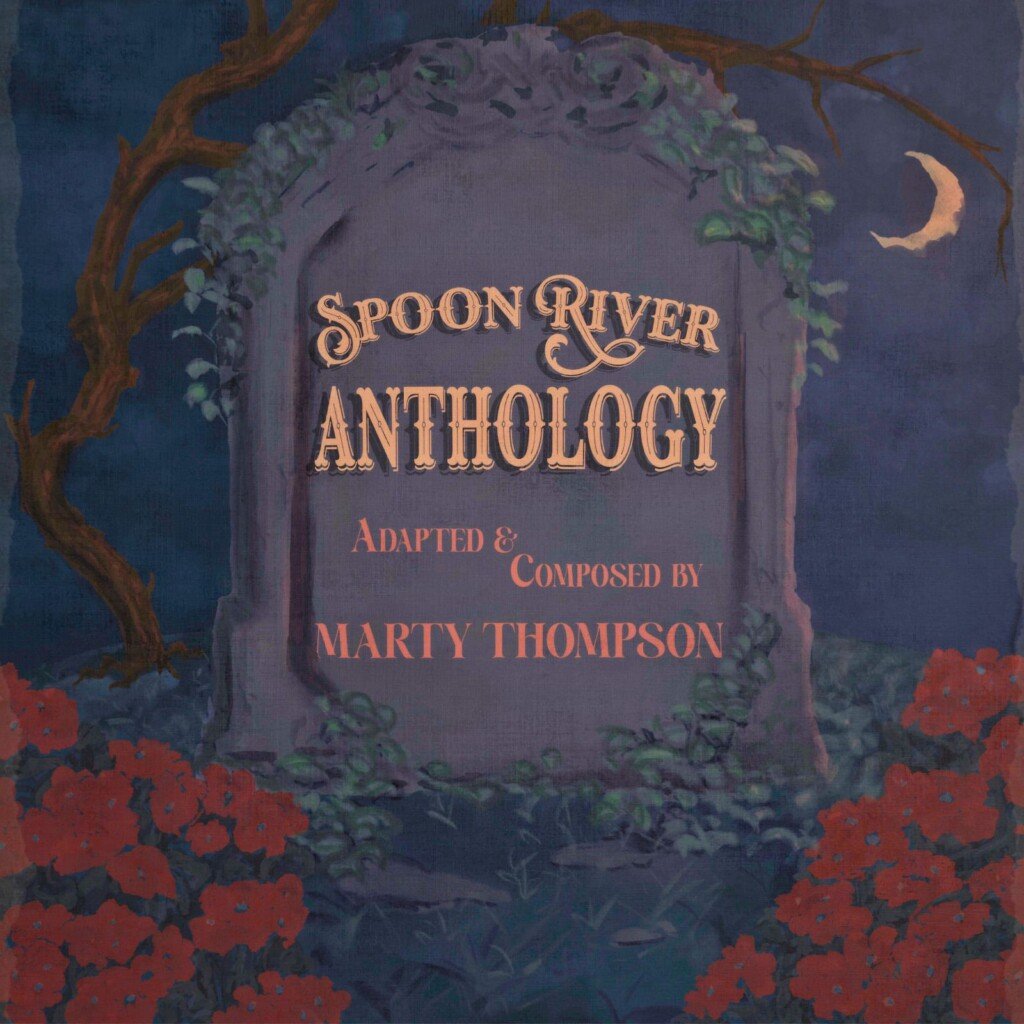
Marty Thompson is an independent roots songwriter and producer specializing in analog Americana and roots rock. Drawing heavily on classic literary influences and vintage studio mechanics, his work pairs intricate acoustic craftsmanship with immersive storytelling. Ahead of the release of his upcoming analog Americana concept album, Spoon River Anthology, and its driving lead single, “Unknown”—tracked live in a Silverthorne, Colorado cabin and inspired by the 1915 graveyard lore of Edgar Lee Masters’ poetry—we caught up with Marty to talk about the stories behind the songs, bypassing digital perfection, and capturing the raw physical weight of a ghost story told in a wooden room. Check out the exclusive interview below:
1. Your roots can often shape your journey. Can you share a story or moment from your early life that had a significant impact on your path into music?
Marty Thompson: I was raised in West Texas. You can’t grow up there without being influenced by Waylon Jennings, Roy Orbison, and Buddy Holly—especially Waylon when I was a kid in the late 70s. Those early pioneers didn’t build their sound on sterile perfection; they built it on attitude, wood, and wires. Hearing Waylon’s raw, unapologetic outlaw records taught me early on that the grit of a story matters far more than a polished vocal. Growing up, West Texas was a major stopover on I-20, so I saw everyone from Ozzy Osbourne and Willie Nelson to Kenny Rogers and ZZ Top. That constant exposure to live, working-class music left a permanent mark on me.
2. Did your musical journey begin with formal training, or was it more of a personal exploration? How has that shaped your unique approach to your craft?
Marty Thompson: It was mostly personal exploration. If I had started with strict formal training, I probably would have been taught to snap my playing to a digital grid, which I often avoid today. My early training was just wearing out cassettes of Neil Young, the Grateful Dead, and Bob Dylan. I bought a black Korean Cort guitar in Fort Worth in about ’94 and played along to a Creedence Clearwater Revival songbook until my fingers bled. Later, I took lessons from a neighbor, Scott Fraser—the lead guitarist for Epic Records’ Space Opera, who actually learned guitar from his “good friend” George Harrison in the early 70s! Scott didn’t use sheet music; we just jammed by ear. Learning that way meant I could play based on how a room feels, letting the natural spill and rhythm of a space dictate the tempo rather than a click track. I did eventually graduate from MTSU with a recording degree, but that raw, ear-first approach still drives every instrument I play today.
3. What do you believe sets your music apart? How would you describe your sound to someone discovering you for the first time, and what emotions or experiences do you hope to evoke in your listeners?
Marty Thompson: It comes down to telling an authentic, immersive story. My upcoming album, Spoon River Anthology (out October 9), is a perfect example. I adapted these tracks from Edgar Lee Masters’ masterpiece of the same name. They are essentially 1915 graveyard confessions—ghost stories about the intertwined lives, regrets, and scandals of people in early 1900s America. What sets this apart is the world-building. Just like the original poetry, the characters in my songs reference each other. As you listen, a wider, complete story of this town develops. I already have the next volume of characters written, and the goal is to build an ever-expanding catalog of these interwoven stories. While taking this on the road as a full Grateful Dead-style touring act with changing nightly setlists is the ultimate dream down the line, right now I’m entirely focused on bringing this cinematic town to life in the studio, volume by volume.
4. For most artists, originality is first preceded by a phase of learning and, often, emulating others. What was this like for you? How would you describe your own development as an artist and music maker, and the transition towards your own style, which is known as FOLK?
Marty Thompson: My transition into this style of folk and Americana started with poetry. Long before I picked up a guitar, I was writing poems and studying meter. Outside of a heavy Jim Morrison obsession in junior high that shaped my early writing, I didn’t formally “learn” poetry—it was just how my brain naturally processed the world. Once I finally learned to play, translating that structural poetry into song form was a seamless evolution. As my instrumentation improved, the songs gained more depth and character. I eventually realized that merging narrative, story-driven poetry with the raw instrumentation of bands like the Grateful Dead and albums like Neil Young’s Harvest Moon was exactly where my true sound lived. That realization is what ultimately prepared me to tackle a massive literary project like Spoon River Anthology.
5. Music often transcends entertainment. What’s your view on the role and function of music as political, cultural, spiritual, and/or social vehicles – and do you try and affront any of these themes in your work, or are you purely interested in music as an expression of technical artistry, personal narrative, and entertainment?
Marty Thompson: I view Americana as an inherently cultural and spiritual vehicle. You are literally carrying the traditions of the past into the present. With the Spoon River project, it’s deeply spiritual. I am adapting posthumous confessions of small-town residents who died a century ago. They talk about their regrets, their hidden loves, and the town’s quiet scandals. Bringing those stories back to life is about honoring the human condition, showing that while a century has passed, our fears and desires haven’t changed at all.
6. Can you walk us through your creative process? From the first spark of an idea to the finished track, what’s the most essential part of your process, and how do collaboration or external influences shape your work?
Marty Thompson: It comes from all directions, but it usually starts with the lyrics. I wrote poetry long before I picked up an instrument. For Spoon River Anthology, my process is to physically write out the original 1915 epitaphs on paper, let the mood sink in, and then find the proper key and melody on either the acoustic guitar or piano. I play the bass, all the guitars, and sing all the vocals on most of my releases, but I brought in some heavy hitters for this project. My friend James Paul Mitchell (who has live credits with the Jerry Garcia Band) plays pedal steel and mandolin. For a track called “Blind Jack,” I brought in legendary fiddler Luke Moller (Hank Williams Jr., Carrie Underwood) to layer two massive fiddle tracks. Finally, I joined forces with studio veteran Dennis Holt on drums. He used brushes throughout to give it that Grateful Dead acoustic living room set vibe from circa 1980.
7 What’s been the most challenging hurdle in either your personal life or music career, and how has it shaped you as an artist?
Marty Thompson: The biggest hurdle was actively ignoring the modern industry’s pressure to sanitize everything. Today, there is immense pressure to use digital pitch-correction, artificial autotune, and quantized grids so your music fits neatly onto commercial playlists. Bypassing all of that is terrifying because you are leaving all your human imperfections exposed. But leaning into that vulnerability shaped this entire campaign. It forced me to trust my hands and the microphones.
8. On the flip side, what moment or achievement in your career so far has made you feel the proudest, and why? And let’s talk about your latest release and future plans.
Marty Thompson: Completing the Spoon River Anthology sessions exactly how I envisioned them: on my own terms, in the mountains, without compromise. The journey officially begins when the lead single, “Unknown,” drops on Friday, October 9, alongside the full-length album. This record is just the first installment. The interconnected story of Spoon River will continue to unfold with each character’s ghostly story in future volumes. Capturing that Americana heartbeat—the combination of raw lyrics, melody, and acoustic arrangement you hear in Neil Young or the Grateful Dead—is what I am most proud of. I’m already planning to track Volume 2 next summer.
9. Creative work in a studio or home environment, or interaction with a live audience? Which of these two options excites you most, and why?
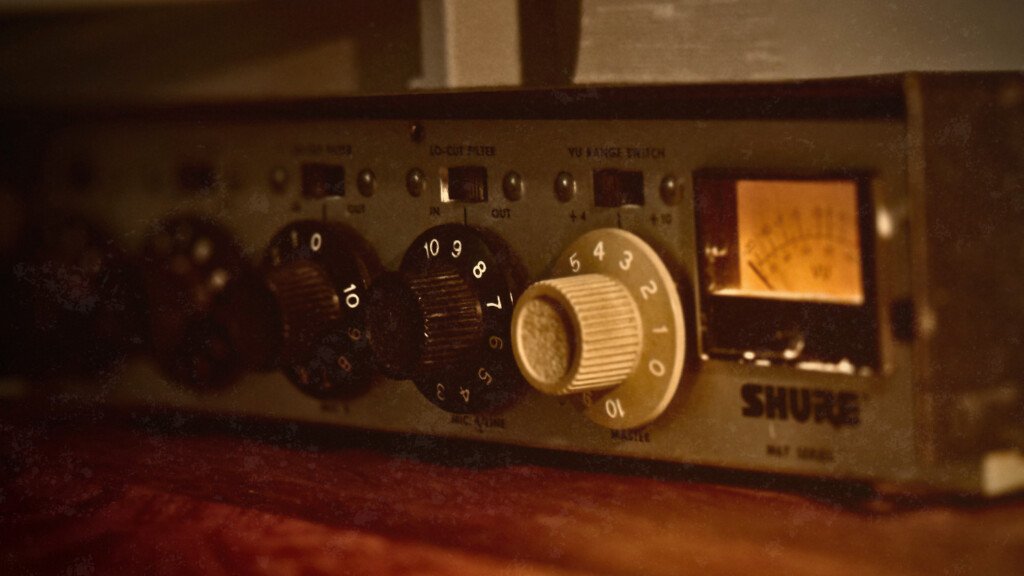
Marty Thompson: They feed completely different parts of the soul, but for this project, the remote studio environment was everything. Tracking live in the Silverthorne cabin felt like playing to an audience, but the audience was the room itself. You are playing to the wood, the altitude, and the history of the songs. When you capture live acoustic music through tube ribbon mics in a secluded cabin, the silence in the room acts as its own instrument.
10. Do you think is it important for fans of your music to understand the real story and message driving each of your songs, or do you think everyone should be free to interpret your songs in their own personal way?Marty Thompson: It’s a delicate balance. On one hand, I want them to know the historical roots—that these songs are adapted directly from Edgar Lee Masters’ 1915 graveyard epitaphs. Understanding that lore gives the album an immense, cinematic weight. But once they press play on October 9, the ghosts I am singing about must become their ghosts. The greatest Americana songs provide a specific narrative framework but leave just enough room in the shadows for the listener to insert their own life. Masters was the master of this style, and I like to think he would have been happy with my adaptations.

STAY IN TOUCH:
FACEBOOK | INSTAGRAM | X | SPOTIFY | TIKTOK | WEBSITE | YOUTUBE