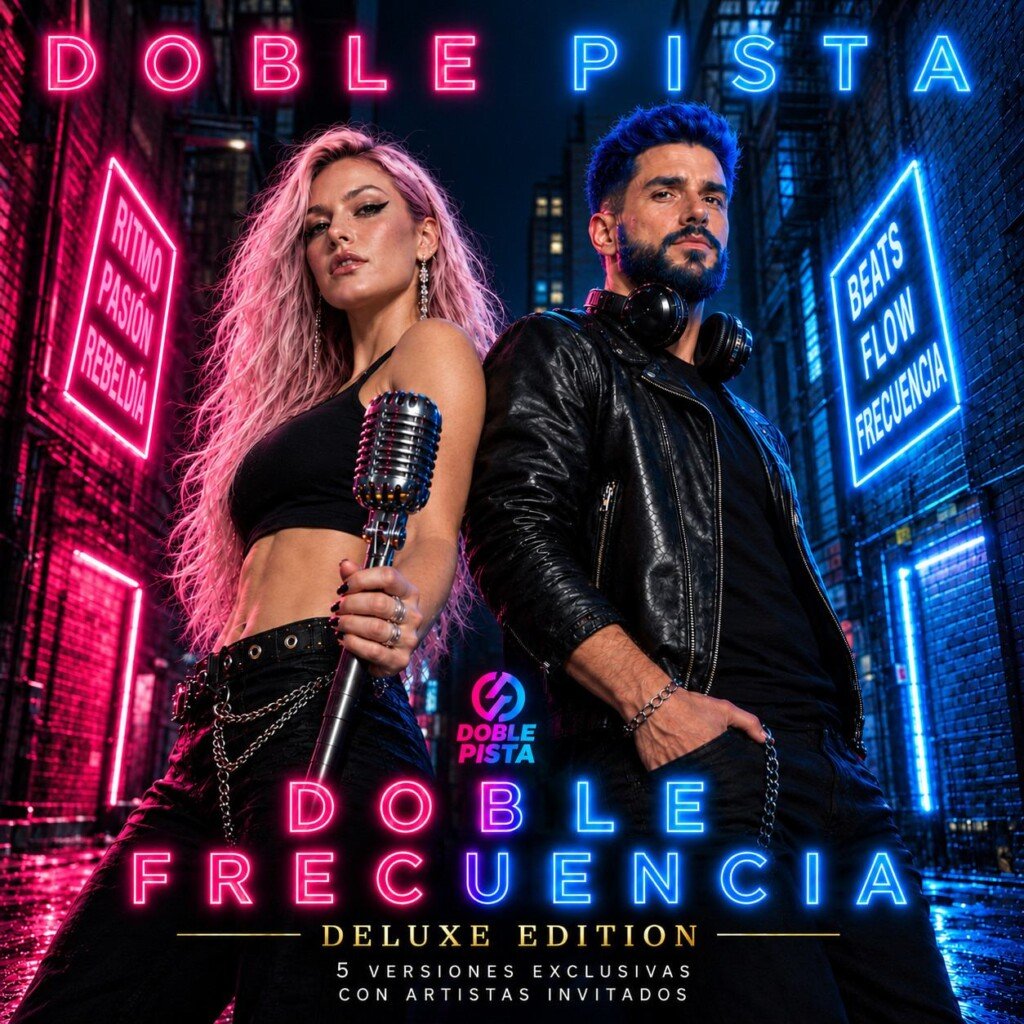
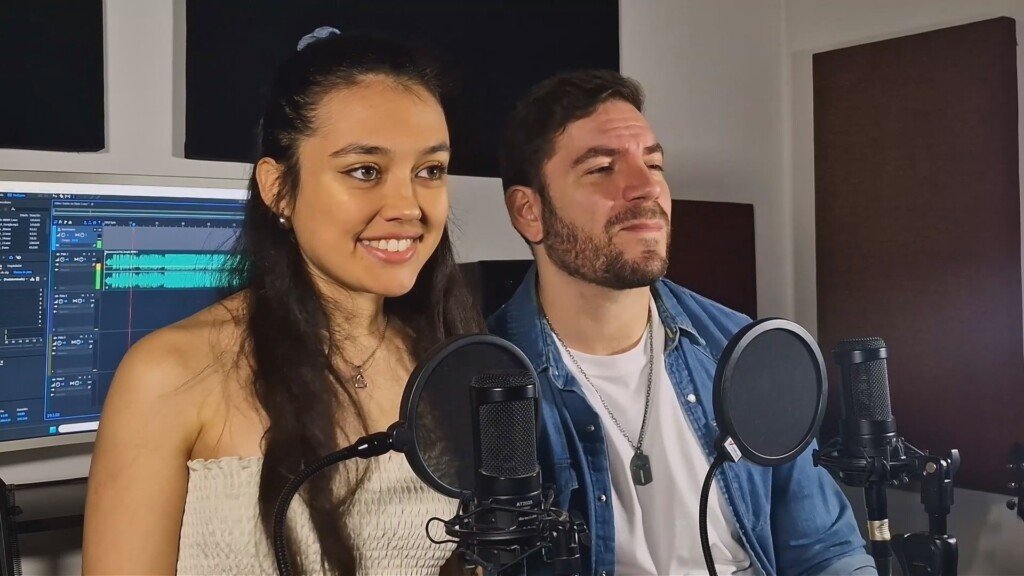
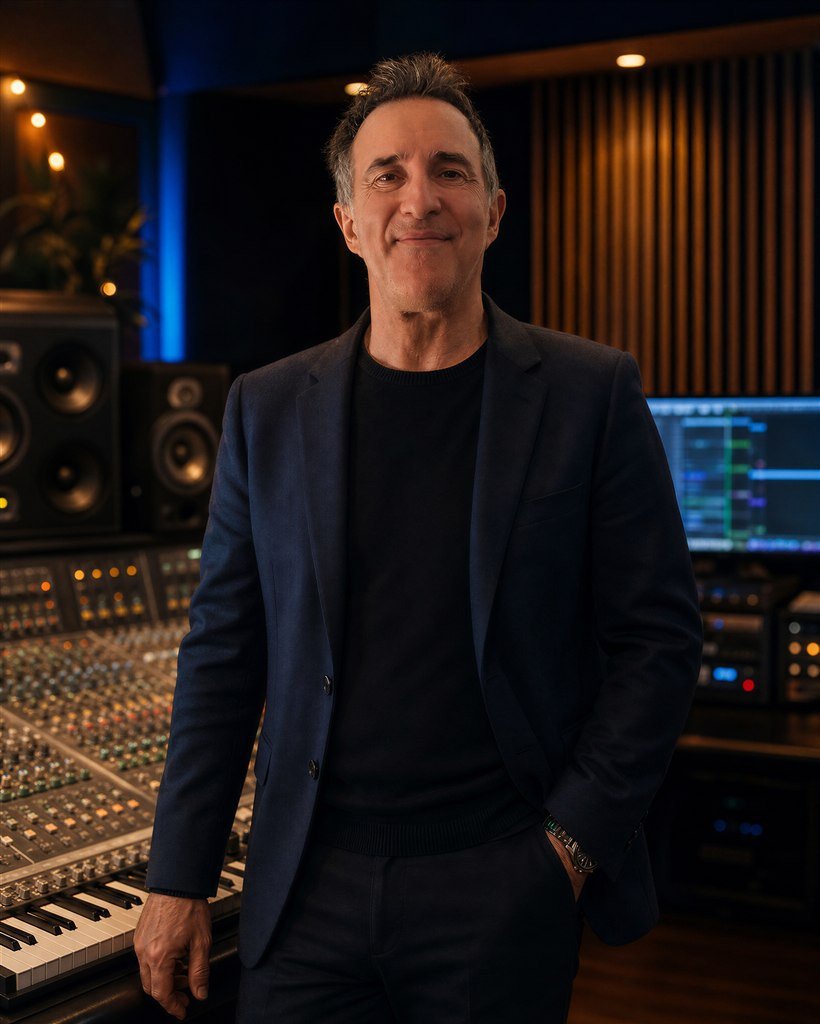
Doble Pista is a conceptual electropop powerhouse spearheaded entirely by Spanish composer, producer, and lyricist Carlos Cuerdo Cobos. Blending retrofuturistic synth textures, modern pop arrangements, and meticulous sound design, the project explores themes of identity, memory, and technological evolution. Ahead of the release of their evocative electropop anthem “Memoria en la Piel”—which features 100% human vocal performances by Sebastián and Agus to put authentic emotional connection at its core—we caught up with Carlos to talk about crafting lush electronic soundscapes where memories are etched into our skin, maintaining complete creative control over every aspect of production, and bridging high-concept electronic synthesis with genuine vulnerability. Check out the exclusive interview below:
1. Your roots can often shape your journey. Can you share a story or moment from your early life that had a significant impact on your path into music?
Doble Pista: I’m Carlos Cuerdo Cobos, producer, composer, songwriter and arranger behind Doble Pista®. I’m from Pineda de Mar, a coastal town near Barcelona. Growing up between the sea and the quiet of a small environment gave me the mental space I needed to dive into music. The contrast between the calm of the town and the vastness of the sea directly influenced my search for atmospheric textures and immersive soundscapes.
2. Did your musical journey begin with formal training, or was it more of a personal exploration? How has that shaped your unique approach to your craft?
Doble Pista: My training has been entirely independent and self-taught. I don’t come from a conservatory or a traditional school. Doble Pista was born in my home studio in Pineda de Mar as a personal laboratory where I could learn by doing. That freedom allowed me not to box myself into genres and to develop an approach where granular synthesis and electronics coexist with emotional narrative, without preset rules.
3. Who were some of the most influential figures in your early musical life, and how did they inspire your sound? Also, what’s the story behind choosing the name ‘Doble Pista’?
Doble Pista: My influences range from 80s synth-pop (Depeche Mode, New Order, Pet Shop Boys) to contemporary electronic production (Flume, ODESZA, Rüfüs Du Sol). The name “Doble Pista” reflects the duality that defines the entire project: the organic versus the digital, human voices versus electronic production, and the pink-blue aesthetic that runs through my entire artistic identity. There are always two paths, two frequencies, two tracks coexisting in creative tension.
4. What do you believe sets your music apart? How would you describe your sound to someone discovering you for the first time, and what emotions or experiences do you hope to evoke in your listeners?
Doble Pista: Doble Pista is not just music — it’s a conceptual universe where I take on the four primary creative roles: producer, composer, songwriter and arranger of every work. My sound is cinematic electronics that fuses low-frequency rhythms with tension-filled melodies. I want the listener not just to hear, but to feel and inhabit that universe, where human emotion and technical precision meet.
5. For most artists, originality is first preceded by a phase of learning and, often, emulating others. What was this like for you? How would you describe your own development as an artist and music maker, and the transition towards your own style, which is known as POP?
Doble Pista: Like any producer, I spent hours deconstructing my idols’ songs to understand how they achieved those atmospheres. But the turning point came when I stopped trying to sound like them and started using music to tell my own stories. The transition toward my current style arrived when I understood that technology shouldn’t replace emotion, but amplify it.
6. Music often transcends entertainment. What’s your view on the role and function of music as political, cultural, spiritual, and/or social vehicles – and do you try and affront any of these themes in your work, or are you purely interested in music as an expression of technical artistry, personal narrative, and entertainment?
Doble Pista: I firmly believe that music can and should be a social vehicle. A clear example is my song “Soy Así,” which was born as a letter to my ten-year-old daughter about cyberbullying. 10% of the proceeds from that track are donated to Save the Children Spain. I don’t make pamphlet music, but when a song has an empowering message, I feel the responsibility for it to have a real impact beyond the studio.
7. Do you feel the rewards of your musical career match the energy and passion you invest in it, or are there different kinds of fulfillment you’re still seeking?
Doble Pista: The greatest reward isn’t metric or commercial, but emotional. When a listener writes to tell me a song helped them through a difficult moment, or when an international publication validates my work, I feel the investment of time and passion makes sense. I’ve always maintained that music doesn’t belong to the one who creates it, but to the one who needs it. That is the true fulfillment.
8. Can you walk us through your creative process? From the first spark of an idea to the finished track, what’s the most essential part of your process, and how do collaboration or external influences shape your work?
Doble Pista: Everything starts with a narrative idea or an emotion, not with a loop. I write the lyrics, compose the music, do the arrangements and produce the entire track. Once the sonic universe is built, I invite vocalists as guest artists — like Sebas and Agus on “Memoria en la Piel” — to bring their humanity. I give them full interpretive freedom; when they record, the song stops being just mine and takes on a life of its own.
9. What’s been the most challenging hurdle in either your personal life or music career, and how has it shaped you as an artist?
Doble Pista: The biggest challenge has been building a complete artistic universe (music, visuals, narrative) entirely independently, also taking on the artistic direction. Maintaining conceptual coherence across every release requires enormous discipline. But that autonomy is also my greatest strength: it allows me to tell stories without filters or commercial compromises.
10. On the flip side, what moment or achievement in your career so far has made you feel the proudest, and why? And let’s talk about your latest release and future plans.
Doble Pista: One of my proudest recent moments has been seeing Pineda de Mar, my town, enter the international atlas of cities of a media outlet in Austin, Texas with 30 years of history, thanks to the coverage of my project. As for the future: my album “Doble Frecuencia (Deluxe Edition)” is already out, and right now I’m putting the finishing touches on the next record, which will see the light next year.

STAY IN TOUCH:
FACEBOOK | INSTAGRAM | X | SPOTIFY | TIKTOK | WEBSITE | YOUTUBE