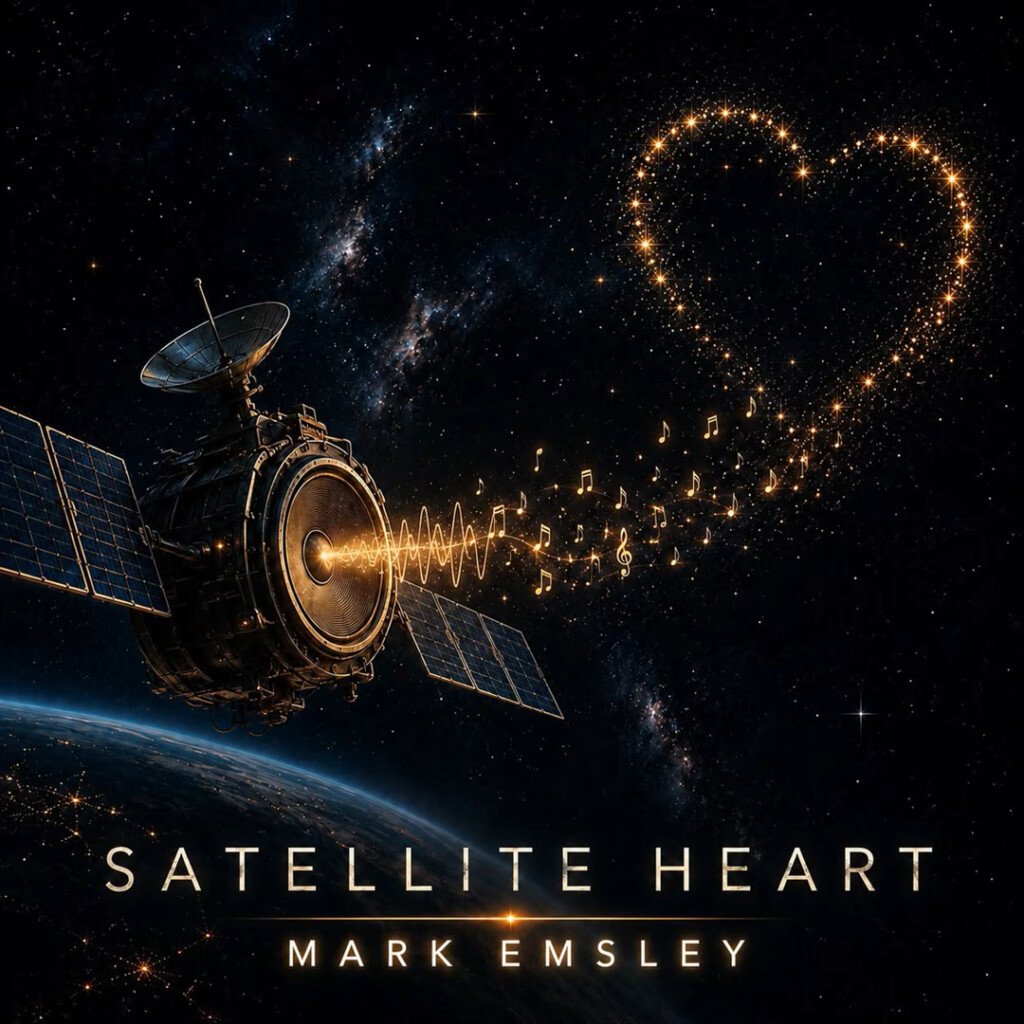
Mark Emsley is a UK singer-songwriter making melodic, guitar-driven rock and pop-rock built around big choruses and honest lyrics. A lifelong musician with a background working throughout the music industry, Mark returned his focus to writing and recording his own material after getting clean and sober in October 2024. Working with producer Karl Morey, his songs draw on real experiences of love, loss, heartbreak, recovery and hope. Recent releases include Wish I Could Hate You and Suitcase in the Wind, with Satellite Heart showing the brighter, more commercial side of his sound. Check out the exclusive Interview below:
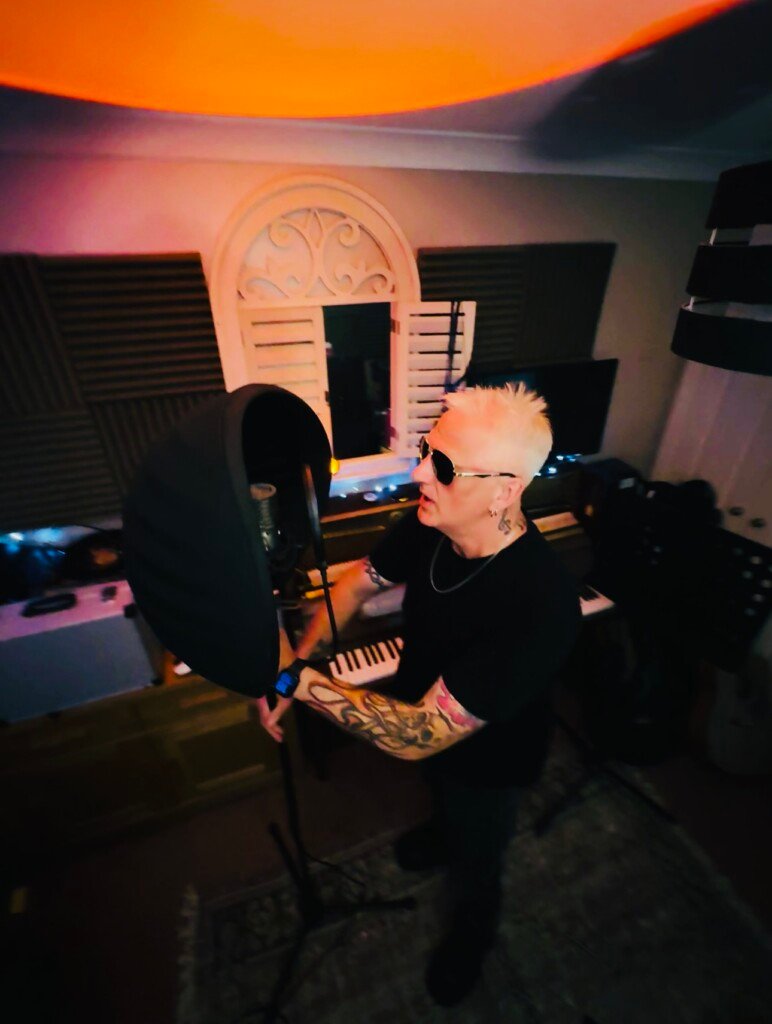
1. Your roots can often shape your journey. Can you share a story or moment from your early life that had a significant impact on your path into music?
MARK EMSLEY: Music was around from pretty early on for me. I had formal piano lessons with a teacher called Mr French, so initially it was all very classical. I was entered into the Bedfordshire Music Festival when I was about ten and ended up winning, which I suppose was probably the first indication that I wasn’t completely useless at this music thing!
I also joined the Bedfordshire Youth Orchestra playing viola, although I can’t pretend that was driven by some great musical ambition. I joined because I fancied a girl who was in it. I absolutely hated playing the viola. Nothing ever happened with the girl either, so musically and romantically it was a fairly questionable decision!
But piano and classical music gave me a really good musical foundation. The guitars and rock ‘n’ roll came later. I wanted to be a rock star. I’m not going to lie — I absolutely did.
2. Did your musical journey begin with formal training, or was it more of a personal exploration? How has that shaped your unique approach to your craft?
MARK EMSLEY: It definitely started with formal training. As I mentioned, I learned classical piano when I was young, and I think that gave me a musical foundation that I’ve probably carried with me without even realising it.
But once I discovered guitars and rock music, it became much more about exploration. I wanted to work things out, write songs and understand why certain melodies or chord changes made me feel something.
These days I don’t sit down and think about theory when I’m writing. I normally start with a melody, a chord progression, a lyric or just a feeling and follow it. Melody is massively important to me. If I’ve got a great melody and something honest to write about, that’s normally where the song begins.
3. Who were some of the most influential figures in your early musical life, and how did they inspire your sound? Also, what’s the story behind choosing the name ‘MARK EMSLEY’?
MARK EMSLEY: I grew up loving Def Leppard, Van Halen, Ozzy Osbourne and The Cult — basically anything with big guitars and great melodies. The Cult were a massive influence on me wanting to be a rock star. Billy Duffy’s guitar playing, his riffs, that guitar sound and tone — I just loved everything about it. I still do. Some of those riffs are amongst the greatest ever as far as I’m concerned.
I was also a huge Prince fan. What an incredible songwriter. He could seemingly do absolutely anything musically, but underneath all of it there were always brilliant songs.
And then there’s Queen. Freddie Mercury, for me, was simply the greatest frontman there’s ever been. The songs, the voice, the presence — everything about him was extraordinary.
All of those artists were different, but I think the common thread for me was always great songs, great melodies, huge guitars and musicians with real personality.
As for the story behind choosing the name Mark Emsley… my parents chose it for me! It’s my actual name. I’ve spent enough of my life trying to work out who I am without inventing another person to be now.
5. What do you believe sets your music apart? How would you describe your sound to someone discovering you for the first time, and what emotions or experiences do you hope to evoke in your listeners?
MARK EMSLEY: That’s quite difficult to answer about your own music without sounding like a complete arse! I suppose I’d describe it as melodic rock and pop-rock — big guitars, strong melodies and choruses that hopefully stay in your head.
What probably matters more to me is that the songs are real. I’m writing about things I’ve actually lived through — relationships, heartbreak, depression, loss, addiction, getting sober and starting again. I’m not particularly interested in pretending I’ve had everything figured out.
I don’t need somebody listening to know exactly what happened to me. If they hear something in one of my songs that connects with something in their own life, that’s enough. If one of my songs means something to somebody else, then every minute I spent writing it was worth it.
6. For most artists, originality is first preceded by a phase of learning and, often, emulating others. What was this like for you? How would you describe your own development as an artist and music maker, and the transition towards your own style, which is known as ROCK?
MARK EMSLEY: I think everybody starts by being influenced by the music they love. When I was younger I was listening to Def Leppard, Van Halen, Ozzy, Queen, Prince and The Cult. Billy Duffy in particular had a huge influence on what I loved about guitar — those massive riffs, that tone and the way the guitar could give a song its entire character.
Of course some of those influences find their way into you. Over time, though, you stop consciously thinking about them. I’ve spent decades around music, guitars and musicians, and eventually all those different things become part of your own musical vocabulary.
I’m certainly not trying to reinvent rock music. I love big guitars, I love great pop melodies and I love huge choruses. I just put those things together in the way that feels natural to me. The thing that makes it mine is probably the life behind the lyrics.
7. Do you feel the rewards of your musical career match the energy and passion you invest in it, or are there different kinds of fulfillment you’re still seeking?
MARK EMSLEY: My definition of reward has changed massively. Of course I’d love the music to reach as many people as possible, I’d love to play more live and I’d be lying if I said I didn’t have ambitions for it.
But I’m doing this because I fucking love it. I’m writing more than I have in years, I’ve got an album finished and I’m already writing songs for the next one.
One of the strangest and most brilliant things recently has been seeing people in countries all over the world listening to my songs. I’ll look at the streaming data and see India, Brazil, the Philippines, America, Germany or somewhere I’ve never even visited, and there’s an actual person there listening to something I wrote. That still gives me goosebumps.
That’s a pretty incredible reward in itself.
9. Can you walk us through your creative process? From the first spark of an idea to the finished track, what’s the most essential part of your process, and how do collaboration or external influences shape your work?
MARK EMSLEY: There isn’t really one formula. Sometimes I’ll pick up a guitar and a chord progression appears, sometimes I’ll hear a melody, and sometimes a phrase or an idea gives me the whole direction of the song.
I tend to write pretty instinctively. Once something excites me I follow it, and quite often the song starts telling me where it wants to go.
Then I take it to Karl Morey, who produces my music. Karl and I have developed a really good working relationship because there’s a lot of trust there. I’ll normally have the song and a strong idea of what I want it to be, and then we can pull it apart, try things, throw away the rubbish ideas and build the record around the song.
The most important thing is that we don’t polish away whatever made the song exciting in the first place.
9. What’s been the most challenging hurdle in either your personal life or music career, and how has it shaped you as an artist?
MARK EMSLEY: Getting clean and sober. Without question. I stopped drinking and taking drugs in October 2024. The truth is, I’d become what you’d probably describe as a functioning junkie. That’s not something I particularly enjoy talking about, but if I’m going to tell my story honestly, there’s no point pretending it was something it wasn’t.
From the outside I could still function and get on with life, but that doesn’t mean everything was okay. Eventually I reached a point where I knew something had to change, and getting clean and sober completely changed my life.
Music became a huge part of what came afterwards. I started writing properly again and suddenly all these experiences I’d been carrying around had somewhere to go. Relationships, heartbreak, depression, grief, addiction and starting again — they’re all in the songs somewhere.
Creatively I feel more alive than I have in years. Getting clean and sober gave me my life back. Music has given me something pretty fucking exciting to do with it.
10. On the flip side, what moment or achievement in your career so far has made you feel the proudest, and why? And let’s talk about your latest release and future plans.
MARK EMSLEY: There are loads of things I’m proud of musically. I’ve been incredibly lucky through music. I’ve worked with some amazing people, had experiences I never imagined I’d have and collected more than a few ridiculous rock ‘n’ roll stories along the way. Some of those stories are probably best left for another time!
But one of the things I value most from all those years is actually the friendships. I’ve made some great friends through music and some of those friendships have lasted for years. You might not see somebody for ages, but there’s this shared connection through music and you can pick up the phone or start chatting online and it’s like no time has passed. I think that’s pretty special.
If you’re asking me what I’m proudest of right now, though, it’s probably this record. I’m genuinely proud of the songs I’ve written and of what Karl Morey and I have made together.
There are parts of my life I’m not proud of, and I’m still learning to live with some of those things. I don’t think getting clean and sober suddenly means you have to look back and pretend everything that happened was somehow worthwhile or part of some grand plan. Some things I wish I’d done differently. That’s just the truth.
But I can’t change any of it. What I can change is what I do now, and music is a massive part of that.
My latest single is Satellite Heart. Musically it’s really upbeat — big guitars, loads of melody and a huge chorus — but lyrically it’s about something much less cheerful. It’s about constantly reaching for somebody who knows exactly how you feel but chooses not to meet you there. The signal isn’t lost. They receive it. They just never land.
Seeing that song, and the other songs I’ve released, being listened to in countries all over the world genuinely gives me goosebumps. It’s still quite difficult to get my head around the fact that somebody thousands of miles away might be sitting there listening to something that started with me and a guitar.
The first album is finished and I’m already several songs into what will eventually become the second. I’m incredibly proud of what I’ve achieved musically in the past, and I’m probably even more excited about what I’m creating now.
And as for some of those old rock ‘n’ roll stories… maybe ask me again in another interview.
11. Do you think it is important for fans of your music to understand the real story and message driving each of your songs, or do you think everyone should be free to interpret your songs in their own personal way?
MARK EMSLEY: Once a song is out in the world, I think it belongs partly to the listener. I know exactly who or what I was writing about, but somebody else might hear the same lyric and attach it to something completely different in their own life. I actually love that. There is a difference, though, between somebody finding their own meaning in a song and completely misunderstanding what the lyric is saying.
Satellite Heart is a good example. It’s not a happy song about two people finding this amazing connection. It’s about one person doing all the reaching. The other person receives the signal, knows exactly how you feel, but never lands.
But if somebody takes that song and it becomes attached to their own story, that’s brilliant. I don’t want to tell people what they’re supposed to feel. That’s one of the beautiful things about music.
STAY IN TOUCH:
FACEBOOK | SPOTIFY | TIKTOK | WEBSITE | YOUTUBE