
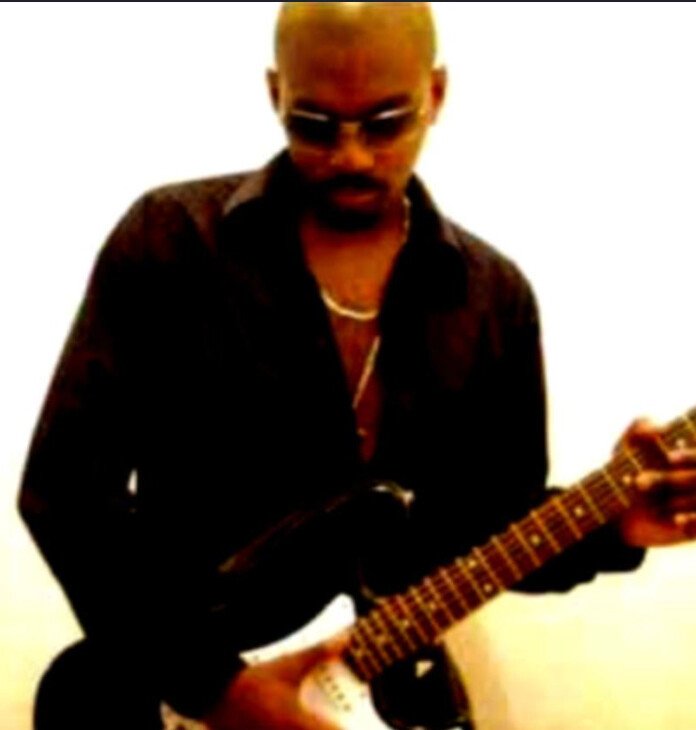
Philmac is a producer, composer, and recording artist blending southern hip-hop, funk, rock, and cinematic soul into a self-contained sound all his own. A true one-man band, he writes, produces, arranges, and performs his music himself — playing guitar, bass, drums, and synthesizers across his records.
Originally from Gadsden, Alabama and raised in Birmingham, Philmac developed his sound while studying Media Arts & Animation at The Art Institute of Atlanta and creating his 1998 debut, P-Funk. Over time, the album earned cult-classic status in the underground for its hypnotic synths, heavy low end, and raw southern lyricism.
Now, after decades of sharpening his craft, Philmac returns with War In Heaven — a high-fidelity, cinematic body of work that expands his world into something bigger, deeper, and more immersive.
Every sound you hear, he played. Every word you hear, he wrote. Every beat you feel, he produced.
Philmac isn’t chasing trends. He’s building a body of work. Check out the exclusive interview below:
1. Your roots can often shape your journey. Can you share a story or moment from your early life that had a significant impact on your path into music?
PHILMAC:
One of the defining moments of my life happened when I was around 14 years old. I had a close call that made me realize how fragile life can be. Around that same time, music became much more than entertainment—it became a way to process life, fear, hope, and ambition.
I grew up in Birmingham, Alabama, where music became both an escape and a source of purpose. I sang in choir, played violin in orchestra, listened to records obsessively, and spent countless hours studying artists like Prince, Michael Jackson, OutKast, Tupac, and producer Dallas Austin.
One experience stands out. While playing violin in seventh-grade orchestra, I became frustrated with performing difficult classical pieces and asked my teacher if I could write my own music instead. To my surprise, he encouraged me. Our orchestra eventually performed music I had written throughout the Birmingham school district. Looking back, that experience was an early preview of what I do today—sit in a studio and create music from imagination.
That period planted the seeds for everything that followed.
2. Did your musical journey begin with formal training, or was it more of a personal exploration? How has that shaped your unique approach to your craft?
PHILMAC:
It was a combination of both. I received formal exposure through choir and orchestra, but most of my development came through curiosity and experimentation.
Starting with a Korg 01/W workstation I purchased when I was 19, I taught myself songwriting, production, recording, mixing, and multiple instruments. Over time I became fascinated by artists who could create complete artistic worlds themselves—people like Prince, Dallas Austin, and Trent Reznor.
That inspired me to become a one-man-band artist who writes, produces, performs, records, and helps shape every aspect of the creative process.
Because I learned through exploration, I never viewed music through strict genre boundaries. To me, music is storytelling, atmosphere, rhythm, and emotion.
My focus today is simple: feeling. As a music fan, I want to feel something when I hear a record. That’s the standard I hold myself to when creating my own.
3. Who were some of the most influential figures in your early musical life, and how did they inspire your sound? Also, what’s the story behind choosing the name ‘PHILMAC’?
PHILMAC:
Prince was a major influence because he showed me that one person could play multiple instruments and create a complete artistic vision. Tupac taught me emotional honesty. OutKast taught me originality and fearlessness. Dallas Austin, Organized Noize, Quincy Jones, Dr. Dre, and The Neptunes taught me the art of record production.
The name “Philmac” started as a family nickname derived from my name, Philip McAdams. Over time it evolved into more than an artist name—it became the creative identity behind my music, filmmaking, storytelling, and production work.
Today, Philmac represents an entire creative universe rather than simply a stage name.
4. What do you believe sets your music apart? How would you describe your sound to someone discovering you for the first time, and what emotions or experiences do you hope to evoke in your listeners?
PHILMAC:
I describe my music as cinematic hip-hop and rock created through a one-man-band approach.
My goal is to make listeners feel like they’re stepping into a world rather than simply hearing a song. The music combines rap, melody, live instruments, immersive production, and themes surrounding identity, spirituality, ambition, survival, and human nature.
More than entertainment, I want the music to create connection. If someone listens and thinks, “I’ve felt that too,” then I’ve succeeded.
I view listeners as collaborators in the experience. Once a song leaves the studio, people bring their own memories, struggles, and interpretations to it. That’s where music becomes something bigger than the artist.
5. For most artists, originality is first preceded by a phase of learning and, often, emulating others. What was this like for you? How would you describe your own development as an artist and music maker, and the transition towards your own style?
PHILMAC:
Like most artists, I started by studying my heroes. I listened closely to how records were arranged, how vocals were performed, and how producers built emotion into songs.
I spent years beatboxing, freestyling, recording ideas, studying albums, and experimenting simply because I loved music.
At my core, I’m a music lover first. Producing, songwriting, engineering, and performing all grew out of that obsession. I never set out to fit neatly into one role—I simply followed my curiosity wherever the music led.
Over time, my own voice emerged naturally. My music reflects my journey from Birmingham to Atlanta to California, my experiences in technology, relationships, spirituality, and my lifelong fascination with creativity itself. That’s a story only I can tell.
6. Music often transcends entertainment. What’s your view on the role and function of music as political, cultural, spiritual, and/or social vehicles?
PHILMAC:
Music can be all of those things at the same time.
Personally, I’m most interested in music as a spiritual and emotional vehicle. I believe music can heal, challenge, inspire, and connect people in ways few other art forms can.
Many of my songs explore morality, temptation, purpose, faith, and survival. I’m less interested in preaching and more interested in creating space for listeners to ask their own questions and arrive at their own conclusions.
The most powerful music doesn’t tell people what to think—it invites them to think.
7. Do you feel the rewards of your musical career match the energy and passion you invest in it, or are there different kinds of fulfillment you’re still seeking?
PHILMAC:
The rewards have been different than I expected.
Commercial success is wonderful, but some of the most meaningful moments have been hearing that a song impacted someone, seeing listeners discover my work years after its release, or watching a record take on a life of its own.
My debut album, P-Funk, continues to find listeners decades after it was released. Experiences like that remind me that music can travel farther and last longer than we often imagine.
I’m still pursuing artistic fulfillment. My goal is to create timeless albums that people will revisit decades from now. That’s the mountain I’m climbing.
8. Can you walk us through your creative process?
PHILMAC:
Most songs begin with a feeling.
Sometimes it’s a freestyle, sometimes a beatbox rhythm, sometimes a melody, lyric, guitar riff, or even an image from a future film scene. Once I discover the emotional center, I begin building around it.
Because I produce, write, and perform, I can move freely between every stage of the process. I often describe the studio itself as an instrument. Every sound, texture, and arrangement choice should contribute to the emotional experience.
The most important part of my process is protecting the original feeling that inspired the song. Technology changes. Equipment changes. Trends change. Emotion is what people remember.
9. What’s been the most challenging hurdle in either your personal life or music career, and how has it shaped you as an artist?
PHILMAC:
Time.
My debut album, P-Funk, was released in 1998, and life took me through many chapters afterward—career, family, personal challenges, and major life transitions.
I can remember it like it was yesterday—sitting in my apartment in Dunwoody, Georgia, in 2001, starting work on what I thought would be my second album using my Korg 01/W workstation.
Back then, the project was called The Mack, a title I had even teased in the liner notes of P-Funk. Over the years, the concept evolved into The Prince before ultimately becoming War In Heaven.
What’s remarkable is that I’m only now finishing that journey. The album is scheduled for release in 2027, meaning some of the ideas behind it have traveled with me for more than 25 years. In many ways, War In Heaven isn’t just a new album—it’s the fulfillment of a promise I made to myself as a young artist.
There were moments when I wondered whether some of my biggest artistic dreams would ever happen. But I’ve learned that creative journeys are rarely linear.
Those experiences taught me patience, resilience, gratitude, and perspective. They also gave me better stories to tell.
Sometimes the years we think we’re losing are actually preparing us for the work we’re meant to create later.
10. On the flip side, what moment or achievement in your career so far has made you feel the proudest, and why? And let’s talk about your latest release and future plans.
PHILMAC:
One of my proudest achievements is the longevity of P-Funk. Decades after its release, people continue discovering it around the world. To me, that’s proof that music has a life of its own once it’s released.
More recently, I’m proud of releasing “Live My Life.” The song represents perseverance, growth, and finally stepping into a dream that has been developing for many years.
Right now I’m focused on my upcoming album, War In Heaven, which is my most ambitious project to date. It’s a cinematic and immersive album that explores survival, identity, spirituality, and what happens after life’s battles. Musically, it blends hip-hop, rock, soul, and storytelling into a single interconnected world.
Beyond music, I’m also developing film projects that expand the same creative universe.
For me, this doesn’t feel like a comeback. It feels like the continuation of a story that never truly ended.

STAY IN TOUCH:
FACEBOOK | INSTAGRAM | SPOTIFY | WEBSITE | YOUTUBE