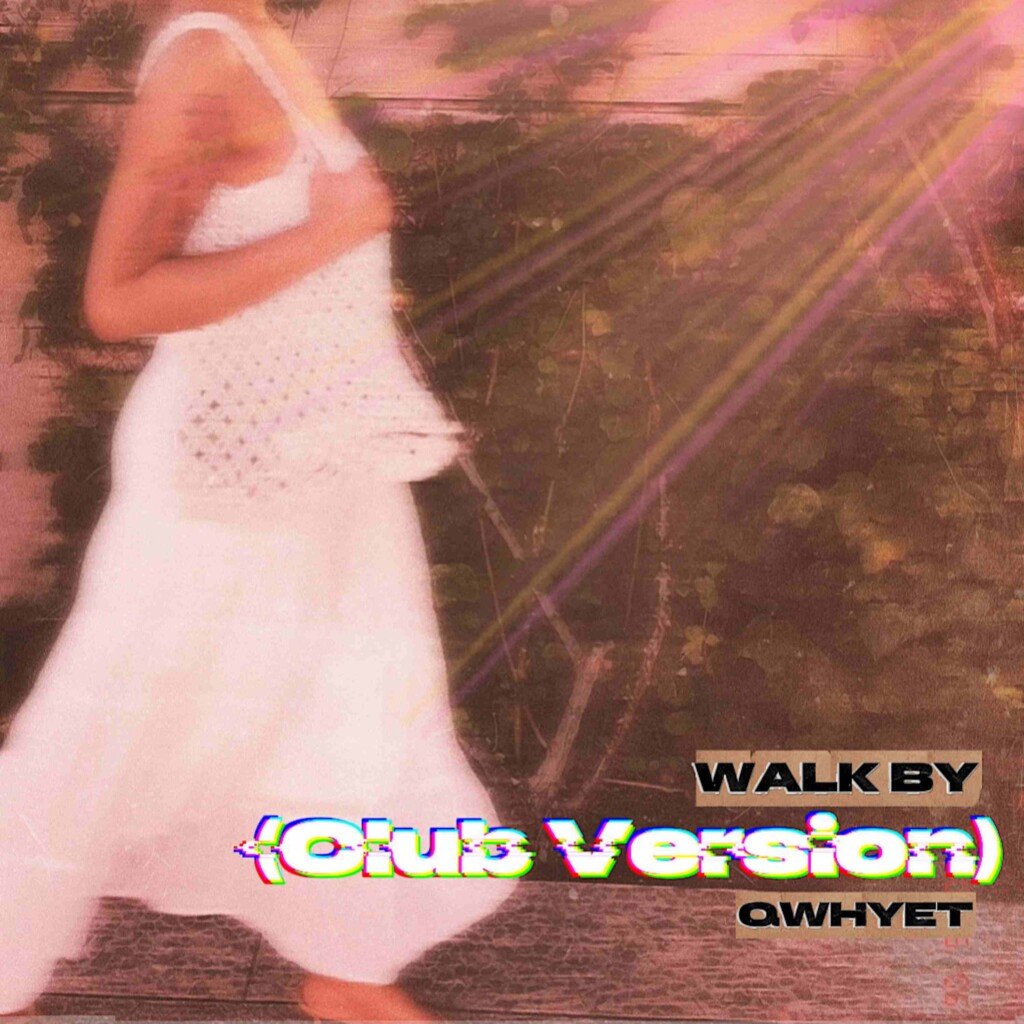
Qwhyet is a Los Angeles-based electronic duo formed by husband-and-wife team J DROONY and Hijkatelyn. Blending underground house, techno, and emotionally driven electronic songwriting, their music bridges hazy, lo-fi vocal textures with hypnotic club rhythms and atmospheric sound design. Ahead of the release of their “WALK BY (Club Version)”—which takes the emotional vocal-house foundation of their original HUSH EP track and pushes it into a harder, more immersive, late-night setting—we caught up with Qwhyet to talk about balancing underground dance energy with intimate songwriting, bringing contrasting sides of their catalog into conversation, and creating music designed for movement without abandoning its reflective core. Check out the exclusive interview below:
1. Your roots can often shape your journey. Can you share a story or moment from your early life that had a significant impact on your path into music?
Hijkatelyn: I grew up with a piano in my childhood home, where many of my earliest memories of music were made. On weekends and during holidays, my cousins and I would gather around the piano, taking turns playing and occasionally learning a few notes from our elders. Looking back, I’d like to think that those simple, beautiful moments were the beginning of something special and the start of my journey into music.
J DROONY: I started playing the trumpet at eight and continued until I was seventeen. Jazz and funk had a big impact on me, especially rhythmically; I still use a lot of syncopation and swing in my production. Growing up in England, I was also exposed to a wide range of music, from acid jazz and dub to jungle and trip-hop. When I began exploring music production in college, all of those influences helped shape the direction my sound would take.
2. Did your musical journey begin with formal training, or was it more of a personal exploration? How has that shaped your unique approach to your craft?
Hijk: My artistic journey began long before I seriously explored music. I have always been creatively driven and naturally drawn to performing and entertaining. Being the great-niece of the late Bill Pickett, I’ve always believed that creativity and artistic expression can run in the blood. To me, it’s less about nepotism and more about a natural inclination toward the arts that feels deeply rooted in who I am. From the ages of four to eleven, I was actively involved in drama classes, competitive cheerleading, dance rehearsals, and casting calls. By the age of six, I had also begun drawing and designing everything from garments to abstract art, a passion I continue to nurture today. Growing up as the youngest of more than 21 cousins, I developed a naturally soft-spoken personality. Over time, however, I found my voice through creative expression. I believe that evolution has influenced the way I approach my art today, allowing me to become more outspoken, bold, and edgy in my creative choices. When it came to music, my journey was much more of a personal exploration than a formally trained experience. I would sing in the shower or jokingly freestyle rap with my peers, but I never initially took music as seriously as I did my other artistic pursuits. It was something I enjoyed naturally, without realizing what it could eventually become. Looking back, I can see how all of my creative experiences have shaped my approach to music. My background in performance, dance, visual art, and self-expression has given me a multidisciplinary perspective. I approach my craft with a desire to be authentic, expressive, and unapologetically myself. For me, music is another medium through which I can communicate who I am, tell my story, and continue to evolve as an artist
JD: My musical background began with formal training through the trumpet. After taking a couple of years away from music, I started producing in Ableton when I got to college. I had never used a DAW before, so it felt a little like learning to walk when I already knew how to run. There was a lot of personal exploration, and plenty of YouTube University, as I worked out how to translate my musical knowledge into production. I think that combination of formal training and finding my own way is a big part of what shaped my sound.
3. Who were some of the most influential figures in your early musical life, and how did they inspire your sound? Also, what’s the story behind choosing the name ‘QWHYET’?
Hijk: When I think about the most influential figures in my early musical life, Britney Spears and Christina Aguilera immediately come to mind. I remember it being around 2005 or 2006, when I was about 10 or 11 years old and beginning to explore that style of music. For my birthday, I received two CDs: Britney Spears’ Oops!… I Did It Again and Christina Aguilera’s self-titled debut album. I would play “Oops!… I Did It Again” and “Genie in a Bottle” on repeat on my CD karaoke system. Those songs became a big part of my early musical experience and helped shape my love for pop music. As for the name QWHYET, it was originally created by J DROONY, who had been sitting on the name for some time. I’ve always been drawn to distinctive and unconventional names, whether for individuals or groups, so when the opportunity came to be part of QWHYET, I was immediately sold and happily jumped on board. The name stood out to me because of its uniqueness, and it felt like something I wanted to be associated with creatively.
JD: I had a couple of trumpet teachers, Bob Frasier and Mark Wright, who had a huge influence on how I think about music and helped me develop a love and respect for the art form. My grandfather, Clifford Jarvis, and his unique approach to drumming also influenced me a lot, particularly in how I program drums and use ghost notes. That influence is still there in my production. I’d had the name Qwhyet in my back pocket for years. I’d always wanted to make electronic music, but until 2025 I’d mainly been making hip-hop. I imagined Qwhyet as the name I’d eventually use for that side of my music. When I approached Hijkatelyn with the idea, we started building it together, and the project has since taken on a life of its own beyond the small idea I started with.
4. What do you believe sets your music apart? How would you describe your sound to someone discovering you for the first time, and what emotions or experiences do you hope to evoke in your listeners?
Hijk: What sets our music apart is its ability to evoke something powerful within the listener, regardless of who they are or where they are in life. Whether it creates a thunderous storm of emotion within someone or simply sparks a quiet fire, we want our music to leave a lasting impression. Our sound is rooted in passion, and our hope is that anyone who discovers our music, even if they hear just one song from our catalog—walks away feeling more passionate about life. Whether it inspires them to embrace their day, love their significant other more deeply, or reconnect with whatever ignites a fire within them, we want our music to serve as a catalyst for those feelings. Ultimately, we want people to feel something real, something personal, and something that reminds them what it means to be alive.
JD: I think the best way to describe our sound to someone discovering us is electronic music with an emotional core, grounded in Hijkatelyn’s songwriting. The fact that we put songwriting at the center is also what sets us apart. A lot of electronic music is instrumental, but we focus on the combination of my production and Hijkatelyn’s lyrics. We can move between techno, house, and electronica while keeping that songwriting at the heart of what we do, and I think that gives the project its own identity.
5. For most artists, originality is first preceded by a phase of learning and, often, emulating others. What was this like for you? How would you describe your own development as an artist and music maker, and the transition towards your own style?
Hijk: It’s interesting to be asked this question because whenever I find myself in a creative rut, J DROONY often encourages me to emulate some of the great music legends of our time. While I understand the value of learning from and drawing inspiration from these artists, I sometimes find it challenging because I feel a strong need to remain true to myself and my own artistic identity. For me, the journey toward originality is about finding a balance between learning from those who came before me and allowing myself the freedom to explore, experiment, and develop a sound that is authentically my own.
JD: Emulating other artists is part of the learning process. We all have to start somewhere, and studying music you love can be an important way to learn how to make something that sounds good. Over time, you move from trying to recreate what you hear to understanding the craft well enough to make something that feels uniquely yours. For me, that transition happened pretty organically. I already knew a lot about the technical side of music; what I needed to learn was how to use that knowledge to make something that felt and sounded like me. Once that clicked, things started to fall into place.
6. Music often transcends entertainment. What’s your view on the role and function of music as political, cultural, spiritual, and/or social vehicles – and do you try and affront any of these themes in your work, or are you purely interested in music as an expression of technical artistry, personal narrative, and entertainment?
Hijk: I’m definitely drawn to music for its entertainment value, but not in the sense of chasing attention, clickbait, or trends. For me, it’s a natural form of expression. As I mentioned earlier, I feel that I’m meant to create, and I see art, creativity, and entertainment as things that naturally go hand in hand. Ultimately, I want to create music that people can connect with, enjoy, and experience in their own way. While I respect music’s ability to serve as a political, cultural, spiritual, or social vehicle, my primary motivation is to create art that feels authentic to me and reflects my natural instinct to create.
JD: I see art as a reflection of, and often a commentary on, society and the world we live in. I think artists should stay informed about the issues facing humanity while they’re creating. There’s absolutely a place for music that helps people decompress or simply have a good time, but I believe the art that stands the test of time is often art that stands for something. As artists, we can make work that expresses skill or offers entertainment, but I also think we can act as a mirror for society, a kind of barometer of the times. That doesn’t mean artists are always right or have all the answers. But when something is wrong in the world, I believe artists, especially those with larger platforms, have a responsibility to shine a light on it and encourage people to consider what we can do about it.
7. Do you feel the rewards of your musical career match the energy and passion you invest in it, or are there different kinds of fulfillment you’re still seeking?
Hijk: Qwhyet is still a relatively young project, approaching its second year, and there’s so much more I want to accomplish as a recording artist. The energy, passion, and intention we’ve poured into our music since day one have already brought us rewards in ways that continue to motivate and inspire us. Moving forward, our focus is on allowing the depth of our artistry and creativity to speak for itself, while maintaining a professional, sophisticated, and intentional work ethic. We want to continue evolving, pushing our creative boundaries, and building something meaningful and lasting through our music. And above all, we want to enjoy the process, have fun, and never lose sight of the passion that brought us here in the first place.
JD: I’m looking for a different kind of fulfillment. Rewards and recognition are great, and they’re certainly part of it, but what matters most to me is making the best music and art I can and pushing the limits of what I think is possible. Ultimately, I’m trying to make work that I genuinely like and feel satisfied with.
8. Can you walk us through your creative process? From the first spark of an idea to the finished track, what’s the most essential part of your process, and how do collaboration or external influences shape your work?
Hijk: My creative process usually starts with an idea for a flow or a beat, which I record as a voice memo and share with J DROONY to get his feedback. Once we decide on the direction, he typically gives me a timeline of a day or two to develop the beat. During that time, I start writing, usually by freestyling the first few bars and allowing the ideas to flow naturally. From there, I begin shaping the song by giving it structure, developing a central theme, and deciding what story I want to tell. Once I have a clear direction, I take it to the studio and start recording. Sometimes, I’ll lay down the first verse and find myself working until 3 in the morning. I also believe in stepping away when needed and coming back with fresh ears, which often helps me finish the track over the next few days. What I enjoy most is the process itself, especially collaborating with someone I love. Making music with my significant other creates a comfortable, relaxed environment where ideas can flow freely. That connection makes the experience more enjoyable and often pushes me to be even more creative and passionate about what I’m making. Ultimately, the most essential part of my process is allowing creativity to happen naturally while finding the right balance between spontaneity, structure, and collaboration. When the chemistry, the sound, and the story all align, the music comes together in a way that feels authentic to me.
JD: Our process is pretty organic. Hijkatelyn and I have been working together for ten years, so we know each other well and understand what the other person responds to. We’ve also developed fairly clear roles. I try not to let too many outside influences shape the work; I’d rather focus on what we’re doing and what we’ve already made, and let that inform where we go next. That helps me keep things fresh rather than making the same song over and over. For me, one of the most essential parts of the process is sound selection. It can be easy to overlook how much it shapes a track. Whether I’m building drums from a sample, using tape feedback, or working with actual drum sounds, the sounds I choose often determine the direction the music takes.
9. What’s been the most challenging hurdle in either your personal life or music career, and how has it shaped you as an artist?
Hijk: When I was 15, I was diagnosed with Graves’ disease, an autoimmune condition that affects the thyroid. At 20, I underwent surgery to have my thyroid removed. During the procedure, my surgeon asked if I was a singer because there was a risk that the surgery could permanently damage my vocal cords. At the time, I said no, never imagining that singing would eventually become such a meaningful part of my life. Today, as a vocalist for J DROONY’s band, Qwhyet, I look back on that experience with an overwhelming sense of gratitude. The fact that I can sing, sustain certain notes, and continue developing my voice is something I never take for granted. What could have been a limitation has become a source of motivation, pushing me to grow, challenge myself, and become a better vocalist every day. In many ways, I view my ability to sing as a miracle and a testament to what faith, perseverance, and determination can make possible. During my transition into life after surgery in 2015, I also learned that the legendary Missy Elliott was a Graves’ disease survivor. Discovering that someone I admired had navigated a similar challenge was incredibly inspiring. Her journey, creativity, and accomplishments as an artist and entrepreneur reminded me that a diagnosis does not have to define the limits of your potential. That experience continues to ground me in my faith and shape the way I approach music. I’ve learned not to take my voice, my opportunities, or my ability to create for granted. My journey has taught me that resilience is not simply about overcoming adversity; it’s about allowing those experiences to transform you into someone stronger, more intentional, and more committed to your purpose. Every time I step up to sing, I’m reminded that my story is bigger than the obstacles I’ve faced, and I hope to channel that same strength into the music I create.
JD: It’s hard to point to just one thing. We all go through different experiences in life, and as artists, those experiences inform the work we make. There have been many things that have shaped my art, but one of the biggest has been going 23 years without contact with my father. Reconnecting with him has been transformative. It’s helped me understand myself better and feel comfortable enough in who I am to make art that’s more deeply grounded in my own experience.
10. On the flip side, what moment or achievement in your career so far has made you feel the proudest, and why? And let’s talk about your latest release and future plans.
Hijk: One of the achievements I’m most proud of is having the drive and creative vision to continue recording and producing music, especially with the release of HUSH, Qwhyet’s first EP. The project came together so naturally, and I’m proud of how everything developed creatively, particularly the way “Walk By” turned out. Seeing our ideas come to life and hearing the finished product has been incredibly rewarding. This project has motivated me to keep pushing forward, continue refining my artistry, and build on the momentum we’ve created. With HUSH, I’m proud of what we’ve accomplished so far, and I’m excited about what’s next for Qwhyet as we continue creating music, exploring new ideas, and growing as artists.
JD: One moment that stands out is getting our music into the September issue of FAZE magazine. It was the first time our music had appeared in a physical magazine, and as a ’90s baby who spent his time reading magazines, that meant a lot to me. All the editorial coverage we’ve received so far has been amazing, and having that support has been encouraging. Seeing people respond to “WALK BY” and its different versions has also been a huge boost. A lot has fallen into place for us this year, and it feels like we’re moving in the right direction.
11. With social media having a heavy impact on our lives and the music business in general, how do you handle criticism, haters, and/or naysayers in general? Is it something you pay attention to, or simply ignore?
Hijk: I choose to ignore the negativity and stay grounded in what I want to accomplish, both in my lane and in life. J DROONY and I are both left-handed, so I think we’re already in our own world in a way. Honestly, I don’t see us spending much time worrying about what others think. The world isn’t always built for people like us, so there’s something empowering about embracing who we are and knowing we’re already built to be tough. We’d rather focus our energy on our vision, our growth, and what we’re here to create.
JD: I mostly block it out. Social media and content creation are an unfortunate part of making music today. I wish they carried less weight in society, and especially in music, but that’s a separate conversation. Criticism and haters are part of the process, too. As the saying goes, if nobody’s hating, you’re probably not doing it right. I try to take it all in stride and let it roll off me like water off a duck’s back.
12. Creative work in a studio or home environment, or interaction with a live audience? Which of these two options excites you most, and why?
Hijk: I’m naturally quite shy, so I feel most comfortable recording at home or in an intimate studio setting with just me and J DROONY. I’ve performed in front of crowds throughout my life But there’s something comforting about being able to blend into the audience. However, I’m gradually becoming more comfortable stepping into the spotlight and embracing being the main attraction. That said, I also appreciate the energy and connection that come with live performances. J DROONY is an incredible performer, and I’ve always admired his ability to captivate an audience. He used to perform in San Francisco many weekends, and watching him perform was one of the things that initially drew me to him. While I naturally gravitate toward the intimacy of studio recording, I’m learning to embrace the idea of performing live and connecting with an audience.
JD: I love performing live. I’ve been performing since I was around five, so being in front of an audience is something that’s ingrained in me. At the same time, there’s nothing like being able to dive deep into my sound and experiment with production techniques, especially now that I’ve started working with cassette tapes, tape degradation, and manipulating those recordings. So, honestly, both sides excite me.
13. Do you think it is important for fans of your music to understand the real story and message driving each of your songs, or do you think everyone should be free to interpret your songs in their own personal way?
Hijk: I definitely think it’s important for fans to understand the real stories and messages behind our music. At the same time, I believe everyone should be free to interpret our songs in their own personal way. Music can mean something different to each person depending on what they’re feeling or going through at a particular moment in their lives. Ultimately, that’s why we create music: to connect with people, evoke emotions, and allow them to find their own meaning in our art.
JD: I’ve always believed that listeners should be free to interpret the music for themselves, so I try not to overexplain a song’s concept beyond sharing what I initially had in mind. I love hearing the interpretations people come up with, because they often discover something we hadn’t thought of ourselves and take the idea somewhere far beyond its original meaning. That’s one of the exciting things about putting art into the world: once it reaches other people, it can become something more than what we first imagined.
STAY IN TOUCH:
X | SPOTIFY | BANDCAMP | TIKTOK | WEBSITE | YOUTUBE