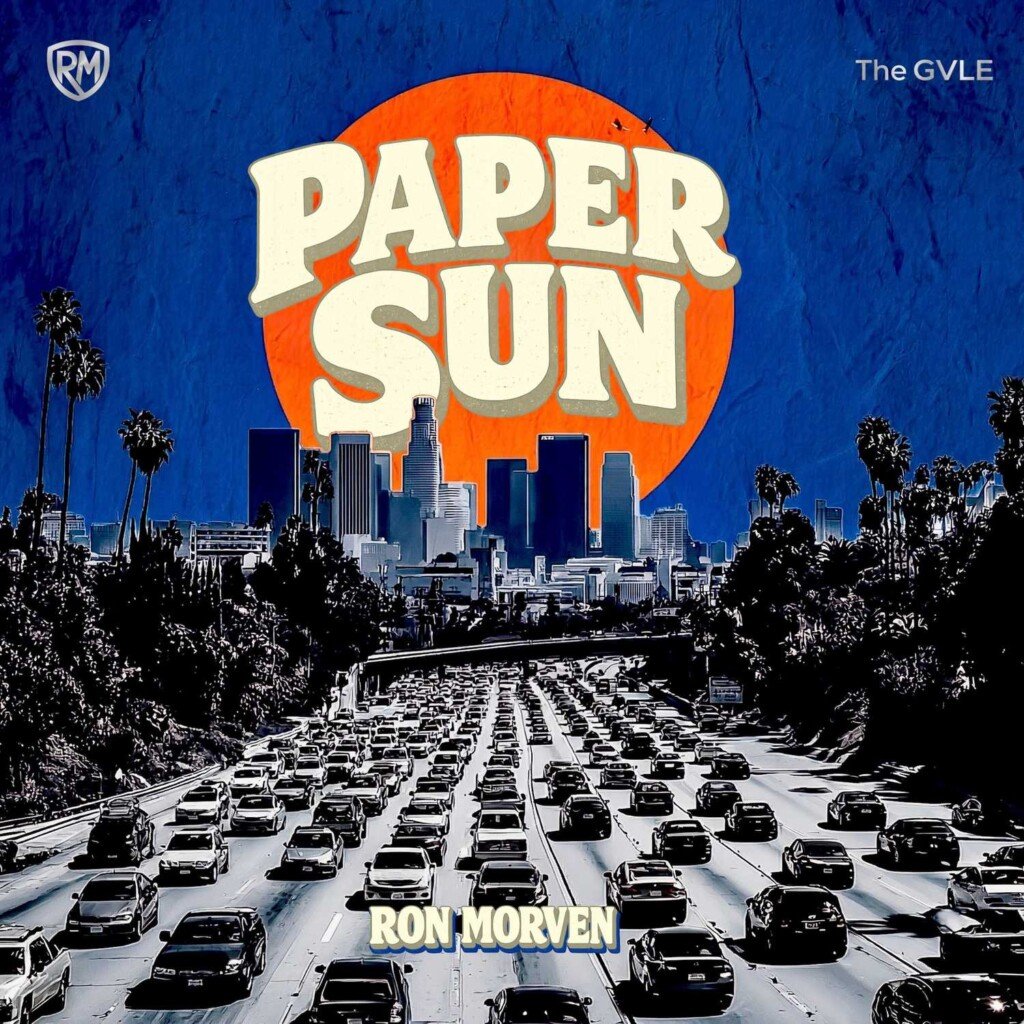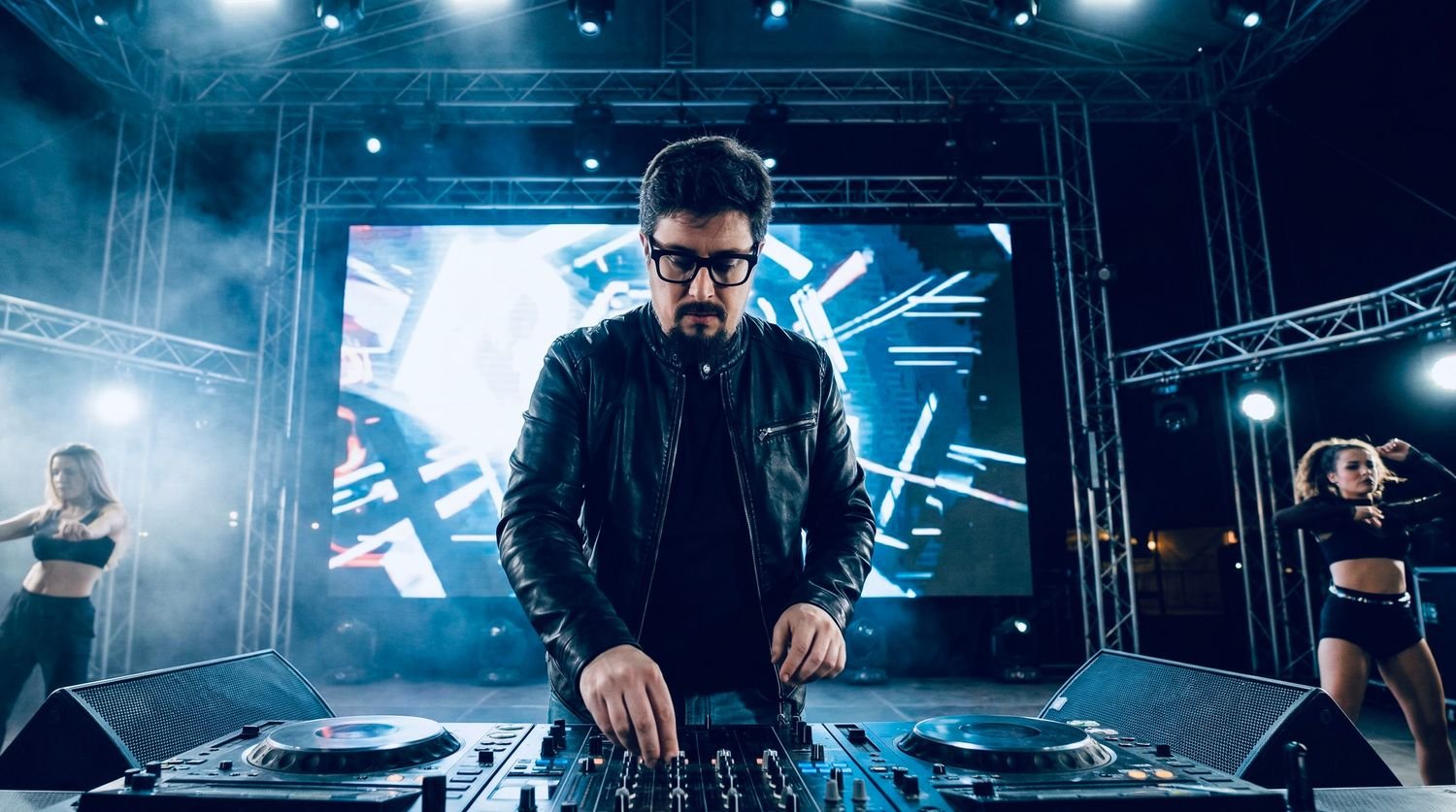
Ron Morven returns with “Paper Sun,” a sun-drenched dance/electronic single built around cinematic atmosphere, pulsing house energy, and a strong sense of movement. Inspired by the golden tension of endless California highways, the track blends uplifting rhythm, melodic drive, and a visual, wide-screen sound designed to feel both immediate and immersive. “Paper Sun” sits between electronic pop, house, and modern dance music, but its identity is not just club-focused — it is built as an emotional, image-rich release with strong summer, night-drive, and cinematic crossover potential. It is a track aimed at listeners who connect with melody, motion, and atmosphere as much as energy. Ron Morven’s project is rooted in songwriting, mood, and world-building, with a clear visual identity and an international approach. “Paper Sun” is a strong fit for blogs, playlist curators, social features, and tastemakers looking for elegant, accessible electronic music with both commercial appeal and personality. Check out the exclusive Interview below:
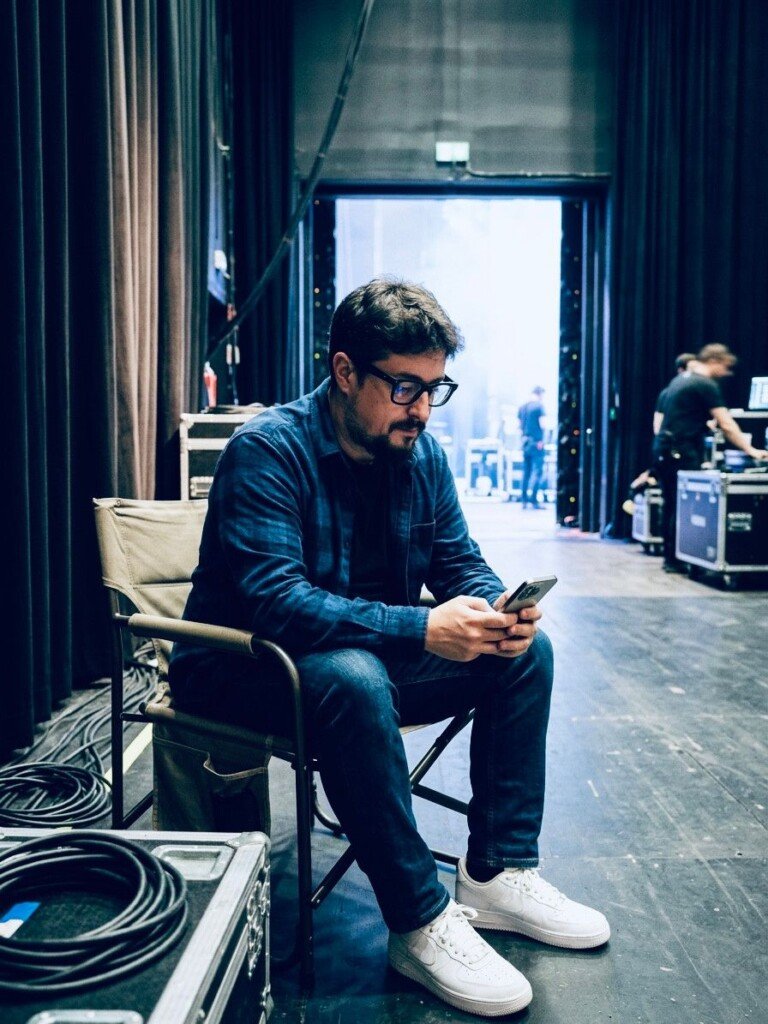
1. Your roots can often shape your journey. Can you share a story or moment from your early life that had a significant impact on your path into music?
Ron Morven: My first connection with music was not a single dramatic moment, but a series of very clear memories: records playing in the background, film scenes staying with me because of the music, and the feeling that a melody could say something more precise than a sentence. I came from storytelling before I came to music in a professional way, so I always heard songs almost like scenes. At a certain point I realized that music could carry the same emotional tension as a book or a film, but in three minutes. That discovery stayed with me and became the foundation of Ron Morven: music as movement, memory, and atmosphere.
2. Did your musical journey begin with formal training, or was it more of a personal exploration? How has that shaped your unique approach to your craft?
Ron Morven: It was more of a personal exploration than a traditional academic path. I have always been interested in structure, rhythm, emotion, and the way a song can build a world around the listener. That probably comes from writing as much as from music. I learned by listening very carefully: how a hook appears, how a vocal line opens a chorus, how silence can create tension, how a small sound detail can become a signature. Because of that, my approach is not only technical. I think about each track as an emotional architecture: the melody, the beat, the voice, and the atmosphere all have to tell the same story.
3. Who were some of the most influential figures in your early musical life, and how did they inspire your sound? Also, what’s the story behind choosing the name ‘RON MORVEN’?
Ron Morven: Some of the figures that influenced me most were artists and producers who knew how to combine emotion with impact: electronic music with a human heart, pop songwriting with cinematic scale, and melodies that feel instantly recognizable without becoming predictable. I have always admired artists who can make a crowd move while still leaving something intimate in the song. Regarding the name,I wanted a name that felt international, cinematic, and slightly mysterious: something that could belong to a songwriter, a producer, or a character inside a larger story.
4. What do you believe sets your music apart? How would you describe your sound to someone discovering you for the first time, and what emotions or experiences do you hope to evoke in your listeners?
Ron Morven: I would describe my sound as emotional electronic music with a cinematic identity. It lives somewhere between melodic dance-pop, alternative pop, EDM, and folktronica, but I try not to make genre the most important part of the conversation. This direction has been described as Transatlantic Narrative House (TNH): melodic electronic music shaped by European emotion, international visual scale, and a narrative layer that runs through both the sound and the imagery. What matters to me is the feeling: movement, nostalgia, summer heat, distance, memory, and the strange beauty of moments that are already becoming past while you are still living them. I want people to dance, but I also want them to feel that there is a story underneath the rhythm.
5. For most artists, originality is first preceded by a phase of learning and, often, emulating others. What was this like for you? How would you describe your own development as an artist and music maker, and the transition towards your own style, which is known as EDM?
Ron Morven: I think every artist begins by absorbing other languages before finding their own. For me, that phase was very important, but I never wanted to imitate a specific artist. I was more interested in understanding why certain records work: why a chorus feels inevitable, why a hook stays in your head, why a production feels expensive or emotional, why a voice can transform a track. My development as an artist has been about filtering those lessons through my own background. EDM attracted me because it is physical and cinematic at the same time. It gives you scale, energy, and light, but if you handle it with restraint, it can also become very emotional. That direction has also been framed as TNH: dance music that keeps the body moving, but also carries atmosphere, continuity, and story.
6. Music often transcends entertainment. What’s your view on the role and function of music as political, cultural, spiritual, and/or social vehicles – and do you try and affront any of these themes in your work, or are you purely interested in music as an expression of technical artistry, personal narrative, and entertainment?
Ron Morven: Music can absolutely be cultural, social, and even spiritual, but I do not believe every song has to become a manifesto. Sometimes a track says something important simply by creating a shared emotional space. In my work, I am more interested in personal narrative, memory, atmosphere, and connection than in direct political statements. That said, music always reflects the time in which it is made. Even a song about summer, love, or escape can carry something deeper: the need to feel alive, to belong somewhere, to recover a moment before it disappears.
7. Do you feel the rewards of your musical career match the energy and passion you invest in it, or are there different kinds of fulfillment you’re still seeking?
Ron Morven: I think rewards in music come in different forms. Of course every artist wants the music to travel, to reach people, to grow beyond the room where it was created. But there is also a quieter kind of fulfillment: hearing a track finally become what you imagined, seeing an image, a melody, a video, and a release all connect into one identity. I am still at the stage where I am building the Ron Morven universe with a lot of energy and discipline. The biggest reward I am seeking is not only attention, but recognition for a sound and a world that feel real, consistent, and emotionally honest.
8. Can you walk us through your creative process? From the first spark of an idea to the finished track, what’s the most essential part of your process, and how do collaboration or external influences shape your work?
Ron Morven: Usually it starts with an atmosphere rather than a beat. It can be an image, a place, a sentence, a memory, or even a color. From there I look for the musical hook, because I believe a song needs a recognizable emotional door in the first seconds. Then I build the structure: a verse that pulls you in, a pre-chorus that raises the temperature, a chorus that opens up, and a final section that gives the track its emotional lift. Collaboration and external influences are important because they stop the work from becoming closed inside itself. But the essential part is always the same: the track has to feel like it belongs to one clear world.
9. What’s been the most challenging hurdle in either your personal life or music career, and how has it shaped you as an artist?
Ron Morven: One of the biggest challenges has been translating a storytelling identity into music without making it too literary or too calculated. Coming from writing, I had to learn that a song does not need to explain everything. It needs to suggest, to move, to leave space. That changed me a lot as an artist. It made me more disciplined and more instinctive at the same time. I learned to remove, to simplify, to trust a hook, a texture, or a vocal phrase. In music, sometimes the most powerful part is what you decide not to overstate.
10. On the flip side, what moment or achievement in your career so far has made you feel the proudest, and why? And let’s talk about your latest release and future plans.
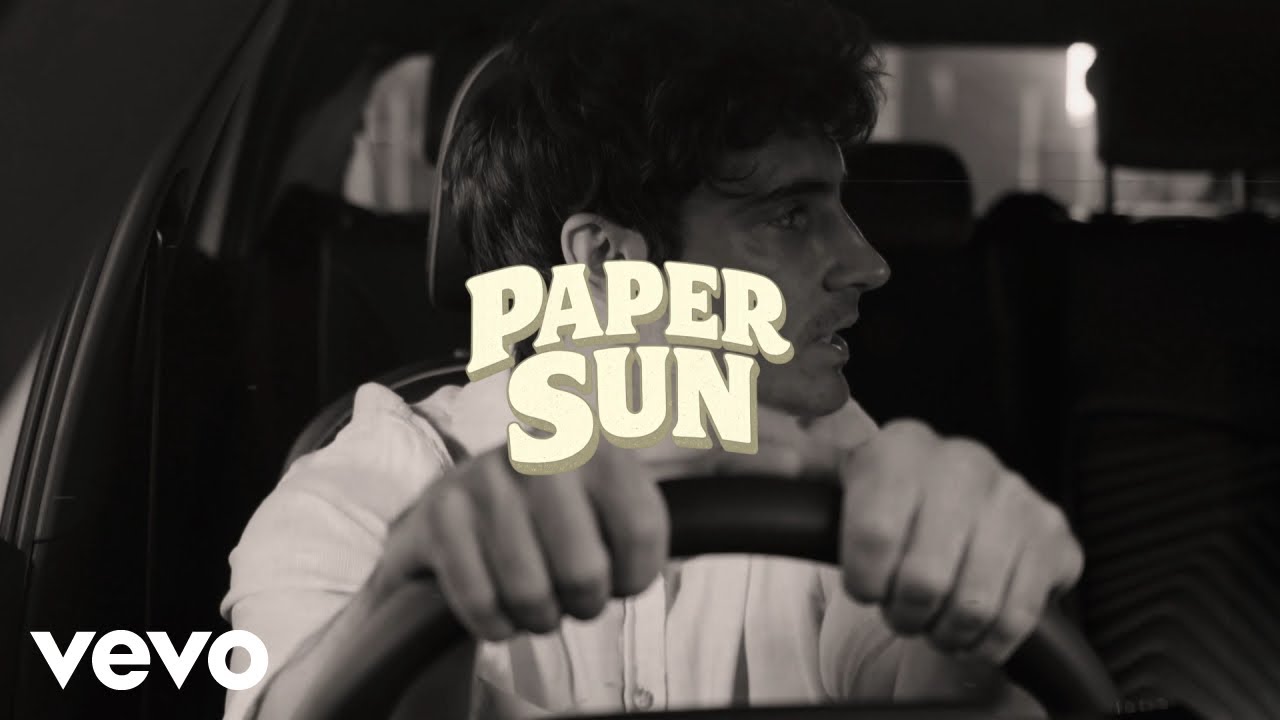
Ron Morven: The proudest moment so far has been seeing the Ron Morven project become a complete artistic identity rather than just a collection of tracks. With ‘Paper Sun,’ the sound, the visual world, and the narrative finally started to feel connected in the way I had imagined. The song has that blend I am looking for: cinematic nostalgia, movement, and emotional electronic energy. It also helped clarify a direction that has been defined around the term TNH: a bridge between European emotional depth, international electronic production, and story-driven visual identity. The official video expands the world around the track, and having the release positioned across the main streaming platforms and video channels is an important step. Looking ahead, I want each release to open another window into the same universe. ‘Es Vedrà’ and ‘Al Bagno Sandra’ continue that direction in different ways: one more atmospheric and magnetic, the other more connected to summer, memory, and a very specific emotional landscape.
11. With social media having a heavy impact on our lives and the music business in general, how do you handle criticism, haters, and/or naysayers in general? Is it something you pay attention to, or simply ignore?
Ron Morven: I try to separate useful criticism from noise. If someone gives a serious observation, even a hard one, I listen. It can help you improve. But haters and empty negativity are different. They usually say more about the person writing than about the work. Social media can be very loud, and if you let every reaction enter the studio, you lose the center of the project. I pay attention to signals, not to noise. The only real answer is to keep making better work.
12. Creative work in a studio or home environment, or interaction with a live audience? Which of these two options excites you most, and why?
Ron Morven: Both excite me, but in different ways. The studio is where you build the world in detail. It is private, obsessive, and almost architectural. You can spend hours on a sound that lasts two seconds, because those two seconds may define the identity of the track. A live audience is the opposite: immediate, physical, unpredictable. You understand very quickly whether a hook has power. For me, the most exciting thing is when the two worlds meet: when something designed with care in the studio becomes a shared physical experience in front of people.
13. Do you think is it important for fans of your music to understand the real story and message driving each of your songs, or do you think everyone should be free to interpret your songs in their own personal way?
Ron Morven: I like the idea that every song has a real story behind it, but I do not want to lock the listener inside my explanation. Once a track is released, it belongs partly to the people who hear it. They may connect it to a memory, a person, a summer, a loss, or a feeling that has nothing to do with my original intention. That is beautiful. I think the artist’s story gives the song a center, but the listener’s interpretation gives it life.
STAY IN TOUCH:
FACEBOOK | INSTAGRAM | X | SPOTIFY | TIKTOK | WEBSITE | YOUTUBE