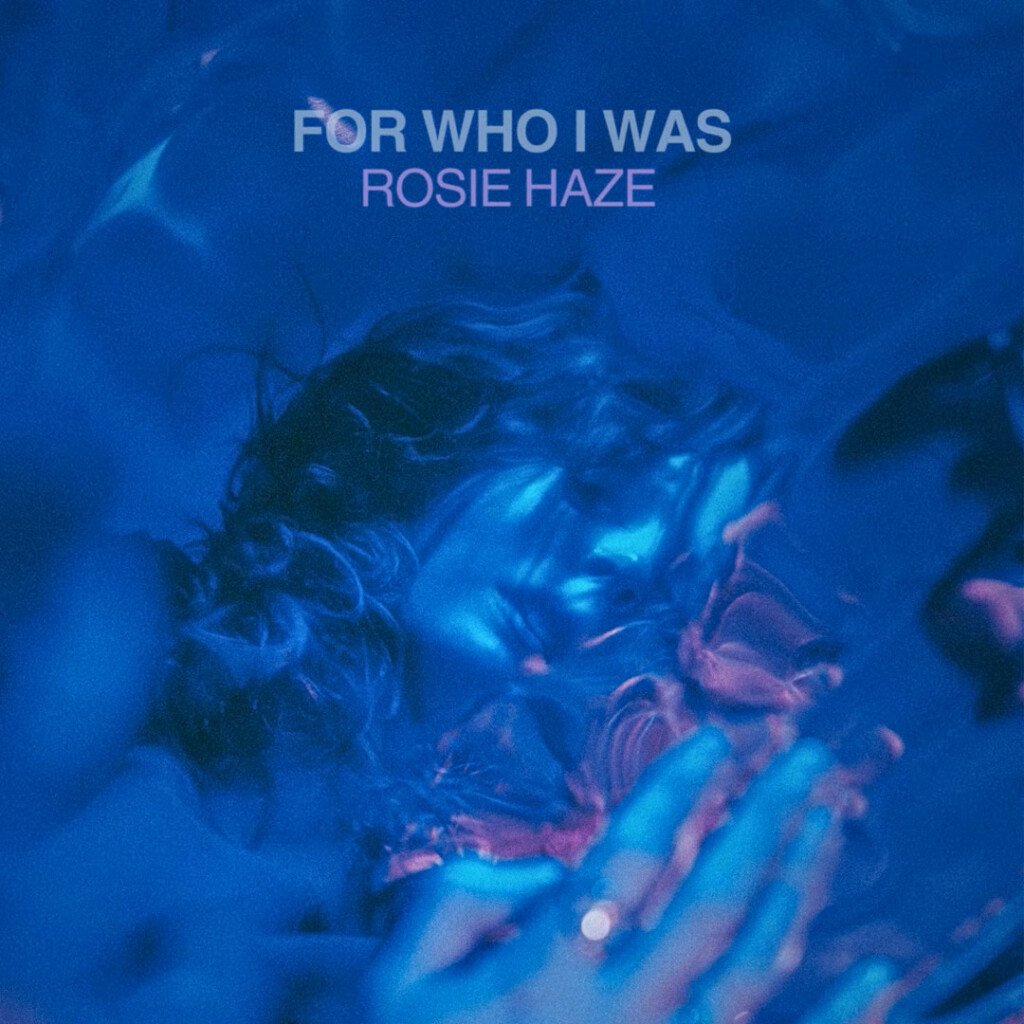
Released to the world on April 3rd, 2026, “For Who I Was” is a deeply personal album inspired by Rosie Haze’s growth, self-discovery, and political values. Drawing from artists like Radiohead and The Cranberries, Rosie Haze infuses her music with dark, atmospheric tones and intricate harmonies. Additionally, Rosie Haze’s experimental style is highlighted by her use of complex effects, samples, and bold chord progressions. Rosie Haze recorded the majority of “For Who I Was” in her home studio in Portland, and the album captures the essence of Rosie Haze’s creative process, blending experimental vocal tracks and emotive storytelling to create a truly captivating listening experience.
Rosie Haze is a melodic and contemporary singer and musician who creates music that meets at a crossroads of indie, alternative, and pop genres. Rosie Haze was born and raised in Portland, Oregon and has been singing, writing, and creating music since childhood before receiving professional training in vocals and production as an adult. Rosie Haze has a degree in Music Technology as well as has interned with professional producers like Ian Mackintosh and Troy Welstad. This experience has informed Rosie Haze’s technical ear and enabled her to professionally record, mix, and produce her own music. Recently, she has been making waves with her debut album “For Who I Was.” Rosie Haze’s unique sound is a blend of introspective lyrics and haunting melodies and her music showcases a raw and authentic expression of her personal journey. Drawing influences from artists like The Cranberries and Radiohead, Rosie Haze infuses her music with dark, atmospheric tones and intricate harmonies. Check out the exclusive interview below:

1. Your roots can often shape your journey. Can you share a story or moment from your early life that had a significant impact on your path into music?
Rosie Haze: I think that music has always been a part of my life and the path that I was going to take. I started writing songs when I was only three years old, and I grew up always singing. There has never been a time in my life when I didn’t love creating music. One specific memory that made me feel more confident in my musical abilities was singing at our neighborhood block party as a kid. One year, an older girl that I admired was singing and playing guitar, and I thought to myself, “I bet I could do that too”. I ended up singing “Hallelujah” by Leonard Cohen for my whole neighborhood while my dad held a flashlight for me to see my lyrics. I was probably about ten when this happened, and after that, singing “Hallelujah” at neighborhood block parties became a tradition. I think that the realization that I could perform for others and be good at it was important to my musical journey and has shaped my life as a performer.
2. Did your musical journey begin with formal training, or was it more of a personal exploration? How has that shaped your unique approach to your craft?
Rosie Haze: My musical journey has been a little bit of both. I began playing and singing for fun as a little girl and eventually went on to take formal piano lessons when I got a bit older. Writing songs comes naturally to me, and is something that I have always done, whether I was taking lessons or not. When I was in middle school, I took music lessons with a local Portland artist named Ian Mackintosh. These lessons focused mainly on improvisation, songwriting, music theory, and preparing for performances, and these skills have really shaped who I am as an artist. I think these skills also helped me to experiment with my sound and trust my ear above anything else. This combination of intuition and technical musical experience is what defines my process and makes my music unique.
3. Who were some of the most influential figures in your early musical life, and how did they inspire your sound? Also, what’s the story behind choosing the name ‘Rosie Haze’?
Rosie Haze: I think that the most influential figures in my early musical life were my music teacher, Ian Mackintosh, and my family. Ian Mackintosh taught me so much about how to write music and be creative, and I am so grateful to him for that. My family is also very musical and were always playing music or encouraging me to play music, which was really important for me growing up. They also instilled in me a love for all genres of music. From them, I found my love for Radiohead, Fiona Apple, and so many other artists that have inspired my sound. As for “Rosie Haze”, that was not my original artist name. Originally, I went by “Rosalie Jeanne” (pronounced Jah-nuh), but this name felt a little bit clunky, and I got tired of having to constantly tell people how to pronounce and spell “Jeanne”. This last year, I changed my name to “Rosie Haze” because Hazel is one of my middle names, and I felt that this name fit my style and music much better. I have a very atmospheric and sometimes dark sound with lots of layered vocals and reverb, and I think that the name Rosie Haze fits these qualities very well because my music feels a little hazy at times.
4. What do you believe sets your music apart? How would you describe your sound to someone discovering you for the first time, and what emotions or experiences do you hope to evoke in your listeners?
Rosie Haze: I think my music has a unique sound that encompasses alternative, indie, pop, and experimental genres. My style is definitely defined by bassy atmospheric tones and layered vocal harmonies, as well as my experimental use of effects. I think that this sound, as well as my lyrical content, sets my music apart. I write music about my experiences in life and love, and a main theme of my recent album, “For Who I Was”, is recovering from a difficult misogynistic relationship and gaining perspective and self-worth as a woman. Because I wrote this album as I was healing and growing, it is unique in the emotional arc that is showcased. I am hoping to build a world of empowerment, self-reflection, and growth. I think that my songs have a softness and kindness for my past self, while also appreciating who I am today, and I hope that my listeners feel that for themselves when they listen to “For Who I Was”.
5. Do you think it is important for fans of your music to understand the real story and message driving each of your songs, or do you think everyone should be free to interpret your songs in their own personal way?
Rosie Haze: I don’t think that it is important for my listeners to understand the full story behind my songs. I hope that people feel empowered and understand the overarching message of growth and appreciating your past self when they listen to my music. Through this message, I hope everyone develops their own understanding of the stories behind my music and can then relate their own life experiences to my writing. I think that is one of the most powerful things about music. It is not necessary to fully understand the circumstances behind any given song because every listener can create their own meaning. Listeners should feel empowered to let a song be theirs within their understanding of what it is about. I hope that my music can keep my listeners company with whatever they are going through.
6. Music often transcends entertainment. What’s your view on the role and function of music as political, cultural, spiritual, and/or social vehicles – and do you try and affront any of these themes in your work, or are you purely interested in music as an expression of technical artistry, personal narrative, and entertainment?
Rosie Haze: I definitely think that music has so much value in our world beyond simply “sounding good”. I think that music has the ability to introduce new experiences or ideas to people and foster empathy and understanding in the listener. When people connect with music, they often are connecting with the story of the artist or song in a way that is only possible through art. Music creates commonality between strangers, emotionally and mentally. For this reason, I think that music is so important for political change because it allows people to put themselves in someone else’s shoes and gain empathy for their situation. I definitely use music as a way to make political change or express my personal beliefs. I have done this with my song “No One Is Illegal,” which is about the stories of those in our country being deeply harmed by the actions of ICE and the Trump Administration. I hope that this song allows listeners to understand the true stories of how this government’s actions are affecting families in our country, and inspires them to take action. I also discuss my feminist beliefs in my music, especially in the song “So-Called Values,” which is a critique of the manosphere and misogyny in our society and within relationships. I think that expressing my beliefs is very important to my own processing and healing as a person, as well as important for others to hear.
7. Do you feel the rewards of your musical career match the energy and passion you invest in it, or are there different kinds of fulfillment you’re still seeking?
Rosie Haze: This is a difficult question to answer because I think that two things can be true at once. I am continually pushing for more success musically, but the energy I put into pursuing music will always be worth it for me because music is what I am passionate about. I create music because I love it, and it is the natural way in which I express myself. I don’t know any other way to live, and therefore, any amount of success is enough for me to continue to love and pursue music. That being said, I am ambitious and driven and will always push for my music to be heard by more and more people and to play bigger and more exciting shows. I will continue to work to become a better musician, singer, recording artist, producer, and performer, for myself and for my listeners.
8. Can you walk us through your creative process? From the first spark of an idea to the finished track, what’s the most essential part of your process, and how do collaboration or external influences shape your work?
Rosie Haze: My creative process is somewhat different from song to song. Some songs come quickly, others are slower. I have written songs on various instruments, including piano, guitar, and bass, and I usually experiment with a melody while I am coming up with a chord progression. Sometimes I come up with lyrics at the same time as I am writing the music, other times I already have a lyrical idea, or the melody and chords inspire one. I try not to put any constraints on my process and instead follow my creativity and what feels right. Once I have a finished song, the next step in my process is recording. I always record my songs in Logic Pro, and I have so much fun adding different parts, instruments, harmonies, and effects that really create the finished sound I am looking for in my song. It’s hard to say what the most important part of my process is, and I think it changes depending on the song I am working on. As long as I am creating music freely, I am happy! For my album, “For Who I Was”, I tried to keep outside influences to a minimum in order to really hone in on the sound I was creating. I did ask for some feedback, however, and was very lucky to be able to collaborate with some amazing musicians to add guitar, bass, clarinet, and drums to many tracks on the album.
9. What’s been the most challenging hurdle in either your personal life or music career, and how has it shaped you as an artist?
Rosie Haze: I think that my most challenging hurdle has been overcoming the fear of what others might think, as well as overcoming the fear of failing, and simply giving music my all. It is a difficult thing to put yourself out there in such a personal way through song, but overcoming this fear was necessary to be content and fulfilled in my art. I have held myself back in the past because I was afraid of giving something my all and then failing. Something that has helped me overcome this and that has shaped the artist I am today is simply redefining the meaning of success for me. To me, I am successful because I am giving music my all, and I will continue to be successful as long as I continue to dedicate myself to music. This perspective offers a freedom that helps me to be more unburdened as an artist. There will always be challenges to pursuing music, but it is all worth it for me.
10. On the flip side, what moment or achievement in your career so far has made you feel the proudest, and why? And let’s talk about your latest release and future plans.
Rosie Haze: The achievement that I am most proud of is my album, “For Who I Was”, and my album release show. I have never worked so tirelessly on something or created something so personal to who I am. The fact that this work is complete and out in the world is so special and exciting to me. Additionally, I have been so fortunate to have amazing friends and family who gave me their time, skills, and energy to add parts to songs that I was not able to do on my own. Because of this, I am also proud of my album in the way that it is a testament to the importance of creating a strong community and supporting and uplifting each other as artists and musicians. Additionally, my parents were so supportive throughout the process of making this album, and I would not have been able to create the finished product I did or put on such a great release show without them. My album release show was a huge success, and I was overwhelmed by the support I received to perform my first sold-out show. It was the best night. As for future plans, I have some big changes coming up in my life! I am moving to the UK in July and am excited to explore the music scene there. In the meantime, catch me performing in Portland. You can find my upcoming shows on Bandsintown or on my Instagram (@rosiehazemusic). I have also been working on a “live” version of my album that showcases how I perform my songs with my friends in Portland, and I am excited to see that project completed. Lastly, I am working on some new music and really looking forward to releasing some brand new songs soon. Stay tuned!
STAY IN TOUCH:
INSTAGRAM | SPOTIFY | BANDCAMP | TIKTOK | WEBSITE | YOUTUBE