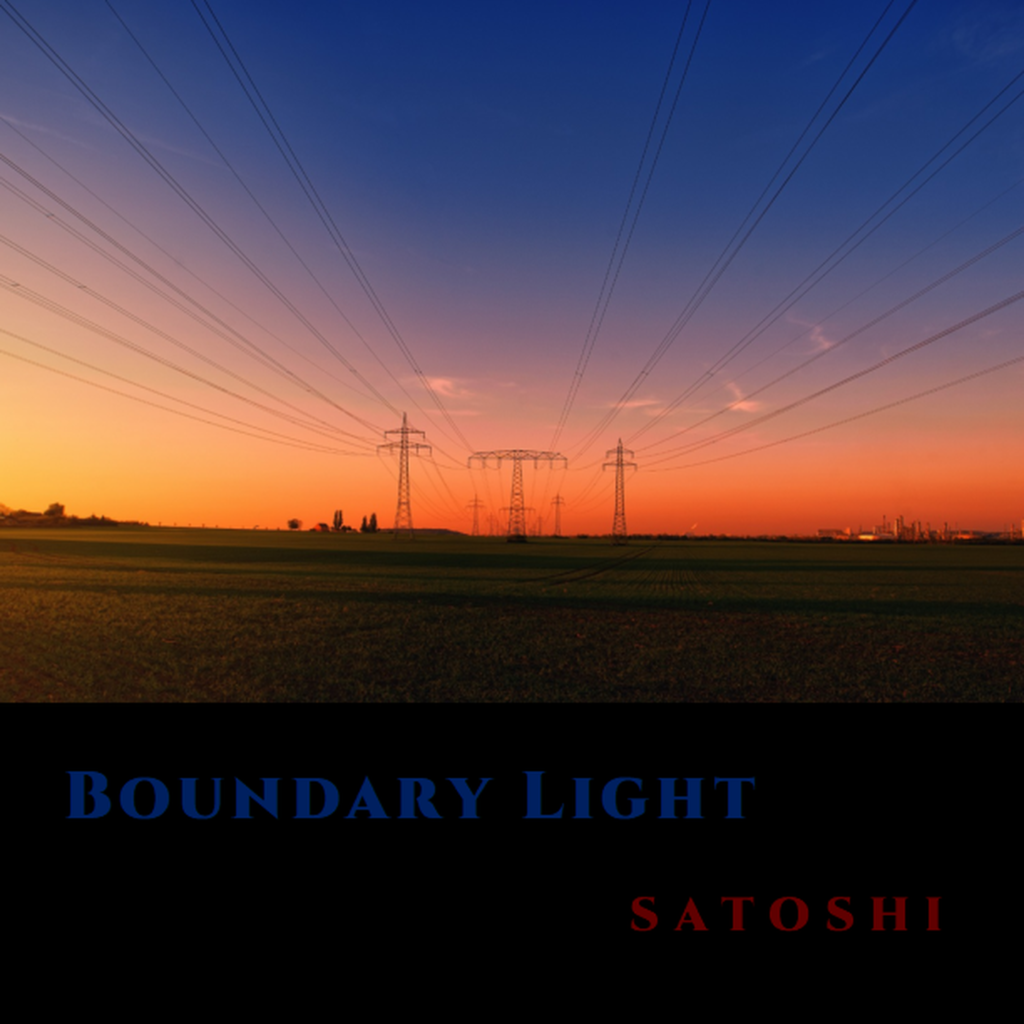
Suspended between intimate stillness and cinematic weight, Japanese composer and producer SATOSHI crafts sonic worlds that resist easy categorization. With his latest release, “Boundary Light,” the artist constructs an evocative, near-future cityscape shaped by loss, blurred identity, and the quiet search for resolution across shifting shadows.
The piece weaves together trip-hop pulses, dark ambient textures, abstract hip-hop rhythms, and the sweeping dynamics of post-rock. Beyond traditional instrumentation, the track features ethereal vocal lines generated via ACE Studio’s AI singing technology—seamlessly integrated into SATOSHI’s end-to-end production, arrangement, and mixing. It is a sound that has already begun to resonate on global stages, finding its way into dance visuals and even soundtracking an official football event at Rwanda’s national stadium.
We caught up with SATOSHI to dive into the architecture of “Boundary Light,” his multifaceted production process, and how he navigates the intersection of cutting-edge technology and deep atmosphere.
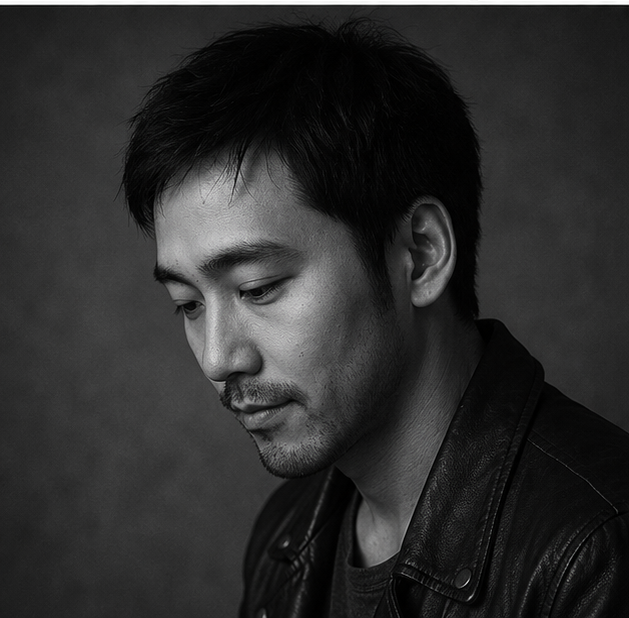
1. Your roots can often shape your journey. Can you share a story or moment from your early life that had a significant impact on your path into music?
SATOSHI: One of my earliest musical memories goes back to when I was about six years old. My mother used to play Whitney Houston’s “So Emotional” in the car, and it became the first song I can clearly remember loving. When I told her how much I liked it, she was surprised and asked how I could understand an English-language song. Looking back, I think I was probably responding to melody and emotion long before I cared about lyrics.
I started taking electronic organ lessons in elementary school, while also becoming fascinated by video game music and trying to work out melodies by ear. I think that was one of the earliest roots of the cinematic side of my music.
Later, my interests expanded through TMN (TM Network), a Japanese electronic pop/rock group led by producer Tetsuya Komuro, and then into Western rock and eventually metal. By the end of high school, I had also discovered Massive Attack and trip-hop, and from that point on genre boundaries became much less important to me.
What seemed like very different musical phases at the time eventually became parts of the same musical language.
2. Did your musical journey begin with formal training, or was it more of a personal exploration? How has that shaped your unique approach to your craft?
SATOSHI: It has always been a mixture of formal training and personal exploration, but I would say the latter has had the greater influence on me.
The electronic organ lessons I took as a child gave me some musical foundations, but much of what shaped me happened outside formal education. I learned music by ear, taught myself guitar, and later drums, while constantly trying to understand why certain music affected me.
At university, I played mainly metal and alternative rock. Later, while living in China for work, I began playing drums and joined several bands in Shanghai, playing music by artists ranging from Metallica and Pantera to Rage Against the Machine, Nirvana, AC/DC, and The Rolling Stones.
After returning to Japan, I continued playing in bands, including several years in a Black Sabbath tribute band. Eventually, when I began composing seriously, I realized that writing and producing music gave me the deepest sense of fulfillment.
Today, I tend to think about atmosphere, melody, harmony, rhythm, texture, and emotion first, and genre afterwards.
3. Who were some of the most influential figures in your early musical life, and how did they inspire your sound? Also, what’s the story behind choosing the name ‘SATOSHI’?
SATOSHI: My influences come from very different worlds.
Video game music was one of the earliest and most important. Final Fantasy, Wizardry, Megami Tensei, Dragon Quest, and Uncharted Waters — particularly Yoko Kanno’s music for the series — showed me how powerfully music can create an imagined world. Uncharted Waters also introduced me to music that evokes different cultures and places, which may be one of the roots of my continuing interest in cinematic and world-music elements.
TMN influenced my sense of melody, electronic sound, and world-building, while TOTO, King Crimson, and Renaissance opened my ears to sophisticated arrangements and progressive structures.
Black Sabbath and later Metallica, Slayer, Pantera, Sepultura, Morbid Angel, and Emperor shaped my sense of heaviness, riffs, aggression, and darker textures. Alice in Chains showed me that heaviness could also come from harmony and emotional ambiguity.
Rhythm and groove have been equally important. James Brown had a major impact on the way I hear groove, while DJ Premier and DJ Shadow influenced my approach to hip-hop rhythm, repetition, and texture. I have also always loved Bob Marley, especially the darker and heavier side of his music. Tracks such as “The Heathen” showed me how repetition and groove can create a sense of weight without relying on distortion or sheer volume.
As a drummer, I have also been strongly influenced by Bernard Purdie and Nate Smith, particularly their sense of pocket, feel, and the subtle balance between precision and looseness.
On the electronic side, Depeche Mode and Massive Attack taught me the power of space, atmosphere, and restraint.
My own sound probably comes from the collision of all these influences.
As for “SATOSHI,” it is simply my real first name. My family name is fairly uncommon, so I prefer not to use my full legal name publicly for privacy reasons.
4. What do you believe sets your music apart? How would you describe your sound to someone discovering you for the first time, and what emotions or experiences do you hope to evoke in your listeners?
SATOSHI: One of the most consistent characteristics of my music is its dark texture. Depending on the track, that might appear through heavy distorted guitars, off-kilter grooves, electronic sounds, or dense layers of ambience.
I work across different genres, so I do not think any particular instrumentation defines my music. What connects the pieces is more the atmosphere and emotional weight behind them.
Conceptually, I often return to two broad themes. One is human weakness and contradiction — our ability to act against what we know to be right — while still leaving open a faint possibility of hope.
The other is the ambiguity of what it means to be human. I sometimes explore this through subjects such as a self-aware AI questioning its own existence and identity, which ultimately leads back to questions about consciousness, morality, and the boundaries of the self.
The darkness is not there simply for aesthetic effect. Ideally, I want the music to give listeners a moment to turn inward and reflect on themselves.
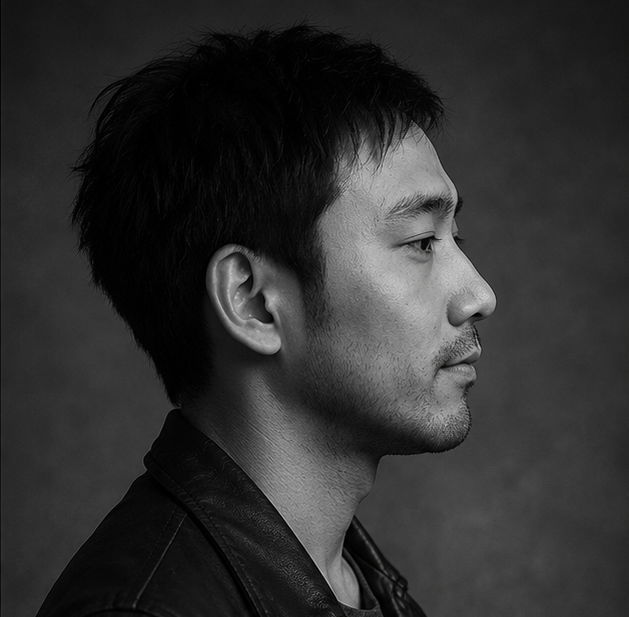
5. Do you think is it important for fans of your music to understand the real story and message driving each of your songs, or do you think everyone should be free to interpret your songs in their own personal way?
SATOSHI: I strongly believe listeners should be free to interpret the music in their own way.
Of course, when I create a piece, there is usually a particular idea, emotion, or question behind it. But I do not think my interpretation should become the only correct one. Once the music leaves me and reaches someone else, it begins to interact with that person’s own memories, experiences, struggles, and hopes.
Everyone follows a different path through life, so the same song can naturally mean very different things to different people. I think that is one of the most beautiful things about music.
As an artist, I would rather offer questions, images, and emotional spaces than fixed answers. If someone finds a meaning in one of my songs that is completely different from what I originally intended, but that meaning feels real and important to them, I consider that a success rather than a misunderstanding.
The meaning of a song does not belong entirely to the person who created it. Part of it belongs to each person who listens.
6. Music often transcends entertainment. What’s your view on the role and function of music as political, cultural, spiritual, and/or social vehicles – and do you try and affront any of these themes in your work, or are you purely interested in music as an expression of technical artistry, personal narrative, and entertainment?
SATOSHI:
I think music can act as a catalyst for looking inward. It can make us reconsider ourselves, but it can also broaden the perspective through which we look at the world.
I do not consciously approach music as a political vehicle, and I am not particularly interested in writing direct political messages. However, many of my works begin with questions about human weakness, contradiction, morality, and identity. Since politics, society, and culture are ultimately human creations, those questions can naturally extend into how we understand the world collectively.
The spiritual dimension is particularly important to me. I have a strong interest in philosophy, religion, ideas, and the humanities more broadly, and I am often inspired by the ways novels and films explore human psychology and existential questions.
Rather than communicating a specific doctrine, I want to create spaces in which questions of meaning, weakness, identity, transcendence, and hope can be experienced rather than simply explained.
7. Do you feel the rewards of your musical career match the energy and passion you invest in it, or are there different kinds of fulfillment you’re still seeking?
SATOSHI:
In a practical sense, not yet. My long-term hope is to build a life with music at its center, and I still have some distance to go before the practical rewards fully match the time and energy I invest.
In terms of expression itself, however, I already feel deeply fulfilled. My music is still developing and becoming more personal, and that process is rewarding in itself.
Recently, collaborations and connections with listeners from different countries have added another kind of fulfillment.
I also find something deeply meaningful in creating work that can continue to exist independently of me. In modern society, much of what we do disappears into larger systems and leaves little personal trace.
A piece of music is different. It can remain.
The thought that one day, even after I am no longer here, my family may still be able to listen to something I created is very moving to me.
8. Can you walk us through your creative process? From the first spark of an idea to the finished track, what’s the most essential part of your process, and how do collaboration or external influences shape your work?
SATOSHI: My creative process usually begins in one of three ways: with a drum groove, a chord progression, or a melody.
Sometimes it begins even earlier, with an abstract image or atmosphere in my mind. In those cases, making music becomes a process of gradually giving that image a concrete form.
For me, the most important point is when the melody, harmony, and rhythm have settled into place. Once those three elements feel right, I feel that the identity of the piece already exists. Sound design, instrumentation, production, and mixing are all important, but I see them largely as ways of revealing and intensifying something that is already there.
With collaborations, I usually give the other person as much freedom as possible. I am more interested in hearing their interpretation than in asking them to reproduce something I already have in my head. That often brings unexpected ideas and emotional nuances into the music.
9. What’s been the most challenging hurdle in either your personal life or music career, and how has it shaped you as an artist?
SATOSHI: One of the more difficult periods of my life was when I was young and struggled to feel comfortable within the school environment. During that time, heavy music — especially bands such as Black Sabbath — became an important refuge for me.
I have always been the kind of person who turns toward darker music when I am sad or going through a difficult period. Listening to something cheerful does not necessarily make sadness disappear. Sometimes music that acknowledges darkness, weight, or pain can be far more comforting because it gives those emotions somewhere to exist.
That experience has had a lasting influence on me as an artist. Darkness in my music is not simply an aesthetic choice, nor do I associate it only with negativity. It can also be a form of recognition and consolation.
If darker music once gave me somewhere to place difficult feelings, I hope my own music might sometimes offer that kind of space to someone else.
10. On the flip side, what moment or achievement in your career so far has made you feel the proudest, and why? And let’s talk about your latest release and future plans.
SATOSHI: It may sound like a small thing, but one of the things that makes me happiest is seeing that people have Shazamed my music.
There is something very meaningful about imagining that someone heard one of my tracks somewhere, did not know who made it, and was curious enough to take out their phone and identify it. To me, that is a very direct sign that the music has left my own world and reached someone I have never met.
My latest release, “Boundary Light,” combines trip-hop and abstract hip-hop rhythms with dark ambient, electronic textures, and the atmospheric weight of post-rock. Set against an imagined near-future city, it explores loss, dissolving identity, human fragility, and the persistence of connection and light in the face of disappearance.
Looking ahead, I want to keep moving freely between dark R&B, trip-hop, ambient and cinematic music, post-metal, blackgaze, and other forms without restricting the project to one genre.
I also want to continue international collaborations and expand further into music for film, games, and other visual media. Ultimately, my goal is to build a sustainable life with music at its center while continuing to deepen this musical world.

STAY IN TOUCH:
FACEBOOK | INSTAGRAM | X | SPOTIFY | BANDCAMP | TIKTOK | WEBSITE | YOUTUBE