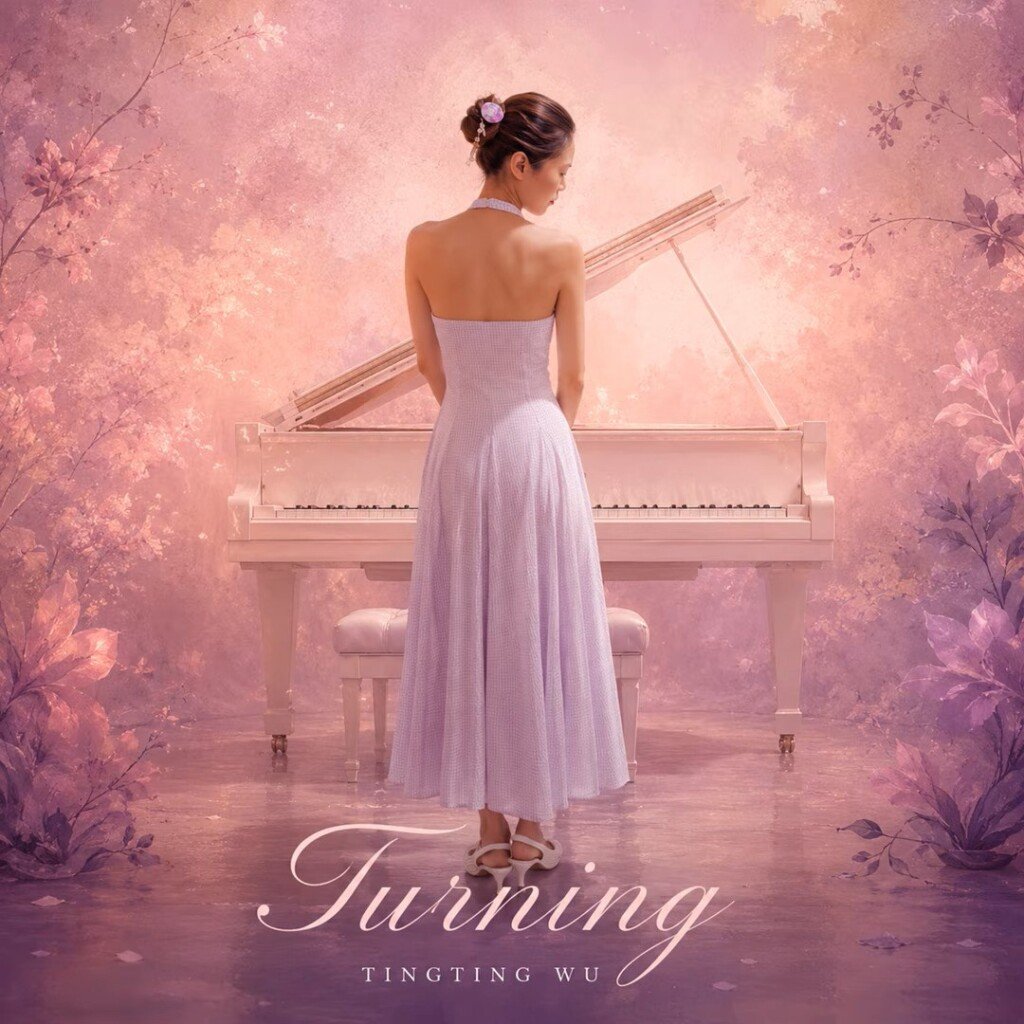
Turning is the newest original piano composition by concert pianist and composer Tingting Wu. Inspired by the ballet turns, the piece also reflects the many turns we all encounter throughout life. Sometimes, a single turn means saying goodbye as two people walk away from each other, perhaps for the last time. Yet every ending can also become the beginning of a new chapter. Tingting Wu is a concert pianist, composer, and founder of LumiMusic, an original immersive concert experience that combines live piano performance with synchronized colored lighting. She began studying classical piano at the age of six and has appeared as a solo pianist in numerous distinguished performances and productions. Her recent highlights include performing as the solo pianist in the PBS television production Pictures at an Exhibition with Grammy and Emmy Award-winning conductor Gerard Schwarz in 2024, and serving as the solo pianist with LumiMusic for the New York AI International Film Festival Awards Ceremony at Symphony Space on Broadway in 2025. Check out the exclusive interview below:
1. Your roots can often shape your journey. Can you share a story or moment from your early life that had a significant impact on your path into music?
TINGTING WU: I think my earliest memory of music was attending a live piano concert when I was five years old. At the time, I had no idea what piece the pianist was playing—I only remember watching his fingers move so effortlessly across the keyboard while the warm orange spotlight made him look almost like an angel.
The whole stage seemed to shimmer because of the beautiful sound and the light in the concert hall. I remember quietly thinking, “I wish one day I could be like that, too.”
Years later, after I had grown up and studied piano, I finally discovered that the music I had heard was the lyrical middle section of Chopin’s Scherzo No. 3 in
C-sharp minor. It felt like rediscovering a treasured childhood memory. Looking back, I believe that beautiful moment planted the seed that eventually led me to pursue music professionally as a concert pianist.
2. Did your musical journey begin with formal training, or was it more of a personal exploration? How has that shaped your unique approach to your craft?
TINGTING WU: My musical journey began with very traditional and rigorous classical training. I started learning piano at the age of six, spent many years studying at professional music schools, and later continued my education at the New England Conservatory and the University of Miami, where I earned my Doctor of Musical Arts degree in Keyboard Performance.
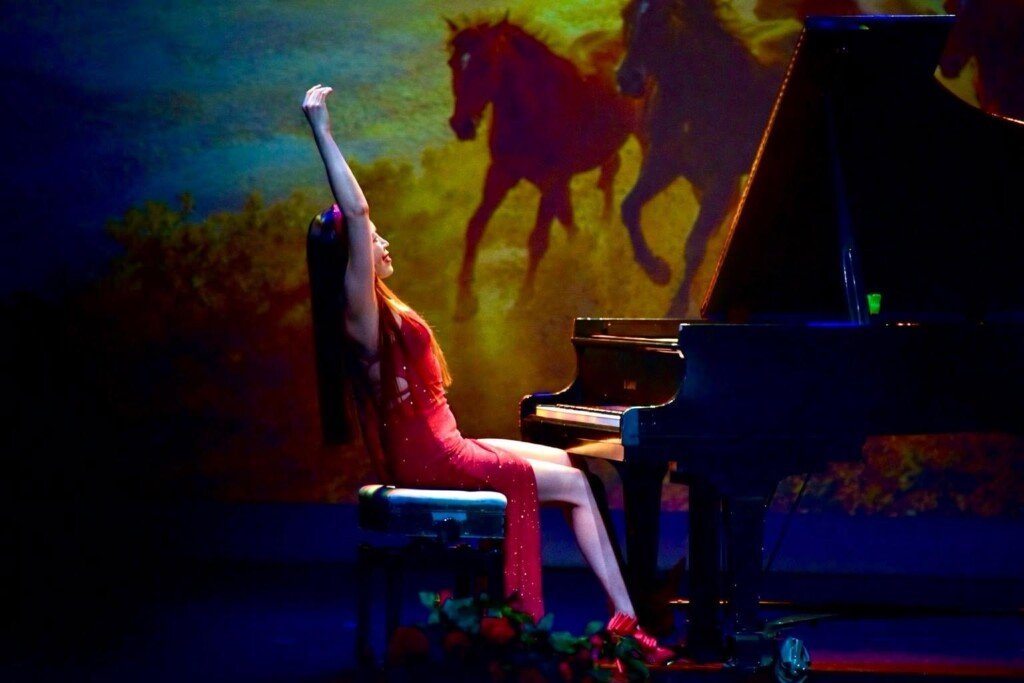
While that training gave me a strong technical and artistic foundation, it also inspired me to ask a different question: How can a piano performance become an even more immersive emotional experience? Around 2019, I began exploring the idea of combining live piano performance with colored lighting because I naturally associate certain harmonies and musical passages with different colors and emotions. I wanted audiences not only to hear the music but also to feel as if they had stepped into its emotional world.
That idea eventually grew into LumiMusic, and in 2022 I presented my first concert in Miami combining classical piano with synchronized colored lighting.
Looking back, I think my formal training gave me the discipline to master the tradition, while my determination to help people truly experience classical music and music in general has inspired me to explore new ways of sharing it with audiences.
3. Who were some of the most influential figures in your musical life so far, and how did they inspire your sound? Also, what’s the story behind choosing the name LumiMusic?
Tingting Wu: There are two people who have had the greatest influence on my musical journey so far. The first is my mother. From a very young age, she encouraged me to participate in China’s top national piano competitions and musical activities, which gave me the opportunity to learn and grow alongside many outstanding young pianists. More importantly, she always told me, “Do your best without fear.” I think that mindset has stayed with me throughout my career. It gave me the courage not only to pursue classical piano at the highest level, but also to explore new artistic ideas and eventually begin composing my own music.
Another person who deeply influenced me is my former piano mentor, Kevin Kenner. When I first shared my vision of combining colored lighting with live piano performance, he genuinely encouraged the idea. His support gave me the confidence to continue developing what later became LumiMusic. Both of them inspired me in different ways—my mother taught me to be fearless, while Kevin encouraged me to trust my own artistic vision and bring the atmosphere I imagined into reality through music and light.
The name LumiMusic is quite straightforward. “Lumi” comes from illumination and represents light, which contains every color we can see—and even those beyond our eyes. To me, LumiMusic represents music illuminated by light, where sound and color come together to create one emotional experience.
4. What do you believe sets your music apart? How would you describe LumiMusic concerts to someone discovering you for the first time, and what emotions or experiences do you hope to evoke in your listeners?
TINGTING WU: I remember a European music critic once told me, “Tingting, your music invites listeners into a world of imagination and emotion. As they listen, they can almost visually ‘see’ your music.” That comment stayed with me because it perfectly described what I have always hoped to create through my music. I want people not only to hear the sound, but to almost see it with their imagination.
That is also the idea behind LumiMusic. For someone discovering it for the first time, I would describe it as a live piano concert combined with synchronized colored lighting, where the colors evolve with the emotions and atmosphere of the music. The lighting is not there simply to decorate the stage—it becomes part of the storytelling, allowing audiences to experience the music through both sound and color.
More than anything, LumiMusic is about creating an emotional space. I hope audiences remember meaningful moments from their own lives, rediscover forgotten dreams, or imagine beautiful moments that are still waiting for them in the future. Every person may experience something different, and I think that is the beauty of music. If someone leaves the concert feeling more peaceful, inspired, or emotionally connected, then I feel LumiMusic has fulfilled its purpose.
5. For most artists, originality is first preceded by a phase of learning and, often, emulating others. What was this like for you? How would you describe your own development as an artist and music maker, and the transition towards your own style, which is known as LumiMusic?
TINGTING WU: Like many artists, I began by learning from the traditions around me. As a classical pianist, I spent years studying the great composers and performers who came before me. At the same time, I was always curious about how audiences experience live performances beyond the music itself.
As I watched concerts in different genres, I noticed that pop performances often used colorful stage lighting to create an exciting atmosphere. That observation led me to ask a simple question: Why couldn’t classical music also use light—not just as a visual effect, but as an artistic language that evolves with the emotions of the music?
That question became the starting point of LumiMusic. Rather than treating lighting as decoration, I wanted every color change to have meaning and to move together with the emotional atmosphere of the performance. I carefully design how music and light interact so they become one artistic experience.
As an artist, I have also learned not to place boundaries around creativity. Although my foundation is in classical music, I don’t want LumiMusic to be limited by genre. Today LumiMusic concerts include classical repertoire, film music, contemporary works, and my own original compositions. Looking ahead, I am also excited to explore electronic elements and other creative possibilities whenever they help deepen the audience’s emotional experience.
Ultimately, my goal has never been simply to present music differently. It is to help people experience music more deeply.
6. Music often transcends entertainment. What’s your view on the role and function of music as political, cultural, spiritual, and/or social vehicles – and do you try and affront any of these themes in your work, or are you purely interested in music as an expression of technical artistry, personal narrative, and entertainment?
TINGTING WU: I believe music is powerful enough to serve many different purposes. For me personally, I choose music itself. Rather than using music to promote a particular message or viewpoint, I hope it creates a space where people can simply feel. I believe music already reveals something about the artist, and it doesn’t always need words to explain itself. Sometimes, the most meaningful connection happens when listeners discover their own emotions within the music.
That is how I approach both LumiMusic and my original compositions. I see them as artistic experiences that welcome a broad audience while also expressing my own stories and imagination. Pieces such as Turning, Rainy Waltz, and The Music Box Lovers all began with personal emotions or images, but once they are shared, they become unique experiences for every listener.
I hope each listener connects with the music through their own memories, dreams, and emotions. One person may think of someone they miss, while another imagines a beautiful future that has yet to come.
7. Do you feel the rewards of your musical career match the energy and passion you invest in it, or are there different kinds of fulfillment you’re still seeking?
TINGTING WU: I can honestly say that I have a very fulfilling musical career, and I feel incredibly fortunate that it continues to grow. LumiMusic, my original compositions, and performing as a concert pianist are all things I have genuinely dreamed of doing. Every project allows me to express a different part of myself, and I feel grateful that they have become part of my everyday life.
Pursuing a dream requires the courage to take risks and the perseverance to stay consistent, but I am glad I chose the path that truly reflects who I am. One of the most rewarding moments has been seeing LumiMusic reach audiences far beyond a traditional piano recital. From being featured at the New York AI Film Festival
Awards Ceremony to being invited back to perform at multiple venues because of its immersive experience, I have seen people connect with classical music in ways I had always hoped they would.
Of course, I still have dreams I want to pursue. I hope LumiMusic continues to grow, reaches even more audiences around the world, and inspires people to experience music in new ways. To me, success is not simply about achievements—it is about seeing an idea that once existed only in my imagination gradually become a reality. Watching that small seed grow into a tree has been one of the greatest joys of my journey.
8. Can you walk us through your creative process? From the first spark of an idea to the finished track, what’s the most essential part of your process?
TINGTING WU: Thank you for asking this question! My original compositions almost always begin with a feeling or an emotion that I genuinely want to share with others through music. Before I think about melodies or harmonies, I first imagine an atmosphere or a story.
For example, I might see someone quietly walking alone on a rainy day. Simply watching that person’s silhouette from behind is enough for my imagination to begin creating a story. I start wondering what they are thinking, where they are going, and what emotions they are carrying with them. That emotional atmosphere gradually transforms into music.
I think that is why many people describe my music as cinematic or story-like. My compositions do not begin with technical ideas—they begin with emotions. Once I discover that feeling, I simply let the music grow naturally until it becomes a complete piece.
To me, that first emotional spark is the most essential part of the creative process. Everything else—the notes, harmonies, and structure—exists to faithfully express that original feeling.
9. Do you think it’s important for fans of your music to understand the real story and message driving each of your songs, or do you think everyone should be free to interpret your songs in their own personal way?
TINGTING WU: I prefer not to reveal every detail behind my compositions. Instead, I like to offer listeners a small clue and then allow the music to tell the rest of the story. I think imagination is one of the most beautiful parts of listening to music.
For example, my newest composition, The Music Box Lovers, is inspired by both personal emotions and imagination. Rather than explaining every detail, I simply invite listeners into the scene with one sentence: A prince and a princess dance inside a beautiful and delicate music box. From there, I leave the rest unanswered. How did they arrive there? Can they leave? What do they truly feel for each other? I intentionally leave those questions open because I want the music itself to explore them.
I have always believed that music becomes even more meaningful when listeners bring their own memories, emotions, and imagination to it. Every person may see a different story, and I think that is part of the magic. Once a piece of music is shared with the world, it no longer belongs only to the composer—it also belongs to everyone who finds their own meaning within it.
That is one of the core ideas behind both LumiMusic and my original compositions. Rather than telling audiences exactly what to think or feel, I hope to create a space where they can discover their own stories through music.
10. The last question, what moment or achievement in your career so far has made you feel the proudest, and why?
TINGTING WU: There have been many meaningful moments throughout my career, but two stand out in particular during the 2025–2026 season.
The first was performing LumiMusic at the New York AI Film Festival Awards Ceremony at Symphony Space on Broadway in late 2025. The audience included filmmakers, writers, and award-winning producers from around the world. It was one of the most important performances of my career, and I remember feeling both excited and honored. After the performance, many people told me they had never experienced piano music presented in this way before. Seeing them connect with LumiMusic made me realize that the idea I had carried in my heart could truly resonate with audiences from many different backgrounds.
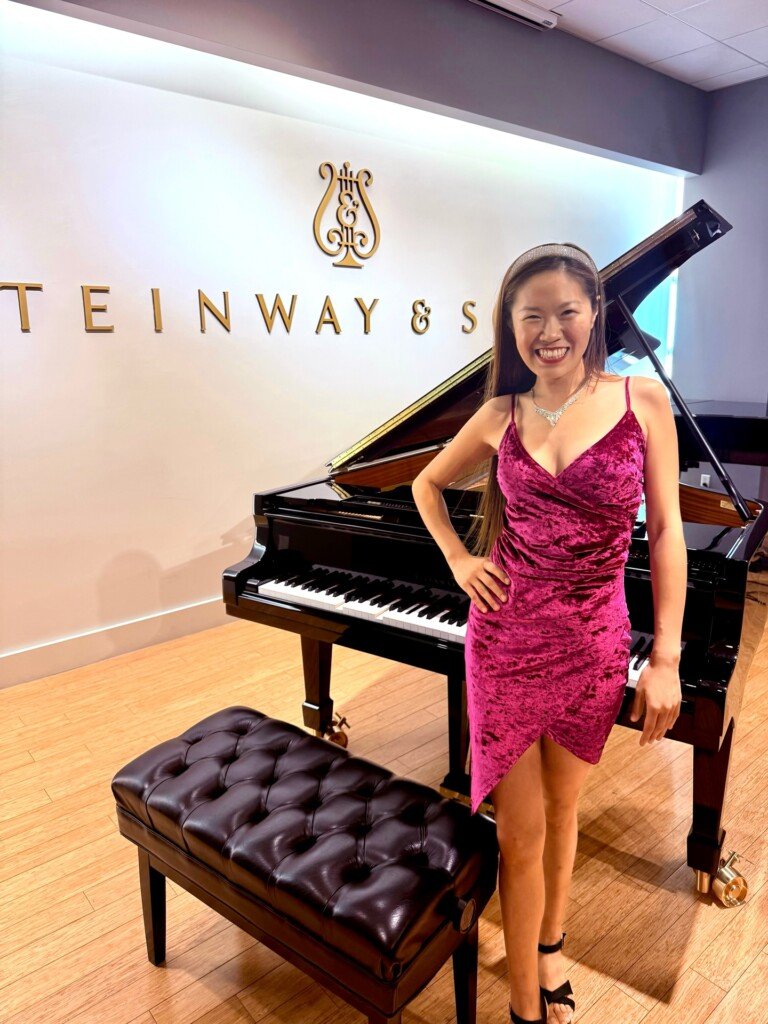
Another unforgettable moment came in late July 2026, when I performed my own original compositions at the Steinway & Sons Recital Hall in Miami. After the concert, many audience members came to speak with me. Some told me the music had brought them to tears. Others shared that it reminded them of their family, friends, or someone they deeply missed. Those conversations meant more to me than I can express.
In that moment, I felt that my purpose as a composer and performer had come to life. More than anything, I hope my music helps people to reconnect with their emotions, and remember what truly matters in their lives. If my music can give someone even a few minutes to dream, reflect, or simply feel, then I know I have achieved my goal as an artist.

STAY IN TOUCH:
FACEBOOK | INSTAGRAM | SPOTIFY | WEBSITE | YOUTUBE