1. Your roots can often shape your journey. Can you share a story or moment from your early life that had a significant impact on your path into music?
Zara Hudson-Kozdoj: Growing up in a very musical household definitely shaped who I am today. My mother is Polish and a musicologist, so music was everywhere from the start. There was a sense of discipline around it, not in an oppressive way, but in a way that made music feel sacred.
2. Did your musical journey begin with formal training, or was it more of a personal exploration? How has that shaped your unique approach to your craft?
Zara Hudson-Kozdoj: It started with very formal training: I was at Junior Guildhall from the age of eight. That gave me a really strong technical foundation, but in my twenties, I began breaking away from that. I found freedom in playing by ear, collaborating with bands, and experimenting in more abstract ways. It’s great to have that classical grounding, but I bring a lot of what I learned later, the freedom and more instinctive side, into my compositions now.
3. Who were some of the most influential figures in your early musical life, and how did they inspire your sound?
Zara Hudson-Kozdoj: Classical cellist Jacqueline du Pré had a huge impact on me; her sound is so raw and emotive. Outside of classical music, Bob Marley is probably my favourite artist because he used his music as a message for positive change. Amy Winehouse is another major influence, and I’d say she’s my favourite British artist. She shaped my unrefined attitude toward performance and reminded me that I don’t need to be a “well-behaved” woman in order to make art.
4. What do you believe sets your music apart? How would you describe your sound to someone discovering you for the first time, and what emotions or experiences do you hope to evoke in your listeners?
Zara Hudson-Kozdoj: Especially in the classical sector, but also wider music, my music stands out because it’s very authentic. I haven’t really found anyone doing quite what I’m trying to do. My aim is to take a traditionally classical instrument and use it as a voice, as if it were a human vocalist.
At the same time, I’m concerned with wider social issues, particularly class in the UK, while still working from a classical base. Across my album, I want listeners to follow the journey through different genres and see that these musical worlds can unify in a shared performance space, all through the cello.
5. For most artists, originality is first preceded by a phase of learning and, often, emulating others. What was this like for you? How would you describe your own development as an artist and music maker, and the transition towards your own style, which is known as CLASSICAL?
Zara Hudson-Kozdoj: Having that technical ability has been vital for me, but my real growth came from a mental shift: moving from being a student told what and how to play, to being a creator deciding why to play.
Learning to read music is like learning to read a book – it’s a starting point. But composing is like becoming a writer where you’re telling your own story. For years, I saw the notes on the page as strict rules. Now, I see them as a colour palette and as a way to paint emotion and perspective rather than reproduce someone else’s.
6. Music often transcends entertainment. What’s your view on the role and function of music as political, cultural, spiritual, and/or social vehicles – and do you try and affront any of these themes in your work, or are you purely interested in music as an expression of technical artistry, personal narrative, and entertainment?
Zara Hudson-Kozdoj: I’m very interested in the function of music as political, cultural, and spiritual. I’m currently writing a protest piece in response to the genocides happening right now.
That said, I don’t think everyone’s music needs to carry that weight. Some people use music purely as an escape, and that’s an important way to experience music too. But for me, even when an album centres on my own life, the themes within it are sociopolitical.
Composers like Shostakovich had to work under political restraint and communicate through codes, which fascinates me. I also find the creative process quite spiritual. Sometimes ideas come to me in dreams, and it can feel like something bigger than me.
7. Do you feel the rewards of your musical career match the energy and passion you invest in it, or are there different kinds of fulfillment you’re still seeking?
Zara Hudson-Kozdoj: I feel very lucky that I’ve had the chance to work with artists I genuinely admire, like Max Richter, Celeste, and the London Contemporary Orchestra. I’m a fan of the people I collaborate with, which is a real privilege.
I’m also grateful to have been born at this time: as a Black woman, my path might have been very different even twenty years ago. Things can always improve, but I do feel rewarded for the work I’ve put in.
8. Can you walk us through your creative process?
From the first spark of an idea to the finished track, what’s the most essential part of your process, and how do collaboration or external influences shape your work?
Zara Hudson-Kozdoj: My process usually starts with a feeling, something physical and emotional, often connected to colours or imagery. Once I have that sense, I start building harmonies that match the mood, because chords can carry a visual or emotional tone.
I then consider the pace and rhythm, lay down the roots and percussive elements, and loop sections until I find the melody that feels right. From there, I expand the piece horizontally and vertically, layering textures and widening the sound. Collaboration and whatever I’m listening to at the time always feed into that process.
9. On the flip side, what moment or achievement in your career so far has made you feel the proudest, and why? And let’s talk about your latest release and future plans.
Zara Hudson-Kozdoj: This album is definitely my proudest moment so far. I’m also proud of recording on Max Richter’s last album, receiving the D’Addario Foundation and ONA scholarships, and conducting Beauty and the Beast straight out of college at the biggest theatre in the UK.
Looking forward, I want to expand. I don’t plan to keep layering the cello forever. I’d love to write a Mass for the Genocides with a small choral and instrumental ensemble. It feels like the next natural step – something with scope and social weight.
10. Do you think is it important for fans of your music to understand the real story and message driving each of your songs, or do you think everyone should be free to interpret your songs in their own personal way?
Zara Hudson-Kozdoj: This is one of my favourite questions. At the Royal College of Music, I took a course called Criticism and Aesthetics with journalist Ivan Hewett, and we debated this endlessly. I still don’t have a fixed answer but I’m constantly evaluating.
Right now, I don’t think biographical details are essential. Good music is good music, and it should stand on its own. That said, I do enjoy sharing my own stories, especially because this album is autobiographical: it’s a soundtrack to my life.
If a listener wants to dig deeper, it might help them to connect with someone spiritually through their music, and get to know them personally through their words and stories. But neither should be a requirement.
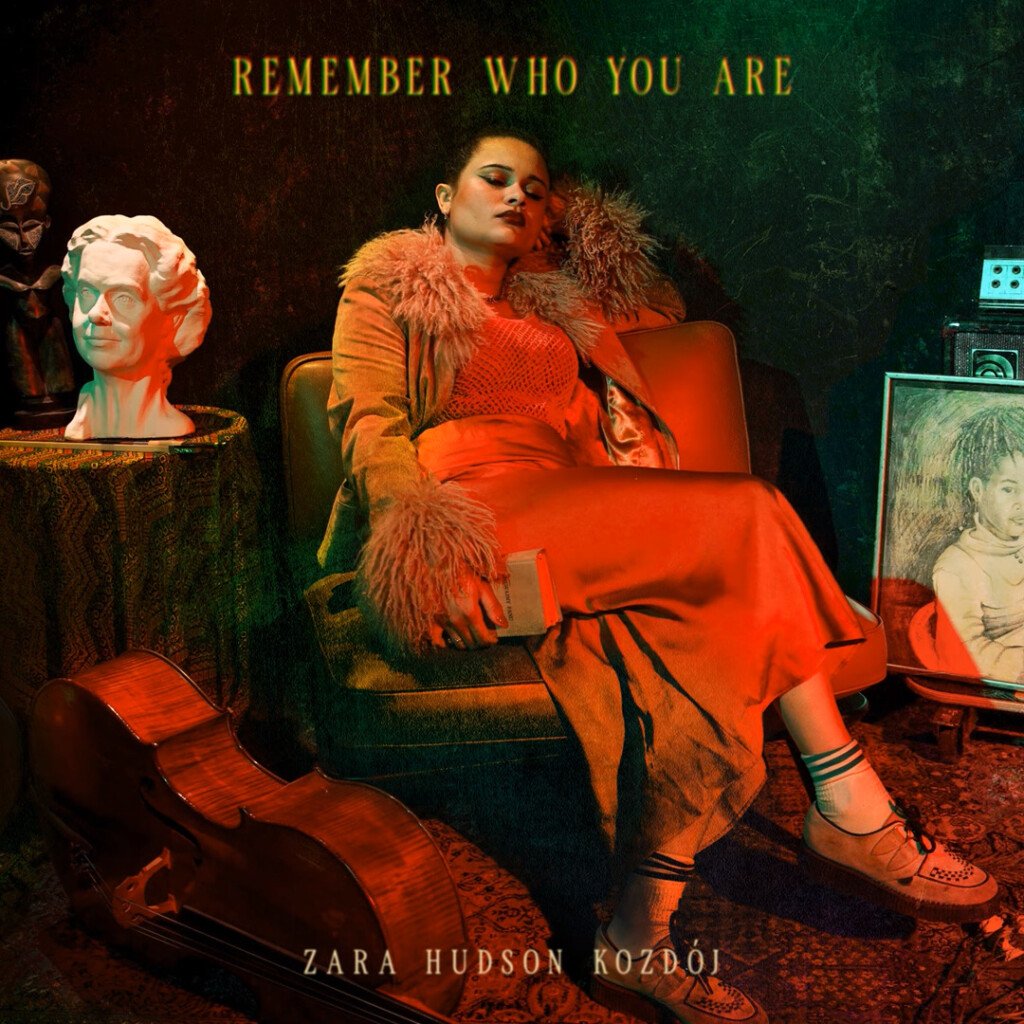
Remember Who You Are is the debut album by Zara Hudson-Kozdoj, out on 10th October 2025 with Platoon. Pre-order / Stream and download here.
Buy tickets to the launch event (London, 13th October) here.

STAY IN TOUCH:
FACEBOOK | INSTAGRAM | TWITTER | SPOTIFY | TIKTOK | YOUTUBE