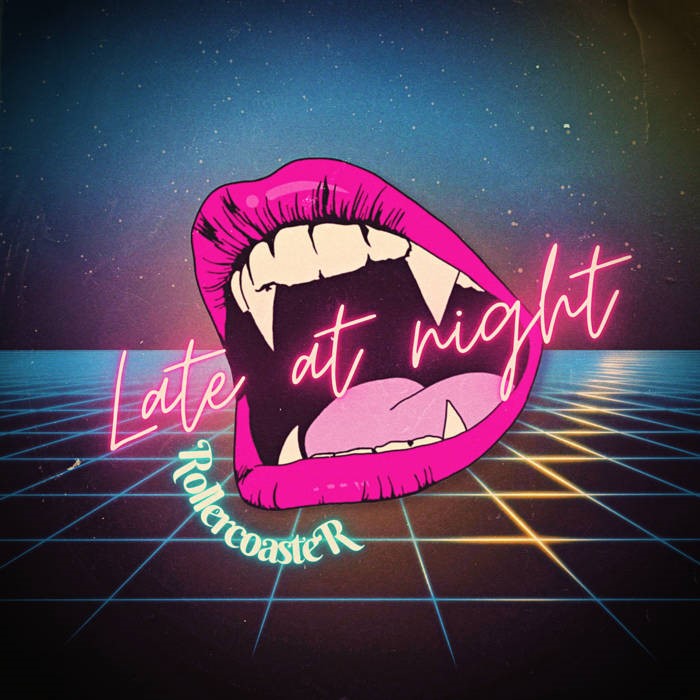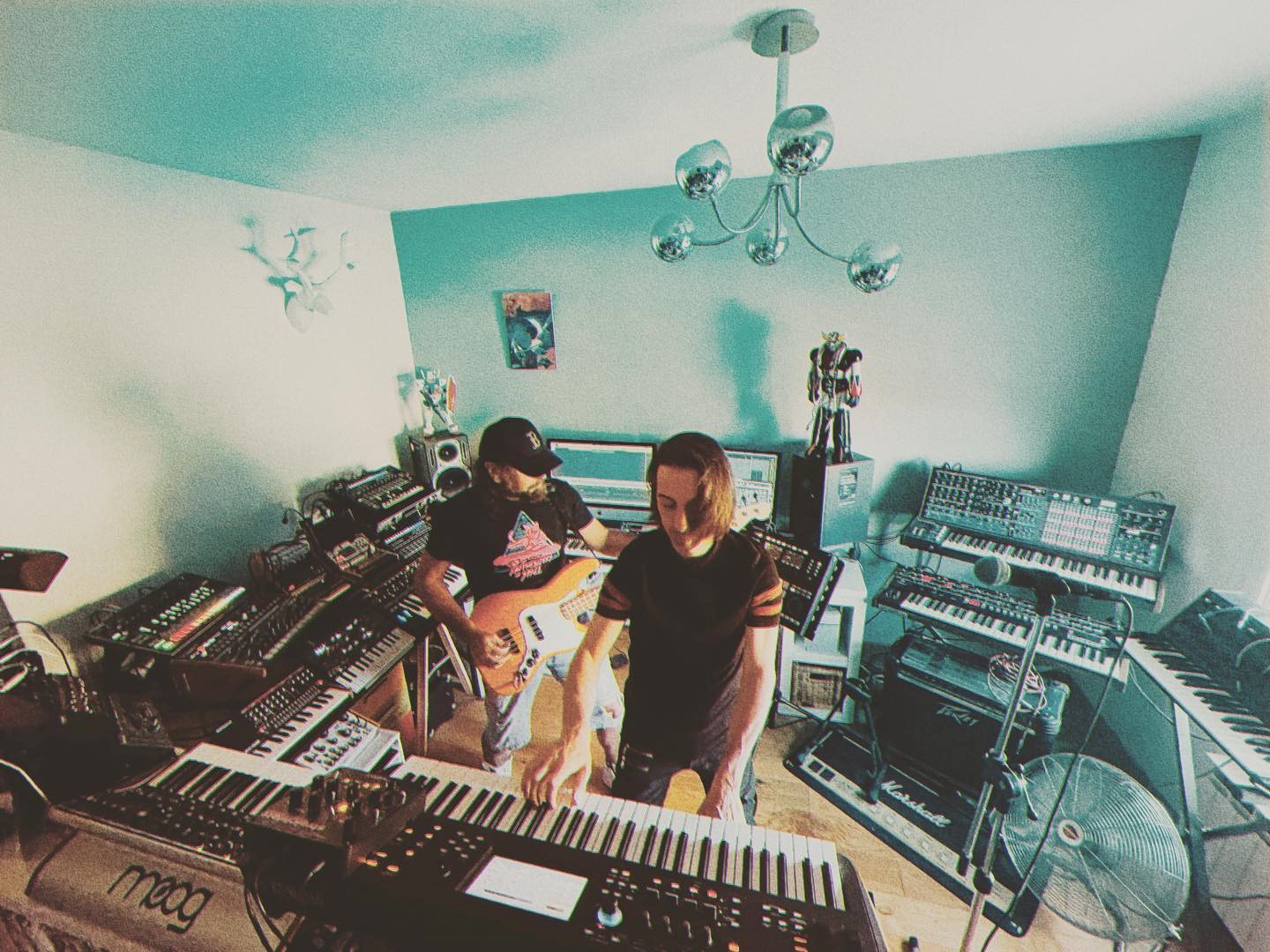
RollercoasteR consists of two musicians, producers, and composers from two separate musical universes who reunited after two decades apart to become RollercoasteR. This second encounter was unavoidable given their intense desire to integrate their thoughts.
One continued to scour the international rock scene (Voodo Angel) while the other began producing electronic music on the French Riviera under several aliases (Jessy Mach, Mr Fuzz or Sofian Rouge). Their youth was spent immersed in the cosmos of the 1980s, the musical playground of preference for this band formed at the intersection of synthwave and darkpop.
This French duo’s debut album, “Night Flashes,” was published last year on the renowned English label Future 80’s records. The group’s second, more instrumental album, “The mad chase,” was released in February and steered them toward a darker, yet still resolutely synthwave ambiance. We find a cover of the main theme from the film “Blade Runner” as well as a dedication to the “Mad Max” franchise by the atmosphere and title of the track “Slit the bad guy.”
“Late at night” brings the band back to a more guitar-centric sound, more adorned with rock sounds as it could have been done in the 1980s, but with a more electronic, actual production, a synthwave recipe with a hint of glam metal, such as the echo of Def Leppard or Billy Idol heard in “The grid” or “late at night.” This environment, which has inspired bands such as “Lebrock” and “The evil dreamers,” is where RollercoasteR likes to write and find inspiration. Check out the album and the exclusive interview below:
1. Can you tell us a bit about where you come from and how it all got started?
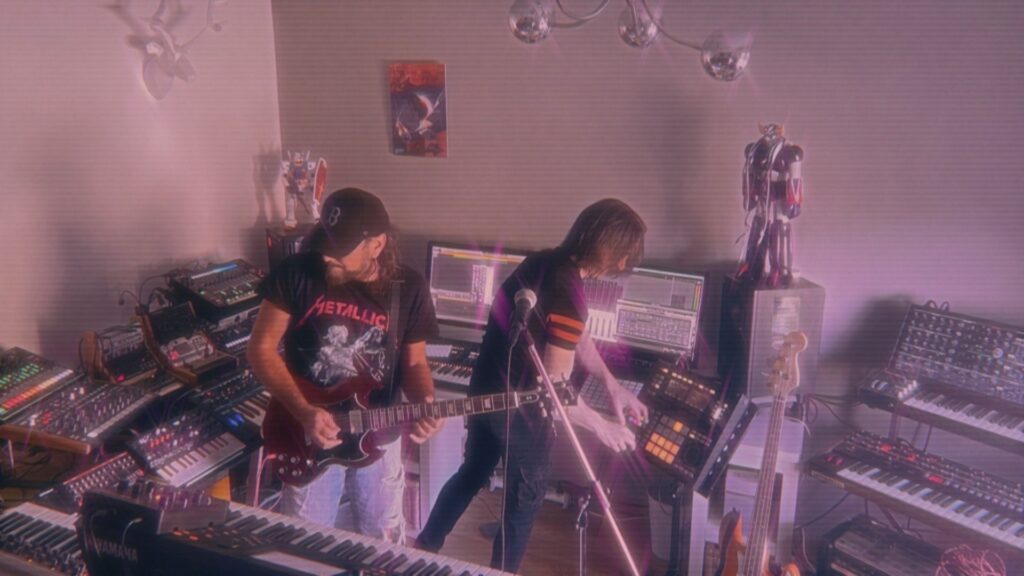
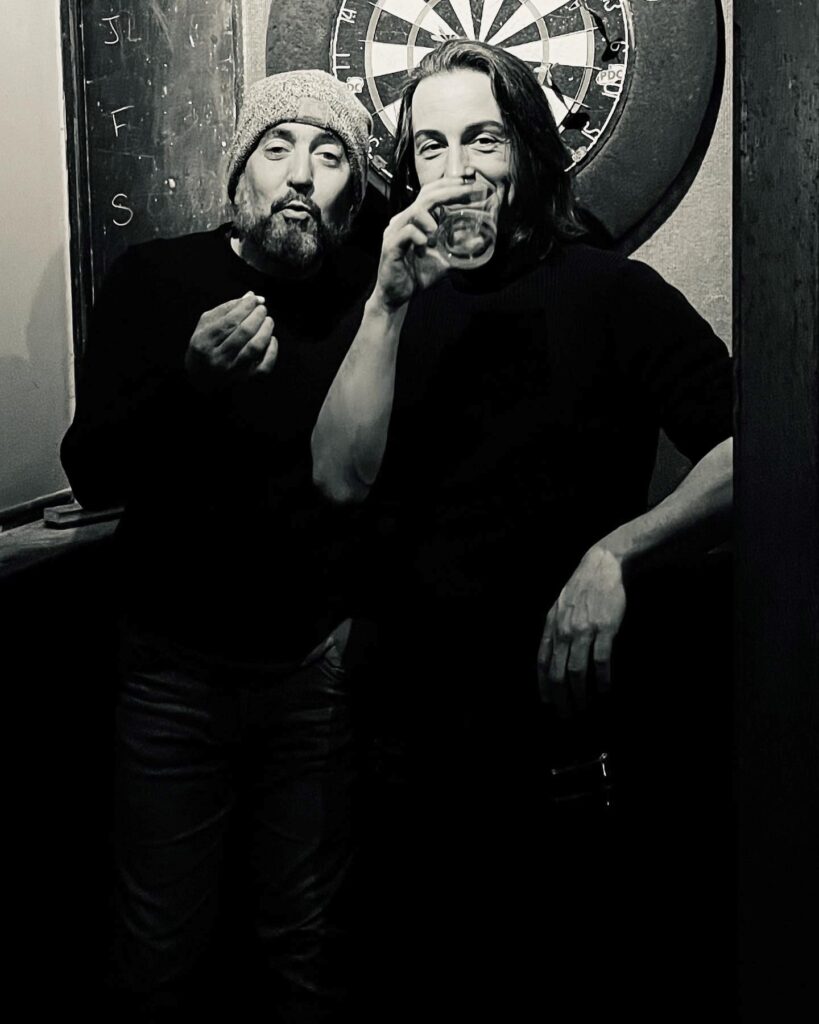
ROLLERCOASTER: RollercoasteR is a group of two musicians, producers and composers coming from two different musical worlds meet again after two decades of separation. This second meeting was inevitable as the desire to merge their ideas was strong.
Coming from the Toulouse scene (France), one continued to scour the international rock scene (Voodo Angel) and the other started to produce electronic music on the French Riviera under different pseudonyms (Jessy Mach, Mr Fuzz or Sofian Rouge).
Their childhood is bathed in the universe of the 80s, musical playground of predilection for this combo born at the borders of synthwave and darkpop.
2. Did you have any formal training or are you self-taught?
ROLLERCOASTER: We both took courses at the conservatory of toulouse and at the university of music. We both got our musical diplomas and competitions there. We also teach piano and guitar.
3. Who were your first and strongest musical influences and why the name ‘ROLLERCOASTER’?
ROLLERCOASTER: “Late at night” brings the band back to a more vocal & guitaristic music, more adorned with rock sounds as it could be done in the 80’s but with a more electronic, actual production, a synthwave recipe with this hint of glam metal, like the echo of a Deff Leppard or a Billy Idol which comes out in tracks like “The grid” or “late at night”.
This playground already well known by bands like “Lebrock” or “The bad dreamers” is the universe in which RollercoasteR likes to compose and get inspired.
We like to pay homage to the movies that accompanied our childhood and sometimes take the time to revisit epic themes like Carpenter’s “The Fog” or recently Don Coscarelli’s “Phantasm” with our own sound that builds up as the productions go on.
About the name « RollercoasteR » we found that the word sounded good and could lend itself to a whole bunch of musical nuances, but also to 80s mental images.
4. What do you feel are the key elements in your music that should resonate with listeners, and how would you personally describe your sound?
ROLLERCOASTER: A music that sounds like a memory of the past, a timeless imprint.
We pay particular attention to the instruments used, a fine mix between the past and the present. We play on old guitars, old synthesizers but we process the sounds with the current techniques of productions and the infinite possibilities of the plugins of the modern homestudio. I think this is the essence of synthwave. To succeed in building a musical piece that we discover but that comforts us by a feeling of already heard in the past…
Concerning the style we oscillate between very vocal tracks but also like to release 100% instrumental productions.
We also try that the listener finds the influence of the hard bands of the 80’s like motley crue, van hallen or Judas Priest.
It’s a bit like mixing heavy music with Depêche mode… Sometimes it’s not obvious! ah ah ah!
5. For most artists, originality is first preceded by a phase of learning and, often, emulating others. What was this like for you? How would you describe your own development as an artist and music maker, and the transition towards your own style, which is known as ROCK?
ROLLERCOASTER:
Yes we agree and our evolution looks like what you are talking about. But… We can’t say that we are a rock band… We have certain ingredients… Listeners will say it for themselves maybe one day.
6. What’s your view on the role and function of music as political, cultural, spiritual, and/or social vehicles – and do you try and affront any of these themes in your work, or are you purely interested in music as an expression of technical artistry, personal narrative, and entertainment?
ROLLERCOASTER:
Music is a powerful vector of communication, influence and passion for ideas. But our own credo is not fixed in advance. It is not a main motivation. The text comes as an idea and will be what it will be. We do not seek to do, as a priority, protest, politics or prevention. We do like everyone else, above all we take a look at life and the world but without a filter.
7. Do you feel that your music is giving you back just as much fulfillment as the amount of work you are putting into it or are you expecting something more, or different in the future?
ROLLERCOASTER:
We know from experience that it’s a really tough world to hope for quick and positive feedback. So… We do this first out of passion. If people adhere we will be happy otherwise, composing and managing to produce our sound is already a great satisfaction. We will see…
8. Could you describe your creative processes? How do usually start, and go about shaping ideas into a completed song? Do you usually start with a tune, a beat, or a narrative in your head? And do you collaborate with others in this process?
ROLLERCOASTER:
One of us sends the other an instrumental pre-production, and the second adds what he feels, hears. Everything is possible, but we generally start from a chord box played on the piano with a voice or a melody on top. Complementary ideas come next.
9. What has been the most difficult thing you’ve had to endure in your life or music career so far?
ROLLERCOASTER: The change in the music industry with the arrival of mp3 and then streaming.
10. On the contrary, what would you consider a successful, proud or significant point in your life or music career so far?
ROLLERCOASTER: Moments of musical sharing, on stage or in the studio.
11. With social media having a heavy impact on our lives and the music business in general, how do you handle criticism, haters, and/or naysayers in general? Is it something you pay attention to, or simply ignore?
ROLLERCOASTER: We have to be careful on this point but all the time a musician has to spend today on social networks tires us because what we like to do is music, not communication.
12. Creative work in a studio or home environment, or interaction with a live audience? Which of these two options excites you most, and why?
ROLLERCOASTER: BOTH!
13. Do you think is it important for fans of your music to understand the real story and message driving each of your songs, or do you think everyone should be free to interpret your songs in their own personal way?
ROLLERCOASTER: everyone should be free to interpret your songs in their own personal way.
KEEP IN TOUCH:
FACEBOOK | INSTAGRAM | SPOTIFY | BANDCAMP | YOUTUBE