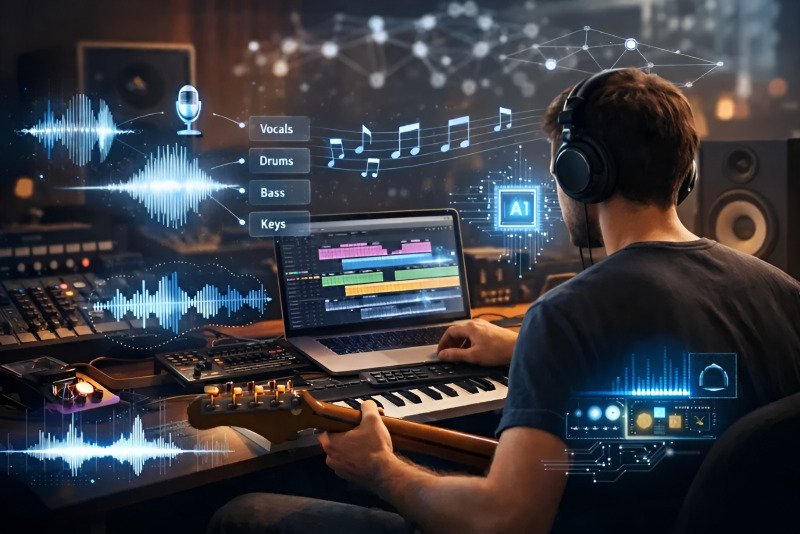
For most independent artists, the release cycle looks something like this: months of writing, recording, and mixing — followed by a scramble to pull together visuals that never quite match the quality of the music itself. Hiring a videographer is expensive. Learning to edit takes time most artists don’t have. And releasing a track without video in 2026 means leaving reach on the table.
Music to video AI tool are changing that equation. Not by replacing creative direction, but by removing the production bottleneck between a finished audio file and a publishable visual.
What Music to Video AI Actually Does
The core function is straightforward. You upload an audio file — MP3, WAV, whatever format your session exported — and the AI analyzes the track’s mood, tempo, and structure to generate a video that moves with the music. No footage required. No timeline to drag clips across. The output is a video ready to post.
For independent artists working without a label budget or a dedicated creative team, this changes what’s possible on release day. A track can go live on streaming platforms and YouTube at the same time, with a proper visual attached, without that visual taking weeks to produce or thousands of dollars to commission.
Tools like MusVideo AI music video generator are built around this workflow — designed specifically for musicians who need to move quickly from audio to something they can actually publish.
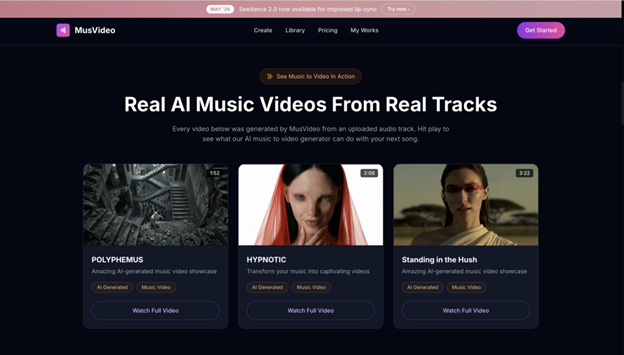
Three Ways Independent Artists Are Using It
Releasing every track with a visual, not just singles
With traditional video production, most independent artists can only afford visuals for one or two tracks per project. AI generation makes it realistic to give every song on an EP or album its own video. That matters for playlist pitching, YouTube uploads, and giving listeners something to share.
Lyric videos at release speed
Lyric videos have become a standard part of the release pipeline. They perform well on YouTube, they extend the life of a track past the initial release week, and they give audiences a way to connect with the songwriting. Generating a lyric video used to mean hiring a motion graphics editor or spending hours in After Effects. AI tools have compressed that into a single upload.
Short-form content without a separate shoot
Platforms like Instagram Reels, TikTok, and YouTube Shorts reward consistency. An artist releasing one track a month needs to show up with content more than once every thirty days. AI-generated video gives artists material to cut down for short-form without organizing an additional shoot every time.
The Honest Trade-Off
AI-generated video is not the same as a fully directed music video with locations, actors, and a cinematographer. For artists who want that, those productions still exist and still carry weight.
What AI tools offer is something different: speed, low cost, and the ability to iterate. You can generate a first version, see how it feels against the track, and adjust. Most tools offer a free tier to test the output before committing, which makes it easy to assess fit before spending anything.
The creative job doesn’t disappear — it shifts. Instead of managing a production, you’re making decisions about visual style, color direction, and how closely the video should follow the track’s emotional arc. The tool handles execution. The artistic judgment stays with the artist.
Why This Matters Now
Music discovery in 2026 happens on platforms that are built around video. A track without a visual is harder to share, harder to pitch, and harder to remember. Independent artists who release consistently with visuals — even simple ones — build a stronger presence than those who release sporadically with occasional high-production content.
AI music to video tools don’t replace ambition. They make it possible to keep pace with a release schedule without burning out or overspending. For independent musicians trying to build an audience on their own terms, that’s the part that matters.
#This is a Contributor Post. Opinions expressed here are opinions of the Contributor. Illustrate Magazine does not endorse or review brands mentioned; does not and cannot investigate relationships with brands, products, and people mentioned and is up to the Contributor to disclose. Contributors, amongst other accounts and articles may be professional fee-based.#