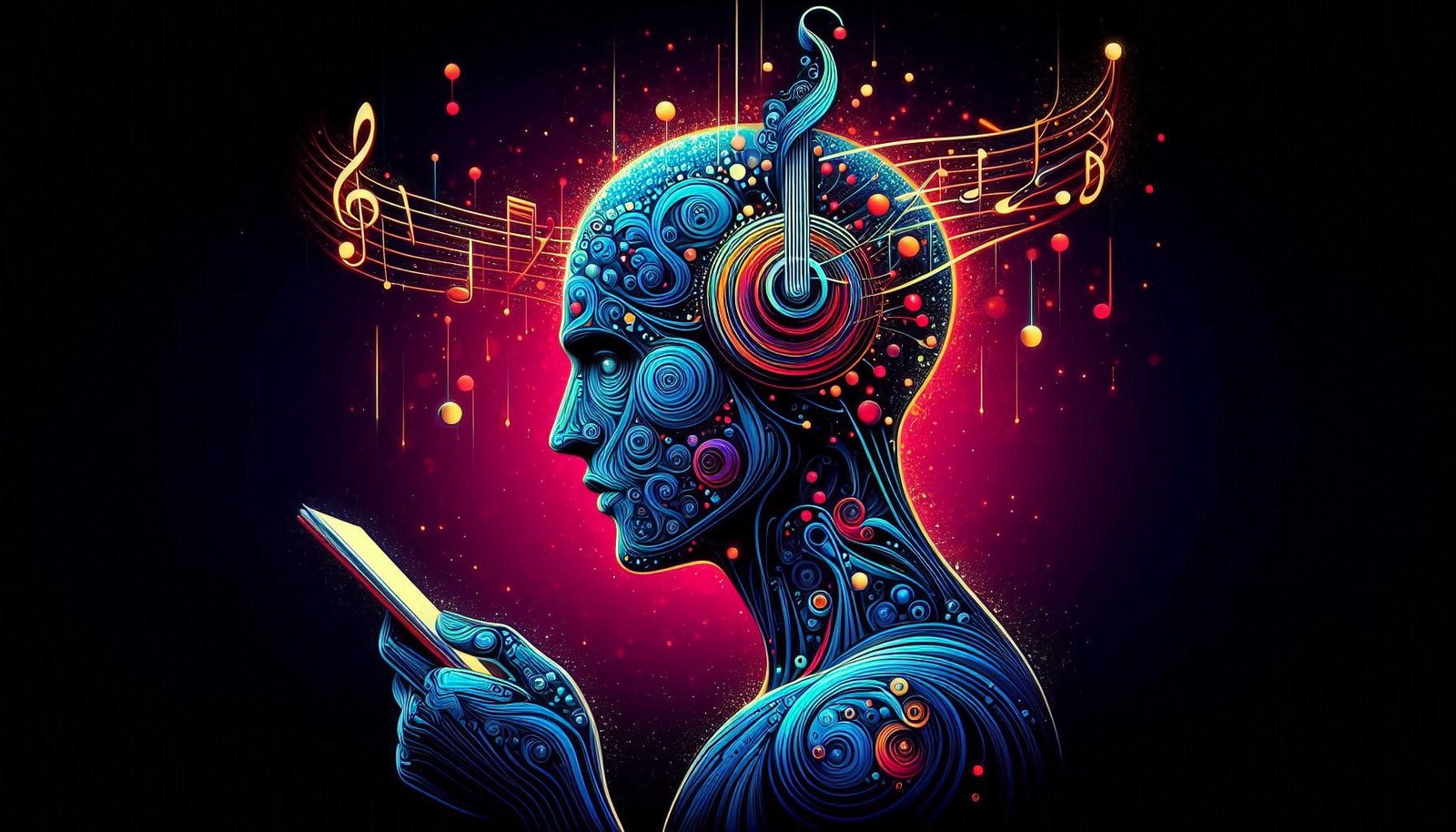
In a world where artificial intelligence is taking over everything from chatbots to medical diagnostics, the music industry has entered its own version of the Matrix. AI-generated playlists? Old news. Today, AI is out here writing actual songs—lyrics, melodies, harmonies, and all.
But here’s the million-dollar question that’s got music fans, critics, and even artists scratching their heads:
Can a robot write a song with soul?
Because let’s be real—music isn’t just a bunch of notes. It’s heartbreak, joy, rebellion, nostalgia, and everything in between. It’s raw, messy, human emotion set to a beat.
So, what happens when we take the human out of music-making?
Let’s dive into the growing clash between machine-made music and human emotion—and figure out whether AI is simply helping musicians or replacing them altogether.
Welcome to the Age of the Music Machine
AI isn’t just analyzing data anymore—it’s creating. Thanks to tools like OpenAI’s MuseNet and Google’s MusicLM, robots can now:
- Compose full orchestral tracks in seconds
- Generate lyrics based on themes or emotions
- Replicate the style of famous artists
- Harmonize and master music with no human input
You can literally tell an AI: “Make a sad indie-folk song about a rainy breakup,” and boom—you’ll have one in under a minute. It’s like a Spotify playlist, but it never existed before.
This kind of tech has already infiltrated platforms like TikTok, YouTube, and streaming services, where AI-generated tracks are racking up serious views. Some listeners can’t even tell the difference.
But the real question isn’t whether AI can make music.
It’s whether that music actually means something.
Music = Emotion. Can AI Feel?
Let’s take it back to basics.
Music is emotional storytelling. It’s the lump in your throat when Adele hits that high note. It’s the adrenaline rush when Kendrick spits a bar that cuts deep. It’s the goosebumps when a sad song hits just right at 2 a.m.
So how can something that doesn’t have a heart, a childhood, a messy ex, or a midlife crisis understand emotion—let alone recreate it?
AI doesn’t feel joy. It doesn’t grieve. It doesn’t fall in love or spiral after a text that says “we need to talk.” It can simulate the structure of an emotional song, sure. But can it write a line that hits you like “I hurt myself today to see if I still feel”? Unlikely.
Even when AI writes lyrics that sound emotional, it’s drawing from patterns, not pain. That’s the key difference.
Why Some People Are Still Vibing with AI Music
Okay, but here’s the plot twist—not everyone cares if a song has a soul.
Let’s be honest: sometimes we just want background music for studying, gaming, or vibing. Chillhop playlists, lo-fi beats, ambient noise—these genres are perfect for AI. They don’t need deep lyrics. They just need to set a mood.
And in this niche, AI is killing it.
AI music is also fast, cheap, and endless. Artists and content creators are using AI to generate soundtracks for TikToks, podcasts, YouTube intros, and more—without paying licensing fees or waiting on human composers.
So yeah, AI music has its place. But does it replace the kind of music that changes lives? The kind that defines a generation?
Let’s not get ahead of ourselves.
Real Artists React: Is AI a Threat or a Tool?
Musicians are divided.
Some artists see AI as a creative co-pilot—something that can help with writer’s block, experiment with new sounds, or even remix their work in real time.
Others see it as a lowkey threat to originality, soul, and the artist’s role altogether.
Artists like Grimes have openly embraced AI, allowing fans to create music using her AI-generated voice. Meanwhile, artists like Nick Cave have slammed AI-generated lyrics, calling them “a grotesque mockery of what it is to be human.”
Cave isn’t wrong. When ChatGPT wrote a song in his style, he clapped back hard:
“Songs arise out of suffering… they are blood and guts. It needs to be felt.”
So is AI just faking the funk? Or are we entering a new era of collaboration between machine and musician?
The Ethics of Algorithmic Art
Beyond the artistic debate lies a deeper ethical issue: who owns AI-generated music?
If a song is created by a bot trained on thousands of existing songs—some copyrighted, some not—who gets the credit? The algorithm? The programmer? The artists whose work it was trained on?
This legal gray area has major implications for the future of music rights and royalties. If AI-generated songs flood the market, will they drown out human artists? Will labels start favoring machines over musicians to cut costs?
Also—what happens when an AI model is trained to sound exactly like Drake, BTS, or Taylor Swift?
We’ve already seen deepfake vocals fool millions. That’s not just weird. That’s dangerous.
Can AI Ever Write a Classic?
Let’s talk legacy.
The greatest songs of all time weren’t perfect. They were flawed. Human. Honest.
- “Bohemian Rhapsody” broke every rule and still became a masterpiece.
- “Smells Like Teen Spirit” was raw and chaotic—but it captured a generation.
- “Hallelujah” took years to be recognized, but now it’s timeless.
These songs weren’t just technically good. They were emotionally necessary. They told stories only those artists could tell.
AI doesn’t have a story. It doesn’t have trauma, culture, or soul. It might write a song that sounds good—but it can’t write your song.
It can’t capture the heartbreak of growing up. The rage of protest. The ache of missing someone who’s still alive.
Because at the end of the day, music isn’t data. It’s truth.
Gen Z’s Take: Is This the Future We Want?
Let’s be real—Gen Z grew up with algorithms. We’ve got playlists made by bots, songs blowing up on TikTok, and AI voice covers of literally every hit song ever.
So it’s easy to feel like, “Yo, what’s the big deal? Music is music.”
But as we lean harder into AI, we gotta ask: Are we losing the magic?
Do we really want a future where every song is optimized for a vibe, not a vision? Where no one bleeds into their lyrics anymore? Where heartbreak is just a filter, not a feeling?
As music fans, we have power. Every stream, every share, every playlist matters. And if we keep choosing heart over hype, humans over code, soul over stats—we can shape the future of music.
Because here’s the truth: tech can mimic a heartbeat, but it can’t feel one.
Where Do We Go From Here?
The future of music isn’t about humans vs. robots—it’s about balance.
AI can be an incredible tool for inspiration, productivity, and even accessibility. But it can’t replace lived experience. It can’t replicate pain, joy, struggle, or triumph. It can’t create culture—it can only remix it.
So let’s use AI where it works. Let it help, not lead. Let it support, not steal.
And let’s keep celebrating the artists who pour their hearts, souls, and stories into every note.
Because no matter how smart AI gets, it will never cry during a bridge. It will never dance at a concert. It will never sing through the static of life.
Only humans do that.
And that’s what makes music real.
How You Can Stay Human in the Age of AI Music
Here are a few ways to stay connected to authentic, emotional music:
- Support real artists: Follow indie musicians, buy their merch, go to local shows.
- Dig deeper: Read lyrics. Learn the story behind the song. Ask yourself why it hits.
- Make your own music: Even if you’re not a pro, expressing yourself through sound is powerful.
- Stay curious: Use AI tools if you want—but keep your heart in the driver’s seat.
Because music isn’t just about sound. It’s about connection.
Final Thoughts: The Soul of Music Belongs to Us
As AI continues to evolve, the line between real and artificial music will keep getting blurrier. But no matter how far tech goes, one thing remains true:
Only a human can write a song that feels like yours.
So the next time you hear a track that gives you chills or makes you cry, remember—it’s not just the notes. It’s the story. The struggle. The soul behind it.
And no matter how smart robots get, that kind of music?
Still hits different.
