EYE OF TJ exists in the silence after the final word is spoken. Born from his private notebooks in Mobile, Alabama, the project serves as a global “inventory of unspoken moments.” It is the digital voice of a storyteller who spent decades in the shadows, now driving into the sunlight of the global stage. The Journey: With over 83,000 global miles (streams) across the catalog, EYE OF TJ has redefined the cinematic landscape of modern rock. From the gritty, 2000s-inspired crunch of the debut album ‘Everything I Didn’t Say’—featuring the 20,000-stream breakout “Letting Go of You”—to the upcoming porch-side vulnerability of the Country-Rock era, the mission remains the same: turning raw honesty into a shared anthem.
The Authority: Documented by over 30 global press outlets from the UK to Brazil, the music has been described as “The Digital Soul of Modern Heartbreak” (Apricot Magazine, UK) and a “Pop-rock quest for ideal love” (Radio Armazem, Brazil). The Invitation: This is more than a discography; it’s a convoy. Whether you are driving through the ruins of a heartbreak or looking toward the headlights in your drive, you are not traveling alone. Welcome to the Empty Highway. We’re all on this road together. Check out the exclusive Interview below:

1. Your roots can often shape your journey. Can you share a story or moment from your early life that had a significant impact on your path into music?
EYE OF TJ: Music has always been the backdrop of my life. I have these vivid memories of sitting in the backseat of my parents’ car, just watching the world go by while the radio played. Those songs stayed with me; they were the first stories I ever really “felt.” I became obsessed with the spectacle of it, too—I never missed an award show because I wanted to see how a performance could change the
energy of a room. By the time I was 11, I started practicing the craft myself. I’ve never been a “heavy talker” in my daily life, but when I sit down to write, I find I have a lot to say. Writing became my primary way of communicating with the world.
2. Did your musical journey begin with formal training, or was it more of a personal exploration? How has that shaped your unique approach to your craft?
EYE OF TJ: My journey was entirely a personal exploration. I didn’t have formal training; I just “grew” into it by listening. I was raised on the foundations of classic rock and country, but as I hit my teens, I started developing my own palate, diving into the big pop eras of the late 90s and 2000s. It’s funny looking back—the first
songs I wrote at 11 years old were definitely leaning into that “boy band” pop sound. But as I matured, my sound naturally shifted. It began to pull in the grit of my Alabama roots and the anthemic energy of rock, eventually leading me to the “Cinematic Country-Rock” space I occupy now.
3. Who were some of the most influential figures in your early musical life, and how did they inspire your sound? Also, what’s the story behind choosing the name ‘EYE OF TJ’?
EYE OF TJ: I’ve always been drawn to artists who can bridge genres. 3 Doors Down was a massive influence—it truly broke my heart when I heard about Brad’s passing. I also look up to guys like Brantley Gilbert and Chris Daughtry; they have this ability to “rock” while keeping one foot firmly planted in country storytelling. That mixture of power and narrative is what I strive for.
As for the name Eye of TJ, I wanted something that represented my vision. The “Eye” refers to the perspective—these songs are glimpses into the things I’ve seen, the heartbreaks I’ve navigated, and the observations I’ve made on the “Empty Highway.” It’s an invitation for the listener to see the world through my lens.
4. What do you believe sets your music apart? How would you describe your sound to someone discovering you for the first time, and what emotions or experiences do you hope to evoke in your listeners?
EYE OF TJ: I describe my sound as “Cinematic Grit.” It’s a fusion of 2000s-inspired stadium rock production and raw, Southern storytelling. What sets it apart is the intentionality—I want every track to feel like a widescreen movie for your ears.
My project exists in “the silence after the final word is spoken.” I hope to evoke that specific feeling of catharsis. I want listeners to find peace in the unspoken moments—the apologies we never sent or the grief we’ve been carrying. If you’ve ever taken a long drive at night just to clear your head, my music is for you
5. For most artists, originality is first preceded by a phase of learning and, often, emulating others. What was this like for you? How would you describe your own development as an artist and music maker, and the transition towards your own style, which is known as COUNTRY?
EYE OF TJ: My development was a long road of trial and error. I spent years emulating the polished pop and alternative rock I heard on the radio, but I eventually realized that something was missing: my home. Living in Mobile, Alabama, the “Roots” and “Country” influences are in the water. “The Pivot” happened when I decided to stop fighting those roots and instead embrace them. I realized I could keep the cinematic, anthemic scale of rock but anchor it with the honesty and grit of Country. It wasn’t a costume change; it was a homecoming
6. Music often transcends entertainment. What’s your view on the role and function of music as political, cultural, spiritual, and/or social vehicles – and do you try and affront any of these themes in your work, or are you purely interested in music as an expression of technical artistry, personal narrative, and entertainment?
EYE OF TJ: I believe music is the ultimate vehicle for empathy. While I don’t set out to make political statements, I am deeply interested in the social and personal narrative. My work focuses on the “Inventory of Unspoken Moments.” By sharing my own vulnerabilities—like in my tribute single “In This World”—I’m creating a space where others can process their own stories. When someone tells me they felt less alone because of a song, that’s when music transcends entertainment and becomes a spiritual or social necessity.
7. Do you feel the rewards of your musical career match the energy and passion you invest in it, or are there different kinds of fulfillment you’re still seeking?
EYE OF TJ: When I first started looking into releasing music, I was paralyzed by the fear of failing. But my friends and family gave me the best advice I’ve ever received: “If you don’t take the risk, you’re failing anyway.” That mindset shifted everything. I am incredibly happy with my progress—I just shattered the 50,000 stream landmark on Spotify, hit 100,000 streams combined with all streaming platforms and hit the Top 25% of all creators on YouTube this month. The reward isn’t just the numbers, though; it’s the fact that this “empty highway” I’ve been building isn’t so empty anymore. There’s a community here now.
8. Do you think it is important for fans of your music to understand the real story and message driving each of your songs, or do you think everyone should be free to interpret your songs in their own personal way?
EYE OF TJ: I think it’s a balance. I provide the “map” with my lyrics and the “atmosphere” with my production, but the listener is the one driving the car. I want my fans to know that these are Real Life Stories, but once a song leaves the Archive, it belongs to them. A song that is a tribute to my mother for me might be a song about a different kind of loss for someone else, and that’s the beauty of it.
9. With social media having a heavy impact on our lives and the music business in general, how do you handle criticism, haters, and/or naysayers in general?
EYE OF TJ: The biggest point of conversation for me has been my use of AI technology. I use AI as a high-fidelity “session band” and a visual engine for my music videos. It allows me—as an independent artist in Alabama—to achieve a cinematic scale that was previously only available to major labels. I used to try to explain the technical side of it to every critic, but now I’ve realized the music speaks for itself. My numbers prove that the audience resonates with the story and the emotion. Now, when I see a negative comment, I just “like” it and keep moving. I’m too busy building the highway to stop for roadblocks.
10. On the flip side, what moment or achievement in your career so far has made you feel the proudest, and why? And let’s talk about your latest release and future plans.
EYE OF TJ: I’m most proud when I see people on TikTok using my sounds to tell their own stories. When “Letting Go of You” started trending, I was honored to see so many people being vulnerable about their own breakups. That’s the dream.
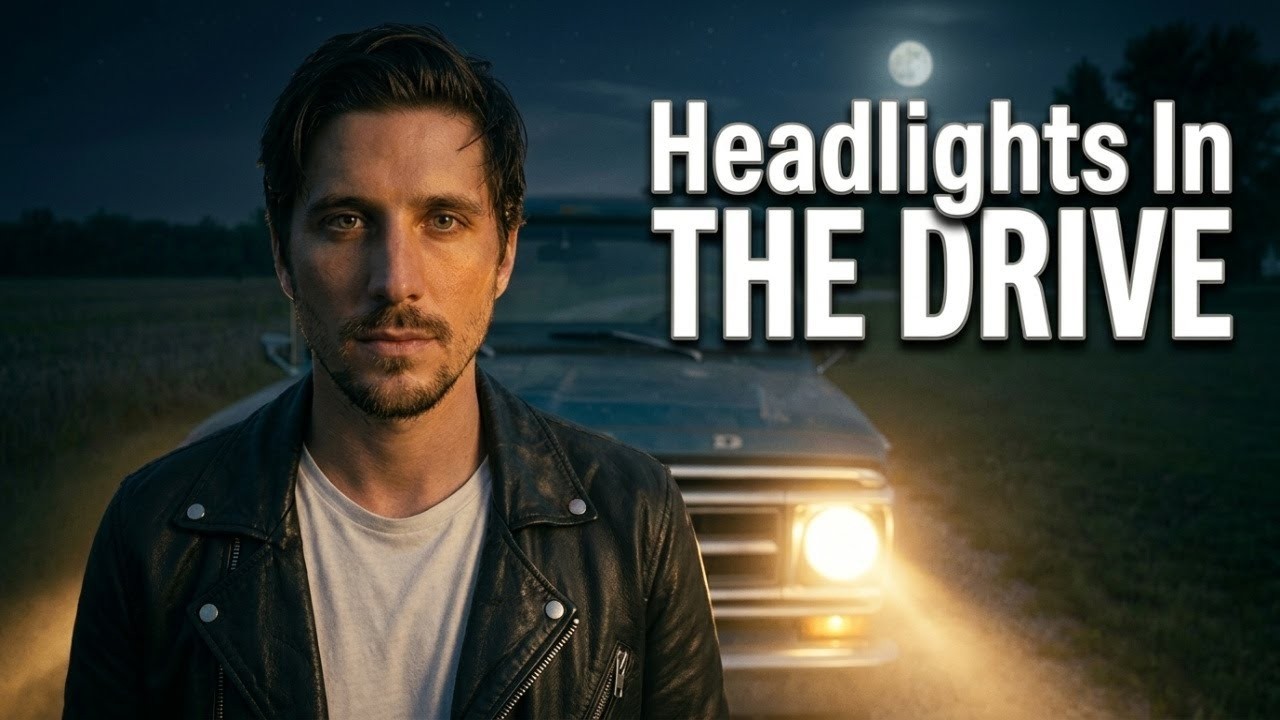
As for the future, “Headlights in the Drive” drops May 12th. It’s the official launch of this new era. It captures that feeling we’ve all had: trying to move on, trying to have fun with friends, but always keeping one eye on the road, wishing for that certain person to pull up in the drive. It leads directly into my new EP, ‘Knowing the Risk,’ which arrives on June 12th. The Archive is just getting started.
STAY IN TOUCH:
FACEBOOK | INSTAGRAM | X | SPOTIFY | TIKTOK | YOUTUBE
Review by: Naomi Joan