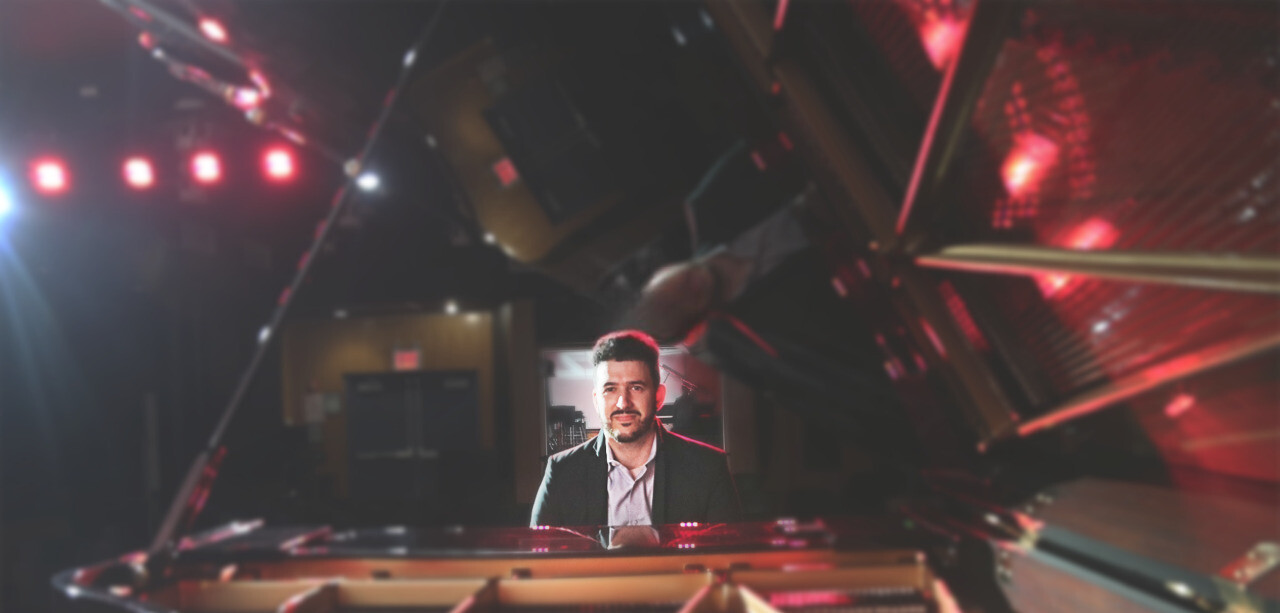
Gal Hecht is and interesting and innovative musician and educator playing piano and keyboard, specializing in jazz, and fusion, living in New York City. Check out the exclusive interview below:
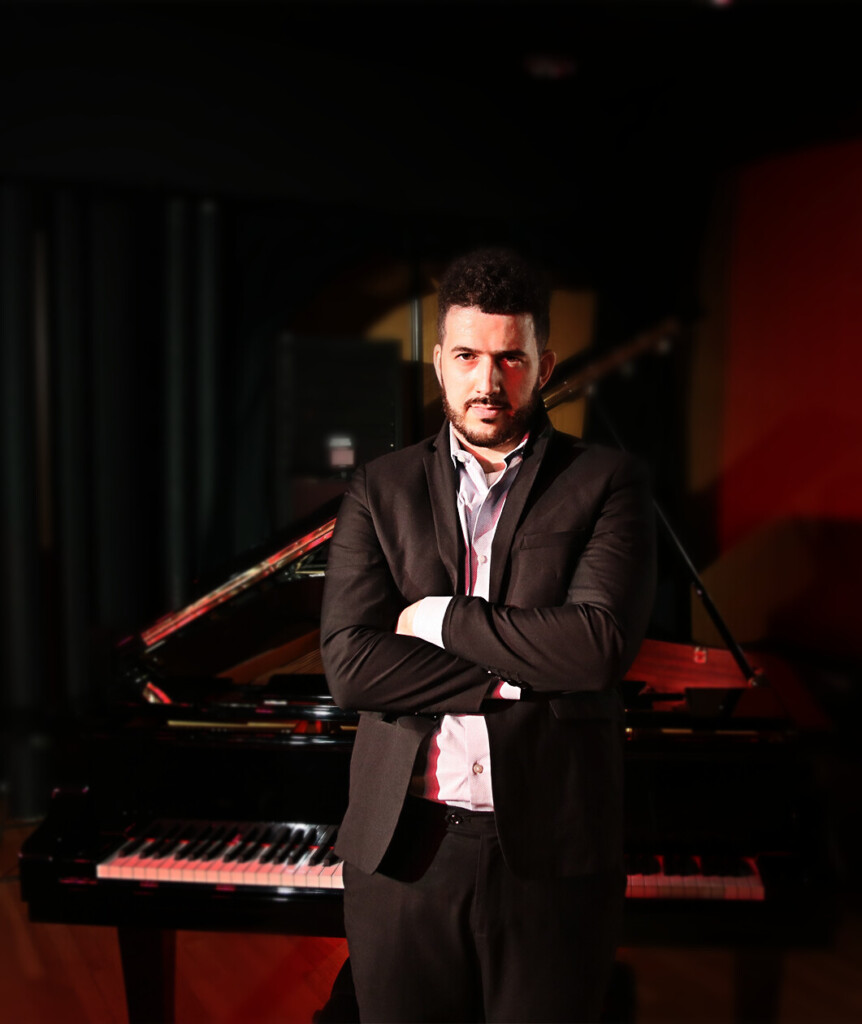
1. Your roots can often shape your journey. Can you share a story or moment from your early life that had a significant impact on your path into music?
Gal Hecht: My journey began about 20 years ago when I first witnessed improvisation during a lesson with my first piano teacher. It looked like magic to me—and in many ways, it still does. I was completely mesmerized and immediately knew I wanted to be able to do that. The idea of composing music spontaneously had a profound impact on me, and I’m deeply grateful to that teacher for introducing me to jazz and the world of improvisation.
2. Did your musical journey begin with formal training, or was it more of a personal exploration? How has that shaped your unique approach to your craft?
Gal Hecht: This is a tricky question because “formal training” can mean different things depending on the genre. I did have a teacher, but unlike many prominent jazz musicians in Israel who attend elite schools like Thelma Yellin or Ironi Alef—where they’re mentored by some of the country’s greatest players—I didn’t have that opportunity. So, in that sense, my path into jazz was more informal compared to the traditional route. That said, I’m actually grateful for it. Learning outside those institutions gave me a broader life perspective and allowed me to develop my own unique tastes and ideas about jazz—ones that weren’t shaped by a rigid or isolated academic environment.
3. Who were some of the most influential figures in your early musical life, and how did they inspire your sound? Also, what’s the story behind choosing the name ‘Seger Shmeger?
Gal Hecht: Back in high school, a friend let me borrow his iPod and played me “Lingus” by Snarky Puppy. I still remember that moment—it completely blew me away. That track lit a fire in me and eventually led to the creation of my own fusion band, Nu-Ma. I’ve always been drawn to the idea of a musical collective, a kind of community of musicians working together. What I admire about Snarky Puppy is how deeply rooted they are in jazz, yet their sound reaches beyond the traditional jazz audience. That balance—between depth and accessibility—is something I really strive for.
I definitely see myself as a jazz musician, but more than that, I think of myself simply as a musician. I try not to limit myself to one genre or aesthetic. Bill Evans was another major influence—his playing left a huge impression on me. His commitment to a personal, recognizable voice is something I aspire to. I want people to hear me play and immediately know it’s me. Before I dove into jazz, I was really into prog-rock—especially Genesis. That music shaped a lot of my early sensibilities.
As for the name Seger Shmeger, it actually came to me during the COVID lockdown in Israel. It was a rough time—things felt stagnant and heavy. Then I heard Snarky Puppy’s single “Bad Kids to the Back,” and it gave me a creative jolt. I wrote a tune inspired by that vibe, something centered around a strong, driving bass hook. I named it “Seger,” which is Hebrew for “lockdown,” and added “Shmeger” as a kind of humorous twist. It’s a Yiddish-style way of downplaying a word—like saying “test, shmest” to take the edge off someone’s stress. So, Seger Shmeger became this mix of frustration and humor, a reflection of that strange time. Later on, I arranged the tune for big band as part of a college assignment, and ended up performing it for my recital.
4. What do you believe sets your music apart? How would you describe your sound to someone discovering you for the first time, and what emotions or experiences do you hope to evoke in your listeners?
Gal Hecht: I think of my music as an invitation. Naturally, I want to be seen as a skilled musician—but more than that, I want people to feel like they’re part of the music itself. A close friend once told me that’s how they felt when listening to a few of my tunes, and that really stayed with me.
The idea of invitation got me thinking: to truly invite someone in, you have to let go of your own agenda or ego. It makes sense physically—if you want something to enter a space, that space needs to be open. But it also makes sense spiritually. I try to create that openness in my music, a space where listeners can step in and feel like they belong. That’s also why I named my new band “Empty”—to reflect that idea of clearing space for connection, collaboration, and shared experience.
If I were to describe my sound, I’d say it’s rooted in groove and honesty, with emotional depth and room to breathe. I hope my music makes people want to dance—because honestly, that kind of instinctive reaction means more to me than any compliment. I also want people to simply feel—whether it’s joy, sadness, tension, or laughter. Any emotion is welcome. Even if it’s not always positive, if the music moves someone, then it’s doing what it’s supposed to.
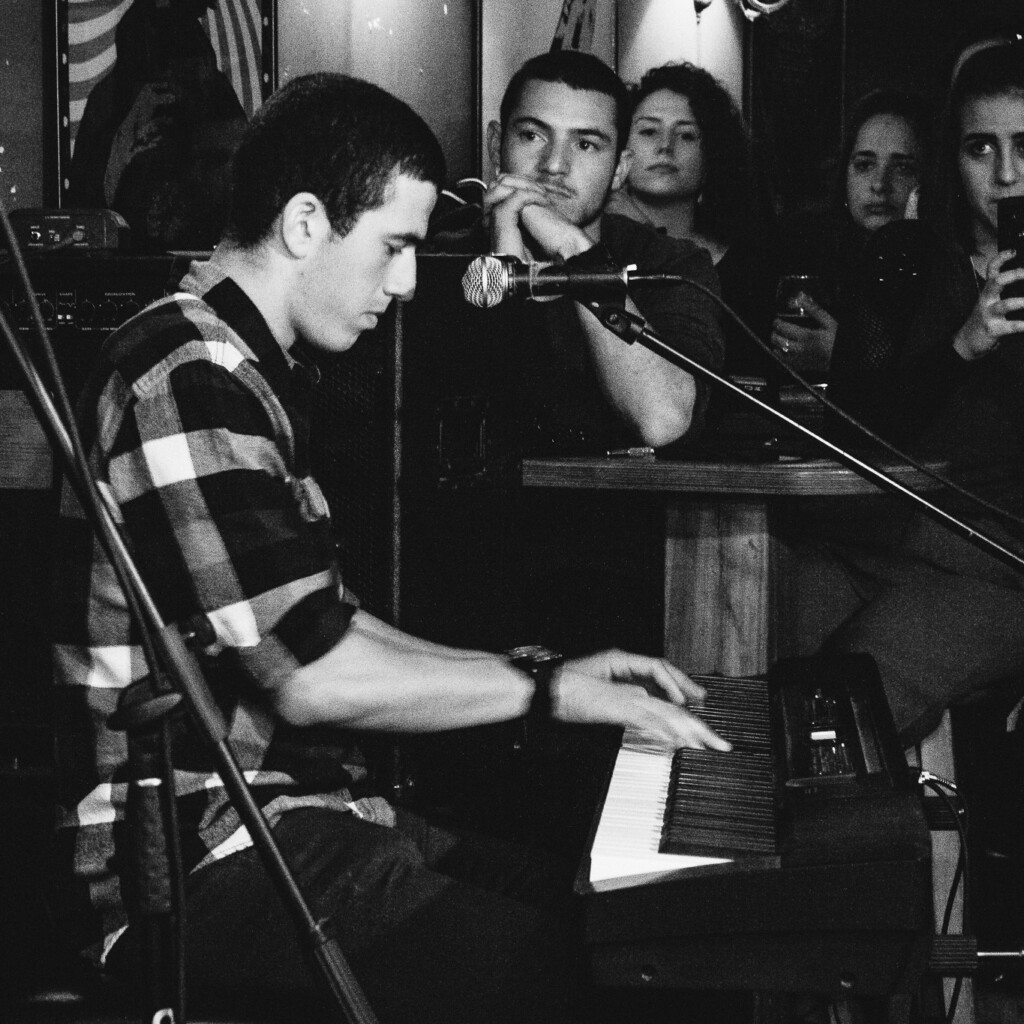
5. For most artists, originality is first preceded by a phase of learning and, often, emulating others. What was this like for you? How would you describe your own development as an artist and music maker, and the transition towards your own style, which is known as JAZZ?
Gal Hecht: I don’t think I was unique in how I first learned jazz—I definitely went through that phase of emulating others. I did a lot of transcribing, but not in the traditional or chronological way. Instead of starting with bebop legends like Charlie Parker or Bud Powell, I was initially more drawn to contemporary artists like Joshua Redman, Brad Mehldau, and Hiromi Uehara. I was fascinated by the “cool” aesthetics—those fast lines, complex harmonies, and sophisticated phrasing. That’s what caught my ear and made me want to dive deeper.
It wasn’t until later that I really gave bebop the attention it deserved. And honestly, it corrected a lot of habits I’d picked up by skipping over the fundamentals. Learning from the roots helped me gain a deeper understanding of the tradition, and now I have a huge appreciation for it. Bebop gave me a solid foundation and shifted my focus to things I now consider more essential—like time, phrasing, and clarity of ideas.
In a way, the non-linear path I took shaped my voice as a musician. It was a bit roundabout—jumping between eras and styles—but that mix of influences, and the missteps along the way, helped me arrive at something that feels personal and honest. I think that’s what ultimately led me to my own approach to jazz.
6. Music often transcends entertainment. What’s your view on the role and function of music as political, cultural, spiritual, and/or social vehicles – and do you try and affront any of these themes in your work, or are you purely interested in music as an expression of technical artistry, personal narrative, and entertainment?
Gal Hecht: To me, music is another form of communication—one that goes beyond language. It can express things that words often can’t, and sometimes it shouldn’t even try to be translated back into verbal terms.
When people ask whether music should serve a deeper purpose beyond the sound itself—whether it needs to be political, cultural, or spiritual—I’d say it can, but it doesn’t have to. Just like in everyday conversation, we can talk about serious issues like politics or philosophy, but we can also talk about how much we love nachos. Both kinds of dialogue are meaningful in their own way.
What matters most to me is honesty. I value genuine expression more than the specific subject being addressed. Whether the music is reflecting something profound or something lighthearted, what’s important is that it’s real. That’s the energy I try to bring into my work—music that’s honest and open, no matter the theme.
7. Do you feel the rewards of your musical career match the energy and passion you invest in it, or are there different kinds of fulfillment you’re still seeking?
Gal Hecht:
I think we all have that little voice inside that craves recognition and instant gratification. Of course, I’d love to play bigger venues, reach a wider audience, and be acknowledged by more established artists in the field. And I think it’s important to be honest about that—to recognize that desire.
At the same time, as much of a cliché as it may sound, I truly believe the journey matters more than the destination. I try to remind myself of that every day. The process—of creating, growing, and connecting through music—is where the real value lies. No matter where I am on that path, I do my best to stay grateful for the road I’m on.
8. Can you walk us through your creative process? From the first spark of an idea to the finished track, what’s the most essential part of your process, and how do collaboration or external influences shape your work?
Gal Hecht: When I sit down to compose, there are usually two key things happening in my mind. The first is that initial spark—whether it’s a melody, a harmonic idea, or a groove. That small seed is what kickstarts the creative flow. I try to capture it immediately—often by recording it—because those ideas can appear spontaneously, or sometimes emerge from aimless, judgment-free writing sessions. I also revisit old, forgotten sketches from time to time. It’s a bit like having faith—you invest time and energy into something small, trusting that it might evolve into something meaningful. And truthfully, it doesn’t always lead anywhere. There are plenty of moments where the idea fizzles out. But I’ve learned those “failures” often feed into larger compositions down the line.
Once I’ve captured the idea, I schedule focused time to develop it. For me, composing is a craft, just like practicing an instrument. Not everything you write will be great—sometimes it’s complete garbage—but that’s part of the process. The second part of my mindset is just as essential: I try to have fun before I start editing. It’s crucial to allow yourself creative freedom without judgment in those early stages.
After I’ve written a first draft, I send it to at least two close friends—people I trust who also compose—to get honest feedback. Only then do I switch into editing mode. I limit myself to two rounds of revision, because without boundaries, you can end up chasing perfection forever.
The final and most important stage happens when I bring the piece to my band. Even though I’m the composer, I see the players’ interpretations as part of the process. Their input often shapes the second revision. I genuinely believe that once I share a composition, it stops being just mine—it becomes ours. That’s why I always stay open to rewriting when working with new musicians. Each player brings a different voice, and I never want my writing to box them in.
9. What’s been the most challenging hurdle in either your personal life or music career, and how has it shaped you as an artist?
Gal Hecht: I think the biggest challenge for me, personally, has been keeping the fire of self-belief alive. At the end of the day, whether we like it or not, the music industry is competitive. Doubt creeps in constantly—those moments when you wonder if you’re good enough, whatever “good” even means. I’ve had to learn that self-belief isn’t something you just have—it’s something you actively nurture. If you stop feeding it, it’s easy to start stepping away from the journey altogether.
Another major challenge—and I think this is something a lot of artists can relate to—is finding balance between financial survival and creative fulfillment. It’s a delicate juggling act. Sometimes, the pressure to make ends meet pulls you away from your art, and other times, you might be so deep in your creative world that the practical side of life gets neglected. But both are essential. You need stability and well-being to create art, but you also need to be creating in order to stay connected to your artistic purpose.
I’ve definitely had phases where work took over and music fell to the background, and those moments always remind me to reevaluate and readjust. Keeping an eye on that balance—and being willing to tweak your schedule when it’s off—is something I’ve found crucial to staying grounded and moving forward.
10. On the flip side, what moment or achievement in your career so far has made you feel the proudest, and why? And let’s talk about your latest release and future plans.
Gal Hecht: One of the moments I’m most proud of was performing at the Shablulim Festival in Israel with my band Nu-Ma. It’s kind of like the Israeli version of Burning Man—a celebration of art, freedom, and community in nature. What made it so special wasn’t the prestige or status, but the atmosphere. Performing under the open sky, surrounded by people who were genuinely there to embrace art and life—it was incredibly fulfilling. It reminded me why I do what I do.
Looking ahead, I’m very excited about my upcoming U.S. tour in January 2026. It will be my first tour, and it feels like a major step forward in my career. I can’t wait to share my music with new audiences, connect with musicians and listeners across the country, and grow from the experience. I have a feeling it’s going to be something really meaningful.
11. Creative work in a studio or home environment, or interaction with a live audience? Which of these two options excites you most, and why?
Gal Hecht: Without a doubt, interacting with a live audience excites me far more than working alone in a studio or at home. There’s something incredibly powerful about the connection that forms between the performer and the audience—it’s a kind of energy exchange that you just can’t replicate in a controlled environment. And I feel it just as strongly from the other side too; watching someone perform live moves me in a way that no recording ever could.
Honestly, if I had all the money in the world, I’d probably spend my time going to live shows and skip listening to records altogether. There’s a certain kind of magic that happens in a live performance—an unspoken electricity—that can’t be captured by any other means. That’s where the real soul of music lives for me.

STAY IN TOUCH:
FACEBOOK | SPOTIFY | WEBSITE | YOUTUBE