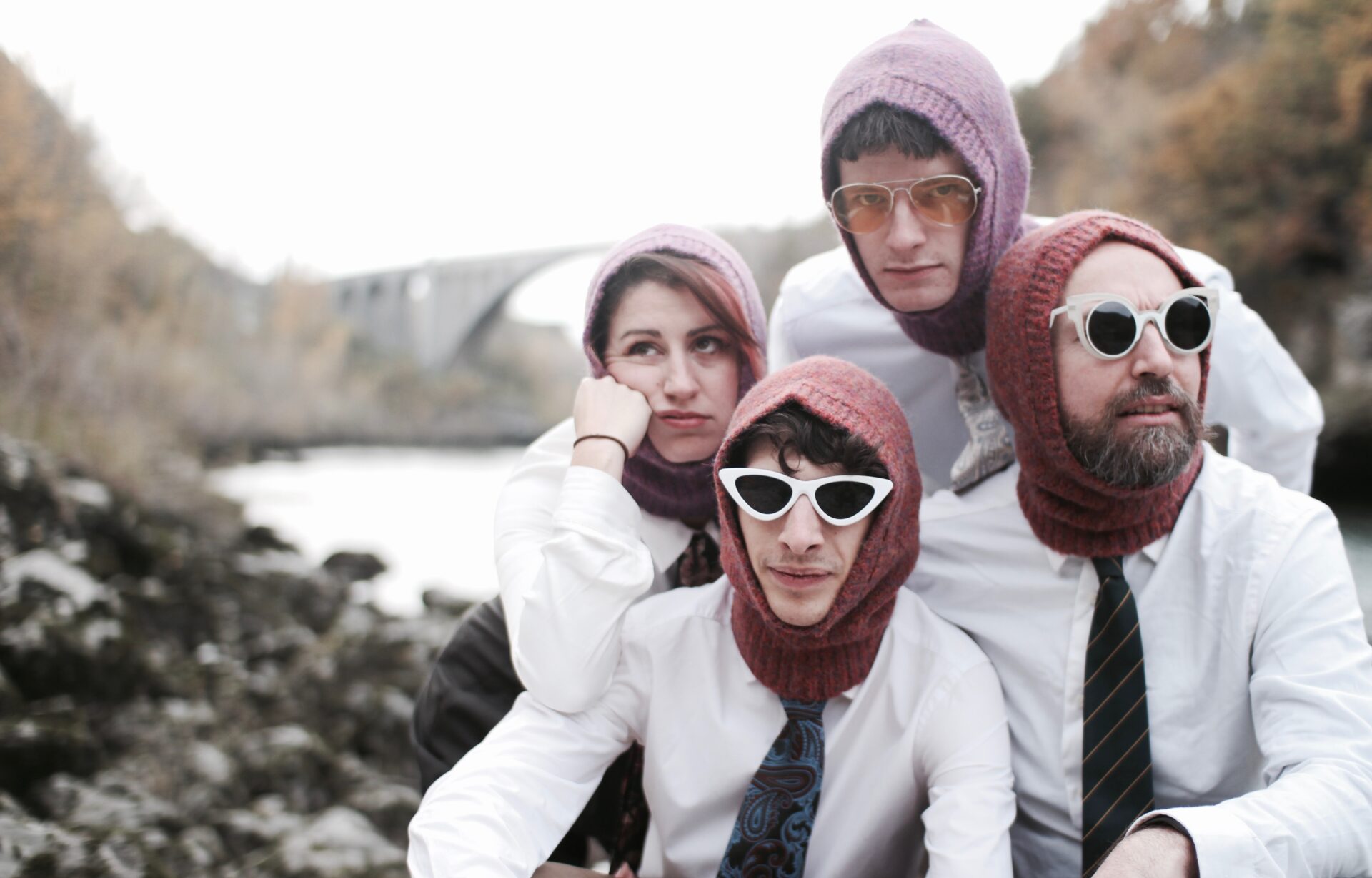
Wales-based art-rock band HMS Morris. Since 2015, they have been touring and recording, and the Cardiff-based Bubblewrap Collective is currently providing support. The band “toys with colliding synthesisers and cooing vocals and still manages to create something cohesive and alluring” with an “undercurrent of post-punk edginess.” (Clunk).
HMS Morris’ music is difficult to categorize because of the way that different genres and instruments are combined; as a result, playlist curators frequently overlook it. They deserved to be introduced to fresh audiences who would appreciate their musical aesthetic. In September, they will release their third album, which is expected to take listeners on a carefully crafted tour of their artistic minds and emotions over the previous three years. Check out the exclusive interview below:

1. Can you tell us a bit about where you come from and how it all got started?
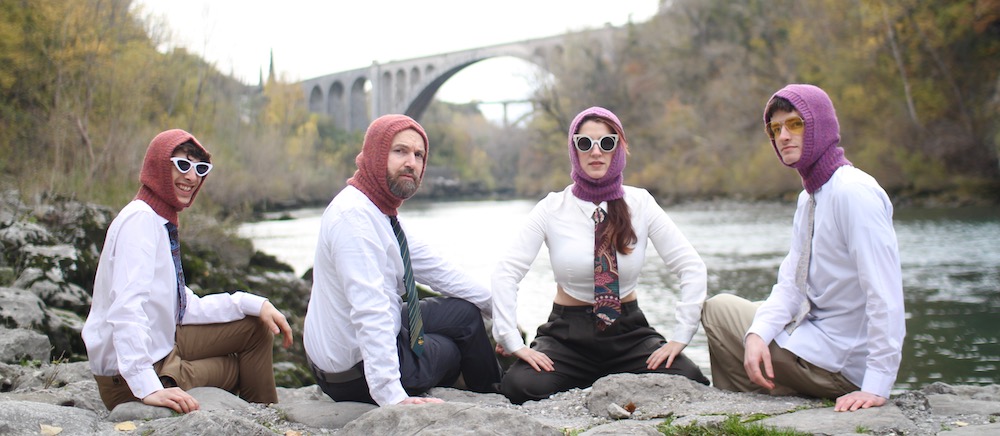
HMS MORRIS: Well, HMS Morris began as a few terrible solo gigs in 2012-13, I’d been in bands since high school and realised quickly after those solo gigs that I missed it and promised myself there and then that I would never do another gig alone; I need people to bounce ideas off of, people to tell me when things sound shait and people to boss around and dress up. So I soon after found Sam who has been my collaborator in music and love (cringe) since then. We’ve been through a few drummers and were a three piece until 2019 but now we’ve settled as a four welcoming Billy Morley on guitar and Iestyn Jones on drums and now we feel whole and have been giging as a quad since we were let loose from the pandemic.
2. Did you have any formal training or are you self-taught?
HMS MORRIS: When you grow up in the welsh education system you’re lucky enough to be offered instrument lessons as early as year 3 so I began playing Spanish classical guitar then and continued through until highschool. We’ve all been through training in one form or another, Sam had singing and piano lessons as a kid, Iestyn had drum lessons and is currently studing popular music in the Royal Northern College of Music in Manchester and Billy also studied popular music and recording at Salford Uni. But really no one can teach you how to be in a band, it’s about communication, collaboration and friendship and that comes with time and practice.
3. Who were your first and strongest musical influences and why the name ‘HMS MORRIS’?
HMS MORRIS: I grew up in a musical family so my first influences were my dad singing around the house, he’s a tenor so it’s a big voice, you can’t escape it, also his collection of classical cds were always being played alongside Mam’s favourite welsh-language bands, mostly a soft rock band called Celt, she fancied (still does) the lead singer. Later in life I fel in love with trying to learn Red Hot Chili Peppers riffs on bass and Martha Wainwright’s lyrics and angst, that album, her 2005 self-titled one is still one of my favourites, it got me when I was in year 11 and it still has me in it’s hold now. Why the name HMS Morris – well, Morris is my mother’s maiden name, she’s an only child so when she married it was bye bye to the name, that tradition infuriates me so I wanted to keep the name alive. The ‘HMS’ – it’s used to name a boat (ignoring the royalism) so I like to think of a band as a team of sailors keeping a ship afloat, to keep a band afloat you need a strong team with everyone doing their job well, I think we have that in HMS Morris.
4. Do you feel that your music is giving you back just as much fulfillment as the amount of work you are putting into it or are you expecting something more, or different in the future?
HMS MORRIS: What I love more than anything is songwriting and performing live and I get to do that pretty often in a band of people I admire so I’d say I’m pretty fulfilled. I’ve learned over the years to enjoy what I’ve got at the present moment, it’s easy to fall into the trap of chasing something but the unpredictability of the music industry right now means you could be chasing forever and you’ll constantly find something different to chase, so I’m in a phase of appreciation of what I have here and now.
5. What do you feel are the key elements in your music that should resonate with listeners, and how would you personally describe your sound?
HMS MORRIS: It can be erratic at times, I can be erratic at times, everyone can be erratic at times, I think that should resonate, it’s pretty human and layered like humans are. Our songs never stick to one solid genre, that doesn’t happen on purpose, they just react to how we’re feeling as their written, I think because of that there’s a song in our back catalogue for nearly every moment in a person’s life, we hope people can use them as a tool to support them as they work their way through the labyrinth.
6. Do you think is it important for fans of your music to understand the real story and message driving each of your songs, or do you think everyone should be free to interpret your songs in their own personal way?
HMS MORRIS: Not at all, once the music’s handed over it’s theirs to have to interpret and to navigate and mould into something that can serve them. I love hearing other people’s interpretation of lyrics I’ve written, it’s nice seeing into other people’s minds.
7. Creative work in a studio or home environment, or interaction with a live audience? Which of these two options excites you most, and why?
HMS MORRIS: For me it’s live audience interaction, nothing beats a sweaty room filled with music lovers, the more you give to them the more they give back. We’re all experiencing a few hours of escapism together, it’s magical.
8. Could you describe your creative processes? How do usually start, and go about shaping ideas into a completed song? Do you usually start with a tune, a beat, or a narrative in your head? And do you collaborate with others in this process?
HMS MORRIS: So our process has been pretty consistent since the beginning of the band, I usually start things off to a point where I have a demo and then hand over to Sam to arrange and produce and sometimes completely pull apart and stick back together. I very often start with a beat or a loop to give me a vibe then I write on top of it; a melody or a keyboard or bass riff then I remove the original beat or loop and eventually create a new one. Lyrics and melody almost always come at the same time. With the new album that’s coming out in September Billy and Iestyn have got stuck in with their own parts and arrangements also, so this album really feels like a proper 4 way.
9. With social media having a heavy impact on our lives and the music business in general, how do you handle criticism, haters, and/or naysayers in general? Is it something you pay attention to, or simply ignore?
HMS MORRIS: We laugh at them, if they’ve taken the time to give their opinion of us it means we’re worth having an opinion about. We like to think we’re grounded, we see how privileged we are to be making music in the first place, it’s a ridiculous and bizarre world to be a part of, the haters are just a part of that bizarre world so they don’t phase us.
10. For most artists, originality is first preceded by a phase of learning and, often, emulating others. What was this like for you? How would you describe your own development as an artist and music maker, and the transition towards your own style, which is known as POP?
HMS MORRIS: I listened to a lot of american female fronted bands like No Doubt, Paramore, Evanescense & The Donnas in my teenage years so for a while I used to sing (not really on purpose) with a bad american twang. I’ve pushed that out of my system now thank god, I’ve learnt to love the uniqueness of my own accent, you don’t hear a Camarthenshire accent often on the radio, Cate le Bon will be the closest you’ll get to it so I’m determined to share it with the world.
KEEP IN TOUCH:
FACEBOOK | INSTAGRAM | TWITTER | SPOTIFY | BANDCAMP | WEBSITE
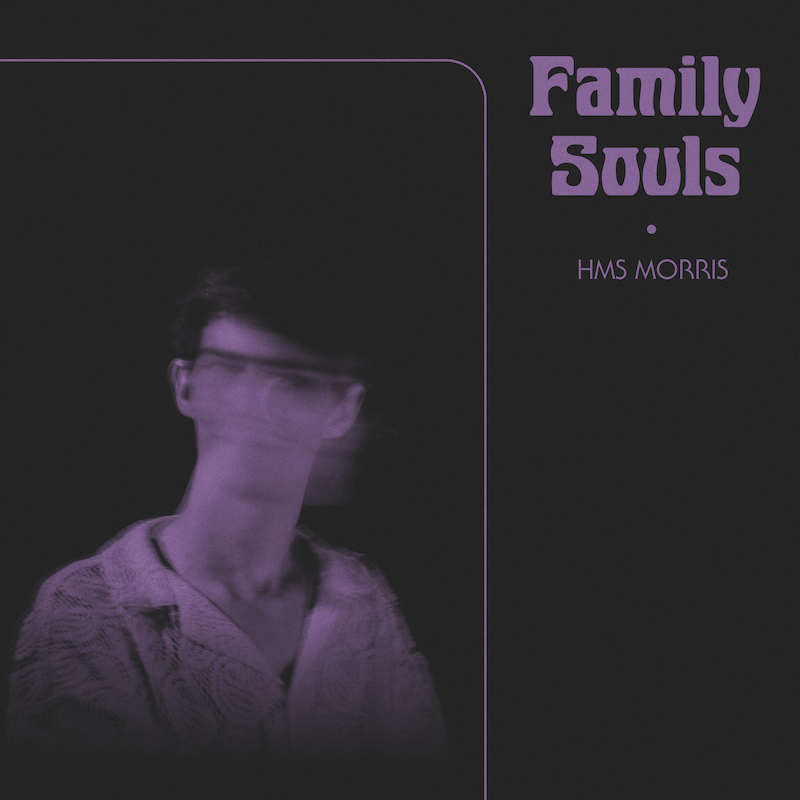
Photo Credit: Dylan Jenkins