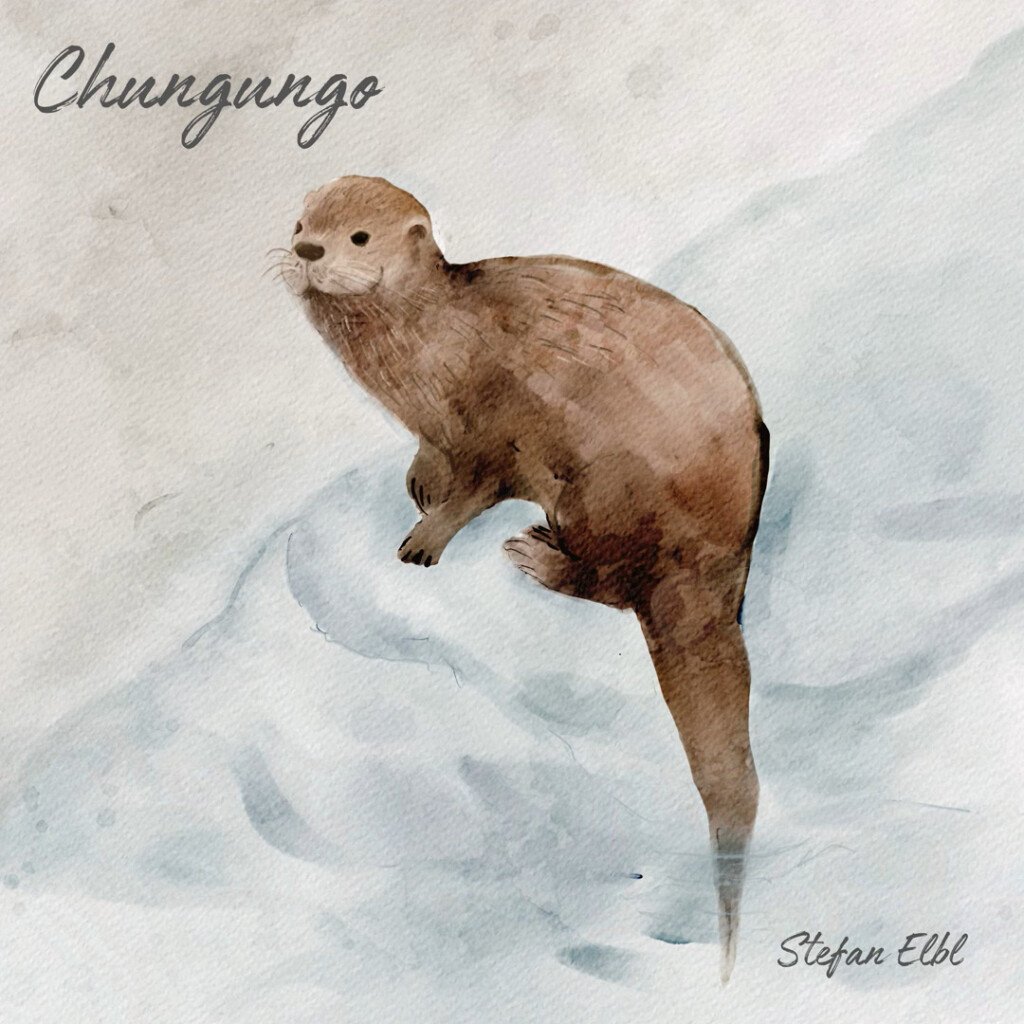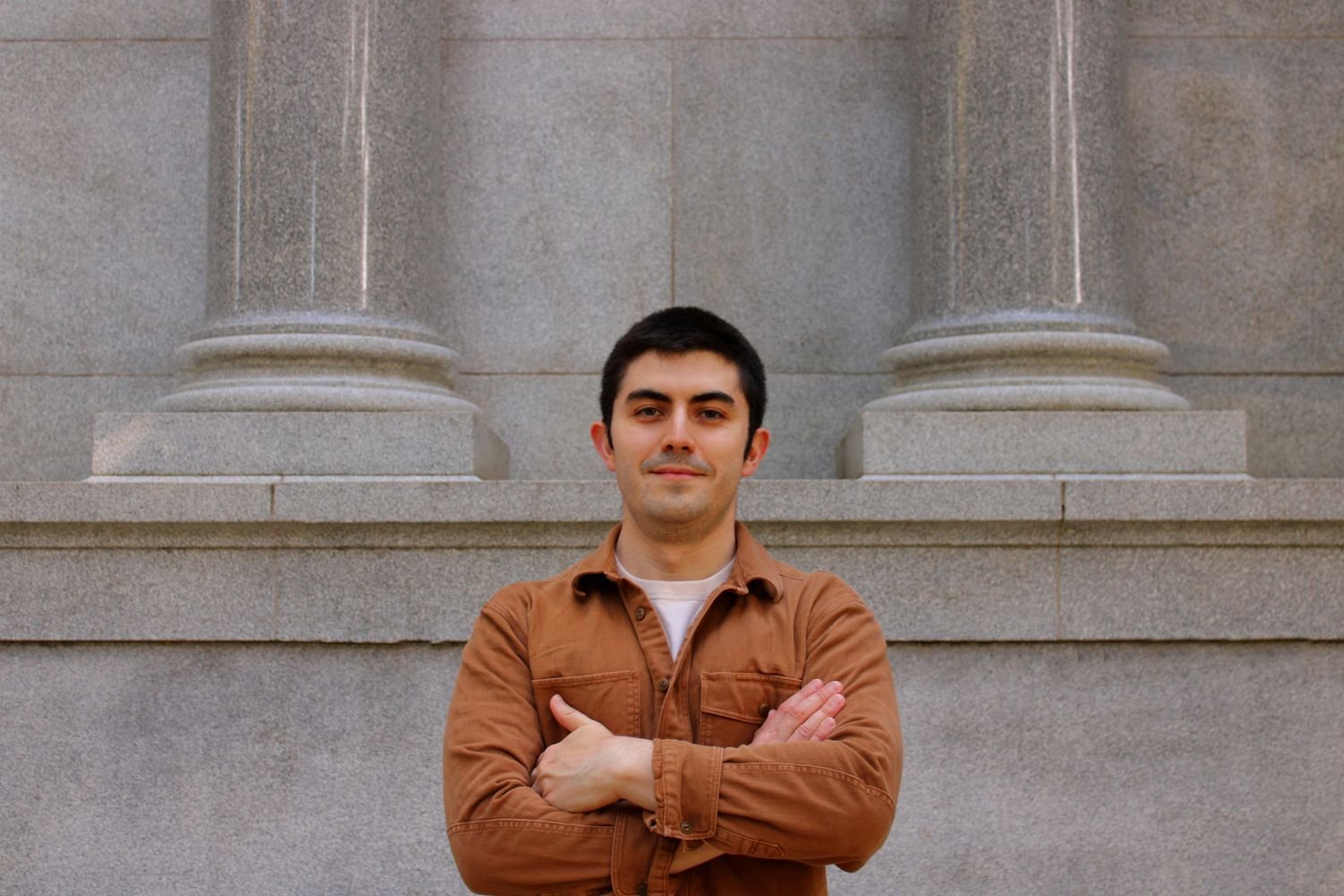
Chilean rock musician Stefan Elbl releases his eighth album Chungungo on April 25. Recorded between Quilpue, Chile and the San Francisco Bay Area, it’s a guitar-driven record with searing riffs, stacked vocal harmonies, and marching basslines drawing comparisons to The Who, Faith No More, and Queen.
The opening track “Torres de Papel” debuted on California community radio KBBF Santa Rosa two weeks before release. Thematically the album explores adapting to new environments, anchored by the chungungo, an endangered Chilean marine otter, as its central metaphor. Stefan Elbl is a Chilean rock musician based in San Francisco, California. His latest album Chungungo blends searing guitars, intricate vocal harmonies, and driving basslines into a sound that draws comparisons to Faith No More, The Who and Queen. A prolific solo artist, his 8 albums move through electronic, rock, pop, folk and metal. Stefan also plays in Bay Area acts Los Piana and Mango Blast.
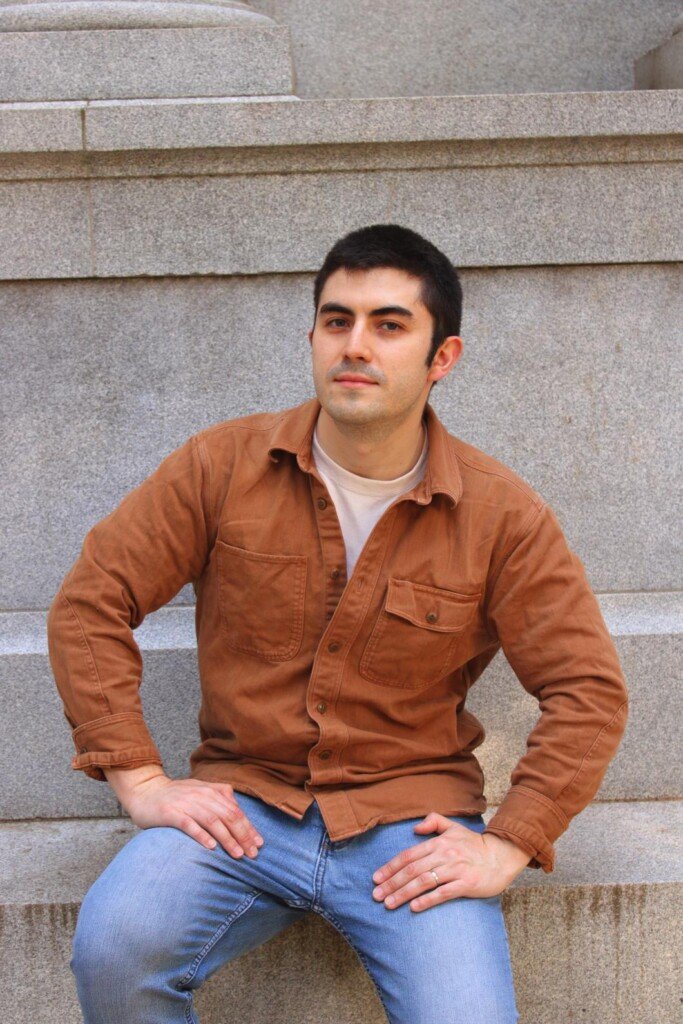
1. Your roots can often shape your journey. Can you share a story or moment from your early life that had a significant impact on your path into music?
Stefan Elbl: I think one of the most vivid images I have was when I was growing up and my dad was watching a “Grand Funk Railroad” concert with one of his friends. I had no idea what was going on, but I saw Mark Farner moving across the stage, just oozing raw energy and I thought: “I want to be like that”. It helped that my family always listened to a lot of rock music.
The other very important moment was when I was 12. Me and some friends wanted to start a band, but all four of us played the guitar, so we were not able to play rock. The other three decided to have me sing because I had a better English pronunciation than them. I had no idea what I was doing honestly, and I never did for a bit. It was nerve-racking at first, as I was quite shy, but that experience forced me to grow as a musician and as a person and I am grateful for it.
2. Did your musical journey begin with formal training, or was it more of a personal exploration? How has that shaped your unique approach to your craft?
Stefan Elbl: I never had formal training of any kind. It was a very long journey full of self-discovery. For example, I didn’t play a chord on the guitar until I had been playing for two years. I just noodled around with it diligently. Obviously, it wasn’t the most efficient way of learning, but when you are having fun I don’t think it matters that much.
I think learning by yourself has its pros and cons. The most obvious con is that your technique can be slightly off and that can bring drawbacks/take you longer to reach your desired goal. With singing for example, it took me years to figure out how to engage the head voice or how to do a subharmonic. The pro is that you get a very distinctive sound, and you are less scared of trying new things out. Oftentimes I see people stopping themselves from doing something because it might break theory or it goes beyond how they learnt. If you never had a formal mold, then it is more natural to come up with more innovative ideas.
So long as you are not harming yourself in the long run, and you like how it sounds, then I think that you should approach art however you feel like.
3. Who were some of the most influential figures in your early musical life, and how did they inspire your sound?
Stefan Elbl: The biggest influences I would say are “Neil Young”, “Los Prisioneros”. My dad is a huge Neil Young fan, so I grew up listening to a lot of his music. I learnt a lot about songwriting and arrangements by studying his works. What I value the most, is that he is able to express so much without going overboard with complexity. He is a mastermind of efficiency. I also got a lot of encouragement from him to constantly innovate: he had no issues going into different genres and constantly experimenting. “Trans” for example was very different from the rest of his catalog at the time, but he still went through with it. That inspired me to be constantly innovating on each album.
My mom is a diehard “Los Prisioneros” fan, I think that has helped me to approach music in a similar way to Jorge Gonzalez: clever songwriting, that does not overlook the “catchyness” of a tune in the pursuit of saying what you want to say.
The other very inspiring figure I would say was my elementary and middle school’s music teacher: “Profe Iván”. He was fantastic at encouraging us to have fun playing music, and he is a big reason for why a lot of the kids in my class ended up playing music as a hobby. I owe a lot to him. Even when I would bring him terrible songs that I was writing as a kid, he encouraged me to keep writing and playing.
4. What do you believe sets your music apart? How would you describe your sound to someone discovering you for the first time, and what emotions or experiences do you hope to evoke in your listeners?
Stefan Elbl: I think not being afraid to explore and innovate constantly is a clear differentiator. It is easy for some people to make the same album four or five times, and I get it. If people cannot easily categorize you, they will quickly move on. Because I make music mostly for myself, I am not afraid to change the formula. I have touched on multiple genres throughout my career: electronic, rock, pop, metal, folk. I think that genuineness is getting harder and harder to find.
Beyond the umbrella term of rock, I find it hard to find one specific tag that can categorize my music. I think the closest would be to tell them that it is the heart and soul of Latin Rock backed with the innovativeness and freshness of Alternative and Indie Rock. I like to play with establishing a pattern and breaking it in a subtle way, so that the listener can feel that something changed in a non-obvious way. The best example of this is the song “Bargain” from my album “Sentinel”. In the chorus, there is one bar with a dissonant chord. It is played only once the first time the chorus goes around, and then it disappears the second time around. That bar introduces a lot of tension that eventually gets resolved. Some listeners have told me they love that part, but they are unsure why.
I would love for my listeners to go on a full emotional journey. If I could have it my way, I would hope that my listeners get inspired to do something after they have listened to what I have done. Most of my songs are calls to actions. I do not care what you do (so long as it is benign), so please just go out and do it!
5. With social media having a heavy impact on our lives and the music business in general, how do you handle criticism, haters, and/or naysayers in general? Is it something you pay attention to, or simply ignore?
Stefan Elbl: I think this is a good question, because social media can oftentimes amplify the natural feelings of insecurity of people. I do not have social media, and have not had for a long time. Mostly because to me, the main value of those platforms was to connect with others, and you can do that mostly by texting or calling.
I think as with all things, you have to understand where criticism is coming from. Is it from a good place? Are they trying to help you? If so, maybe there is something valuable to extract from there, even if it is not what you would like to hear. If the comments are coming with malice or without any backing I would say to just ignore them.
6. Do you think it is important for fans of your music to understand the real story and message driving each of your songs, or do you think everyone should be free to interpret your songs in their own personal way?
Stefan Elbl: I think everybody should feel free to interpret songs as they like. A lot of my lyrics are purposefully abstract, because I do not want to force the listener to view the world the same way that I do. I am always interested in knowing what the artist was thinking when they wrote the song, but I think sometimes the public might take whatever they say as gospel.
It’s like an open-ended story. Take “The Sopranos” for example. Did Tony die in the last episode? Does it really matter? I suppose David Chase had an idea in his mind, but because he has gone on the record saying what it was, fans of the show keep talking and debating about it. That is a beautiful thing.
7. Do you feel the rewards of your musical career match the energy and passion you invest in it, or are there different kinds of fulfillment you’re still seeking?
Stefan Elbl: I think for me music is very introspective. I mostly make music because I greatly enjoy doing so, and not to gain followers. Putting my music out there is just in case somebody eventually finds it and it resonates with them. For me, having songs I can listen to and reminisce on the times when I was composing or recording them is more than enough.
I am of the opinion that nowadays, people seem to obsess over numbers, followers and all the metrics that the algorithm rewards you with. I try not to think about that. If I am happy with my music, then that is all that matters to me.
8. Can you walk us through your creative process? From the first spark of an idea to the finished track, what’s the most essential part of your process, and how do collaboration or external influences shape your work?
Stefan Elbl: Back in the day, I first started by thinking of a song that I liked, and figuring out how I could reinterpret it in my own way. Take “Glucogenólisis” from my album “Tras Cuatro Paredes” for example. It started as my reinterpretation of the song “Avalancha” by “Héroes del Silencio”. I grabbed some of the core ideas of the song structure by starting with a guitar riff, leading into verses, a mellower interlude and then ending with a banging chorus with a guitar solo. A similar thing happened with “Torres de Papel” in “Chungungo” and “This is a Call” from the first “Foo Fighters” album.
Nowadays, I think of a sound. I think of something that is not out there. For example with “Rápido” from my newest album I thought: “I want to listen to a semi-operatic song with multiple shifts that keeps a frenetic energy throughout”. I approach songwriting as telling a story: on which journey do I want to take the listener through? And, which instruments and arrangements are most effective in conveying that sentiment?
9. Creative work in a studio or home environment, or interaction with a live audience? Which of these two options excites you most, and why?
Stefan Elbl: Both are very exciting of course! I think they are slightly different. Because I do not have tight deadlines, I greatly enjoy having time in the studio to experiment and polish ideas. As I said before, music to me is very introspective so having a lot of time to think and come up with new arrangements/layers/tracks is a very fun experience all things considered.
Of course, being an extrovert I love being on stage. The raw connection you get with people and feeding off their energy is priceless. I like public speaking and improvisation, and that is something that can only happen on stage. I remember a time when I was playing and I dropped my pick. I could not stop the show to pick it up, so I had to play the rest of the song with my fingers (which I was not used to). Was it perfect? No! I messed up a lot, but it was unique, it was fun, it was authentic. That is something that I think is missing nowadays.
10. On the flip side, what moment or achievement in your career so far has made you feel the proudest, and why? And let’s talk about your latest release and future plans.
Stefan Elbl: One recent moment I am very proud of is when I finished mastering my latest album “Chungungo”. I just sat there, with my eyes closed in the morning listening to the songs through speakers and thinking: “This is it”. I love all of my previous albums, but this one is the best-sounding record in terms of the audio quality and that caused a lot of emotion within myself. I had moved on from being just a kid with a cheap condenser mic who had to rely on virtual instruments because he couldn’t afford actual instruments. It felt like it was all worth it.
My latest release, Chungungo is definitely my best sounding work. Me and the folks at Dackel Audiovisual Studios worked very hard to get the sound we wanted. Learning how to mix and master my music was a great learning experience, because it has brought me closer to achieving what I hear in my head.
I have a lot going on in the future. I already have another EP fully composed and that will start recording soon for my solo project. I have a recorded album with the jam band “Mango Blast” that we are hoping to finish mixing during the year. With “Los Piana”, the newest duo I am a part of, we are writing the songs for our second album: a shoegaze-inspired LP. Apart from all the studio work, I would like to get out there and play more. I think now that I am done with my PhD, I should have more time on the weekends.
STAY IN TOUCH:
SPOTIFY | BANDCAMP | YOUTUBE