
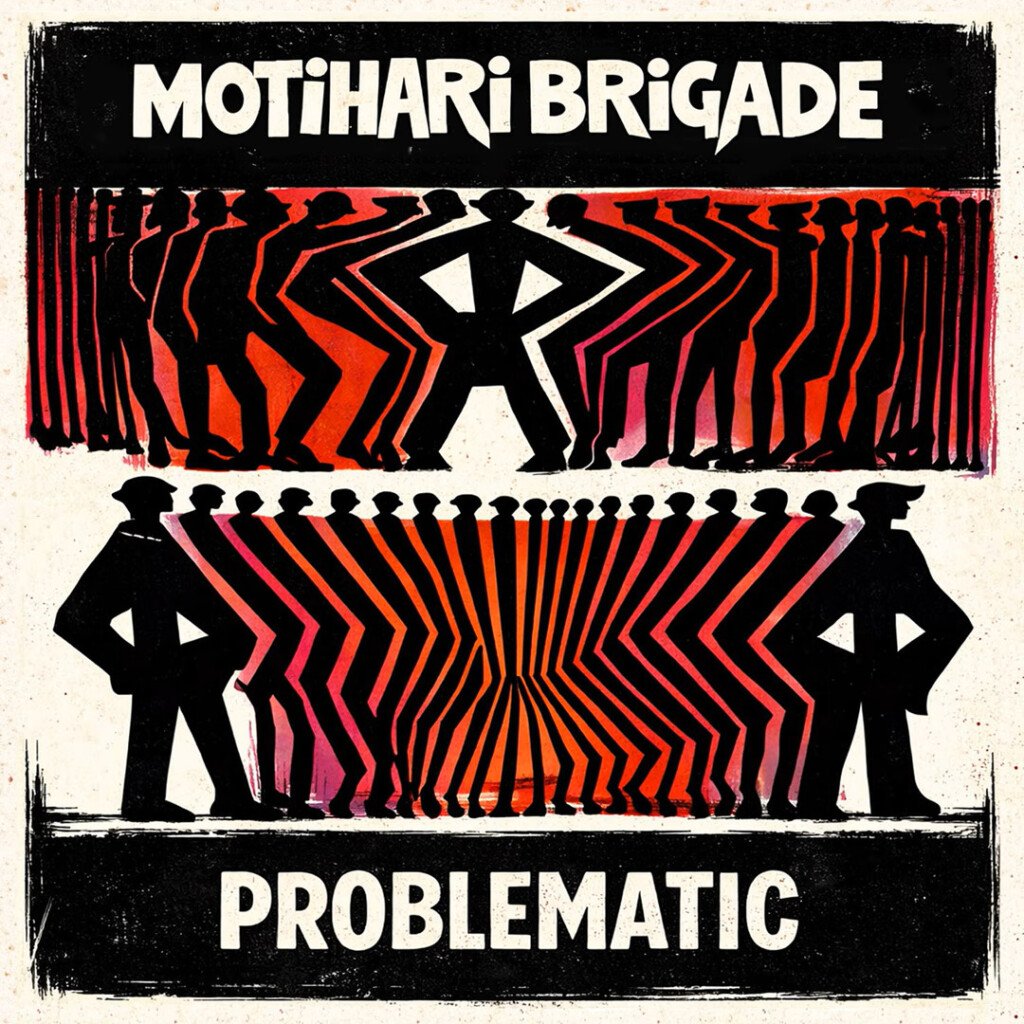
Motihari Brigade has never been interested in making background music, and Problematic proves that once again with an album that thrives on confrontation as much as it does musicianship. Released on George Orwell’s birthday, the band’s third full-length record embraces the rebellious spirit of its literary namesake, weaving together themes of censorship, artificial intelligence, propaganda, militarism, and mass conformity through a blend of classic rock swagger and philosophical curiosity. Rather than preaching from a pedestal, guitarist, songwriter, and vocalist Eric Winston packages provocative ideas inside memorable riffs, infectious grooves, and a healthy dose of satire, resulting in a record that consistently invites listeners to think while they’re rocking out.
The album immediately establishes its dystopian atmosphere with “Cowboy Armageddon.” Organic, shaky percussion and shimmering acoustic guitar strums create the feeling of stepping into the opening sequence of a post-apocalyptic western, where cinematic tension quietly simmers beneath the surface.
That momentum flows seamlessly into the title track, “Problematic,” which serves as both the album’s philosophical manifesto and its catchiest moment. Anchored by the band’s signature groove, Winston delivers lines like “I’m problematic baby, don’t fit inside the box” with playful confidence, transforming ideas about nonconformity into an irresistible singalong. References to Socrates, simulacra, mass psychosis, and rebranded inquisitions could easily have become heavy-handed, yet the song keeps things lively through sharp hooks and an almost tongue-in-cheek charisma. It’s a clever balancing act that allows political commentary and classic rock energy to coexist without one overwhelming the other.
On the other hand, “Save Ourselves” and “Not What They Seem” question the institutions and narratives that shape modern society. Elsewhere, “The Great Refusal” attacks complacency with razor-edged guitar riffs, acrobatic bass lines, and pounding drums that mirror the urgency of its message.
One of the album’s most compelling moments arrives with “Heedless of the Storm,” the opening movement of the mini rock opera The Hubris March. Built around a thick, rumbling groove and sparkling guitar work, Winston delivers an unrelenting series of questions examining war, propaganda, manufactured consent, and political narratives. His straightforward vocal delivery gives the lyrics extra weight, allowing the listener to wrestle with each line rather than simply absorbing slogans.

STAY IN TOUCH:
FACEBOOK | INSTAGRAM | X | SPOTIFY | BANDCAMP | WEBSITE | YOUTUBE
Review by: Naomi Joan