

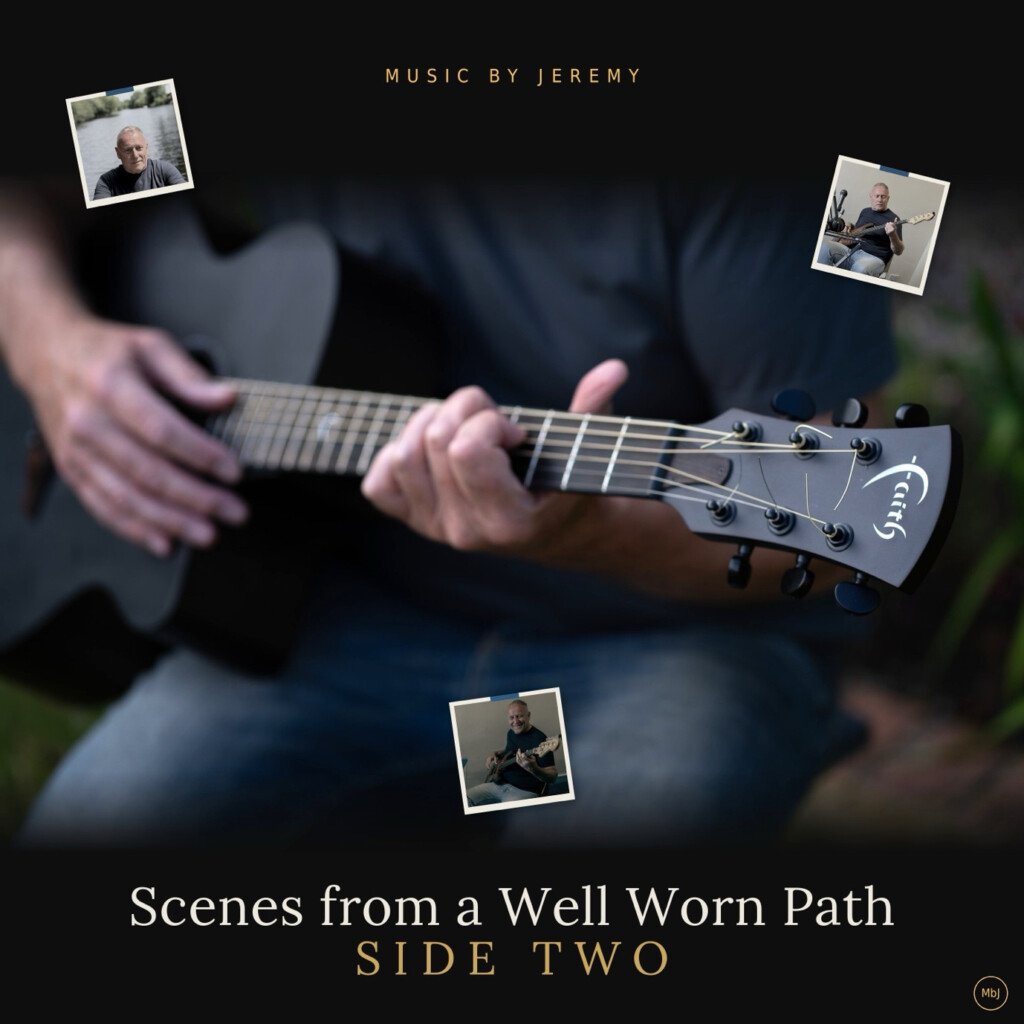
With Scenes from a Well Worn Path (Side Two), Banbury singer-songwriter Music by Jeremy continues a sprawling 24-track musical journey through pain, grief, joy and fear, but there is nothing particularly weary about the way these songs confront life. If anything, the record feels energized by curiosity that keeps poking at uncomfortable questions long after easier answers have presented themselves. Drawing from the confessional storytelling traditions of John Lennon, Paul Simon, Randy Newman, Bob Dylan and Bruce Springsteen, Jeremy writes songs that turn emotions over and examine them.
“Do Birds Sing the News” is a perfect example. Relaxed, glistening acoustic strumming provides an almost soothing backdrop while the singer’s thick, agonized voice brings considerable weight to the lyrics. The song imagines birds observing the world from above, wondering what they see, and whether they communicate the things humans fail to prevent, like the news, fire, invasion from the West, fear. The music invites you in, while the questions refuse to let you settle comfortably.
Then “4 O’Clock Train” brings considerably more momentum. Glistening, heavy guitars collide with handclaps and thumping drums as the vocal performance rises with the arrangement. Its recurring sense of “how did this happen?” captures the bewilderment of finding yourself somewhere you never expected to be. The song turns that familiar human question into something almost rhythmic: events happen, consequences follow, and suddenly you’re standing in the aftermath.
“Idonella Sakaiensis” strips things back beautifully. Gentle guitar chords cradle a soft, emotional vocal as Jeremy reflects on the unpredictability of existence and the futility of trying to control what naturally wants to live. Its central idea is that why are we shocked when life doesn’t ask permission? The warning not to cage a beating heart because instinct won’t forget gives the song an almost philosophical tenderness.
What makes Scenes from a Well Worn Path (Side Two) particularly intriguing is the contrast between its intimate origins and its unusual production process. Jeremy writes the music and lyrics himself, often on an old Faith acoustic guitar in his garden, before using AI tools as what he describes as a creative “prosthetic” to build out the instrumentation he couldn’t otherwise assemble. Yet the technology never becomes the story. The songs remain firmly focused on the messy, searching business of being human.
As the second installment of the larger four-part project, Side Two feels like another stretch of the roa. Its greatest strength is that it keeps asking questions, and, more importantly, isn’t afraid to leave some of them hanging in the air.

STAY IN TOUCH:
INSTAGRAM | SPOTIFY | WEBSITE
Review by: Naomi Joan