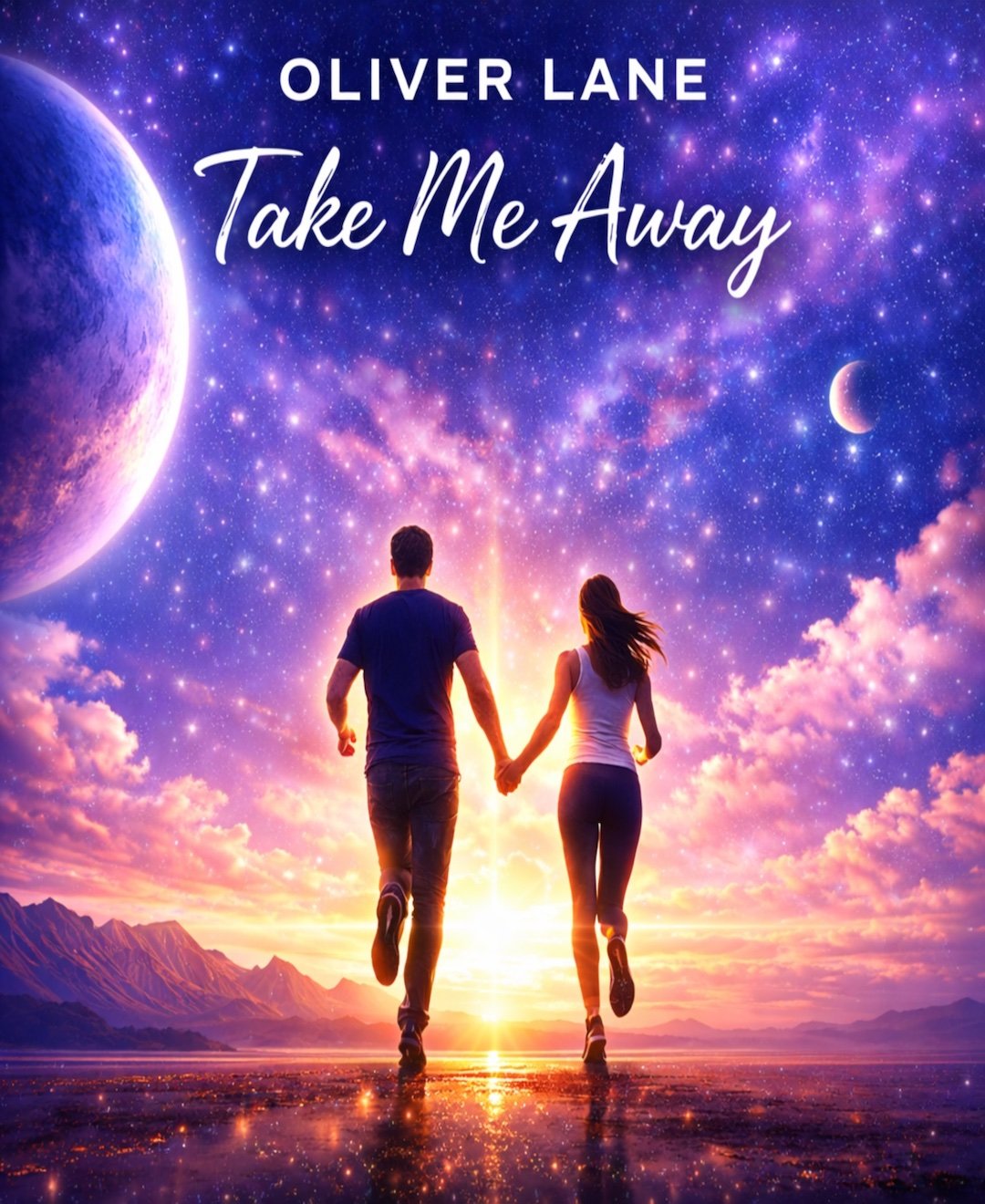
Oliver Lane is a French musician and composer with a background in classical piano and jazz. Trained as a pianist, he has developed a versatile approach to music, allowing him to compose across multiple styles and sonic worlds. Today, he is primarily focused on electronic music, with a strong emphasis on synthwave-inspired productions. His work blends original compositions with the atmosphere and aesthetics of the 80s and 90s, combining nostalgic textures with a modern electronic edge. Driven by melody and emotion, Oliver Lane’s music is rooted in cinematic storytelling, where analogue-inspired synths and evolving arrangements create immersive soundscapes. Check out the exclusive interview below:
1. Your roots can often shape your journey. Can you share a story or moment from your early life that had a significant impact on your path into music?
OLIVER LANE:One of the most defining moments for me was when I first heard “Oxygène” by Jean- Michel Jarre on the radio. The melody immediately caught my attention, but what really fascinated me was the electronic arrangement behind it. For the time, it felt completely new and futuristic.
That moment really stuck with me. It made me think: “This is the kind of music I want to create.” It felt accessible in a way, like it was something I could learn to do myself. From there, it naturally pushed me toward the keyboard and exploring electronic music more seriously.
2. Did your musical journey begin with formal training, or was it more of a personal exploration? How has that shaped your unique approach to your craft?
OLIVER LANE:I took piano lessons as a teenager in a private classical music school, but at the same time I was always listening to songs on the radio and trying to reproduce the ones I liked on my keyboard. It was a mix of structured learning and personal exploration from the very beginning.
Later on, I also became interested in jazz and harmony, which really helped me expand my musical understanding. I’m very open to all styles, and the classical piano training gave me a solid technical foundation that ultimately allows me to be more free and expressive on my keyboards tod
3. Who were some of the most influential figures in your early musical life, and how did they inspire your sound? Also, what’s the story behind choosing the name ‘OLIVER LANE’?
OLIVER LANE: During my teenage years, I listened a lot to instrumental music— Jean-Michel Jarre, Vangelis, and Giorgio Moroder when it comes to electronic music. I was also, and still am, a big fan of bands like Pink Floyd and Supertramp —artists who developed their own distinctive sound and often used long musical passages within their songs.
What I really love is the idea that music can tell a story and gradually build in intensity. The sense of progression is very important to me; it’s something that naturally influences the way I compose and structure my own music.
chose the pseudonym Oliver Lane quite simply because my name is Olivier, and I felt it sounded good. I went for an English-sounding name because I make instrumental music, which can be listened to without any language barrier.
Even though I’m French, I chose this kind of identity because I feel that today, especially with the internet, music speaks to a global audience. My music is meant to travel beyond borders, and an international-sounding name felt natural for that vision.
4. What do you believe sets your music apart? How would you describe your sound to someone discovering you for the first time, and what emotions or experiences do you hope to evoke in your listeners?
OLIVER LANE: At the moment, I’ve been feeling quite nostalgic about the 80s and 90s, and technology now makes it possible to rediscover the sound of the analog synthesizers from that era. There are some excellent plugins available today, and it was through exploring these sounds that I found
the inspiration to write my track “Take Me Away.”
It’s a dance-oriented piece with a 90s rhythmic feel, featuring that characteristic off-beat bassline, in the spirit of tracks like “Children” by Robert Miles, which was one of the defining hits of that time.
My intention is for listeners to be able to dream through this music and escape into another world. At the same time, it has a tempo that allows people to dance, and I hope they can really enjoy and let go while listening to it.
I’m also working on an alternative version, slightly different and more DJ-oriented, which will be longer and include a second section with new melodies
5. For most artists, originality is first preceded by a phase of learning and, often, emulating others. What was this like for you? How would you describe your own development as an artist and music maker, and the transition towards your own style, which is known as EDM?
OLIVER LANE: As I mentioned, I’m originally a pianist and keyboard player. I spent a lot of time playing in pubs and in cover bands, performing well-known hits. This experience of reproducing and analysing other people’s music has been extremely formative for me.
Today, technology makes it possible to create music alone at home, and it has made electronic music much more accessible and approachable to produce.
Being French, I also grew up with a strong connection to electronic music, which has deep roots in France and Europe. Artists like Daft Punk brought this music back into the spotlight and helped shape its modern identity, while still drawing inspiration from the 80s.
I belong to that generation, and it naturally made me want to explore and create this kind of music myself today.
6. Music often transcends entertainment. What’s your view on the role and function of music as political, cultural, spiritual, and/or social vehicles – and do you try and affront any of these themes in your work, or are you purely interested in music as an expression of technical artistry, personal narrative, and entertainment
OLIVER LANE: For me, music should bring people together, regardless of their political opinions or their background. Music should speak to the human being. That’s why I don’t see it as a political or social communication tool.
I make music with the intention of making people dream and feel emotions. I simply want them to create their own images and stories while listening to my tracks. Music allows us to express emotions that we cannot put into words.
7. Do you feel the rewards of your musical career match the energy and passion you invest in it, or are there different kinds of fulfillment you’re still seeking?
OLIVER LANE: Music is what makes me happiest in this world. When I play a piece and people thank me, it’s an incredible feeling. And when I find a beautiful melody that resonates with many people, it brings me a deep sense of fulfillment.
8. Can you walk us through your creative process? From the first spark of an idea to the finished track, what’s the most essential part of your process, and how do collaboration or external influences shape your work?
OLIVER LANE: t can vary a lot from one track to another. Sometimes, it starts with a chord progression that inspires the melody, and other times, a melody comes first and I build the harmony and sound design around it.
For “Take Me Away,” the process was quite different. I was very tired, late at night, just exploring sounds and plugins without any specific goal. Then I found a sound, and this simple, repetitive arpeggio came naturally under my fingers.
At that moment, I felt there was something special. From there, I built the harmony and developed a progression around that arpeggio, which became the foundation of the track
9. What’s been the most challenging hurdle in either your personal life or music career, and how has it shaped you as an artist?
OLIVER LANE: I went through some serious health issues at one point in my life, but fortunately, everything is fine now. That experience helped me put many things into perspective and made me realize how short life is. It pushed me to truly focus on what I love and to do what I genuinely want to do.
10. With social media having a heavy impact on our lives and the music business in general, how do you handle criticism, haters, and/or naysayers in general? Is it something you pay attention to, or simply ignore?
OLIVER LANE: Whatever you do, you will always be criticized, so it’s really important not to focus on negative criticism. The main thing is to stay sincere in your music. When you compose, you’re already feeling emotions yourself, and you hope that listeners will feel them too.
After that, the rest is out of your control—you don’t have any influence over it.
11. Do you think is it important for fans of your music to understand the real story and message driving each of your songs, or do you think everyone should be free to interpret your songs in their own personal way?
OLIVER LANE: My music is instrumental, so everyone is free to interpret it in their own way. In fact, that’s exactly the point—that’s what I enjoy most.

STAY IN TOUCH:
SPOTIFY | BANDCAMP | TIKTOK | YOUTUBE