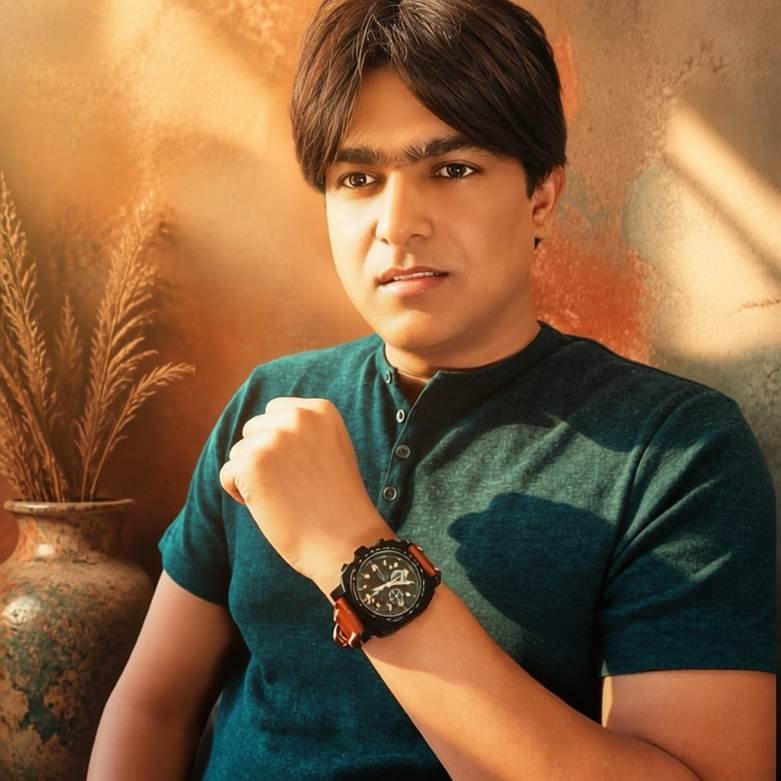
Praveen Koval is a storyteller whose work spans songwriting and filmmaking, united by a single purpose: exploring what it means to be human. Drawing inspiration from everyday moments, relationships, memories, and dreams, he creates emotionally honest stories that invite reflection long after they end. Each song begins with a story, not a genre. Blending cinematic storytelling with intimate songwriting, Praveen creates music that feels personal yet familiar, allowing listeners to discover their own experiences within every lyric. His growing body of work is guided by one enduring belief: everyone has a story worth telling. Check out the exclusive interview below:
1. Your roots can often shape your journey. Can you share a story or moment from your early life that had a significant impact on your path into music?
PRAVEEN KOVAL: I still remember lying in bed wearing a Walkman, listening to my favourite songs long after everyone else had gone to sleep. It felt like the music belonged only to me. In those quiet moments, it was just me and the song. Looking back, I think that was the first time I realized music could feel deeply personal.
But that memory really began years earlier.
Every second Saturday of the month, my father would take me to a small cassette shop to buy the latest Bollywood movie soundtracks. Before we even picked up a cassette, the shopkeeper would enthusiastically tell us which songs were becoming popular, which albums everyone was asking for, and why we absolutely had to listen to a particular soundtrack. Looking back, I know he was probably just a great salesman. But as a child, every recommendation felt like an invitation to discover something magical.
We’d come home with a few cassettes, often with two movie soundtracks, one on each side, and before long those songs would fill our home. Music wasn’t something we scheduled time for. It became part of everyday life.
My father wasn’t just passionate about music, he was fascinated by technology. As new ways of listening to music appeared, he was always eager to bring them home. The tape recorder, Walkman, the CD player, each one made listening feel like a completely new experience. At the same time, my elder brother was introducing me to artists like Michael Jackson, Ace of Base, Apache Indian, and 2 Unlimited. Without realizing it, I was growing up between Bollywood and Western music, and both quietly became part of who I was.
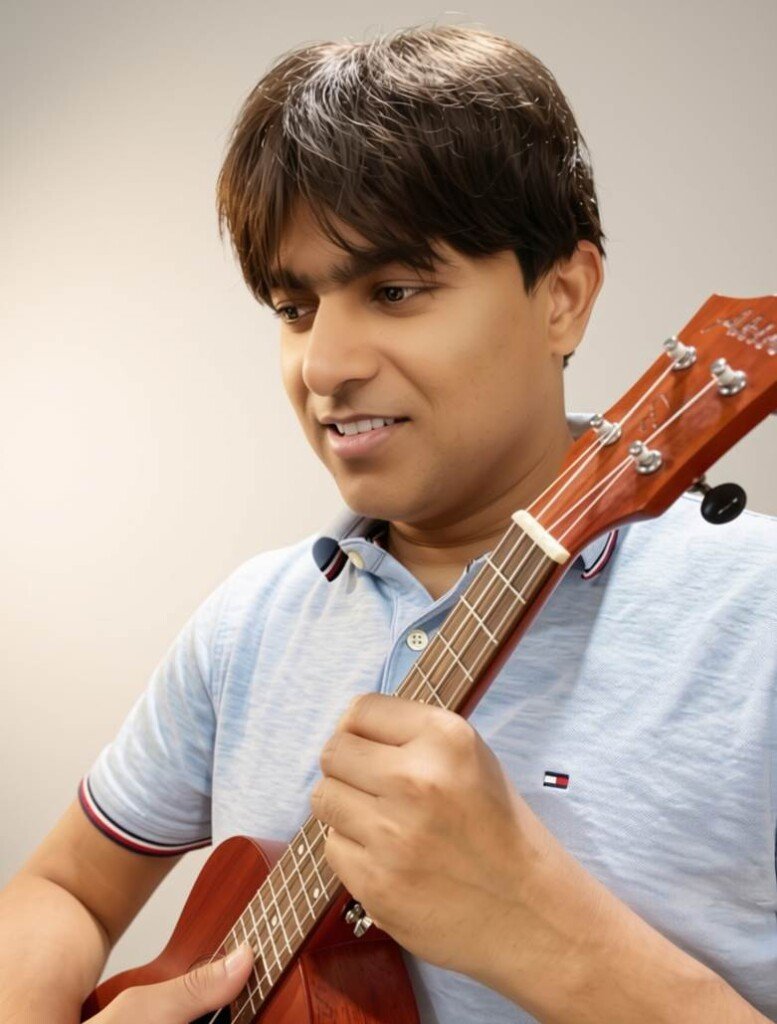
When I was around nine years old, my father arranged guitar lessons for my younger brother and me. At the time, it simply felt like another activity after school. I had no idea it would become one of the most important decisions of my life.
Years later, I’ve come to realize that my father gave me much more than a love for music. He gave me a love for discovering things. Whether it was a new song, a new technology, or a new idea, he approached each one with the same sense of excitement. Somewhere along the way, I inherited that curiosity.
Looking back, I sometimes think my journey didn’t begin with learning the guitar or writing my first song. It began by watching someone who never stopped discovering. I think I’ve been chasing that same feeling ever since.
2. Did your musical journey begin with formal training, or was it more of a personal exploration? How has that shaped your unique approach to your craft?
PRAVEEN KOVAL:
I still remember my first guitar lessons. I was around nine years old, sitting cross-legged with a guitar that felt almost as big as I was, carefully playing the same melody over and over while my teacher patiently corrected my fingers. He deliberately held back on teaching me chords and music theory because my hands were still too small to comfortably play them. His plan was simple. Build the foundation first and let the rest come with time. Then, just as we were about to reach that next stage, my father’s job in the armed forces required us to move to another city. The lessons ended almost overnight.
For a long time, I thought my musical education had stopped there.
Looking back, I realize it had simply changed direction.
For years, I became what I’d describe as a “bits and pieces” guitarist. I could play melodies, but I didn’t really understand the language behind the instrument. Then, almost a decade later, YouTube tutorials became more accessible. I remember sitting in front of my computer late at night, pausing and replaying the same lesson again and again until something finally clicked. Every answer seemed to uncover another question waiting to be explored. Slowly, the gaps began to close.
Around the same time, I opened FL Studio for the first time. I had no idea what most of the buttons did, but I still remember creating my very first drum loop. Growing up, drums weren’t something I had easy access to. In school and later in college, there were only a couple of drum kits, and they were usually reserved for a handful of students. Suddenly, I could build an entire rhythm on my computer.
I was so excited that I cranked my speakers up, turned the bass all the way up because I wanted the kick drum to sound as punchy as possible, and kept playing the same loop over and over again. It never occurred to me that it was well past midnight until a neighbour knocked on the door and asked me to turn the volume down. I remember laughing, putting on my headphones, and carrying on for hours. I probably looked like a little kid who had just been handed his favourite toy.
That night changed something for me. I wasn’t just learning to play music anymore. I was learning how to create it. Virtual instruments fascinated me because a simple MIDI keyboard could suddenly become a piano, an orchestra, or an entirely new sound. It felt like someone had handed me an unlimited canvas. Later, when I joined film school and moved to a Mac-based workflow, I naturally transitioned to Logic Pro, which has been my creative home ever since.
But if I’m honest, another education had already begun long before any of that.
I still remember sitting in literature classes while my teacher explained the meaning behind a poem. Most of the class was focused on understanding the words. I found myself wondering about the world around them. Who was this person before the poem began? What happened after the final line? Somehow, I was always more interested in the story behind the story.
Years later, one of my teachers encouraged me to enter a self-written poetry and recital competition. It had two parts: writing your own poem and then performing it. I did well with the writing, but my recital wasn’t particularly strong. I didn’t win, but I walked away with a quiet realization. I naturally experienced the world through images, emotions, and the small moments people often overlooked. Looking back, I think that was when I first began paying attention to what existed between the lines. I didn’t know it then, but I’ve been chasing those moments ever since.
As I became more interested in songwriting, I quickly discovered that writing poetry and writing lyrics were completely different crafts. I had to learn about melody, rhythm, phrasing, and syllables almost from scratch. So I kept studying, experimenting, writing, and rewriting. Every new skill unlocked another door, and every door revealed there was still more to learn.
Looking back, those years remind me of a bamboo tree. For a long time, nothing seemed to be happening on the surface. I wasn’t an exceptional guitarist. I wasn’t a great songwriter yet. I certainly wasn’t releasing music. But beneath the surface, the roots were quietly growing. Guitar, poetry, production, filmmaking, and songwriting all arrived at different times, but together they slowly became the foundation for everything I create today.
3. Who were some of the most influential figures in your early musical life, and how did they inspire your sound? Also, what’s the story behind choosing the name ‘Praveen Koval’?
PRAVEEN KOVAL:
I still remember listening to A.R. Rahman’s music and wondering why it felt so different from everything else I was hearing. I didn’t have the vocabulary to understand production or orchestration back then. I just knew his music made me feel something. If a scene showed rain, you could almost feel the air becoming heavier even before the visuals appeared. Years later, when I began producing music myself, I realized he wasn’t simply composing songs. He was creating emotional worlds.
As my musical world expanded, I found myself equally drawn to ghazals. Looking back, I think it was because they carried stories with remarkable honesty and simplicity. They weren’t trying to impress the listener. They were inviting the listener into someone’s life. Then I discovered the film scores of James Horner, and that changed my perspective once again. Until then, I had always believed lyrics carried the story. His music taught me that an instrumental piece could become a chapter of the story on its own.
Looking back, I don’t think these artists influenced my sound as much as they influenced the way I listen. Each of them showed me a different way to create emotion. Today, whether I’m writing lyrics, producing music, or shaping a cinematic arrangement, I’m still asking the same question: What emotion is this moment asking for? Everything else comes after that.
Choosing to create under my own name was a very deliberate decision. Over the years, I’ve realised that the work I care about most always begins with honesty. Not personal honesty, but emotional honesty. My responsibility is to serve the story and the character, not my own preferences. Using my own name felt like a natural extension of that philosophy. I wanted people to meet the same person, whether they discovered me through a song, a film, a book, or a conversation.
4. What do you believe sets your music apart? How would you describe your sound to someone discovering you for the first time, and what emotions or experiences do you hope to evoke in your listeners?
PRAVEEN KOVAL:
I still remember one of our exercises in film school. We were asked to deconstruct the background score of two completely different films.
The first was Transformers. Every creative decision was designed to make the audience feel scale, intensity, and adrenaline. The music was loud, powerful, and relentless. It served the spectacle brilliantly.
The second was the final scene from The Pursuit of Happyness. Will Smith’s character walks out into a crowded street after finally getting the job he’d fought so hard for. The score is incredibly simple. A piano, a gentle orchestra, and a performance that barely asks for your attention. Yet somehow, it carries an emotional weight that stays with you long after the scene ends.
I remember sitting there realizing that both approaches were successful. They were simply trying to achieve different things.
That exercise quietly shaped the kind of artist I wanted to become.
I enjoy spectacle, but I’ve always been more deeply moved by ordinary human moments that carry extraordinary emotional weight. The quiet victories. The conversations we remember years later. The emotions that don’t need to shout to be felt.
That’s how I think about my own music.
I don’t begin by asking what genre this song should be. I begin by asking who this person is, what they’re feeling, and what emotional truth the music needs to serve. Everything else, whether it’s the lyrics, the production, or the arrangement, grows from that foundation.
If someone were discovering my music for the first time, I probably wouldn’t describe it through genre. I’d describe it as cinematic storytelling built around human emotion.
I still think about that final scene from The Pursuit of Happyness. It wasn’t the entire film that stayed with me. It was that one small moment when he quietly says, “This part of my life… this little part… is called happiness.” Somehow, it felt less like I was watching someone else’s story and more like someone had captured a feeling I didn’t know how to put into words myself.
That’s the kind of experience I hope my music creates. Not songs that simply entertain for a few minutes, but moments where someone quietly thinks, “I’ve felt that too.”
5. For most artists, originality is first preceded by a phase of learning and, often, emulating others. What was this like for you? How would you describe your own development as an artist and music maker, and the transition towards your own style, which is known as cinematic?
PRAVEEN KOVAL:
I still have old music projects on my computer that nobody has ever heard. At the time, I genuinely believed each one would become my first release. I’d spend weeks working on a track, listen back the next day, and quietly close the project without exporting it. That cycle repeated itself for almost a decade.
At first, every unfinished project felt like a disappointment.
Today, I see them as part of my education. Every song that never got released taught me something the next one needed.
Like many emerging artists, I spent years chasing whatever seemed to be working. One day it was tropical house. Another day it was radio-friendly songwriting. Keep the song under three minutes. Bring the vocals in within the first few seconds. Follow the trends. Every new rule promised a better song, but somehow every song felt a little further away from the kind of artist I wanted to become.
Everything changed when I stopped asking, “What genre should I make?” and started asking, “Whose story am I telling?”
Around that time, I had the privilege of learning from a mentor who graduated from A.R. Rahman’s KM Music Conservatory. He wasn’t interested in making songs bigger. He was interested in making them truer. We would spend weeks changing just two or three words in a lyric until they carried the right emotion. He showed me that arrangement, vocal harmonies, and even mixing weren’t there to impress the listener. Every creative decision had to earn its place by serving the story.
One lesson has stayed with me ever since. Sometimes the line you’re most proud of is the very line you need to remove. Not because it’s poorly written, but because it serves the writer instead of the character. Learning to let go of my favourite ideas taught me more about originality than any production technique ever could.
People often describe my music as cinematic, but I don’t think that came from chasing a particular style. It happened because I stopped chasing genres and started chasing emotional truth. Every song begins with a character, a moment, or a feeling that deserves to be understood. The music simply becomes the language that helps that story come alive.
Over time, I stopped worrying about sounding original. I became far more interested in telling each story as honestly as I could. Ironically, that’s when my own voice began to emerge.
6. Do you feel the rewards of your musical career match the energy and passion you invest in it, or are there different kinds of fulfillment you’re still seeking?
PRAVEEN KOVAL:
I remember receiving a few messages after releasing Nothing Lasts Forever and Ghutan. People wrote to say, “It felt like you were telling my story.” Those words stayed with me far longer than any streaming number ever could.
That’s probably because I’ve never seen my songs as isolated releases. They’re small windows into a much larger storytelling universe I’m slowly building. Some songs are inspired by moments from stories I’m writing, and I hope one day those stories continue through films and other visual mediums. For me, a song is rarely the complete story. It’s often the moment that lingers after a chapter ends or the emotion that remains long after the credits roll.
The rewards I’m seeking have changed over time. I’m no longer chasing numbers as much as I’m chasing longevity. I want to create work that people return to years later because it still reminds them of a part of themselves.
If someone listens to one of my songs and quietly thinks, “I’ve lived this too,” I’ll feel like the work has found exactly the person it was meant for.
7. Can you walk us through your creative process? From the first spark of an idea to the finished track, what’s the most essential part of your process, and how do collaboration or external influences shape your work?
PRAVEEN KOVAL:
For me, songs almost never begin with music. They begin with an image.
Handprint is a good example. I remember reading about the musk deer in Indian literature. It’s said that the beautiful fragrance it spends its entire life searching for actually comes from within itself. That image stayed with me for years. Around the same time, I found myself thinking about palmistry and how people often search for answers about their future while forgetting that their own hands are capable of shaping it.
Somewhere along the way, those two images found each other, and a single question emerged: Why do we spend so much of our lives searching outside for something that already exists within us?
Once I discover that central question, the rest of the process becomes much clearer. I begin to understand who the character is, what they’re feeling, and what emotional truth the song is trying to protect. Only then do the lyrics begin to appear.
When the words begin to settle, I start searching for a melody that carries the same emotional weight. I’m not looking for something that’s technically impressive. I’m looking for something that feels inevitable, as though the character couldn’t have sung it any other way. Production comes after that. I enjoy building cinematic soundscapes, but every instrument, texture, and transition has to earn its place by serving the story rather than distracting from it.
If there’s one place where I lose the most sleep, it’s the chorus and the bridge. Verses usually come more naturally because they’re the character telling their story. But the chorus has to carry the emotional heartbeat of the entire song. Sometimes changing just two or three words can take weeks because that’s usually where the soul of the song lives.
Collaboration has also taught me an important lesson. The best collaborators don’t replace your voice. They help you hear it more clearly. If a suggestion makes the story more honest, I’m always willing to let go of my original idea because, in the end, the song matters more than any single creative decision.
8. What’s been the most challenging hurdle in either your personal life or music career, and how has it shaped you as an artist?
PRAVEEN KOVAL:
For many years, I’ve lived two creative lives. During the week, my focus is entirely on engineering, building products and working with global teams. Music belongs to my weekends, holidays, and the quiet spaces in between. I’ve always been intentional about keeping those two worlds separate. Engineering is where I solve problems. Storytelling is where I ask questions. I never want one to compromise the other.
People often assume the biggest challenge is finding time. For me, it has been something else.
I don’t just want to release a song. I want to release the world it belongs to.
Most of my music is written with visuals in mind, so every release naturally grows into a much bigger project. A music video isn’t an afterthought; it’s another chapter of the same story. That means every song demands months of additional writing, planning, filmmaking, and collaboration before it reaches people. It’s easily four or five times the effort of releasing music alone.
That pursuit has also shaped the way I work. One principle from engineering has stayed with me throughout my creative journey: quality is never an accident; it’s an intentional effort. It was one of the reasons I spent nearly a decade making music before releasing my first song, and why I wasn’t afraid to shelve songs or short films when the execution didn’t do justice to the story I wanted to tell.
Over time, I realised that discipline isn’t the opposite of creativity. It’s what allows creativity to reach its full potential. Engineering taught me to prepare, build systems, and respect the process. Storytelling gave those systems a purpose. Together, they’ve given me a workflow that lets me build patiently without compromising on quality. When preparation and emotion meet, that’s usually where the best stories begin.
9. On the flip side, what moment or achievement in your career so far has made you feel the proudest, and why? And let’s talk about your latest release and future plans.
PRAVEEN KOVAL:
A few months ago, on Father’s Day, my youngest son wrote me a letter about the things he admired most about me. One sentence stopped me in my tracks. He wrote that he was proud that I was an artist.
I had tears of happiness. It’s a letter I’ll keep for the rest of my life.
My father saw me become an engineer, but he never had the chance to see this chapter of my life. He was the person who unknowingly planted the first seeds of music in me by bringing home cassette tapes, introducing us to new technology, and encouraging us to learn instruments. I often wonder what he would have thought if he had seen me release my own music.
Recently, I watched my older son, who’s only eleven, perform an incredibly challenging arrangement of the Interstellar theme on the piano. He had worked out much of it himself, and when he finished, the entire room applauded. His music teacher even paused to tell me how impressed she was with the way he’d approached the piece.
As I watched him play, I wasn’t thinking about streams or releases. I was thinking about how music quietly travels across generations. My father passed that curiosity on to me without ever intending to. Perhaps the greatest reward isn’t creating music at all. It’s seeing that same curiosity quietly finding its way to the next generation.
That same way of seeing the world also shapes my latest release, Goodnight My Love. Like much of my work, it isn’t just a standalone song. It’s another chapter in the cinematic storytelling universe I’m building, where every release explores a different human emotion through music and visuals.
I’m excited to keep expanding that world through future music, films, and long-form storytelling. But if you ask me what achievement means today, it isn’t a number or a milestone. It’s knowing that the stories I’m creating have become part of my family’s story too. That’s a legacy no chart can ever measure.
10. Creative work in a studio or home environment, or interaction with a live audience? Which of these two options excites you most, and why?
PRAVEEN KOVAL:
If you walked into my home on a quiet weekend night, you’d probably find me in my studio surrounded by guitars, a piano, microphones, studio monitors, and far too many unfinished ideas.
That’s my favourite place to create.
I also have a small home theatre where I watch my films and music videos before anyone else sees them. There’s something magical about sitting alone in front of a 150-inch screen with immersive Dolby Atmos sound, experiencing the story the way I imagined it while I was writing it. Before the work belongs to the world, it belongs to that quiet room.
My very first audience, though, is usually much smaller. My dog is almost always lying beside me while I work late into the night. I like to think she’s my most patient listener, although by two in the morning she’s probably wondering if I’ll ever stop replaying the same chorus.
And then comes the real test. My wife.
She’s my first critic, and she’s wonderfully honest. If something doesn’t move her or doesn’t feel right, she’ll tell me without hesitation. More often than not, that means I’m back in the studio reworking it. I’ve come to appreciate that because it’s much better to hear difficult feedback from someone who genuinely wants the work to succeed.
Live audiences are incredibly special, and I hope to experience more of them as my journey continues. But for me, the real magic happens long before the applause. It happens in those quiet nights at home, where stories are discovered before they’re shared.
11. Do you think is it important for fans of your music to understand the real story and message driving each of your songs, or do you think everyone should be free to interpret your songs in their own personal way?
PRAVEEN KOVAL:
Whenever I release a new song, one of the very first people I send it to is my mother. She has always encouraged me, and even today she’s usually waiting to hear what I’ve created next.
The funny part is that she doesn’t always understand every lyric. But she’ll often tell me, “I loved the music.” What she’s really responding to is the melody and the feeling it leaves behind.
That reminds me that every listener experiences music differently.
Some people connect with the lyrics. Others remember the melody long after the words are gone. Some find comfort in a chorus they can sing along to. Others hear a story that reminds them of their own life. None of those experiences are more right than the others.
When I write, I begin with a very specific story and emotional truth. I owe it to the characters to tell that story honestly. But once the music is released, I don’t believe it belongs only to me anymore.
Stories have a wonderful way of finding people for reasons the writer could never predict. Someone might hear a song and discover a meaning that I never consciously intended, yet it’s completely real because it connects with something they’ve lived themselves.
As a storyteller, I don’t want to take that experience away by explaining every detail. I’d rather invite people into the world I’ve created and let them bring their own memories, hopes, and emotions with them.
Stories don’t truly belong to the writer after they’re released. They begin a second life inside the people who experience them.

STAY IN TOUCH:
FACEBOOK | INSTAGRAM | X | SPOTIFY | WEBSITE | YOUTUBE