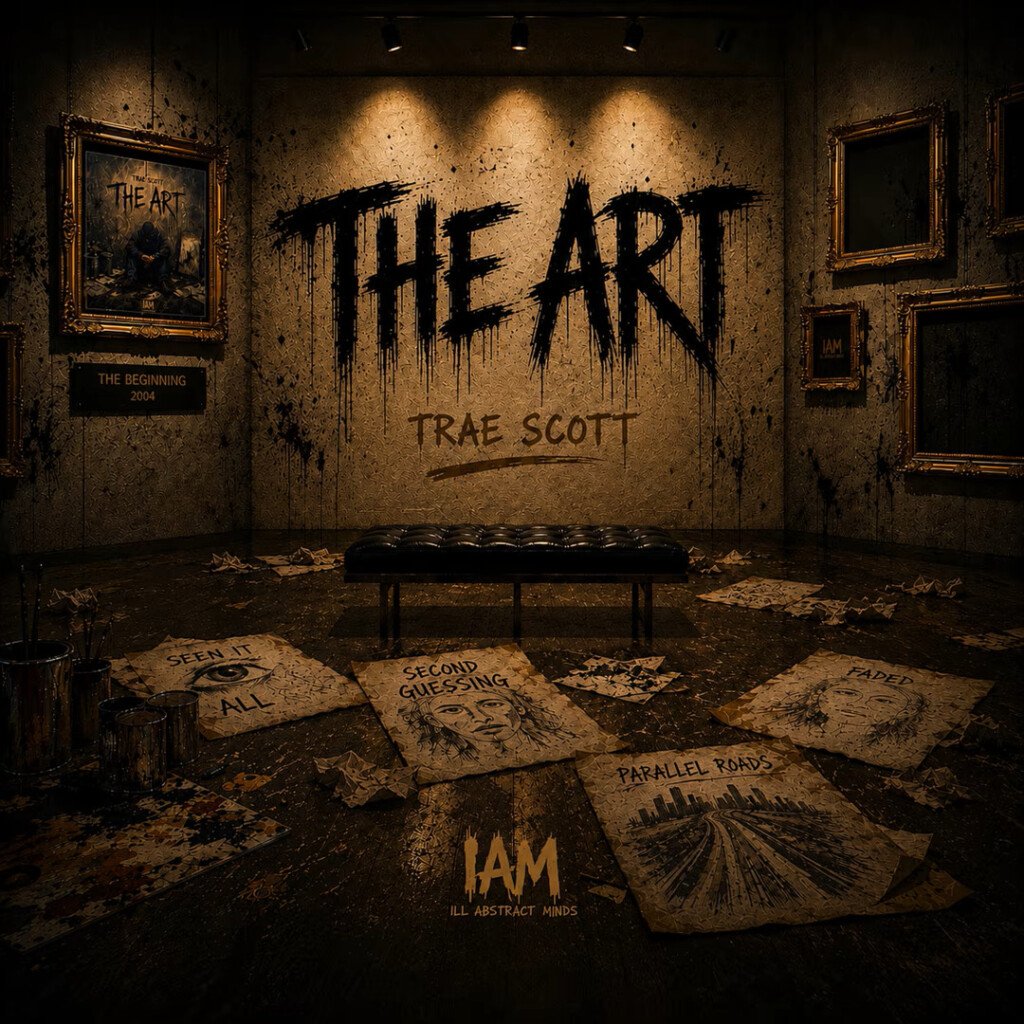
Born in Pittsburgh, Pennsylvania, and raised in Atlanta, Georgia, Traé Scott is an independent recording artist, songwriter, and founder of Ill Abstract Minds. Creating music since 2004, he has spent more than two decades documenting life through honest storytelling, thoughtful lyricism, and a philosophy rooted in perspective, growth, and legacy. Inspired by a family deeply connected to music—including a grandfather who was a certified pianist, organist, music educator, and multi-instrumentalist—Traé views every song as another brushstroke on a lifelong masterpiece. His fifth studio album, The Art, reflects his belief that legacy is built through the process, not just the outcome. Beyond his own music, Traé is building Ill Abstract Minds as a creative home for passionate artists who think differently, value originality, and create from authentic experience. His mission is simple: leave listeners feeling better than they did before they pressed play. Check out the exclusive interview below:
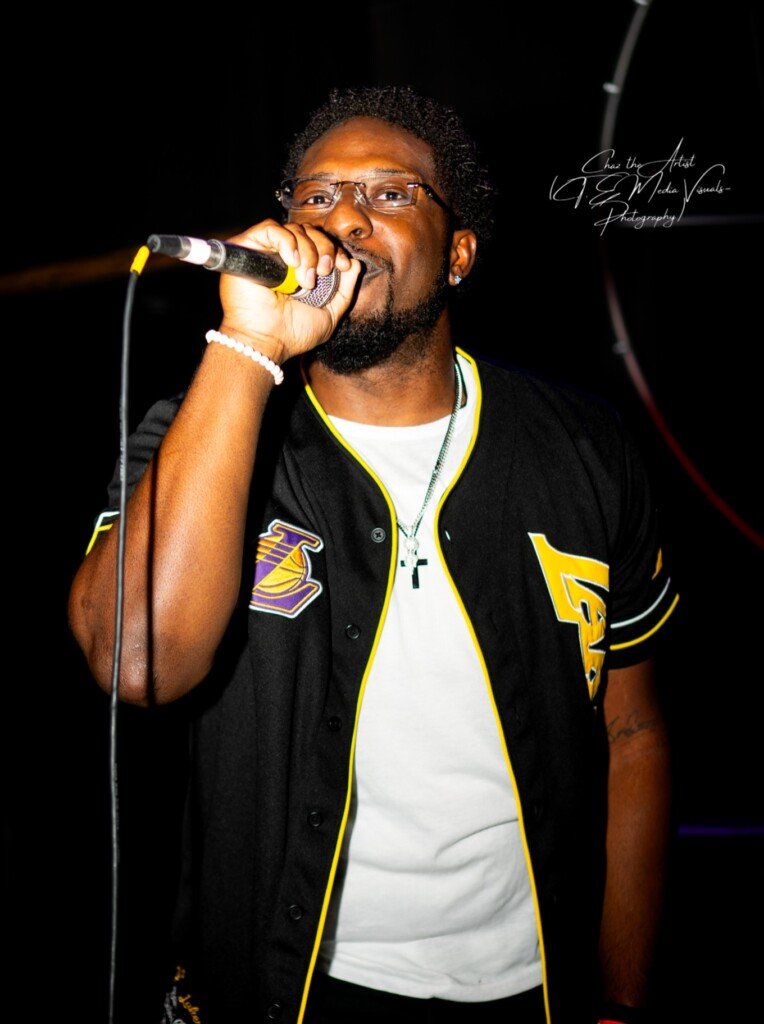
1. Your roots can often shape your journey. Can you share a story or moment from your early life that had a significant impact on your path into music?
Traé Scott: Music has always been part of my family before it ever became part of my career. My grandfather, Art Sr., could play 19 different instruments and spent years teaching music. Watching how deeply music lived inside him made me realize it wasn’t just entertainment—it was a language. My father also had a passion for music, even though life took him down a different road, and hearing his experiences taught me how easily dreams can be interrupted if life isn’t balanced.
I was born in Pittsburgh but raised in Atlanta from the age of six, so I grew up around two very different cultures. Pittsburgh gave me my roots, while Atlanta gave me the soundtrack that shaped my identity. Being an only child also played a huge role in who I became. I spent a lot of time observing people, overthinking situations, and creating worlds in my imagination. Music became the place where all those thoughts had somewhere to go.
2. Did your musical journey begin with formal training, or was it more of a personal exploration? How has that shaped your unique approach to your craft?
Traé Scott: It was definitely a personal exploration. Before I wrote songs, I was writing poetry. Poetry gave me a way to organize my thoughts and express things I didn’t always know how to say out loud. Eventually those poems started finding rhythm, and before I knew it they became verses.
I never had formal musical training. Everything I’ve learned came from experience—writing, recording, performing, listening, and constantly trying to improve. I think starting with poetry is why my music has always been lyric-driven.
3. Who were some of the most influential figures in your early musical life, and how did they inspire your sound? Also, what’s the story behind choosing the name ‘Traé Scott’?
Traé Scott: Growing up I studied artists like Jay-Z, Nas, Tupac, The Notorious B.I.G., DMX, Method Man, T.I., OutKast, and the entire Dungeon Family movement. They all approached music differently, but what connected them was authenticity.
I originally performed under the name The Spade, but eventually I realized I wanted my legacy attached to my real name. Traé Scott isn’t a character—it’s me.
4. What do you believe sets your music apart? How would you describe your sound to someone discovering you for the first time, and what emotions or experiences do you hope to evoke in your listeners?
Traé Scott: I honestly think it’s my passion for creating. I care about every line, every concept, every transition, every little detail. I want every lyric to make people make that ugly face. I want every concept to hit like the crazy plot twist at the end of a movie where everything suddenly makes sense.
I genuinely love creating. I’d make music if I never made a dime from it because the process itself is rewarding to me. I’m fortunate that isn’t the case, but even if it was, I’d still be creating.
5. For most artists, originality is first preceded by a phase of learning and, often, emulating others. What was this like for you? How would you describe your own development as an artist and music maker, and the transition towards your own style, which is known as HIPHOP?
Traé Scott: When I first started recording, I wanted to rap like T.I. I grew up on his music, around the age ages of 13-16 where I was starting to build my independence, so naturally my first few songs sounded like I was trying to be him.
The turning point came when I started hearing my own voice through the studio speakers. That’s when I realized your voice is your instrument. Your vocal tone is a huge part of your identity, and once I leaned into my own voice instead of somebody else’s, my sound naturally developed into what people hear today.
6. Music often transcends entertainment. What’s your view on the role and function of music as political, cultural, spiritual, and/or social vehicles – and do you try and affront any of these themes in your work, or are you purely interested in music as an expression of technical artistry, personal narrative, and entertainment?
Traé Scott: Music has always been one of the most powerful ways to influence people. Whether it’s political, cultural, spiritual, or personal, every song leaves somebody with something.
My dad has always told me, “You make that feel-good music. It’s like Motown rap.” I’ve always loved that description because even when I’m talking about pain, doubt, or life’s challenges, I never want people to leave feeling hopeless. Life already gives us enough darkness. I want my music to remind people there’s always something worth living for if you’re willing to find your purpose.
7. Do you feel the rewards of your musical career match the energy and passion you invest in it, or are there different kinds of fulfillment you’re still seeking?
Traé Scott: Earlier in my career I probably measured success differently. Today, I don’t hope anyone discovers me but fans. They’re the people who keep the music alive.
Every article, every review, every message from someone saying a song helped them through something means more than numbers ever could. Of course, I want bigger stages because I love performing, but I’m chasing connection more than fame.
8. Can you walk us through your creative process? From the first spark of an idea to the finished track, what’s the most essential part of your process, and how do collaboration or external influences shape your work?
Traé Scott: I’m constantly rapping in my head 24/7, so concepts literally come out of nowhere. It could be a conversation, something I see while driving, or one line that suddenly becomes a whole song.
Collaboration helps bring the best out of a record, but I don’t chase perfection. Some of my favorite moments are the little imperfections—a crack in the voice, an ad-lib, or a take that just feels real. Like Drake telling the engineer “ok I got it” and they keep it in the song or Case singing “He can’t sing no more” because he really couldn’t physically sing anymore. Those moments give a record authenticity.
9. What’s been the most challenging hurdle in either your personal life or music career, and how has it shaped you as an artist?
Traé Scott: The biggest challenge wasn’t making music—it was learning the business. The more I learned about marketing, media, relationships, and promotion, the more I realized major labels don’t have secret information. They just have bigger budgets and more people doing the work consistently.
That changed my mindset. Instead of waiting to be discovered, I started building opportunities one relationship at a time.
10. On the flip side, what moment or achievement in your career so far has made you feel the proudest, and why? And let’s talk about your latest release and future plans.
Traé Scott: Releasing The Art is easily the accomplishment I’m most proud of.
Before making this album, I cleaned out every song I’d ever recorded. I wanted a completely fresh start. Every song on The Art was created specifically for this project.
This album became a test for myself. Could I start from scratch, create something cohesive, and make a better album than I’d ever made before? The answer was yes, and I exceeded my own expectations.
Looking ahead, I’m focused on more visuals, college radio, sync licensing, live performances, and continuing to build Ill Abstract Minds.
Everybody celebrates the masterpiece. I wanted to celebrate the brush strokes. The process itself is the masterpiece.
11. With social media having a heavy impact on our lives and the music business in general, how do you handle criticism, haters, and/or naysayers in general? Is it something you pay attention to, or simply ignore?
Traé Scott: I welcome constructive criticism from people who genuinely want to see me grow, but I don’t spend time feeding negativity. The hardest part is actually finding criticism you can actually use to get better. Most of it personal preferences disguised as a critic. Every successful artist has critics. My focus stays on the people who connect with the music.
12. Creative work in a studio or home environment, or interaction with a live audience? Which of these two options excites you most, and why?
Traé Scott: That’s a tough one because I genuinely love both.
The studio is like my fun place. It’s like being a kid in a candy store. I get to create, experiment, play around with ideas, and watch something that started in my head become a real song. I can honestly listen to my own music all day because every record reminds me of that creative process.
Performing is an amazing rush. The only thing I can compare it to is sports. It’s that feeling right before the biggest game of your life—the butterflies in your stomach, the adrenaline, the excitement. Every show gives me that feeling.
If I had to choose, I’d still lean toward the studio because none of the performing is possible without the creation. But I definitely want more fans because I want more opportunities to perform.
13. Do you think is it important for fans of your music to understand the real story and message driving each of your songs, or do you think everyone should be free to interpret your songs in their own personal way?
Traé Scott: Every song starts with my perception, but once I release it, it belongs to the listener too. Now I do think it’s important to have some sense of where the artist is coming from but if someone hears one of my songs and finds a meaning I never intended, I don’t think they’re wrong. That’s the beauty of art. It begins as my story, but it can become someone else’s. Just understand the artist and don’t put the wrong type of negativity to his/her thoughts, like stuff you don’t even believe but it’s a good lie, that’s nasty behavior.

STAY IN TOUCH:
FACEBOOK | INSTAGRAM | X | SPOTIFY | WEBSITE | YOUTUBE