
Psalm 63 translates a deeply personal, ancient scripture into a lush, cinematic landscape. That’s the heartbeat of Melody and Truth: original Christian music and Scripture songs that point people to Christ, worship that magnifies Jesus, and a longing to see hearts anchored in His Word for the glory of God. Songs like Glimpses, The Daniel Song (Praise Be to the Name of God), and I Wake are all part of that story—truth-filled worship designed to help you meditate on Scripture and carry it with you. Check out the exclusive Interview below:
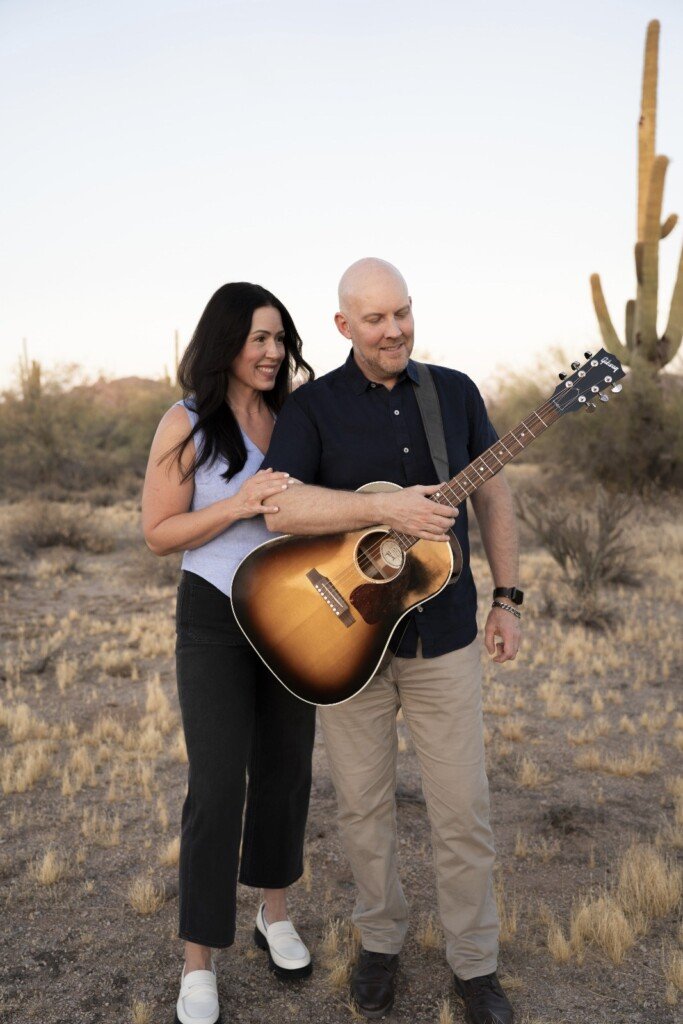
How did Melody and Truth approach setting David’s wilderness longing to music without losing the raw, unfiltered honesty of the original text?
The melody and soundscape and ethos of the music came all at once while I mediated on these verses. Our producer had a great first version of the track and captured most of what I was going for in tones and a cinematic feel. The big thing I wanted to change and work on was the intro and the first verse. The Psalm is a progression, and likewise the song. Rather than a typical CCM vibe, it was important that the listener felt the starkness of the landscape, experiencing the thirst the psalmist must have felt. I was in the studio while he was working on some changes to the track, and I suggested the dark piano tone instead. I also suggested we change the uplifting musical intro to a pedal tone with a melody forecasting the haunting musical motif from “There’s no water here”. I stressed waiting as long as possible for the track to “lift”. This all had a huge impact, and the “journey” I wanted the song to lead people on was coming together. There is a turn in the song where we and the psalmist take our eyes off our circumstance and lift them to the Lord on His throne to worship Him.
Waiting on more energy in the track helped lift the turn to the LORD on His throne in the upcoming sections. That’s where the whole rhythm section is in and the brighter tones come in and it feels like we have “broken into song” even though we have already been singing.
It was meaningful to be in the studio with Brandon, communicating face to face, especially regarding the opening to the song. He had all the other cinematic elements in the track already, and it all came together when we changed the intro and first verse.
The opening arrangement deliberately relies on spartan, spacious instrumentation to evoke “a dry and weary land.” How did you determine which sonic textures best represented that feeling of spiritual drought and emptiness?
A lot of what our producer created was working after his first track, but I still wanted to scale back the beginning so there was not an early “lift” in the song. I remember thinking the first “intro” was too bright and too “CCM.” That’s when I suggested the darker piano and came up with the allusion to the pre-chorus (“There’s no water here”) as the intro. I also asked for fewer drums and for them to come in later. I just emphasized more space and a cinematic pedal tone. Switching to a darker piano tone was crucial.
The point of all this was that the psalm and song are a progression of emotion. The beginning is supposed to feel a little “bleak.” It did not make sense to start out energetically, upbeat, and bright, then go down, then come back up, and so on.
There is a pivotal moment in the song where the emotional perspective shifts from longing in the desert to gazing upon God’s steadfast love. What specific musical devices—dynamic builds, harmonic shifts, or instrumentation—did you use to signal that inner transformation?
I’m assuming you mean after the second pre-chorus, when it lifts to God’s throne. I believe we went back to the regular piano there and let the dark piano go. We also picked up the energy in the “band,” with the full band and drums coming in. Our producer really nailed this transition.
The music really follows the passage, allowing the listener to feel the change in emotion along with the psalmist.
Scripture-centered worship can take many forms, from traditional hymnody to contemporary anthems. What made the cinematic, immersive style the right vessel for the specific emotional arc of Psalm 63?
This is devotionally how I felt like singing and communicating it. Again, it’s not something I planned to write. The song is my response of worship of the One true and living God after reading and meditating on the Psalm.
Many people experience “wilderness seasons” in their personal lives. How do you hope listeners in a season of spiritual dryness connect with the transition from thirst to praise featured in this track?
My hope and prayer with most of my music is simple and consistent. I pray that this song moves people to turn to God’s Word in their thirst. I pray they drink deeply and daily from His Word to know Christ, to love Him, to follow Him, and to rest in Him and trust Him in all things. We are all easily distracted and constantly turn to empty things for comfort and influence.
Obviously, many of us turn to destructive things, but I believe what is most pervasive is the slow burn into feeling “starved” and “dry” in our souls because we are unknowingly and habitually filling our minds with empty things at best, while simultaneously starving ourselves from the Living word, who is our very life.
Your project is built around helping people not just hear the Bible, but dwell in it and sing it. What was the journey like adapting the exact words of Psalm 63 into natural, memorable vocal melodies?
This may sound reductive and too simple, but this is how this musical meditation came to me as I read it. My plan was not to write a song. I was moved by these verses and started picturing my life this side of heaven, and the season I had been in, like a journey through the wilderness and desert alongside other believers. I literally had to open my mouth and sing the song to the Lord.
I only have one song I have written that I “planned” to write. Someone gave me a poem they wrote as the theme for their ministry and asked me to turn it into a song, and with some minor changes to the poem, I did. Otherwise, songs come into my heart and mind as I am meditating on God’s Word or praying. When these melodies and arrangements come, it feels like an old friend from the beginning. I believe it’s a work the Lord does to bless me and encourage me and knit my heart, mind, and emotions to Him. The music is a way of remembering and proclaiming that saturates my being.
As the track crescendos into full worship and remembrance, how did you keep the production feeling reverent and intimate rather than simply loud or overwhelming?
The whole song is “musical,” including the crescendo, if you know what I mean. It is not a formula song or an escalating chant that just gets louder and higher. The lift comes from the reality of the passage. It is not manufactured. It’s just a rich payoff of full band and harmonies that the song naturally builds to. We have a trio of tight vocals, with our daughter Gretchen in front of the choir. We don’t have to resort to anything over the top.
Cinematic music often relies on visual cues, but here the narrative is driven by ancient poetry. Did you envision specific visual scenes or landscapes in your mind while arranging and mixing the song?
Yes! I remember describing this scene to Brandon when we were in his studio the first time. The scene I envisioned is not the literal biblical background for this particular psalm. It’s an imaginative scene influenced by the literal and historical background to this psalm that David wrote. He wrote this while on the run in the Judean desert, most likely from Absalom (or possibly Saul). David is seeking and longing for God’s presence in these verses as he is in the wilderness.
Our wilderness is a little different than David’s this side of the Cross. The Lord was with David, but he did not have the indwelling Holy Spirit like believers do today. He was displaced from his home, and so are we in this “already but not yet” this side of Heaven, as Heaven is our home.
David pictures being close to God as related to worshipping in the temple or going to the temple to worship the Lord.
I pictured and felt like I was slowly dragging my feet through a similar desert wilderness, parched and weary, seeking the Lord. As I sang the song aloud, I pictured other parched believers joining me as we walked in the “desert,” joining our voices together in worship as we sought the Lord and turned our gaze on Him. As we sang and worshipped, we were strengthened together by the Lord.
“Psalm 63” encapsulates the core mission of Melody and Truth. What set this release apart from your previous work in terms of how you approached creative collaboration and song structure?
Psalm 63 is part of our first batch of songs with our new producer, Brandon Bee. We all had to learn a lot while working on this song in particular because the sound was so particular to me, and we were working at a distance. I am so thankful for Brandon’s patience with me and his musical gifts.
We also realized we needed to find a studio with a great engineer we could work with here in AZ to capture vocals because we are making too much music to fly back and forth to Washington, where Brandon is based. So, in a way, everything changed: new producer, new state, new process of production and musical releases, and so on.
We moved from Oregon to Arizona five years ago. We had lived there for 26 years, and all our musical connections were there in the Northwest. This song took us over a year to produce because we had to meet and gather other believers and singers here, find a way to record quality vocals and send them to Brandon, fly our daughter into town to record her parts, etc. The main creative collaboration was just between us and our producer in regard to the track. We had worked out the vocal arrangement over the last few years of sharing the song in person. I wrote it soon after moving here to AZ, and we had been sharing it with guitar and vocals with friends and small churches. The song structure, as I’ve shared before, came all at once.
Now that Psalm 63 is available to the world, what do you hope churches and individual worshippers take away from this unique, Scripture-first approach to modern worship music?
Well, we led it and shared it many times with just a guitar and two or three voices before the Lord provided a way for us to produce and share it. It’s simple and beautiful to sing with just a piano or guitar. You don’t need a big church or full band to sing and worship the Lord with this song. All our chord charts are available to download for free on our website: www.melodyandtruth.com
I hope worshippers, leaders, and churches use it for personal or gathered worship with whatever musical setup the Lord has provided. This is a rich, beautiful, and moving track, but the words and melody also stand up well on their own. You can even sing it well a cappella. This is one of the core, unique aspects of Melody and Truth music: songs that are rich in engaging and memorable melodies.
STAY IN TOUCH:
FACEBOOK | INSTAGRAM | X | SPOTIFY | WEBSITE | YOUTUBE